
The Art of Bookbinding: Creating Personalized Journals and Notebooks
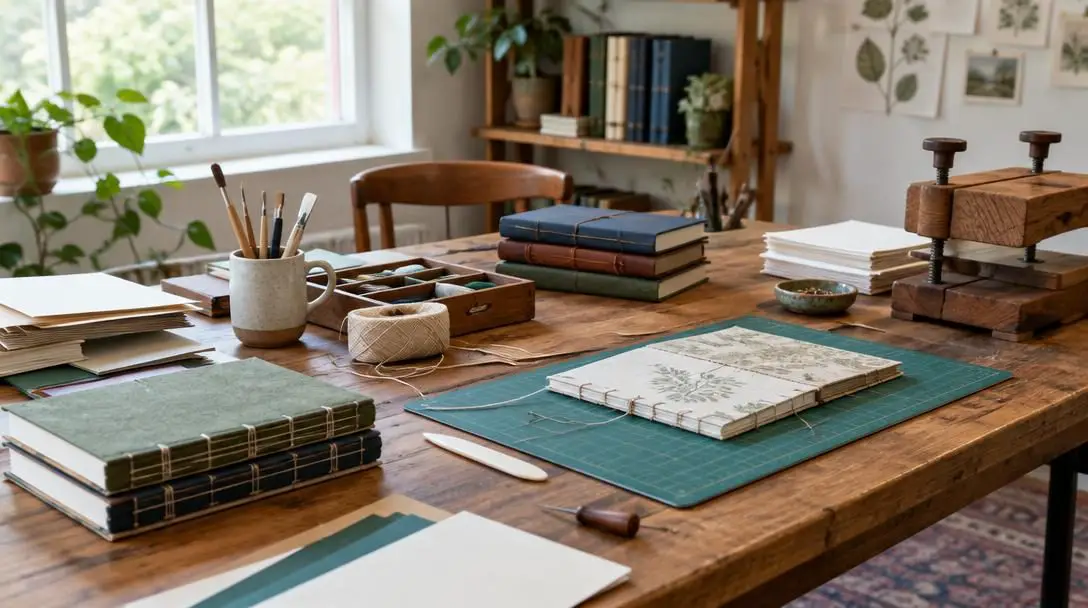
The art of bookbinding represents an enduring convergence of mechanical engineering, tactile craftsmanship, and fine visual art. By transforming loose, vulnerable sheets of paper into a unified and resilient volume, a bookbinder creates a protective vessel designed to safeguard personal thoughts, sketches, recipes, and literary works across generations. Mastering the assembly of a book empowers makers of all skill levels to construct personalized, hardwearing notebooks tailored precisely to their creative needs.
Far from being an obsolete relic of the pre-industrial past, hand bookbinding offers an intentional, grounding alternative to mass-produced notebooks. Working with basic tools such as needles, thread, paper, and bone folders allows artists and writers to dictate every structural variable of their volume, from paper texture and page count to hinge flexibility and cover resilience.
Key takeaways
- Nested groups of folded pages, known as signatures, form the structural core of any hand-sewn book block.
- Stitching techniques like the kettle stitch connect consecutive signatures across the spine, balancing tension to allow the book to lie open smoothly.
- High-quality, acid-free papers and flexible adhesives prevent brittle degradation, discoloration, and structural breakdown over time.
- A bone folder is indispensable for creating sharp, fiber-compressing creases without transferring natural skin oils to the paper.
- Handmade books provide therapeutic benefits, cultivate artistic confidence, and serve as long-lasting physical time capsules for personal writing and art.
From Ancient Guilds to Modern Craft Desks: A History
The art of bookbinding has been practiced for centuries, with its modern European traditions tracing back directly to the rise of the printing press. Before automated assembly lines and digital printing existed, bookbinding was far from a casual weekend pastime. It was a rigorous, highly specialized, and guild-protected trade. Aspiring binders spent years under formal apprenticeships, acquiring an intimate understanding of how animal skins, parchment, hand-milled rag papers, and hemp cords reacted to changes in temperature, humidity, and adhesive moisture.
Over the decades, as industrialization introduced mechanized casing machines and mass-market paperbacks, hand binding evolved from an insular trade into an accessible, expressive craft. Contemporary bookbinding balances reverence for traditional structural mechanics with room for experimental aesthetic freedom. Today, anyone equipped with a modest collection of specialized manual tools can produce a resilient, heirloom-grade volume from the comfort of a home workspace.
Bookbinding transforms delicate, vulnerable sheets of loose paper into a durable, unified vessel capable of weathering decades of regular use.
The Anatomy and Mechanics of a Bound Volume
At its core, bookbinding unites individual sheets of paper, binds them along a central axis into a unified block, and attaches a protective outer structure. Understanding how these mechanical components interact is critical to building a journal that survives repeated handling without throwing stitches or cracking along the hinges.
The interior pages of a hand-bound journal are organized into distinct units called signatures. A signature is created by nesting multiple sheets of paper inside one another after each has been creased down the middle. Rather than attempting to punch through and sew hundreds of loose individual leaves, the binder sews through the interior valley of these nested gatherings along their central fold lines.
The spine serves as the physical backbone of the volume. To connect adjacent signatures into a cohesive book block, binders rely on specialized connecting stitches, most notably the kettle stitch. Executed at the head and foot of the spine, this looping stitch interlocks each new signature with the one previously sewn. This distributes mechanical tension evenly along the spine, ensuring the book block remains firmly aligned while allowing leaves to open flat without straining the paper.
Finally, the outer cover acts as the book's primary shield against environmental wear, handling, and corner impacts. Typically composed of durable front and back boards joined across the spine by cloth, leather, or sturdy paper, the cover encases the book block. Once the signatures are fully sewn, adhesive secures the book block to the cover assembly, transforming separate paper gatherings and rigid boards into an enduring, integrated volume.
Essential Materials and Tools for the Bindery
Assembling a durable journal requires careful curation of raw supplies. Because the mechanics of a book depend on structural integrity, using the proper materials ensures that your finished volume withstands the test of time.
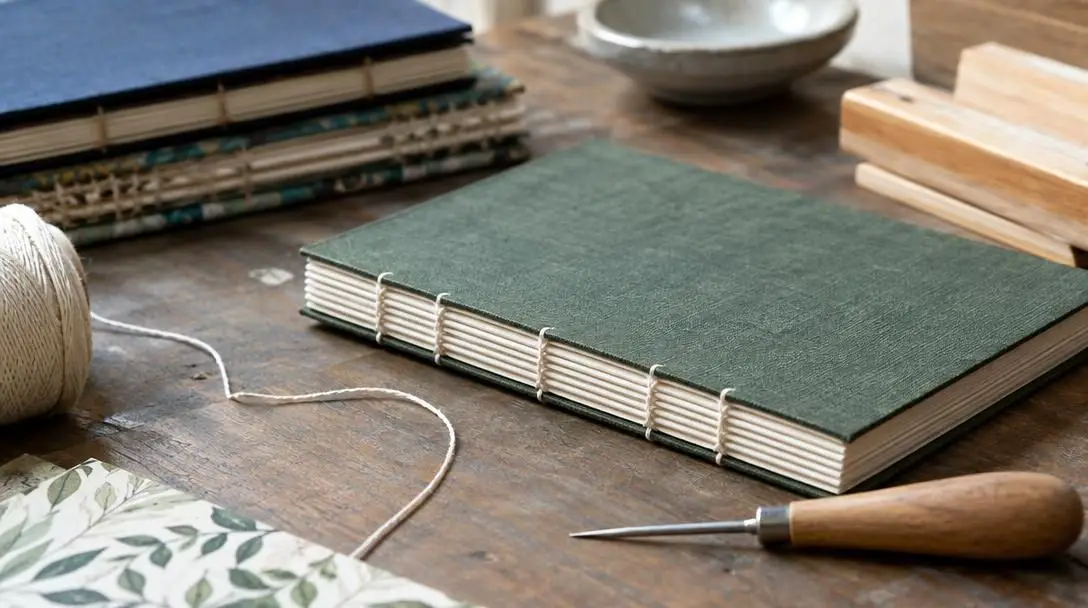
Acid-Free Paper
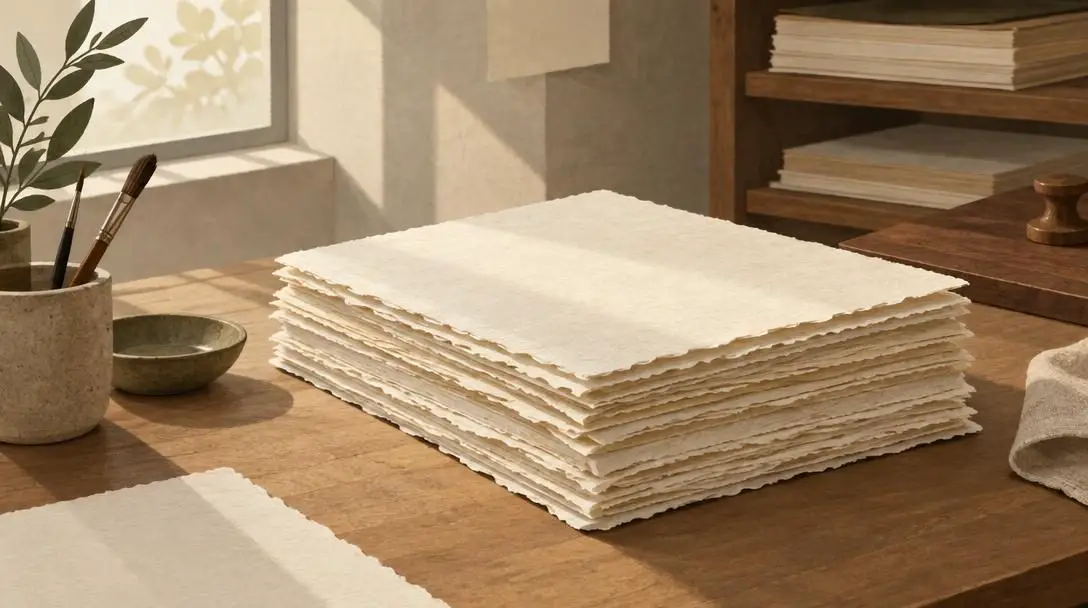
- Primary function: Serves as the writing and drawing substrate for the text block
- Key physical attribute: Neutral pH formulation that resists yellowing and embrittlement
- Ideal applications: Writing, sketching, and mixed-media journaling
Selecting the right text paper dictates how the finished notebook performs. Paper must feature a smooth, even surface suited to your chosen medium, whether that includes fountain pens, graphite, or watercolor washes. Utilizing acid-free stock is critical: papers made without acidic wood pulps resist chemical breakdown, preventing the yellowing, brittleness, and ink bleeding that degrade common commercial papers over decades.
Thread and Needle
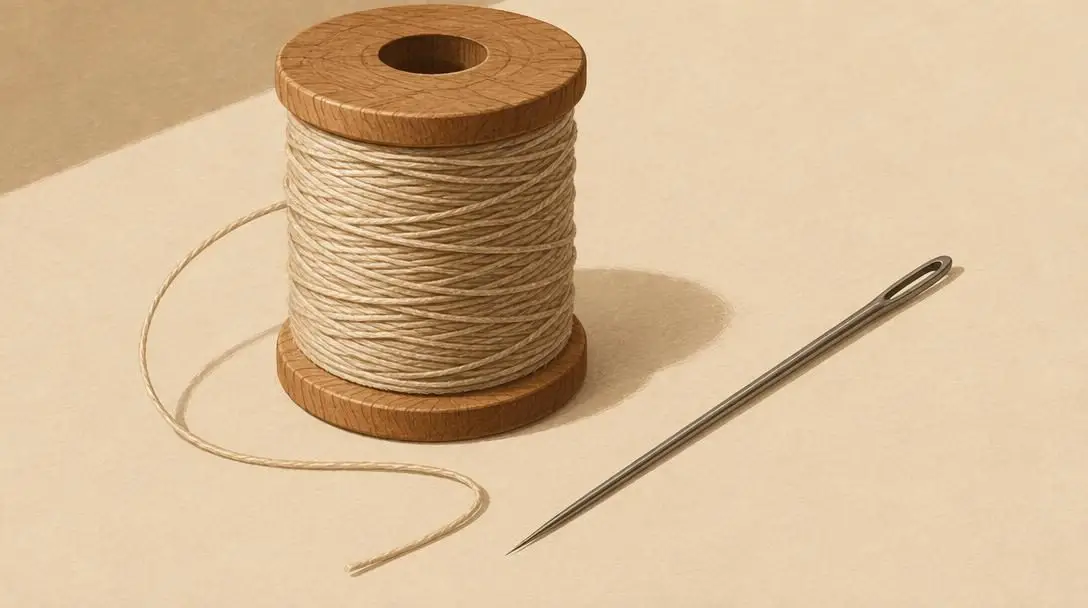
- Primary function: Mechanically fastens nested signatures together along the spine
- Key physical attribute: High tensile strength with a smooth, snag-free exterior
- Ideal applications: Kettle stitches and multi-signature spine assemblies
Sewing the gathered paper sections requires strong thread and a sturdy, dull-pointed or lightly blunted bookbinding needle. The needle must slip easily through pre-pierced stations in the signature folds without tearing the paper fibers. The thread must provide sufficient tensile resistance to hold nested leaves under continuous movement without stretching out, snapping, or cutting into the paper fold lines.
Bone Folder
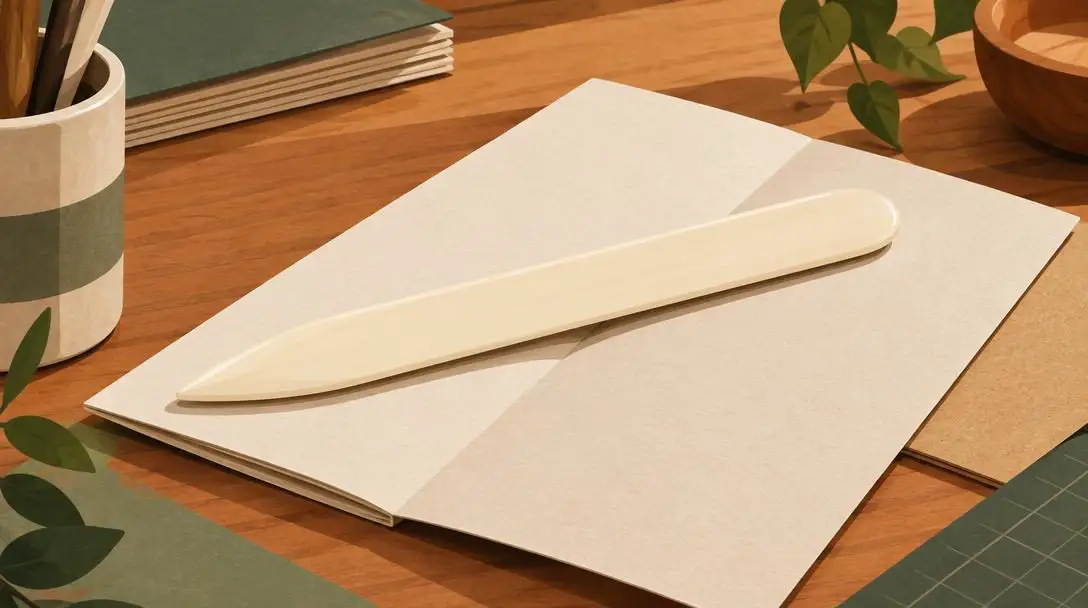
- Primary function: Creasing, scoring, and burnishing paper and book cloth
- Key physical attribute: Hand-carved, ultra-smooth animal bone or synthetic Teflon
- Ideal applications: Folding signatures and adhering cover materials smoothly
The bone folder is a fundamental, hand-held tool featuring tapered edges and a polished body. It is used to generate crisp, razor-sharp creases along signature folds without damaging, burnishing, or tearing paper fibers. Unlike finger pressing, a bone folder shapes paper uniformly while preventing the transfer of natural skin oils, dirt, or moisture onto archival surfaces.
Protective Cover Materials
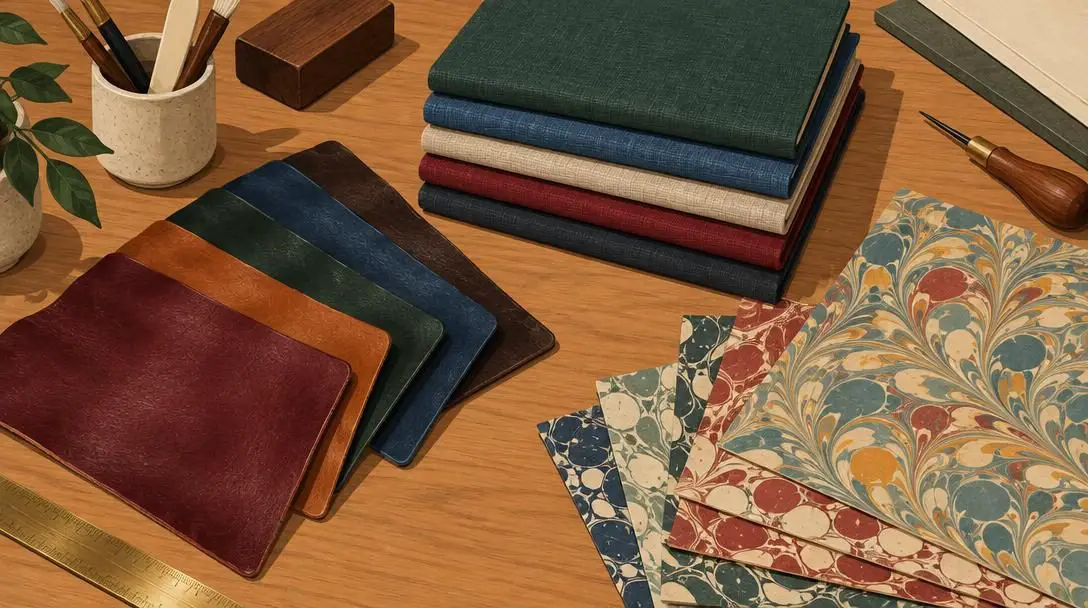
- Primary function: Encapsulates and shields page edges from abrasive wear
- Key physical attribute: Durable flexibility across the hinge joints
- Ideal applications: Hardcover case bindings and flexible softcover wraps
Materials such as top-grain leather, bookbinding cloth, heavyweight handmade papers, or buckram protect the outside of the journal and establish its sensory appeal. This outer layer serves as the front-line barrier against handling abrasion, protecting delicate page corners and absorbing the mechanical strain created whenever the covers swing open.
Structural Adhesive
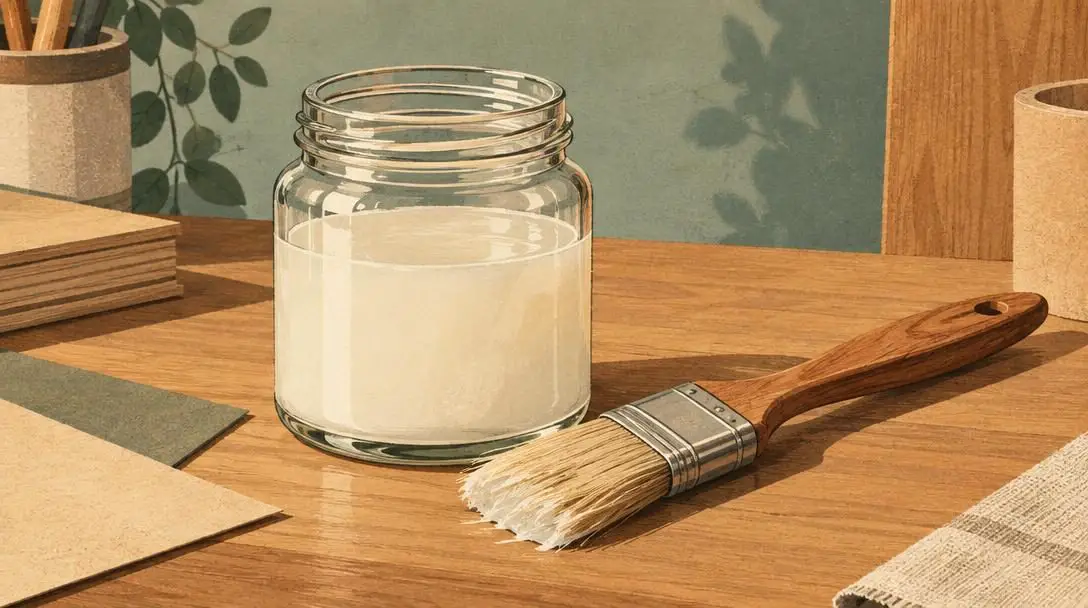
- Primary function: Chemically bonds book cloth, spine linings, and boards
- Key physical attribute: Archival, acid-free formulation that dries flexible
- Ideal applications: Casing the sewn book block into its protective exterior
Specialized bookbinding glue, such as neutral-pH polyvinyl acetate (PVA), is essential for uniting structural components. Standard craft adhesives often dry brittle, discolor, or contract excessively, which can warp paper and split spine joints. Quality bindery adhesives remain permanently flexible after curing, maintaining a resilient grip between organic sheet fibers and outer cover boards across fluctuating temperatures.
| Tool / Material | Primary Role | Key Performance Factor | Common Mistake |
|---|---|---|---|
| Acid-Free Paper | Interior text block leaves | Archival longevity and ink tolerance | Using wood-pulp paper that yellows |
| Thread and Needle | Signature structural joinery | Tensile resistance without elasticity | Using weak thread that snaps under tension |
| Bone Folder | Precision scoring and creasing | Smooth, non-marring bevels | Creasing with fingers, leaving oil marks |
| Cover Material | External physical armor | Hinge flexibility and abrasion resistance | Using overly stiff materials that tear at joints |
| Bookbinding Adhesive | Component lamination and casing | Permanent flexibility upon drying | Applying excess glue, causing surface ripples |
Step-by-Step Guide: Crafting Your First Journal
Constructing a custom notebook requires patience and a systematic approach. By breaking the bindery process down into distinct, logical stages, you can maintain precise alignment and produce a tightly bound book block that will hold up over years of use.
- Preparing the Signatures: Select your text sheets, measure them to the intended spread dimension, and fold each sheet cleanly in half using the bone folder. Group multiple folded leaves into small bundles—typically four to six sheets nested inside each other—to create uniform signatures. Press each signature firmly along the spine to ensure the leaves lay completely flat and align flush across all four outer edges.
- Sewing the Signatures: Mark sewing stations at measured intervals along the outer fold of each signature, piercing through the spine valley with an awl or needle. Align the gathered bundles in order. Thread your needle and sew through the fold line of the first signature, passing out through the stations to connect the second bundle. Use a continuous kettle stitch at the head and foot of the spine to link each new bundle to the preceding one, creating a firm, unified book block.
- Preparing the Cover: Measure the exact length, width, and spine thickness of your newly stitched book block. Cut heavy binder's board to size, leaving an intentional margin of a few millimeters around the head, tail, and fore-edge to shield the interior leaves. Cut your leather, cloth, or decorative paper to accommodate the boards, leaving adequate turn-in margins around the outer edges so the material wraps neatly around the backing boards.
- Assembling the Final Volume: Apply an even, measured coat of bookbinding adhesive across the spine and endpapers of the book block. Carefully align the block within the prepared cover structure, seating the spine squarely into position. Smooth the outer hinges with a bone folder to eliminate air pockets, then place the finished volume between pressing boards under moderate weight until the adhesive cures completely.
Techniques for Decorating and Personalizing Your Journal
A handmade journal serves as a blank canvas for both interior and exterior creative expression. Incorporating mixed-media design elements allows you to transform plain bookcloth and text paper into an expressive, personalized work of art.
Surface Painting, Dyeing, and Stamping
Cover fabrics, heavy watercolor wrappers, and endpapers can be customized using fluid acrylics, textile dyes, or hand-carved stamps. Surface stamping is an accessible choice for beginners seeking to introduce intricate repeat patterns or organic borders without specialized equipment. Applying archival ink pads to carved relief blocks allows makers to adorn plain covers with consistent geometric patterns or botanical motifs.
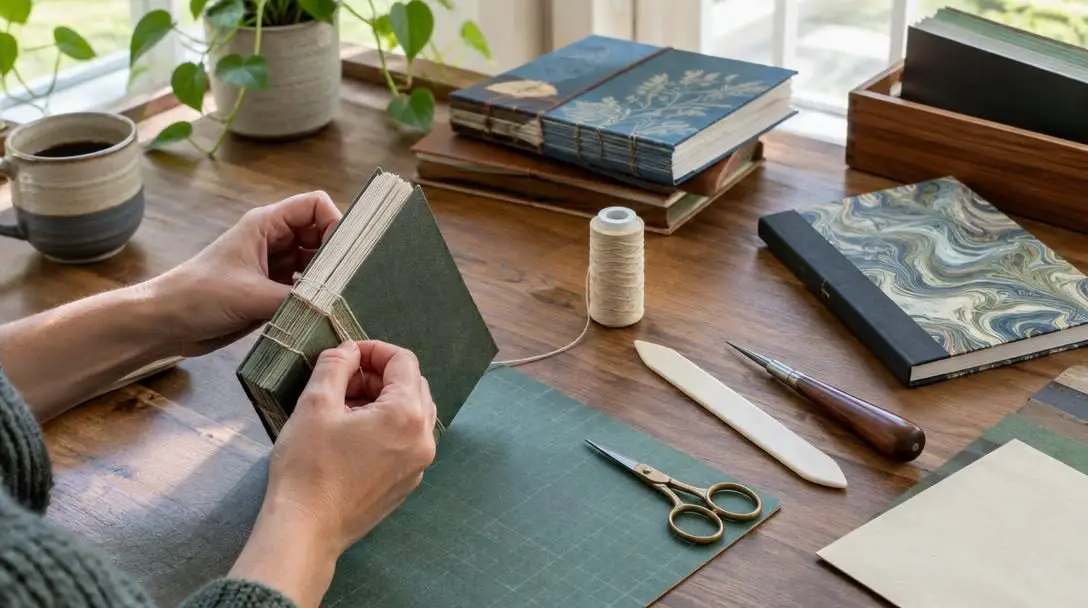
Hand Calligraphy and Monograms
Adding hand-lettered calligraphy brings traditional elegance and historic character to covers, spine labels, and title flyleaves. Whether inscribing a recipient's initials, personal motto, or volume title, hand-drawn letterforms elevate simple notebooks into heirloom presentation pieces. Crisp ink calligraphy on heavier label paper, bordered and adhered to the front cover, creates a timeless, dignified look.
Dimensional Fabric and Cloth Embellishments
Fabric-wrapped hardcovers offer an ideal foundation for dimensional tactile details. Sewers can embellish linen, cotton canvas, or silk book cloth with intricate hand embroidery, decorative stitching, or inset metallic buttons and beads. Securing these accents to the cover material before laminating it to the rigid binder's board prevents internal threads from bulging against the interior pages, adding a rich, sculptural feel to the book.
Curated Journal Prompts and Page Layouts
Personalization goes well beyond the exterior cover. Scribing or stamping structured prompts directly onto signature leaves turns a simple notebook into a guided journal. Markers can map out guided sections for daily reflection, mindfulness exercises, travel logs, or creative writing prompts, encouraging a consistent writing habit whenever the journal is opened.
Common Bookbinding Mistakes and How to Avoid Them
Beginners often make minor oversights that compromise the longevity and finish of their notebooks. Being mindful of these common issues will help you create a sturdier, cleaner volume on your very first try.
- Skipping the Bone Folder: Creasing signatures using bare fingertips leaves loose, rounded folds and transfers natural skin oils and moisture directly onto the paper fibers. Always use a bone folder to compress paper grain cleanly for a compact spine.
- Inconsistent Stitch Tension: Pulling thread with excessive force can rip the paper around pierced stations, while sewing too loosely produces a wobbly book block that sags when shelved. Maintain firm, even, and deliberate tension on every pass through the kettle stitch.
- Overusing Adhesive: Applying glue too heavily saturates paper and cloth fibers, leading to unsightly wrinkles, water marks, and warped cover boards. Apply adhesive in a thin, uniform film using a wide, firm-bristled brush.
- Miscalculating Cover Dimensions: Cutting cover boards to the exact size of the text block leaves the page edges exposed to dirt, bends, and impact damage. Always measure the sewn block carefully and add a 3 to 5 millimeter overhang (the "squares") on the three open sides.
The Therapeutic, Creative, and Archival Benefits
Building a personalized journal offers substantial benefits that extend well beyond the satisfaction of completing a craft project. The tactile, methodical nature of folding paper, sewing signatures, and smoothing bindings encourages mindfulness and active focus, offering a quiet respite from digital screens.
Regular journaling itself is linked to lower levels of stress and anxiety, sharper cognitive recall, and improved emotional clarity. Documenting life events, creative ideas, and personal observations on archival paper provides therapeutic release while establishing a tangible personal time capsule. Decades down the line, a hand-bound volume preserves your handwritten reflections, artwork, and creative growth as an enduring legacy that can be passed down to future generations.
Expanding Your Bindery Skills: Next Steps
Once you have built your first journal using basic nested signatures and a simple kettle stitch, the wider craft of bookbinding invites further exploration:
- Exploring Advanced Bindings: Expand your structural repertoire by learning exposed-spine bindings, intricate multi-needle Coptic stitches, or classic library-style case bindings with woven headbands.
- Adapting for Specific Media: Experiment with varied paper stocks. Heavy cold-press watercolor sheets, toned charcoal paper, or smooth, bleed-resistant fountain-pen paper each require customized signature folding and spacing adjustments to handle spine swell.
- Constructing Dedicated Formats: Tailor future binding projects to specialized functional uses, such as landscape-format field sketchbooks, accordion-fold photo albums, or lie-flat culinary recipe journals.
- Acquiring Dedicated Equipment: As your projects grow in scope, consider investing in traditional workshop equipment, including cast-iron book presses, hardwood sewing frames, and specialized bookbinding awls to streamline production and elevate your craftsmanship.
Frequently asked questions
What is a signature in bookbinding, and how many pages should it contain?
A signature is a bundle of folded sheets nested inside one another down a shared central spine fold. For standard 70 to 90 gsm writing paper, signatures typically consist of four to six folded sheets (yielding 16 to 24 numbered pages per signature). Using fewer sheets prevents the outer leaves from creeping excessively past the inner leaves, resulting in flatter, cleaner book blocks.
Why is the kettle stitch used at the ends of book spines?
The kettle stitch functions as a specialized chain link that locks adjacent signatures together at the head and foot of the spine. By looping the thread through the sewing station of the signature below, it anchors the bundles, prevents the spine from shifting or loosening, and distributes opening strain evenly across the entire book block.
Can I use standard school glue instead of bookbinding adhesive?
Standard craft or white school glues are not recommended for bookbinding because they dry brittle over time and contain high water contents that warp delicate paper and book cloth. Dedicated bookbinding adhesives, such as neutral-pH polyvinyl acetate (PVA), remain flexible after drying, prevent paper cockling, and won't turn yellow or degrade the paper fibers.
How do I prevent my notebook's covers from warping after gluing?
Cover warping occurs when paper, cloth, and binder's board absorb moisture unevenly from adhesive. To prevent this, apply glue quickly in a thin, uniform coat, align the components, and place the drying book between smooth pressing boards under a heavy, evenly distributed weight for at least 12 to 24 hours.
What is the difference between acid-free and regular paper?
Regular paper is often manufactured using groundwood pulp that contains acidic lignin compounds, which break down over time, causing the paper to become yellow, brittle, and fragile. Acid-free paper is processed with neutral or mildly alkaline chemical baths, neutralizing degradation and preserving both the paper structure and the ink applied to it for centuries.
The bottom line
Bookbinding is an accessible, deeply rewarding craft that combines structural precision with limitless creative freedom. By mastering core principles—such as assembling uniform signatures, maintaining steady stitch tension, and applying archival adhesives—anyone can transform simple sheets of paper into a durable, heirloom-quality journal. Whether built to preserve daily reflections, display fine art, or serve as a thoughtful handmade gift, a custom-bound book provides an enduring home for your most meaningful work.