The Art of Crossword Puzzle Construction: How Puzzles Are Made and Who Makes Them
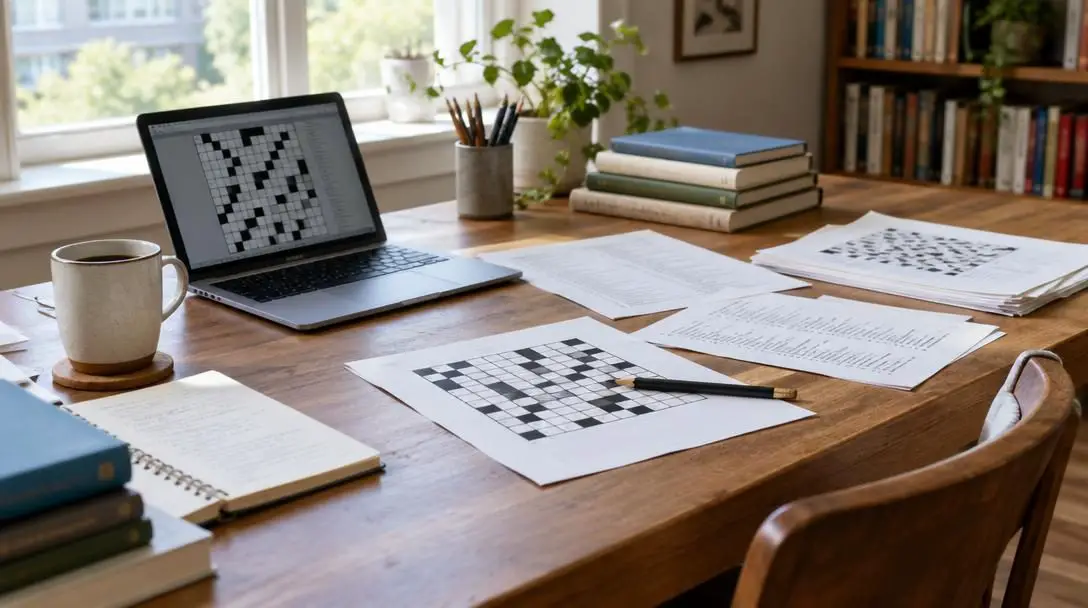
For more than a century, crossword puzzles have occupied a central place in daily intellectual recreation, challenging minds across breakfast tables, commuter trains, and digital screens. At its fundamental level, a crossword presents an interlocking matrix of black and white squares where every intersecting entry must form a valid, verifiable word or phrase in both directions. While millions of solvers regularly crack clues through deduction and lateral thinking, the reverse discipline of assembling those grids remains a mystery to most.
Constructing a crossword puzzle is an intricate craft that requires both creative ingenuity and rigid structural discipline. Unlike solvers, who begin with an existing blueprint and work toward answers, puzzle makers—traditionally known as cruciverbalists—must build that entire architectural structure from scratch out of raw vocabulary. From managing symmetric patterns and grid mechanics to composing equitable clues, construction demands an intimate awareness of language, mathematical balance, and editorial voice.
Key takeaways
- Crossword puzzle construction demands a balance between rigid grid geometry, strict symmetry, and creative wordplay.
- Grid formats range from bite-sized 5×5 mini puzzles to traditional 15×15 daily newspapers and expansive 21×21 weekend grids.
- Leading constructors and editors like Will Shortz, Merl Reagle, and Liz Gorski have elevated the medium through distinctive cluing, humor, and visual artistry.
- The construction workflow prioritizes theme creation and long entry placement before filling surrounding letters or writing clues.
- Digital platforms like Crossword Nexus and mobile apps now coexist alongside the tactile tradition of pencil-and-paper solving.
The structural blueprint: Grid geometry and themes
Every crossword puzzle begins with physical or digital boundaries defined by a grid. Grids are not merely arbitrary checkerboards; they are governed by established industry conventions that dictate how words interlock, how open white spaces flow, and where black squares may be placed. Standard rules ensure that every single letter square participates in both an Across entry and a Down entry, eliminating isolated islands and ensuring total cross-referencing potential for the solver.
The scale of the grid dictates the complexity and thematic scope of the puzzle. Quick-play mobile games often use miniature dimensions that emphasize tight, rapid-fire letter interactions. In contrast, standard daily newspaper puzzles adhere to standard dimensions that balance accessible vocabulary with clever thematic twists, while weekend editions expand into larger formats that accommodate ambitious, multi-word phrases.
| Grid Format | Standard Dimensions | Typical Context | Primary Design Focus |
|---|---|---|---|
| Mini Grid | 5×5 squares | Quick digital apps and mobile games | Compact letter clusters and rapid solves |
| Daily Standard | 15×15 squares | Daily print newspapers and online platforms | Rotational balance and symmetrical theme placement |
| Weekend / Sunday | 21×21 squares | Expanded Sunday newspaper editions | Expansive themes, multiple long entries, and complex fill |
Once grid dimensions are selected, constructors typically establish the theme. A central theme provides the structural backbone and narrative personality of the puzzle. Themes may draw from a specific category, such as culinary terms, or rely on sophisticated wordplay, such as humorous sound changes, pun-altered idioms, or shared letter substitutions. Because theme answers represent the longest entries on the board, they dictate where the surrounding black squares must sit and limit the remaining space available for standard fill words.
Constructing a puzzle is vastly different from solving one, requiring the maker to build a balanced, solvable architecture out of raw language.
Key pioneers and curators in modern crossword construction
Behind the daily grids published in national periodicals sits a community of dedicated creators. While many constructors work as independent freelancers submitting original drafts to major publications like The New York Times and The Wall Street Journal, several influential figures have uniquely shaped the modern landscape of the craft.
Will Shortz
- Role: Crossword Editor
- Primary Outlet: The New York Times
- Craft Specialty: Puzzle curation, cluing difficulty balance, and editorial standards
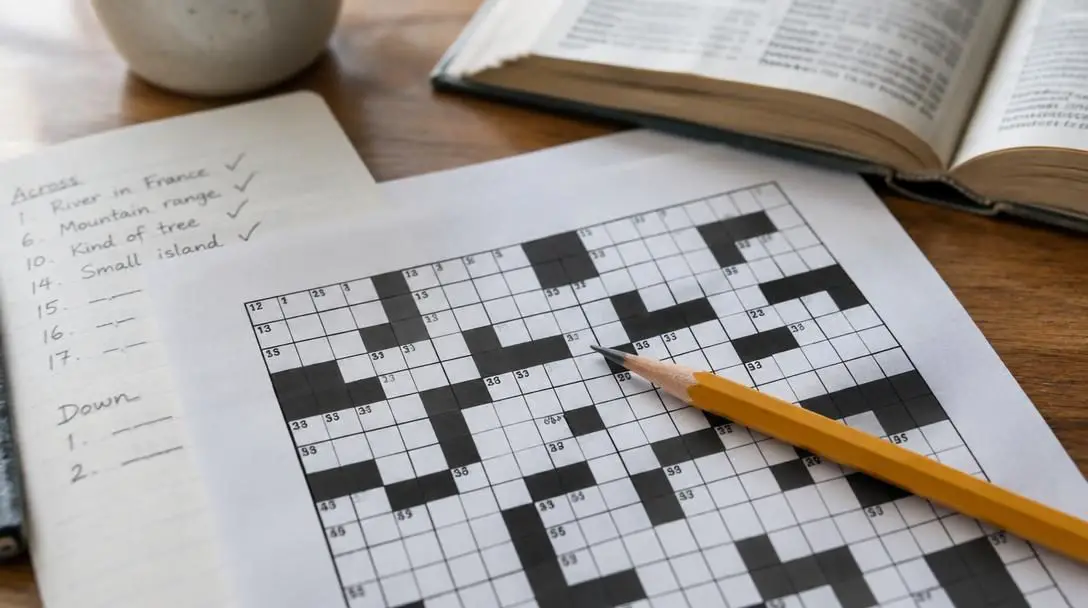
As the long-standing editor of The New York Times crossword puzzle, Will Shortz has defined the standard of excellence for modern cruciverbalism. Rather than drafting every grid himself, Shortz serves as the ultimate curator and editor, reviewing submissions from freelance constructors worldwide. His editorial approach emphasizes fresh vocabulary, progressive difficulty scaling throughout the week, and meticulously polished clues that challenge solvers through clever misdirection and wordplay.
Merl Reagle
- Role: Master Constructor
- Primary Outlet: Nationally syndicated Sunday newspapers
- Craft Specialty: Inventive themes, linguistic humor, and pun-driven layouts
Widely celebrated as one of the most entertaining constructors in puzzle history, Merl Reagle became famous for his expansive Sunday newspaper crosswords. Reagle was renowned for his playful wit, constructing grids around elaborate, pun-heavy themes that turned familiar phrases inside out. His work demonstrated that crossword puzzles could be genuine comedic storytelling vehicles, combining rigid architectural symmetry with delightful linguistic trickery.
Liz Gorski
- Role: Architectural Constructor
- Primary Outlet: Major national publications
- Craft Specialty: Visual grid patterns, connective lines, and graphic themes
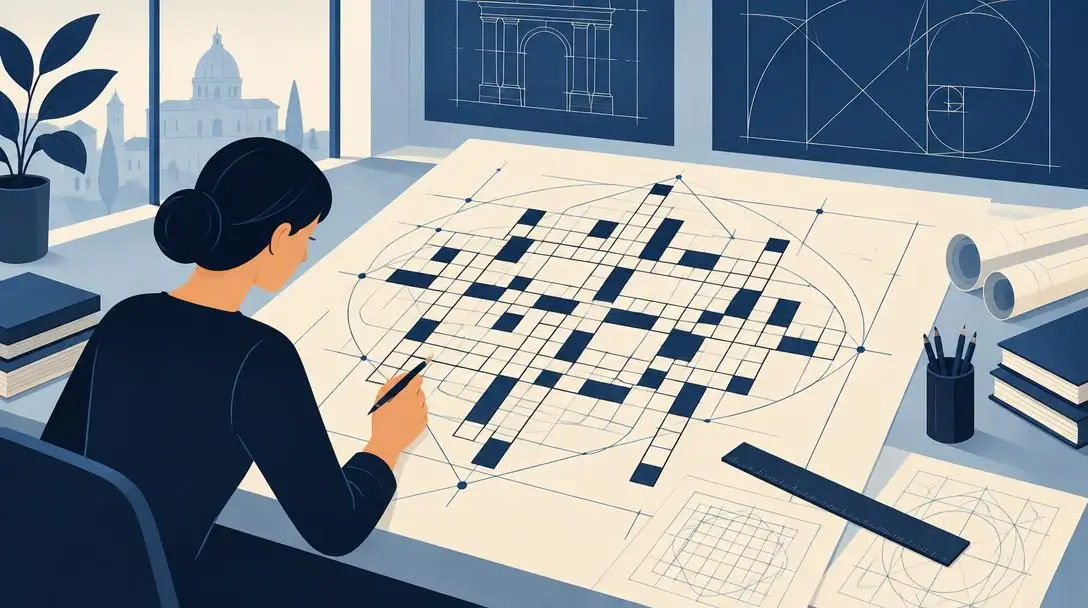
Renowned for pushing the visual boundaries of the medium, Liz Gorski has earned acclaim for creating visually striking puzzles that bridge wordplay and graphic art. Her hallmark designs frequently integrate visual themes, using the arrangement of black squares or connecting lines drawn between specific answer entries to reveal recognizable shapes, holiday figures, or architectural outlines right inside the completed grid.
The seven-step construction process
Transitioning from a solver to a constructor requires an orderly, systematic workflow. Attempting to fill a grid at random inevitably leads to unsolvable dead ends. Professional constructors use a step-by-step approach to move from an initial concept to a published grid.
- Select target format and grid dimensions: Choose the appropriate scale for the puzzle. Beginners often experiment with a 5×5 mini grid before advancing to the standard 15×15 daily layout or the expansive 21×21 weekend framework.
- Develop a central theme: Brainstorm a coherent set of related phrases or pun-based modifications. Ensure that these theme answers have matching letter lengths so they can be arranged symmetrically across the grid.
- Place the theme entries: Lock your longest themed answers into the empty board before placing any other words. These entries act as structural pillars that cannot be altered later without rebuilding the entire puzzle.
- Design the black and white square pattern: Build the black square layout around your theme entries. Ensure the grid maintains visual balance and that every square belongs to both an Across and a Down word without isolating any corner.
- Fill the non-themed entries: Populate the open spaces with common, accessible vocabulary. Work through interconnected letter junctions, balancing vowels and consonants to keep the letter flow smooth and natural.
- Draft the clues: Write clear, clever clues for every entry. Balance direct dictionary definitions with wordplay, lateral thinking, and cultural allusions, matching the overall intended difficulty of the venue.
- Test-solve and revise: Put the finished puzzle through a comprehensive audit. Work through the puzzle fresh or provide it to a test solver to catch awkward intersections, repetitive entries, or ambiguous clues before publication.
Navigating quality: Fatal flaws in grid design and cluing
A poorly built puzzle causes frustration rather than satisfaction. Constructors must constantly evaluate trade-offs between ambitious theme material and overall grid quality. When constructors push for overly complex entries without sufficient flexibility, the solving experience suffers across several common failure points.
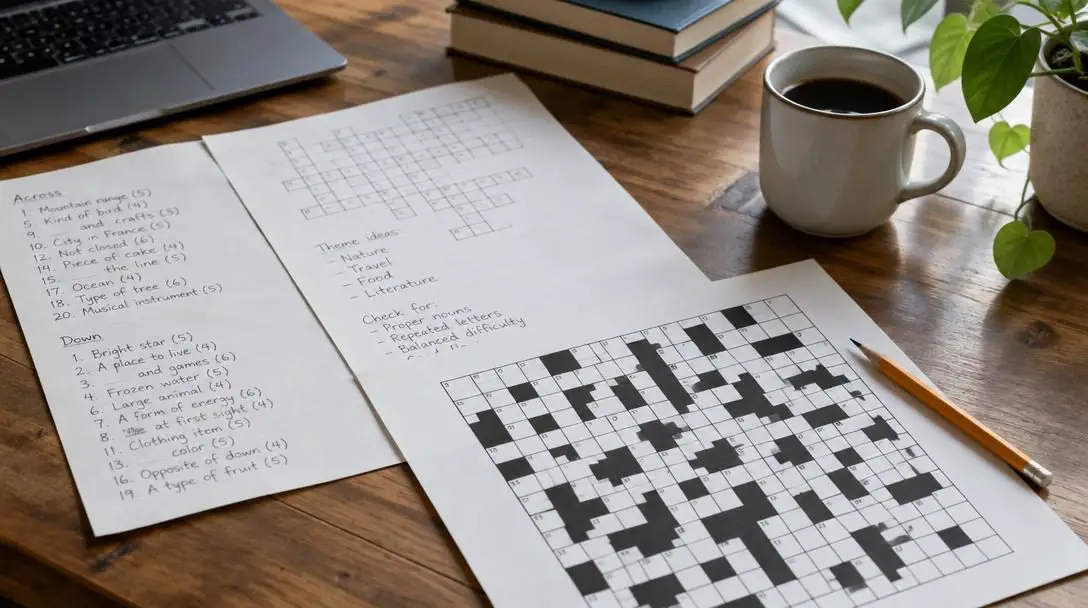
- Unfair and obscure crossings: An intersection between two highly obscure proper nouns, unusual foreign terms, or specialized jargon creates an unfair guessing point. Solvers should always have a fair chance to deduce a missing letter through its crossing entry.
- Neglecting letter placement: Jamming uncommon consonants like J, Q, X, or Z into tight corners severely restricts intersecting options, often forcing awkward abbreviations or obscure fill words into the surrounding area.
- Overloading on low-quality fill: Relying on arbitrary abbreviations, obscure partial phrases, or archaic dictionary terms compromises the puzzle's elegance. High-grade construction emphasizes lively, everyday language over desperate compromises.
- Imbalanced clue phrasing: Clues that are either excessively literal or impenetrably cryptic drain the joy of solving. Effective cluing walks the fine line between fair instruction and playful misdirection.
- Broken symmetry and disconnected flow: Placing black squares haphazardly can create choked letter passages or completely isolated puzzle quadrants, turning one cohesive board into disjointed mini-puzzles.
From newsprint to screen: The evolving toolset of cruciverbalism
The craft of puzzle construction has undergone a profound transformation over recent decades. Where early constructors plotted words on blank graph paper with pencils and physical reference dictionaries, modern cruciverbalists harness specialized digital tools that streamline the mechanical aspects of grid design.
Digital search platforms like Crossword Nexus provide expansive clue and answer databases, allowing both constructors and enthusiasts to explore letter patterns, verify word lengths, and analyze how complex letter combinations interlock. These platforms eliminate hours of manual cross-referencing, giving constructors more freedom to focus on imaginative themes, refined clue writing, and overall puzzle voice.
Distribution has evolved alongside the construction process. Dedicated applications like the NYTimes Crossword bring daily word puzzles directly to smartphones and tablets, offering interactive features, automatic error checks, and digital community leaderboards. These digital tools have introduced cruciverbalism to a wider audience than ever before.
At the same time, an active community of independent and freelance constructors publishes inventive puzzles on personal blogs and social media platforms. These independent outlets frequently embrace modern slang, varied cultural references, and experimental grid shapes that challenge traditional newspaper conventions. Yet, despite these digital innovations, the classic experience of solving a physical newspaper grid with a pencil remains an enduring, deeply tactile ritual that continues to thrive.
Frequently asked questions
What is a crossword puzzle constructor called?
A crossword puzzle constructor is often referred to as a cruciverbalist. The term also broadly describes anyone who is an avid enthusiast or solver of crossword puzzles.
What are the standard dimensions for a newspaper crossword puzzle?
The standard size for a daily newspaper crossword puzzle is 15×15 squares. Quick digital puzzles frequently use 5×5 mini grids, while large Sunday or weekend editions typically use 21×21 grids.
Why must theme entries be placed in the grid first?
Theme entries are usually the longest words or phrases in the puzzle and have fixed letter counts. Placing them first allows the constructor to set the black squares symmetrically around them, ensuring the remaining white spaces can be cleanly filled.
What makes a crossword intersection unfair?
An intersection is considered unfair when two obscure, unfamiliar, or specialized words cross at the same square. If a solver does not know either word, they cannot deduce the shared letter through cross-referencing and are forced to guess blindly.
How do digital tools assist modern crossword constructors?
Digital tools and platforms like Crossword Nexus assist constructors by searching dictionaries, matching letter patterns, evaluating grid density, and verifying that every intersecting word forms valid language, saving time during the drafting phase.
The bottom line
Crossword puzzle construction is a unique meeting point of architectural balance, expansive vocabulary, and playful deception. Whether built for a national broadsheet by seasoned veterans or shared independently online by passionate newcomers, each grid represents hours of thoughtful curation. As digital applications and databases continue to modernize the craft, the heart of cruciverbalism remains unchanged: delivering an engaging, fair, and satisfying linguistic duel between constructor and solver.