How To Become A Master Scrabble Player
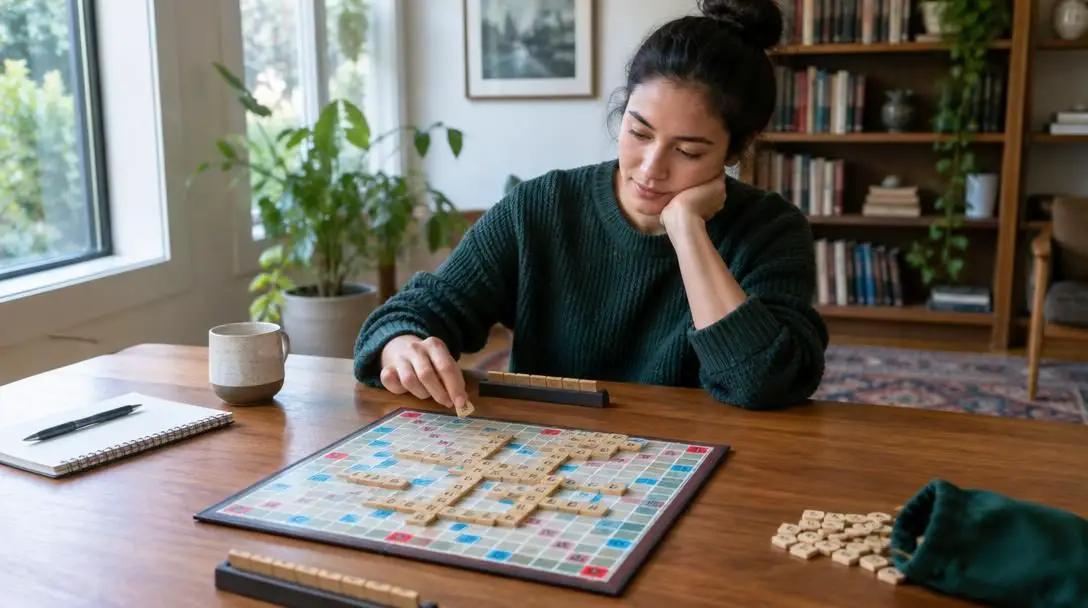
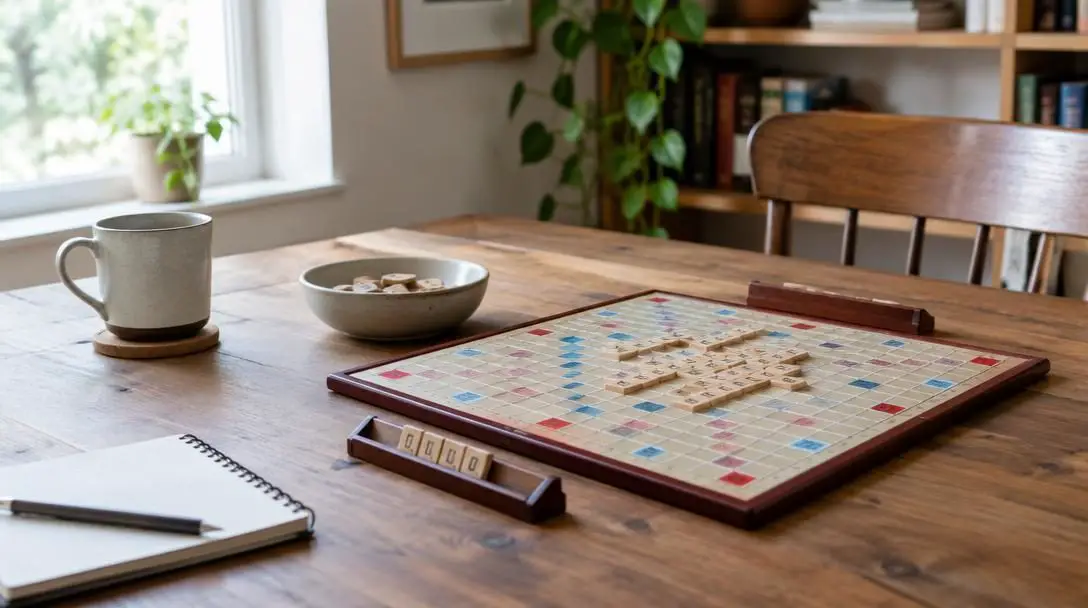
Scrabble is a classic and timeless game that has entertained players of all generations, combining the mechanics of an anagram puzzle with the spatial geometry of a crossword board. While many casual players treat it as an informal family pastime, competitive word play reveals a deep discipline that balances linguistic breadth with mathematical strategy. Across the globe, dedicated clubs and tournaments demonstrate that winning consistently requires far more than simply memorizing long or obscure words.
To move from a casual living-room participant to an advanced board master, players must learn how tile distribution, spatial positioning, and defense intersect. Every turn is an optimization puzzle where the board shifts between offensive scoring lanes and defensive hazards. By looking past immediate instincts and understanding the foundational mechanics of the game, any player can begin making calculated, deliberate choices on every turn.
Key takeaways
- Success in Scrabble hinges on understanding tile values, board geometry, and the mathematical value of intersecting plays.
- Mastering short two-letter words and basic grammatical affixes unlocks essential parallel scoring opportunities.
- Blank tiles and high-value letters must be preserved for strategic multipliers rather than expended on low-yield turns.
- Maintaining a balanced rack of vowels and consonants ensures steady, consistent scoring throughout a match.
- Adjusting board pacing based on whether you are leading or trailing protects point leads and creates comeback opportunities.
Core mechanics and scoring systems
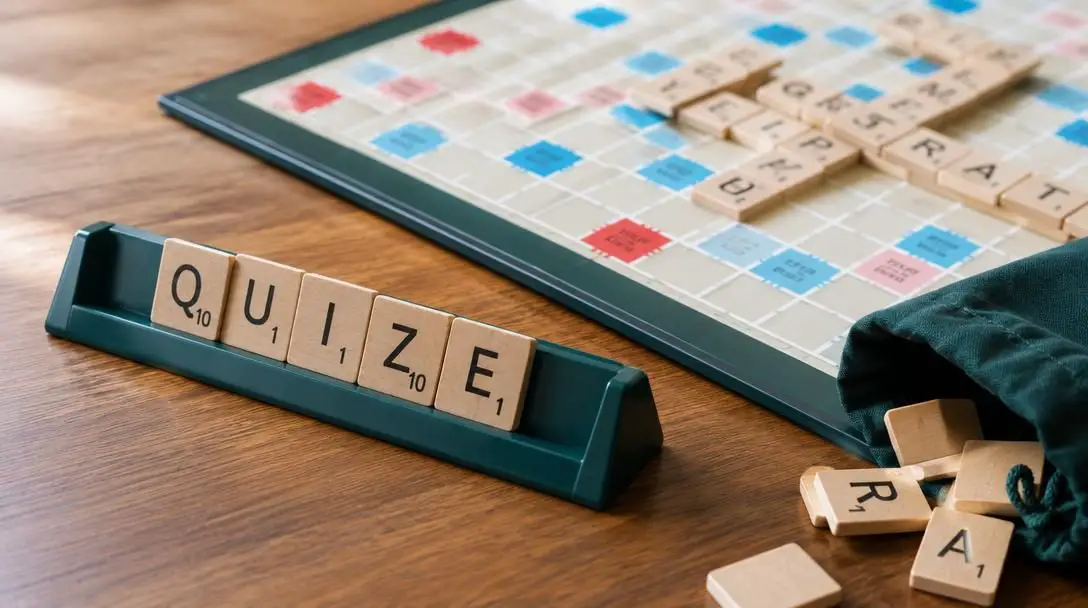
Scrabble functions through the careful interaction of letter distribution, tile values, and spatial positioning across the grid. Every letter in the game has a specific point value assigned to it, which directly reflects how common or difficult that letter is to place within standard vocabulary. Understanding the distinct point values of each letter enables you to make better decisions every time you draw and arrange your rack.
Letters such as E and T carry low point values because they are abundant and integrate seamlessly into countless common words. In contrast, difficult letters like Q and Z carry high point values that offer massive scoring rewards when placed effectively. If high-value tiles are placed haphazardly on standard grid spaces, their scoring potential is largely squandered. To achieve high scores, players must coordinate these difficult tiles with bonus squares that multiply individual letter values or overall word scores.
| Tile category | Representative tiles | Point profile | Primary strategic role |
|---|---|---|---|
| High-value tiles | Q, Z | High point values | Targeting multiplier squares to produce substantial scoring swings |
| High-frequency tiles | E, T | Low point values | Building word foundations, connecting plays, and managing rack flexibility |
| Blank tiles | Blank (wildcard) | Zero points | Bridging disconnected words and completing high-scoring plays |
Blank tiles represent another critical mechanic. Although a blank awards zero points on its own, it functions as any letter in the alphabet, making it the most flexible asset on your rack. A blank can bridge two distant sections of the grid, complete an intricate word, or help you use all your tiles in a single turn. Expending a blank tile on an ordinary, low-scoring play is one of the most common strategic mistakes newer players make.
Mastery relies on seeing the grid not as isolated words, but as an interconnected network of tiles where every connection yields points.
Beyond individual tile values, competitive scoring relies heavily on parallel and perpendicular word formation. When you place a word adjacent to an existing play, you score not only your primary word but also every new perpendicular word formed by touching letters. In these scenarios, two-letter words become the fundamental building blocks of high-scoring turns. Sliding a word parallel to another can create several two-letter words at once, accumulating points for each connection on a single turn.
Essential digital resources for vocabulary development
Expanding your working vocabulary is a necessary requirement for improving your performance on the board. While the official Scrabble dictionary serves as the definitive reference for tournament-legal terms, modern digital resources provide accessible ways to study definitions, inspect anagrams, and analyze letter combinations during daily practice.
Merriam-Webster

- Tool type: Digital dictionary and reference platform
- Key utility: Definition lookups and linguistic exploration
Merriam-Webster serves as a premier resource for broadening linguistic knowledge. By checking definitions and studying unfamiliar terms regularly, players can cement new vocabulary into long-term memory rather than relying on rote memorization alone. Incorporating daily word lookups into your routine ensures steady lexical growth.
Dictionary.com
- Tool type: Online vocabulary resource and mobile app
- Key utility: Daily word study and quick word searches
Dictionary.com provides quick lookups and accessible word-of-the-day features that help players encounter varied terms. Regularly using the app during spare moments exposes players to unusual letter pairings and less common stems that often appear on the Scrabble board.
Word Finder
- Tool type: Anagram solver and letter-combination utility
- Key utility: Exploring letter arrangements and word permutations
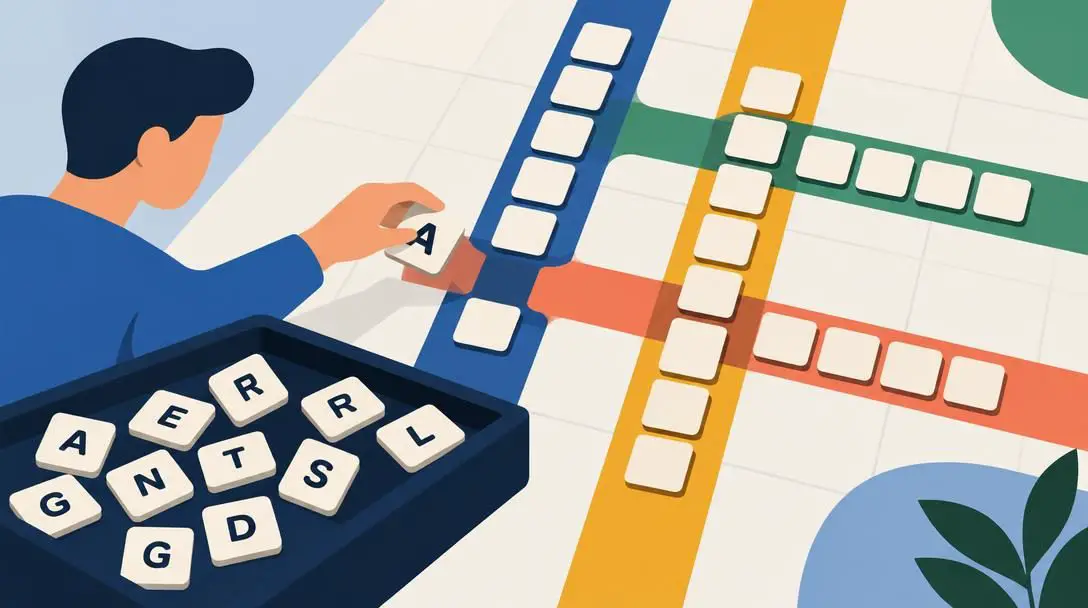
Word Finder allows players to input specific tile combinations to discover valid words and anagram possibilities. This tool is particularly useful for post-game analysis, helping players see scoring opportunities they missed on specific racks during practice matches.
Strategic steps to build board mastery
Progressing from a beginner to an advanced player requires disciplined study and deliberate board habits. By practicing specific tactical concepts during each game, you can systematically raise your average turn score.
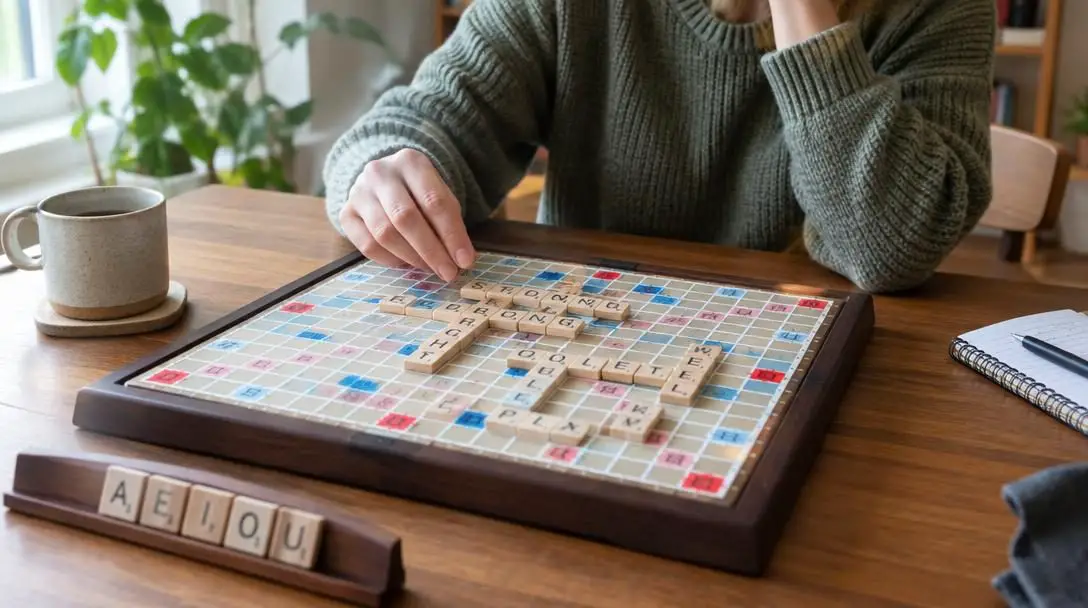
- Commit to daily vocabulary study: Memorize small word lists every morning or evening using the official Scrabble dictionary. Expanding your vocabulary directly increases the number of valid plays available to you on any given rack.
- Memorize the complete two-letter word list: Short words allow you to escape tight board sectors, execute dense parallel plays, and shed difficult letters without conceding board control to your opponent.
- Master prefixes and suffixes: Look for opportunities to extend existing words on the grid. Adding prefixes such as un- or re-, or suffixes such as -ed, -ing, and -s, allows you to capture multipliers while scoring points from letters already played.
- Prioritize board positioning and defense: Evaluate where your tiles land in relation to open multiplier squares. Avoid placing tiles that hand your opponent an easy pathway to a triple word score or a high-scoring hook.
- Deploy blank tiles with clear purpose: Reserve your blank tiles for turns that yield substantial point totals or allow you to play all your tiles at once, rather than burning them on minor turns.
- Track your opponent's tendencies and tile pool: Observe what kinds of plays your opponent makes, watch whether they are working to open or close the board, and anticipate what letters they might hold to counter their strategy.
- Compete against a diverse range of opponents: Playing exclusively against the same partner causes tactical stagnation. Competing against players of varying skill levels exposes you to new defensive maneuvers and board configurations.
Common strategic mistakes to avoid
Even players with expansive vocabularies frequently lose matches due to avoidable board errors. Correcting these recurring pitfalls will immediately safeguard your point totals:
- Squandering high-value tiles on plain squares: Playing tiles like Q or Z on standard squares without multipliers wastes their point-generating leverage. Always look for double or triple letter scores to amplify high-value tiles.
- Burning blank tiles prematurely: Using a blank tile on a low-scoring turn strips your rack of its most powerful problem-solving tool without providing a meaningful scoring advantage.
- Ignoring two-letter connectors: Overlooking short words limits your mobility on crowded boards and prevents you from scoring multiple words in a single turn via parallel placement.
- Overlooking affix hooks: Forgetting to check if an opponent's word can accept an -s, -ed, or re- means leaving easy points on the board.
- Neglecting board defense: Focus on net scoring rather than gross scoring. If your 30-point play immediately opens a 50-point lane for your rival, the play is a net loss.
- Limiting practice to familiar rivals: Sticking to a single opponent prevents you from learning how different players manage risk, pacing, and defensive locking.
Advanced rack management and board pacing
Advanced Scrabble play requires looking beyond the immediate turn to manage what happens next. A master player rarely chooses a move based solely on its raw score; they also assess rack balance. Leaving an unplayable combination of seven consonants or seven vowels on your rack will cripple your scoring over the following turns. Maintaining a healthy ratio of vowels to consonants ensures that you remain flexible, regardless of what tiles you draw from the bag.
Game pacing is equally vital. Depending on the score margin and the number of tiles remaining, you must actively decide whether to open up the board or lock it down. If you hold a commanding lead, closing down open lanes and blocking access to bonus squares minimizes your opponent's comeback chances. Conversely, if you are trailing, your priority must shift toward creating wide-open lanes and fresh multiplier opportunities to manufacture high-scoring turns.
Frequently asked questions
Why are two-letter words so important in competitive Scrabble?
Two-letter words serve as the essential connectors of the board. They enable parallel plays where a newly placed word scores alongside several perpendicular words simultaneously, and they provide an escape route when you need to play in cramped spaces.
When is the best time to play a blank tile?
Blank tiles are best reserved for high-scoring plays or turns where you can use all the tiles on your rack. Because they award zero points on their own, their value comes entirely from flexibility; using them on low-scoring words wastes their strategic potential.
How do prefixes and suffixes help improve scoring?
Prefixes like "un-" and "re-", along with suffixes like "-s", "-ed", and "-ing", allow you to hook onto existing words already on the grid. This lets you score points from previously played tiles while reaching bonus multiplier squares that were otherwise inaccessible.
What does rack balance mean and why does it matter?
Rack balance refers to keeping a workable mixture of vowels and consonants on your rack after making a move. Managing what tiles remain behind ensures you do not get stranded with an unplayable, vowel-heavy or consonant-heavy rack on future turns.
How should my strategy change if I am losing a match?
When trailing, you should aim to open up the board by playing words into open space, creating new lanes and hooks that grant access to multiplier squares. This opens up scoring volatility, which gives you the opportunities needed to mount a comeback.
The bottom line
Becoming an accomplished Scrabble player is a deliberate journey that blends vocabulary growth, spatial awareness, and game theory. True mastery does not come from memorizing obscure long words alone; it comes from maximizing tile values, maintaining balanced racks, exploiting two-letter parallel connections, and carefully managing board defense. By studying systematically, reviewing your games with digital resources, and testing your skills against varied opponents, you can transform your approach and master the board.