The Art of Scrapbooking: Preserving Memories Through Craft
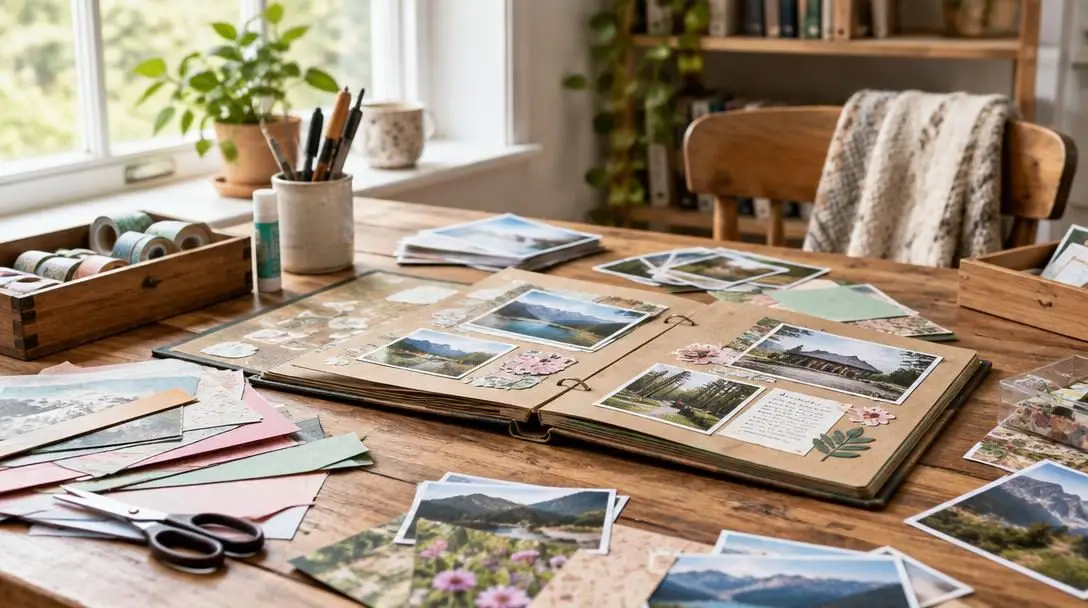
The human impulse to document personal milestones, meaningful relationships, and significant daily moments has existed for centuries. Transforming these memories into creative, tangible keepsakes allows people to build physical archives that bridge personal history with visual artistry. Through the careful combination of photographs, ephemera, written commentary, and decorative media, scrapbooking has grown from an informal gathering of printed items into an internationally celebrated creative pursuit that preserves life stories for future generations.
Whether assembling a simple record of a family afternoon or designing an elaborate, multi-layered album commemorating major life milestones, scrapbooking provides a hands-on approach to storytelling. By exploring the craft's historical evolution, mastering foundational layout techniques, and understanding essential archival preservation methods, creators can produce durable albums that safeguard personal heritage against the passage of time.
Key takeaways
- Scrapbooking evolved from 16th-century memorabilia albums into a modern global pastime shaped by innovations like Kodak's 1900 photo album and 1950s crafting materials.
- Using acid-free adhesives, papers, and protective sleeves is vital to prevent photographs and paper keepsakes from fading and deteriorating.
- Successful layouts rely on deliberate visual hierarchy, thoughtful color harmony, and a balance between imagery and written reflections.
- Creative scrapbooking provides notable wellbeing benefits, including reduced stress and anxiety, sharpened concentration, and artistic self-expression.
The historical evolution of scrapbooking
The art of preserving memories through craft has been an enduring tradition that dates back as far as the 16th century. Long before the advent of photographic film, individuals assembled personal collections of memorabilia to safeguard correspondence and creative works that carried aesthetic or sentimental value. These early albums brought together hand-written letters, greeting cards, drawings, and printed pictures, functioning as personal archives for families and individuals seeking to capture their private histories.
By the 19th century, scrapbooking took on a form closer to what we recognize today. Crafters in this era frequently gathered newspaper clippings, broadsides, and printed ephemera, using scrapbooks as practical tools to document significant political and social issues. Rather than focusing solely on domestic life, these 19th-century volumes served as tangible scrap-collections of public discourse, civic debates, and historical movements, preserving contemporary perspectives alongside family records.
The focus of the craft shifted toward everyday family life and personal leisure at the beginning of the twentieth century, driven by major technological shifts in consumer photography:
- 1900: The Kodak company introduced the first ready-made photo album specifically designed to store photographs alongside memorabilia, removing the need for custom bookbinding or makeshift blank ledgers.
- 1920s: As personal photography flourished across households, scrapbooking established itself as a widespread, popular pastime across the United States.
- 1950s: The craft became a firmly established domestic hobby, catalyzed by the commercial availability of colorful craft papers, decorative stickers, and die cuts that provided fresh avenues for artistic personalization.
- Present Day: Scrapbooking is a worldwide phenomenon, practiced both through traditional tactile scrapbooks and digital software platforms that allow crafters to design pages on computers and print them for physical display.
Preserving memories through craft bridges personal history with visual artistry, creating tactile archives that endure for future generations.
How the scrapbooking process works
At its core, scrapbooking is an organized creative process that takes disparate items—such as printed photographs, paper remnants, and written thoughts—and arranges them onto durable sheets to build an engaging, cohesive narrative. A finished page can stand alone as an individual composition or form part of an interconnected, multi-page volume that explores a broad theme, such as a family history, travel journey, or celebratory milestone.
The physical base of every layout is the paper. The base sheet must possess sufficient thickness and strength to support the combined weight of mounted photos, decorative paper layers, and dimensional embellishments. Crafters position their focal photographs onto this foundational sheet, frequently matting them with contrasting border cardstock to make the images stand out visually. Paper ephemera, such as event tickets, receipts, and postcards, are then added alongside hand-lettered or printed commentary to give depth to the imagery.
In addition to traditional cut-and-paste methods, digital scrapbooking has become a prominent modern avenue. Digital crafting lets makers compose full page layouts on a computer using digital design elements, custom fonts, and digital photographs. Once completed, these digital layouts can be printed out directly and placed into physical scrapbooks, giving crafters flexibility in how they combine digital efficiency with traditional physical album storage.
Essential tools and materials for your workstation
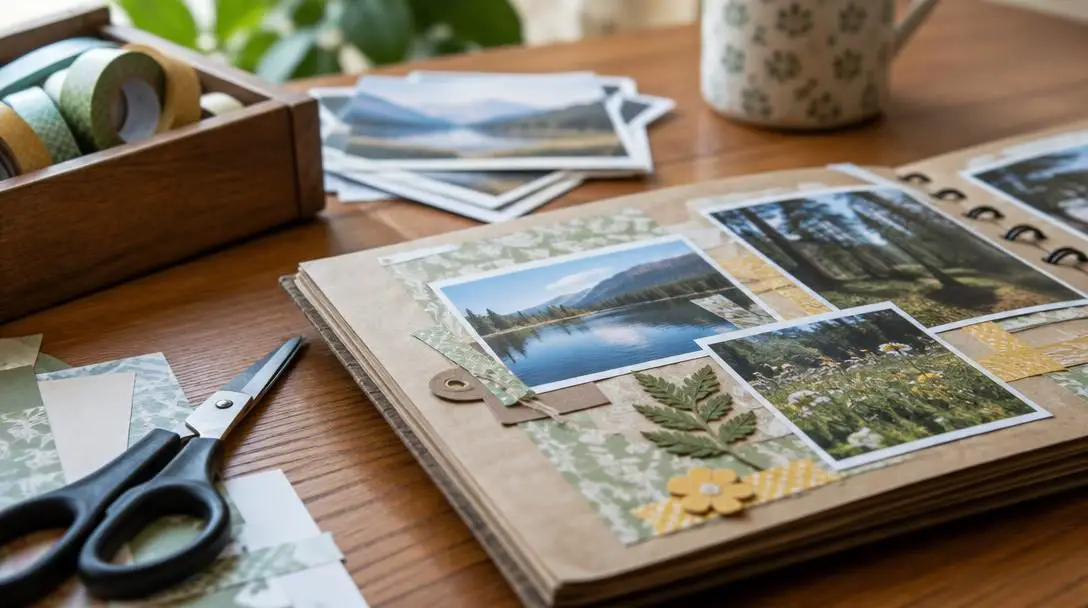
Assembling a scrapbooking workspace requires only a handful of fundamental supplies to get started, though the variety of tools can expand as crafters explore more elaborate creative techniques. Selecting the right materials ensures that page assembly is smooth and that the finished project remains chemically stable over time.
- Cutting tools: Clean, accurate lines are essential for a polished album. Crafters rely on standard craft scissors for detailed trimming around shapes and photographs, alongside a dedicated paper trimmer for producing straight, consistent edges on cardstock.
- Paper selections: Sturdy cardstock forms the structural foundation of the layout. Crafters complement this base with patterned papers to introduce thematic designs, as well as specialty sheets such as vellum or metallic foil to add varied visual textures.
- Adhesives: Securing items reliably without causing paper to buckle requires specialized adhesives. Crafters use dedicated crafting glues, double-sided tape runners, and adhesive dots engineered to hold papers, photos, and heavier embellishments securely.
- Writing utensils: Pens and markers are indispensable for adding hand-lettered page titles, drawn decorative borders, dates, and narrative captions that explain the context of each photograph.
- Embellishments: Dimensional elements add tactile variety and creative personality. Popular accents include stickers, ink stamps, fabric ribbons, buttons, and die-cut shapes that match the mood of the layout.
- Photographs and ephemera: Personal photo prints provide the primary narrative focus, while real-world ephemera such as postcards, ticket stubs, and paper receipts ground the memories in physical history.
- Advanced equipment: As crafters develop their skills, they often adopt mechanical tools such as die-cut machines for producing uniform shapes, stamping tools for repeatable motifs, and embossing machines that press raised, dimensional patterns into paper.
Principles of layout design and aesthetic styles
The visual impact of any scrapbook layout depends on how effectively the elements are arranged. A well-designed page immediately directs the viewer's attention to the primary focal point—usually a dominant photograph or prized memento—while arranging supporting accents in a way that avoids visual clutter. To achieve this, crafters rely on key visual fundamentals:
- Focal point and photo placement: Establishing a clear visual hierarchy requires choosing the most significant image and giving it prominent placement on the page. Secondary photos and accents are arranged around this central feature so the layout remains structured and intuitive.
- Color harmony: The color palette across cardstock bases, patterned sheets, and decorative accents should complement one another. Aligning your paper tones with the dominant colors within the photographs produces a unified aesthetic rather than a distracting clash.
- Visual balance: Distributing visual weight evenly prevents a layout from feeling top-heavy or lopsided. Crafters balance large focal images on one side of a spread with groupings of journaling text, smaller photos, or clusters of buttons and ribbons on the other.
Crafters express these visual principles across a wide variety of design styles, ranging from traditional to modern aesthetics. Three of the most enduring approaches include the following:
| Design style | Primary aesthetic focus | Typical visual characteristics |
|---|---|---|
| Clean and simple | Uncluttered composition with generous breathing room | Ample white space, minimal decorative elements, crisp geometric alignment, and strong photographic focus |
| Shabby chic | Soft, comfortable, and romantic charm | Pastel color palettes, distressed paper edges, layered ribbons, and soft textile accents |
| Vintage | Historical authenticity and nostalgic warmth | Muted and sepia tones, antique typography, aged design motifs, and classical ephemera |
Preserving memories for future generations
Because the primary motivation behind scrapbooking is to create an enduring family archive, archival safety must guide every material choice. Photographs, paper documents, and inks are inherently sensitive to chemical decay, light exposure, and everyday physical handling. Left unprotected, precious prints can quickly discolor, embrittle, or fade.
The cornerstone of archival preservation is using strictly acid-free materials. Standard commercial papers, newsprint, and mass-market adhesives contain natural acids and lignins that degrade cellulose fibers over time. When placed in direct contact with photographic emulsions, these acidic components spark chemical reactions that cause yellowing, staining, and permanent image loss. Choosing acid-free cardstocks, specialty papers, and mounting adhesives ensures that memories remain clear and structurally sound for decades.
Physical protection against direct wear is just as crucial as chemical safety. Enclosing completed scrapbook pages within transparent protective sleeves shields fragile materials from airborne dust, ambient moisture, and the corrosive natural oils transferred from human fingers during page turning. Combining acid-free adhesives, archival-safe papers, and sturdy protective sleeves provides comprehensive preservation for delicate keepsakes.
Step-by-step guide to building your first scrapbook page
Assembling your first scrapbook layout is an approachable project when broken down into sequential steps. Following a systematic process ensures that your design remains balanced, cohesive, and easy to complete without feeling overwhelmed by supplies.
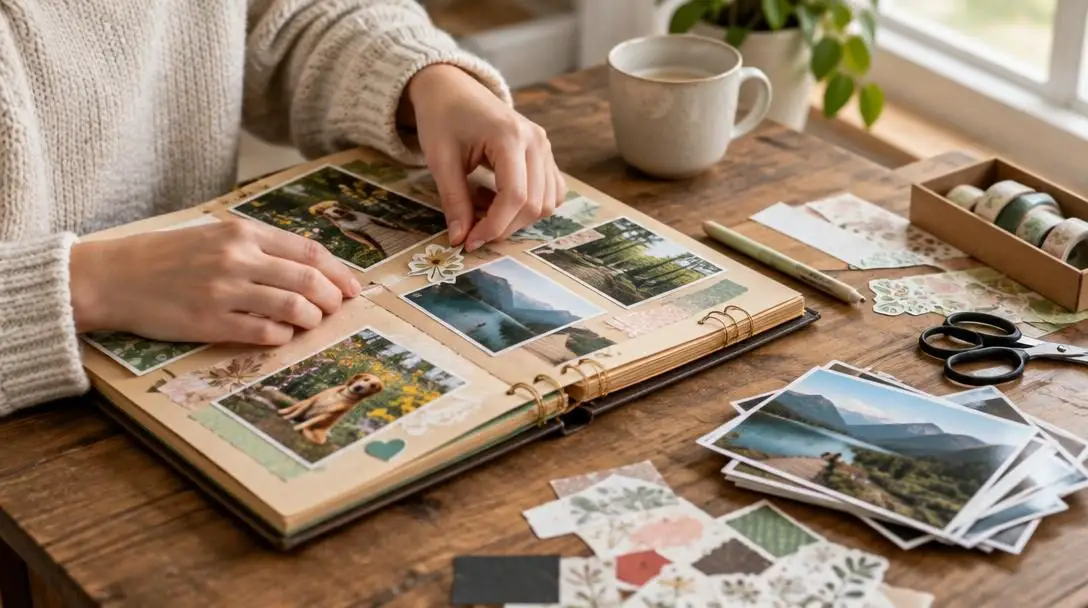
- Select a theme and gather materials: Decide on the central subject of your layout, such as a holiday, a family reunion, a sports event, or an ordinary daily routine. Collect all relevant photographs, coordinating patterned papers, cardstock, and memorabilia like ticket stubs or programs.
- Curate and crop the photographs: Sift through your images to choose the sharpest, most meaningful shots that tell the story. Use your scissors or paper trimmer to crop away distracting backgrounds, directing visual attention squarely onto the subjects.
- Plan the page layout: Set out your base cardstock sheet and test different arrangements of photos, mats, and ephemera before applying any glue. Shift elements around until you achieve visual balance, clear focal hierarchy, and comfortable margins.
- Affix the elements: Once your composition is finalized, use acid-free glue, tape runners, or adhesive dots to attach the papers, mementos, and photographs firmly to the base sheet, pressing smooth to prevent air pockets.
- Incorporate decorative embellishments: Position stickers, ink stamps, ribbons, buttons, or die cuts in empty corners or beside photo clusters. Use embellishments intentionally to enhance the page's mood without distracting from the photographs.
- Add captions and context: Use an archival pen or marker to write down essential historical details, including full names, dates, geographic locations, and personal commentary. This contextual text ensures the story behind the images remains understandable to future readers.
- Insert into protective sleeves: Give all inks and adhesives sufficient time to dry completely. Once dry, slide the finished page into a clear protective sleeve to safeguard it against dirt, handling, and environmental friction before binding it into an album.
Common scrapbooking mistakes to avoid
Both beginner crafters and experienced hobbyists occasionally run into mistakes that compromise either the artistic quality or the physical longevity of an album. Being mindful of these frequent missteps will help keep your crafting process enjoyable and your albums secure:
- Relying on non-archival adhesives: Using standard household glues, basic sticky tapes, or non-archival craft pastes can ruin a project. Non-archival adhesives release acids that yellow paper, discolor photos, and eventually fail, causing elements to detach over time.
- Overcrowding the layout: Cramming too many images, stickers, and memorabilia onto a single sheet results in visual chaos. Leaving negative space around images gives the viewer's eye a place to rest and makes the focal images stand out.
- Omitting written context and dates: Assuming you will always remember when and where a photo was taken is a common oversight. Without captions, critical context such as names, dates, and personal anecdotes can easily be lost to subsequent generations.
- Neglecting visual contrast: Mounting photographs directly onto busy patterned backgrounds can cause the images to blend in and get lost. Backing your photos with a solid cardstock mat separates them cleanly from vibrant background designs.
- Permanently altering unique heirlooms: Cutting or applying wet glue to rare antique letters, historical documents, or original one-of-a-kind prints causes irreversible damage. Always work with high-quality reproductions or removable photo corners when handling irreplaceable artifacts.
Health and wellbeing benefits of the craft
Beyond producing meaningful physical archives, scrapbooking offers significant personal and therapeutic value. Engaging in tactile crafting activities allows people of all ages to step away from screen-heavy environments and focus their minds on a deliberate, creative task.
Studies have demonstrated that taking part in creative hobbies like scrapbooking can actively reduce stress and anxiety, enhance concentration, and support overall mental health. The tactile routine of measuring paper, trimming borders, selecting color combinations, and writing down memories fosters mindfulness, encouraging crafters to slow down and immerse themselves in the present moment.
Furthermore, scrapbooking stimulates the imagination and provides an open medium for creative self-expression. Crafting allows people to articulate their life stories in their own distinct visual voice, providing a deep sense of accomplishment once a spread or album is completed. It also thrives as a vibrant social activity, offering crafters opportunities to join clubs, attend workshops, and connect with fellow enthusiasts who share a mutual passion for storytelling and memory preservation.
Expanding your craft: advanced techniques and next steps
Once you are comfortable with basic page assembly, there are numerous creative directions to explore to further refine your crafting skills. Many crafters expand their capabilities by exploring specialized machinery, such as electronic or manual die-cut machines that produce intricate lace borders, custom alphabet sets, and complex geometric shapes. Incorporating stamping tools and pigment inks enables you to generate repeated decorative motifs, while embossing folders and heat tools allow you to press raised, tactile textures into smooth cardstock.
You can also experiment across different aesthetic styles to discover what best suits your personal taste. Transitioning from the crisp, minimalist lines of clean-and-simple layouts to the layered, distressed textures of shabby chic or the sepia-toned charm of vintage design will broaden your artistic versatility. Additionally, blending digital scrapbooking software with physical albums offers the freedom to arrange complex photo collages digitally before printing them out for traditional embellishment, giving you the best of both creative worlds.
Frequently asked questions
Why is it important to use acid-free materials in scrapbooks?
Acid-free materials are essential because standard papers and commercial glues contain natural acids that cause paper fibers to turn yellow and brittle. When placed in contact with photographs, these acids degrade photo chemicals, leading to permanent discoloration and fading over time.
What is the difference between traditional and digital scrapbooking?
Traditional scrapbooking involves assembling physical photographs, cardstock, ephemera, and dimensional embellishments using scissors and adhesives. Digital scrapbooking uses computer design software to arrange photos and digital artwork into page layouts, which are then printed out to add to an album.
How did Kodak influence the history of scrapbooking?
In 1900, the Kodak company released the first ready-made photo album specifically engineered to hold both photographs and paper memorabilia. This innovation made memory keeping accessible to everyday families without requiring custom bookbinding, helping turn scrapbooking into a popular American pastime by the 1920s.
How can I safely include antique family documents in a scrapbook?
To protect irreplaceable family documents or original vintage photographs from permanent damage, avoid cutting them or applying permanent wet glue. Instead, scan the originals to print archival-quality reproductions for your layout, or secure the originals using removable, acid-free photo corners.
What are the primary design principles for creating an attractive layout?
An attractive scrapbook layout relies on establishing a clear focal point through dominant photo placement, maintaining color harmony across papers and accents, and achieving visual balance by distributing large photos, text blocks, and embellishments evenly across the page.
The bottom line
Scrapbooking remains one of the most rewarding ways to celebrate personal milestones, document daily life, and preserve family heritage. By combining basic crafting supplies with sound design principles and archival-safe materials, anyone can build a lasting visual record of their most cherished experiences. Whether you prefer the tactile charm of cut paper and ribbons or the modern flexibility of digital design, the craft offers a creative, relaxing, and enduring way to share your life's stories with generations to come.