
The Culture Guide: 5 Things You Should Not Do When Visiting China

China is a vast and captivating country with thousands of years of rich history, exquisite art, world-renowned food, and unique customs that local hosts look forward to sharing with foreign travelers. While exploring this heritage can be an unforgettable adventure, traveling through a society with such deeply rooted cultural conventions requires visitors to maintain an open mind and a strong awareness of everyday manners. If you do not pay close attention to social boundaries, innocent misunderstandings can quickly turn a pleasant excursion into an uncomfortable situation for both you and your hosts.
International journeys are infinitely smoother when travelers take the time to recognize local expectations before stepping off the plane. In China, modern daily interactions remain deeply influenced by traditional community values, mutual deference, and the vital concept of personal dignity. To help you build warm relationships, respect your hosts, and avoid unnecessary blunders, this guide explores five critical things you should never do when visiting China.
Key takeaways
- Refrain from touching strangers and instead rely on verbal greetings, polite nods, or gentle hand waves.
- Never plant your chopsticks vertically into a bowl of rice, as this arrangement mimics incense burned at funerals.
- Decline gifts, snacks, or drinks at least twice before accepting them to demonstrate modesty and avoid appearing greedy.
- Avoid drinking untreated tap water, but feel free to brush your teeth, take showers, or drink water thoroughly boiled in an electric kettle.
- Never lose your temper or shout in public, because causing someone to lose face destroys social harmony and derails problem resolution.
Cultural foundations: Understanding harmony and face
To grasp why certain behaviors are discouraged in China, visitors must first understand the philosophical principles guiding interpersonal relationships. In many Western cultures, personal independence, immediate honesty, and individual self-expression are celebrated. People are often taught to assert their personal rights immediately, display their feelings plainly, and use tactile greetings like hugs, cheek kisses, or firm handshakes. In contrast, Chinese social interactions place a high priority on communal harmony, subtle communication, and avoiding open discord.
At the center of this social framework lies the concept of face, which represents an individual's honor, dignity, and standing among peers. When you criticize someone openly, provoke a loud confrontation, or ignore traditional etiquette, you cause that person to lose face. Preserving face for both yourself and your counterparts keeps daily interactions amicable. These expectations touch every facet of travel, from how you handle dining utensils at dinner to how you receive hospitality and navigate disputes.
In traditional Chinese culture, maintaining communal harmony and protecting someone's face matters far more than individual public assertion.
At a glance: Five behaviors to avoid in China
| Behavior to avoid | Underlying reason | Correct alternative |
|---|---|---|
| Touching strangers | Physical contact is strictly reserved for close bonds | Offer a verbal greeting, a polite nod, or a hand wave |
| Using chopsticks incorrectly | Vertical placement resembles funeral incense rituals | Grip near the top and rest them flat across bowls |
| Accepting offers immediately | Instant acceptance appears greedy and lacking in grace | Politely decline twice before accepting on the third try |
| Drinking the tap water | Untreated water contains bacteria, heavy metals, and sediment | Drink commercially sealed bottled water or boiled water |
| Getting angry in public | Loud outbursts cause others to lose face and breach harmony | Remain calm, step aside, and discuss issues in private |
Five critical mistakes travelers must avoid
Navigating China successfully requires swapping certain Western reflexes for behaviors that align with local etiquette. These five specific taboos illustrate where cultural expectations diverge most sharply.
Touching Strangers
- Standard greeting: Polite nod, verbal hello, or gentle wave
- Acceptable physical contact: Reserved for close friends and family
- Social impact: Casual touch causes discomfort and confusion
In many Western countries, greeting an acquaintance or even meeting a stranger in a professional context involves touch. Business partners exchange firm handshakes, while friends often trade casual hugs or light kisses on the cheek upon meeting and parting. In China, however, initiating physical contact with someone you do not know well is considered entirely inappropriate.
While you may see close friends or family members walking arm-in-arm through the streets, casual physical contact is strictly reserved for those who already share a deep personal relationship. When meeting new people, tour guides, shopkeepers, or hotel staff, keep your hands to yourself. Establishing a warm connection does not require physical touch; a cheerful verbal greeting, an amicable nod, or a gentle wave of the hand communicates courtesy without overstepping personal boundaries.
Using Chopsticks Incorrectly
- Optimal hand grip: Along the thicker, upper third of the utensils
- Major dining taboo: Sticking chopsticks upright in a bowl of rice
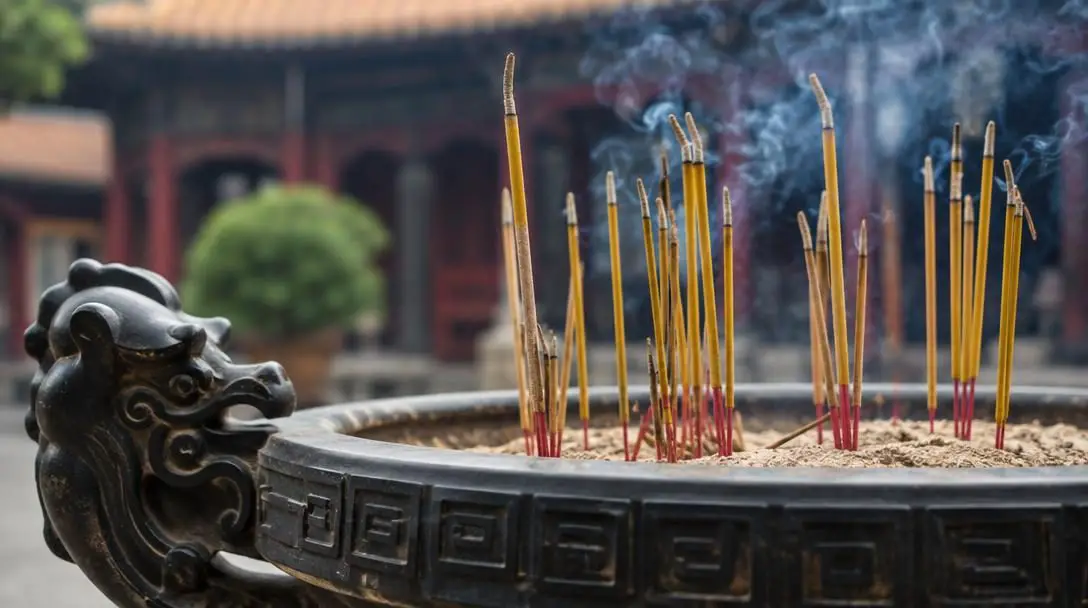
- Ritual association: Funeral incense offered to the deceased
Forks, knives, and Western-style spoons are rarely the primary utensils on traditional dining tables in China. Instead, pairs of slender chopsticks are used for almost every dish. While these utensils look simple, using them properly requires practice and mechanical leverage. Beginners frequently make the mistake of gripping chopsticks too close to the tapered, narrow tips, which restricts finger dexterity and makes grasping food frustratingly difficult. Holding the sticks higher up toward the thicker ends provides superior control and range of motion.
Even more critical than your grip is utensil placement. You must never stick your chopsticks vertically into a bowl of rice so that they stand straight up. This arrangement looks nearly identical to incense sticks burned at altars during funeral rituals and ancestor worship. Doing this at a dining table is deeply offensive to those around you. Always place your chopsticks horizontally across the rim of your bowl or lay them on the dedicated chopstick rest when taking a pause.
Accepting Offers Immediately
- Courteous response: Decline at least twice before saying yes
- Instant acceptance perception: Greedy, impatient, or uncouth
- Host expectation: Insisting several times before the guest accepts
Western communication styles often value directness: if someone asks whether you want a snack or another beverage, you give an immediate yes or no based on your personal preference. In China, this directness can come across as uncouth and self-centered. Taking an offered gift, piece of candy, or cup of tea on the very first mention can make you appear eager, greedy, and lacking refinement.
Proper hospitality involves an unspoken social dance. When offered an item or a favor, polite etiquette requires you to refuse at least twice before finally accepting on the third round. This modest hesitation demonstrates deference and respect for your host's generosity. Similarly, if you are offering something to a local friend or guest, never take their initial refusal at face value. They are simply following good manners, and you should persistently present the offer several times until they comfortably accept.
Drinking the Tap Water
- Permitted hygiene uses: Handwashing, showering, and brushing teeth
- Health hazards: Heavy metals, bacteria, and sediment
- Safe solutions: Inexpensive bottled water or hotel electric kettles
Travelers often wonder whether local tap water meets safe drinking standards. In China, municipal tap water is entirely fine for routine external hygiene, such as taking a shower, washing your hands, or brushing your teeth. However, untreated tap water is not safe for internal consumption. Drinking directly from the faucet exposes you to contaminants, including harmful bacteria, industrial sediments, and heavy metals that can trigger serious gastrointestinal distress.
Fortunately, staying safely hydrated throughout the country is simple. Sealed bottled water is inexpensive, widely produced, and readily available in convenience stores, supermarkets, and street stalls across every city. If you find yourself in your hotel room without bottled water, use the electric kettle provided in almost every accommodation. Bringing tap water to a rolling boil kills off dangerous pathogens, making it completely safe to drink once it cools.
Getting Angry in Public
- Core dynamic: Preserving personal dignity and public harmony
- Consequence of yelling: Immediate loss of face and conversational shutdown
- Effective strategy: Stepping away to address issues privately and calmly
Traveling inevitably introduces moments of friction, such as delayed high-speed trains, room booking mix-ups, or language barriers with service staff. In cities like New York, raising your voice, displaying visible frustration, and aggressively demanding assistance might sometimes force a quick response. In China, that aggressive approach backfires entirely.
Displaying open anger, shouting at employees, or causing a scene in front of others violates communal harmony and causes the other person to suffer a devastating loss of face. When put in that position, staff will often shut down, withdraw, or become uncooperative. Public tantrums also reinforce negative stereotypes of foreign visitors as unruly and disrespectful. If you feel your frustration mounting, step away from the desk, head to your private hotel room to vent, and return only when you are composed enough to resolve the issue quietly and politely.
Everyday protocols: How to handle routine scenarios
Knowing what not to do is only half the battle; knowing how to act ensures smooth sailing through markets, restaurants, and train stations. Follow these structured steps to manage common interactions gracefully.
- Greet acquaintances with measured space: Stand an arm's length away, offer a pleasant smile, speak a polite greeting, and give a brief nod of your head instead of reaching for a handshake or hug.
- Position your dining tools correctly: Hold chopsticks toward the upper third of their length for better balance, use them to bring food to your mouth, and place them across the rim of your dish between bites.
- Engage in courteous refusal: When offered food, tea, or gifts, shake your head gently and decline twice; accept graciously on the third offer with two hands and a warm expression of thanks.
- Secure safe drinking water daily: Buy sealed water bottles each morning before leaving your hotel room, and use the in-room electric kettle to boil water for tea or hydration in the evening.
- De-escalate travel friction quietly: Speak in a calm, lowered voice if a booking error or service problem occurs, and request to speak with a staff member discreetly away from watching crowds.
Common cultural mistakes and how to fix them
Even well-intentioned travelers can stumble into awkward encounters if they forget the nuances of local customs. Recognizing these common errors helps you correct your behavior before causing offense:
- Assuming handshakes are expected everywhere: Reaching out to touch strangers can leave them feeling startled or uncomfortable. Default to warm verbal greetings and gentle nods.
- Leaving utensils upright in starch: Sticking your chopsticks into a mound of rice brings thoughts of death and mourning to the table. Always lay them down horizontally.
- Gripping chopsticks near the tips: Choking up on chopsticks deprives you of leverage and leads to dropped food. Slide your fingers back toward the broad end.
- Saying yes on the first pass: Grabbing a gift instantly makes you look greedy. Practice the art of declining twice before saying yes.
- Assuming a single refusal means no: Giving up when a local host declines your offer ignores the rules of politeness. Ask two or three times before taking no for an answer.
- Drinking water straight from the tap: Drinking unboiled faucet water can ruin your itinerary with stomach trouble. Stick to commercially sealed bottles or freshly boiled water.
- Berating service staff in front of peers: Shouting at a clerk destroys their dignity and ensures they cannot help you without losing face. Keep all complaints private and polite.
Frequently asked questions
Is it safe to brush your teeth with tap water in China?
Yes, municipal tap water in China is fine for basic hygiene tasks such as brushing your teeth, washing your face, and taking showers. You should only avoid swallowing untreated tap water directly from the sink.
What should I do if I cannot use chopsticks well?
You can practice before your trip by watching video tutorials and learning to hold the utensils near the top end. If you are struggling at a restaurant, you can politely ask the staff for a spoon, which is commonly available for soups and rice dishes.
How many times should I refuse a gift before accepting it?
Standard etiquette calls for declining an offered gift, snack, or drink at least twice. On the third offer, you may warmly accept, which shows both humility and appreciation for your host's generosity.
Can I hug or shake hands with someone I meet for business in China?
Touching strangers is inappropriate, so you should avoid casual hugs or kisses. In international business settings, handshakes have become more common, but it is best to let your local counterpart initiate physical contact rather than forcing it yourself.
How can I resolve customer service problems without making staff lose face?
Maintain an even, quiet tone of voice and avoid creating a public spectacle. Ask to discuss the problem quietly away from other customers, explain the issue politely, and work cooperatively toward an amicable resolution.
The bottom line
Traveling across China offers a rewarding look into a civilization with ancient traditions and vibrant modern cities. Embracing local expectations—from respecting personal physical boundaries and mastering chopstick placement to participating in humble gift exchanges and safeguarding public face—demonstrates respect for the people hosting you.
Before you depart, take the time to practice holding chopsticks properly and mentally prepare yourself for a culture centered on patience and group harmony. When you approach unexpected travel hiccups with calm grace and respect the boundaries of local customs, you will forge warm connections, prevent uncomfortable misunderstandings, and enjoy a memorable journey across China.