The History And Origins Of The Popular Board Game – Scrabble
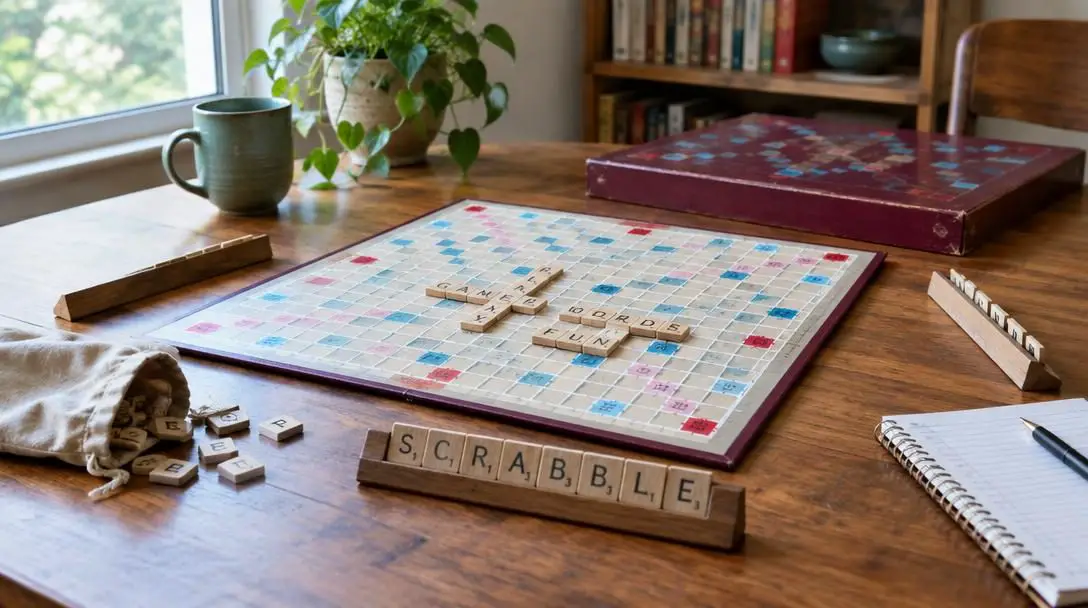
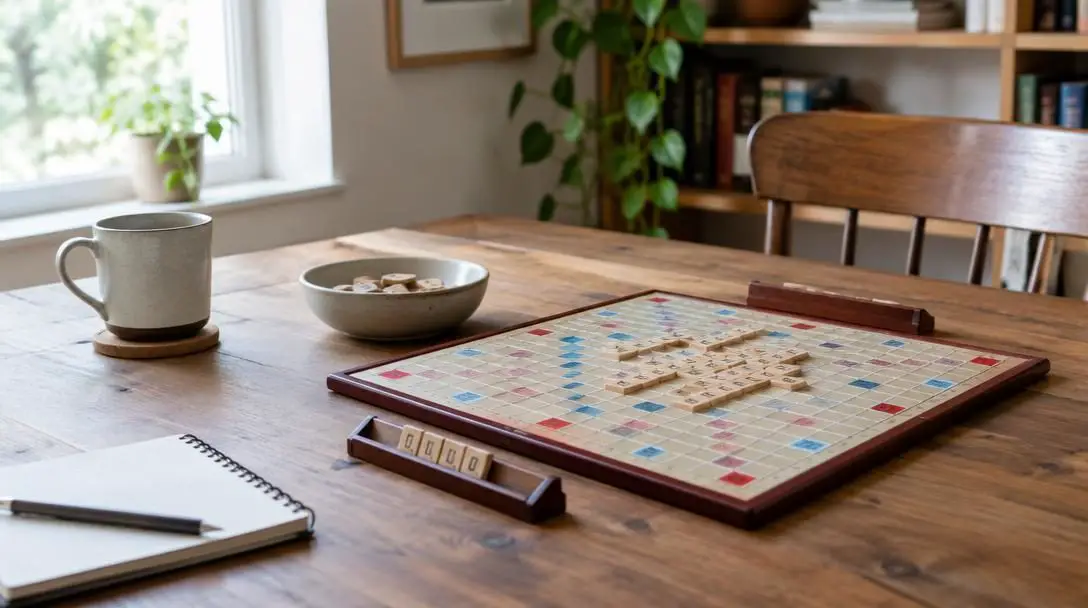
Scrabble is one of the most recognizable board games in modern history, played across kitchen tables, classroom desks, and competitive tournament halls in dozens of languages. At its core, the game challenges players to assemble interlocking words across a grid using wooden or plastic letter tiles, blending the spatial logic of a crossword puzzle with the unpredictability of a blind draw. Yet behind this familiar pastime lies an improbable journey that began during the Great Depression, steered by an out-of-work architect and a dedicated friend who believed in the concept when major game manufacturers did not.
Today, the game balances accessible mechanics with profound analytical depth, making it equally engaging for casual family game nights and high-stakes international championships. Exploring Scrabble's origin story reveals how meticulous linguistic research, trial-and-error prototyping, and savvy post-war marketing transformed an obscure homemade invention into a staple of global popular culture.
Key takeaways
- Architect Alfred Mosher Butts invented the game during the 1930s after studying the front page of newspapers to calculate exact letter frequencies.
- Originally called Lexiko and later Criss-Cross Words, the game struggled commercially until James Brunot bought the manufacturing rights in 1948 and rebranded it as Scrabble.
- A chance discovery by a Macy's department store executive and exposure on national television sparked an explosion in demand that reached four million North American sales by 1952.
- Mastering the game relies on rack management, short word knowledge, and spatial board defense rather than merely hunting for the longest vocabulary words.
- Scrabble is now available in more than 120 countries and translated into over 30 languages, featuring in major television dramas and classrooms worldwide.
The Architects of Scrabble's Worldwide Success
The realization of Scrabble required two distinct minds: an analytical designer focused on mathematical balance and linguistic probabilities, and an enterprising partner capable of streamlining the concept into a commercially viable product.
Alfred Mosher Butts
- Role: Original game inventor and designer
- Hometown: Poughkeepsie, New York
- Key innovation: Linguistic letter-frequency analysis and point-value distribution
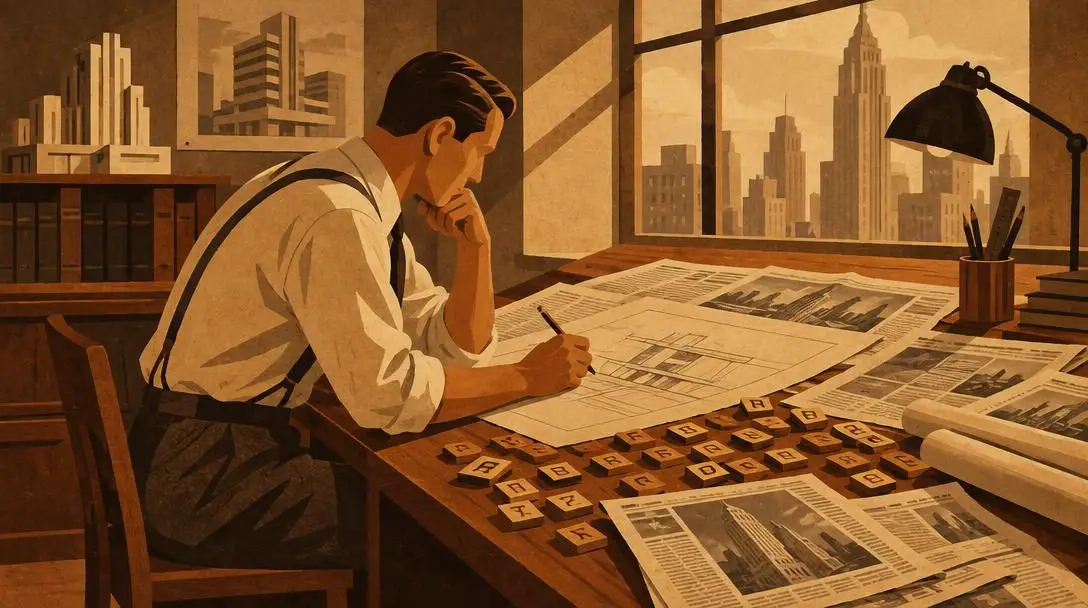
In the early 1930s, Alfred Mosher Butts was an architect from Poughkeepsie, New York, who found himself without steady work during the economic downturn. Looking to design a fresh parlor pastime, Butts analyzed the recreational landscape and divided existing games into three structural categories: games of movement (such as chess and checkers), games of numbers (such as dice and card games), and games of words (such as anagrams). He noted that traditional word pastimes lacked a crucial element of chance, which often made them repetitive and rewarded only academic vocabulary without unpredictability. By introducing a randomized tile draw to a vocabulary game, Butts sought to unite technical skill with calculated luck.
James Brunot
- Role: Production partner, marketer, and trademark owner
- Acquisition year: 1948
- Key contributions: Trademarked the Scrabble name, refined the board layout, and established the modern scoring system
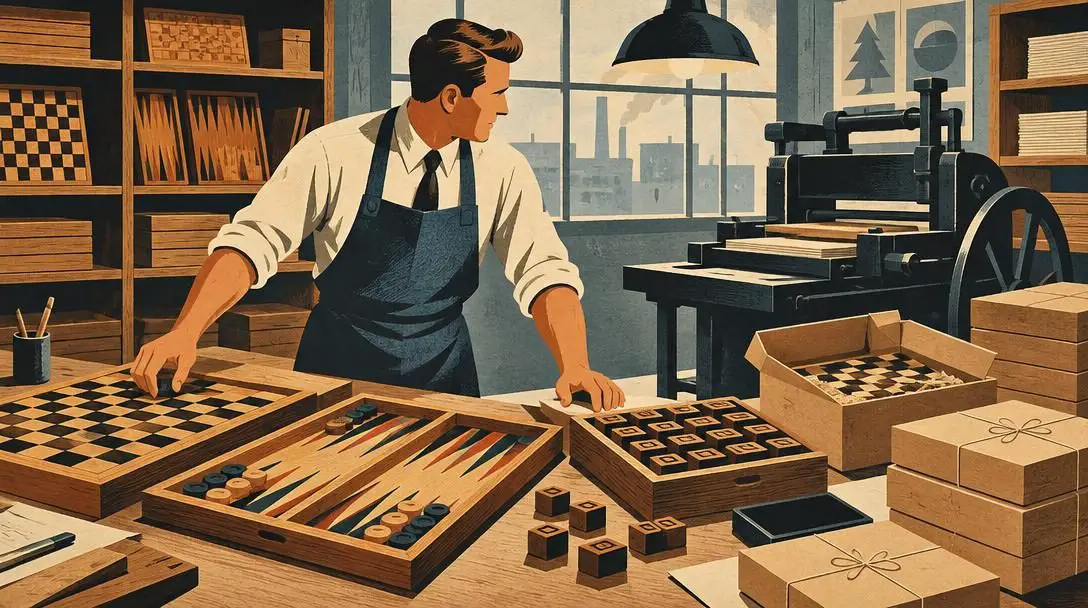
Although Butts spent years refining his concept, commercial game publishers repeatedly rejected it. In 1948, James Brunot, a friend and supporter of Butts, stepped in to purchase the North American manufacturing and distribution rights. Brunot made pivotal modifications: he simplified several rules, revamped the aesthetic design of the board, streamlined the scoring grid into its recognizable modern form, and officially trademarked the moniker Scrabble, an English word meaning to scratch or scramble feverishly. Working with his family out of a converted schoolhouse, Brunot assembled early sets by hand before explosive demand prompted him to partner with established game maker Selchow & Righter.
The Evolution of Alfred Butts's Prototypes
The path from a kitchen-table experiment to the definitive crossword board game spanned nearly two decades of testing, naming revisions, and mathematical adjustments.
| Stage | Primary Format | Defining Feature | Commercial Status |
|---|---|---|---|
| Lexiko | Tile hand only (no board) | Players formed nine-letter words directly from their drawn hands | Rejected by major commercial publishers |
| Criss-Cross Words | Grid-based playing board | Introduced interlocking crossword mechanics on a physical surface | Self-produced in small batches; limited interest |
| Scrabble | 15x15 board with premium squares | Refined scoring multipliers, standardized point values, and simplified rules | Worldwide bestseller across over 120 countries |
When Butts first tested his idea under the name Lexiko, players drew letters to form words without any playing board at all. Recognizing that the gameplay lacked spatial interaction, Butts evolved the project into Criss-Cross Words, which introduced a gridded surface where words intersected horizontally and vertically. During this phase in 1938, Butts conducted his most consequential research: he methodically tallied how often each letter of the alphabet appeared on the front page of publications like The New York Times. This empirical frequency analysis determined how many copies of each tile belonged in the letter pool, as well as their individual values—granting rare consonants like "Q" and "Z" lofty point totals while keeping ubiquitous vowels like "A" and "E" frequent and low-scoring.
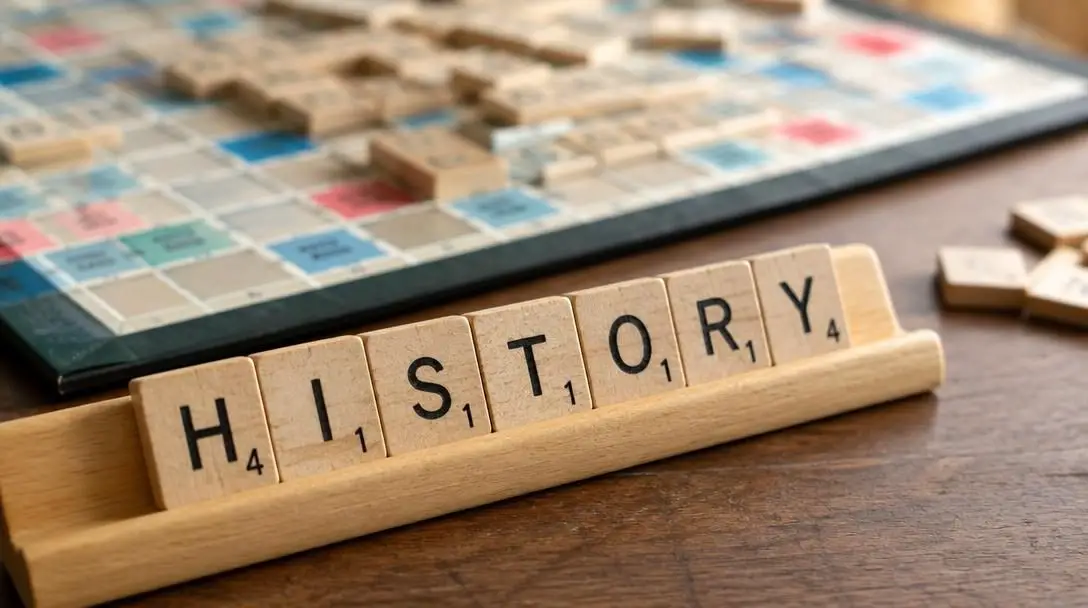
Scrabble bridged the gap between academic wordplay and family entertainment by pairing rigorous letter-frequency mathematics with the unpredictability of a blind tile draw.
From Handcrafted Sets to Global Distribution
Early sales of Scrabble were slow and arduous. Operating out of their rural Connecticut schoolhouse, James Brunot and his family hand-stamped letters onto wooden tiles and assembled boards one by one, losing money during their initial year of production. The breakthrough arrived unexpectedly in the early 1950s when an executive from Macy's department store discovered the game while on vacation. Enamored by its compelling mechanics, the executive placed a substantial retail order, giving Scrabble prominent shelf space in the world's most famous department store.
The ensuing surge in demand far exceeded the Brunot family's modest manufacturing operations. To meet orders, Brunot licensed North American manufacturing rights back to Selchow & Righter, the prominent game firm that had once rejected Butts's early prototypes. By 1952, over four million sets had been sold across North America. The game expanded overseas in 1954, debuting in Great Britain and sweeping through continental Europe. Today, Scrabble is manufactured in more than 30 languages, adapting its tile counts and letter values to suit the phonetic and grammatical profiles of languages ranging from French and Spanish to Swedish and Arabic.
Step-by-Step: How to Play a Standard Match
A standard game of Scrabble requires between two and four players navigating a delicate balance of vocabulary recall, point multiplication, and defensive board control.
- Draw for the opening turn: Place all 100 letter tiles inside an opaque fabric bag. Each player draws one tile, and the individual whose letter is closest to the beginning of the alphabet earns the right to play first. Blank tiles take precedence over letter tiles. Return the drawn tiles to the bag, shake it thoroughly, and have each participant draw a full hand of seven tiles onto their personal rack.
- Make the center opening play: The first player forms a legitimate word of two or more letters and places it across the center star square. This center space functions as a double-word score. The player tallies their initial score, records it on the scoresheet, and draws enough replacement tiles from the bag to restore their rack to seven.
- Build interlocking words clockwise: Play proceeds clockwise around the table. On each subsequent turn, a player may place a new word, exchange any number of tiles from their rack by spending their turn, or pass entirely. Placed words must run horizontally from left to right or vertically from top to bottom in a continuous line, connecting seamlessly to at least one existing tile on the board.
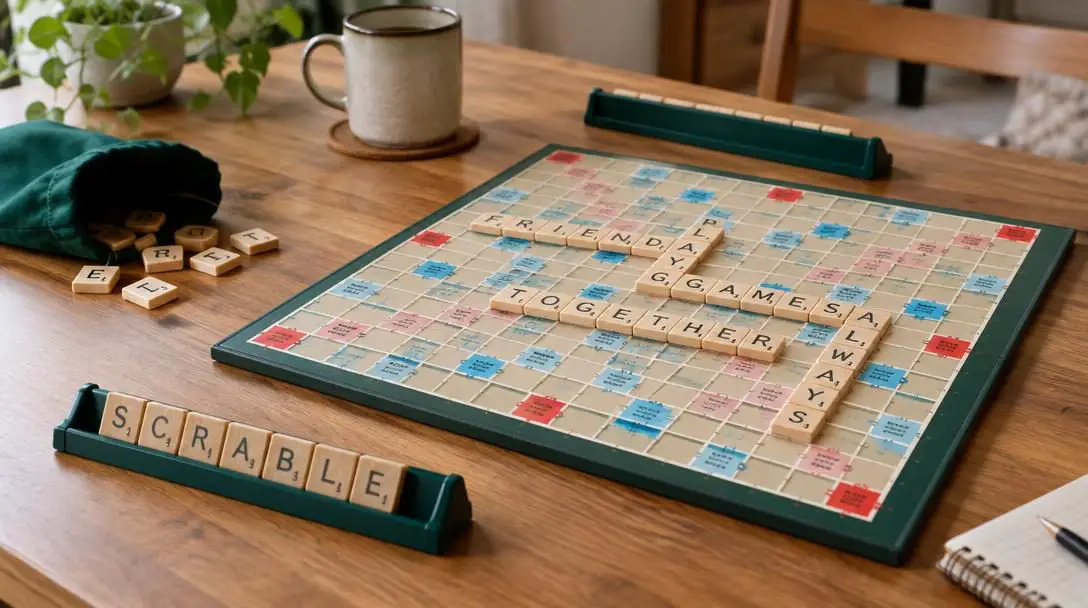
- Calculate bonus multipliers: Tally the score by adding the values printed on each letter tile used. Factor in any premium squares covered on that specific turn: light blue squares double a letter's value, dark blue squares triple a letter, pink squares double the entire word, and red squares triple the entire word. If a play successfully forms multiple words simultaneously across adjacent tiles, calculate every resulting word individually.
- Manage challenges and conclude the game: If a player questions the validity of a played word, they may issue an official challenge before the next participant draws or plays. Consult an agreed-upon dictionary; if the word is unacceptable, the active player removes their tiles and forfeits the turn. The game finishes when the tile bag is empty and one player exhausts their rack, or when all players pass consecutively. Unplayed tiles remaining on racks are deducted from their respective owners' totals, and the highest score wins.
Five Strategic Mistakes Every Player Should Avoid
While having an extensive vocabulary is helpful, competitive success in Scrabble hinges far more on board geography, resource management, and risk minimization.
Ignoring Premium Multiplier Squares
Inexperienced players often focus exclusively on constructing long words, regardless of where those words sit on the board. A modest four-letter word placed across a triple-word multiplier routinely outscores an intricate six-letter word played over standard grid squares. Always examine the board for open multiplier paths before settling on a word.
Leaving Premium Spaces Open for Opponents
Carelessly playing adjacent to high-value squares without covering them is one of the most common tactical errors. If your word ends directly alongside an open triple-word or triple-letter square, your opponent will almost certainly capitalize on your opening to post a game-changing score on the very next turn.
Overlooking Two-Letter Word Hookups
Mastering two-letter words provides the structural foundation for high-level play. These short words permit parallel plays, allowing a player to slide an entire word alongside an existing row to score multiple crosswords on a single turn. Neglecting two-letter words traps players in open, uncrowded areas and deprives them of valuable parallel scoring opportunities.
Hoarding Difficult Letters and Ruining Rack Balance
Clinging to awkward consonants like "Q," "Z," or "V" in the hope of crafting an elaborate high-scoring word later in the game frequently backfires. Accumulating too many consonants or an overabundance of vowels limits your flexibility. Sacrificing a turn to swap unworkable tiles or using them promptly on small plays preserves a balanced vowel-to-consonant ratio.
Wasting the Blank Wildcard Tile
Blank tiles carry zero base points but represent any letter in the alphabet, making them the most versatile assets on your rack. Wasting a blank tile on a low-scoring 12-point play simply to complete a turn is a major strategic blunder. Save blanks to bridge critical multipliers or complete a 50-point seven-letter bonus play.
Cultural Significance and the Competitive Era
From its roots as a mid-century domestic board game, Scrabble steadily blossomed into an international competitive discipline and a celebrated cultural fixture. Across the world, formal clubs and sanctioned tournaments bring together enthusiasts who play under strict chess clocks, standardized word authorities, and rigid competition rules.
The game has also left an indelible mark on modern television and cinema. Memorable scenes in critically acclaimed period dramas and character studies, including Mad Men and Breaking Bad, utilize games of Scrabble to symbolize domestic tension, intellectual sparring, and character psychology. In education, teachers regularly introduce the game into language arts classrooms to reinforce spelling mechanics, expand active vocabularies, and develop elementary arithmetic through spatial score calculation.
Frequently asked questions
Who invented Scrabble, and when was it created?
Scrabble was invented by Alfred Mosher Butts, an unemployed architect from Poughkeepsie, New York, during the early 1930s. He finalized its core mechanics and letter distributions around 1938 before James Brunot trademarked and redesigned it in 1948.
What were the original names of Scrabble?
The game was initially named Lexiko, which was played without a game board. Butts later modified the concept into Criss-Cross Words, introducing the grid-based interlocking crossword layout, before James Brunot renamed it Scrabble.
How were the point values and letter quantities calculated?
Alfred Mosher Butts calculated letter counts and point values by studying the front page of newspapers, such as The New York Times, to measure the exact frequency of letters in the English language. Common letters received lower values, while rare consonants received higher scores.
How many letter tiles are in a standard Scrabble set?
A standard English-language Scrabble set includes exactly 100 tiles: 98 marked with letters and point values, and two blank tiles that function as wildcards with zero point value.
What caused Scrabble to become a nationwide commercial hit?
Although it started slowly under James Brunot's small family operation, Scrabble exploded in popularity in the early 1950s after an executive from Macy's department store encountered the game on vacation and placed a large order, followed by nationwide television coverage.
The bottom line
Scrabble's enduring reign over the board game world is a testament to the power of thoughtful design, persistence, and mathematical precision. What began as Alfred Mosher Butts's quiet depression-era endeavor became a worldwide phenomenon through James Brunot's production vision and strategic rebranding. By combining the calculated unpredictability of drawing letter tiles with the spatial possibilities of a crossword grid, Scrabble remains an unmatched test of vocabulary, tactical foresight, and board control that continues to entertain millions across the globe.