Examining Morality Through The Lens Of Comic Book Writers
Comic books have long served as a vibrant source of entertainment for audiences across the globe. From classic superheroes endowed with extraordinary abilities to the sinister villains they confront, these illustrated tales capture the imagination with high-stakes adventures and incredible conflicts. Yet behind the colorful artwork, explosive confrontations, and larger-than-life scenarios lies a profound tradition of storytelling that investigates ethical philosophy, human nature, and societal values.
Historically, comic book writers have treated their characters as dynamic vessels for exploring complex moral dilemmas rather than straightforward archetypes of unambiguous good and evil. Writers frequently construct narratives that question the foundational concepts of righteousness, duty, and justice: What defines right and wrong? Can noble ends ever justify harmful means? What are the limits of personal responsibility when catastrophic events occur? By using superheroes as allegorical figures, writers invite readers to reflect on how they navigate ethical decisions in their everyday lives.
Key takeaways
- Comic narratives serve as philosophical crucibles, testing whether noble ends can ever justify harmful means.
- Iconic figures represent contrasting ethical systems, from absolute non-violence to strict internal restraint and personal accountability.
- Evaluating moral dilemmas requires analyzing how character choices, tactical methods, and devastating consequences interact on the page.
- Superhuman abilities do not eliminate moral friction; rather, immense power magnifies the ethical stakes of every decision.
Ethical archetypes in graphic literature
Writers explore morality by placing characters in narrative crucibles where their core principles are challenged by opposing worldviews. Rather than presenting abstract ethical essays, the comic medium dramatizes ethical philosophy through dynamic action, dialogue, and personal sacrifice. Over decades of serialization, figures such as Superman, Batman, and Spider-Man have emerged as touchstones for distinct philosophical perspectives.
| Character | Moniker / Archetype | Key Storyline | Core Philosophical Conflict |
|---|---|---|---|
| Superman | The Ultimate Boy Scout | "What's So Funny About Truth, Justice & The American Way?" | Unwavering non-violence versus lethal, outcome-focused pragmatism |
| Batman | The Dark Knight | "The Killing Joke" | Vigilante justice and moral restraint versus retributive murder |
| Spider-Man | Everyman Hero | "The Night Gwen Stacy Died" | Absolute personal accountability versus self-protective deflection |
Comic literature operates as an ongoing dialogue about the human conscience, examining whether moral boundaries must remain absolute in an unpredictable world.
Superman
- Moniker: The ultimate boy scout
- Signature Storyline: "What's So Funny About Truth, Justice & The American Way?"
- Opposing Force: The Elite
- Core Principle: Absolute dedication to non-violence and justice
In the case of Superman, often recognized as the ultimate boy scout, moral exploration centers on his remarkable strength, his unwavering sense of justice, and an uncompromising commitment to doing what is right. Superman represents an enduring commitment to non-violence and absolute values, showing that immense strength is most meaningful when restrained by strict ethical guardrails.
In the acclaimed storyline "What's So Funny About Truth, Justice & The American Way?", Superman faces a team of antiheroes known as The Elite. The Elite argue that traditional superhero ethics are outdated and that lethal force is entirely justified when eliminating terrorists and dangerous criminals. Superman opposes this worldview, believing that lethal tactics violate his fundamental dedication to non-violence. Through this confrontation, the narrative investigates whether extreme, violent means can ever be accepted to achieve peace, and it prompts readers to consider if certain moral values must be preserved regardless of public pressure or changing times.
Batman
- Moniker: The Dark Knight
- Signature Storyline: "The Killing Joke"
- Opposing Force: The Joker
- Core Principle: Strict refusal to cross the line into lethal retribution
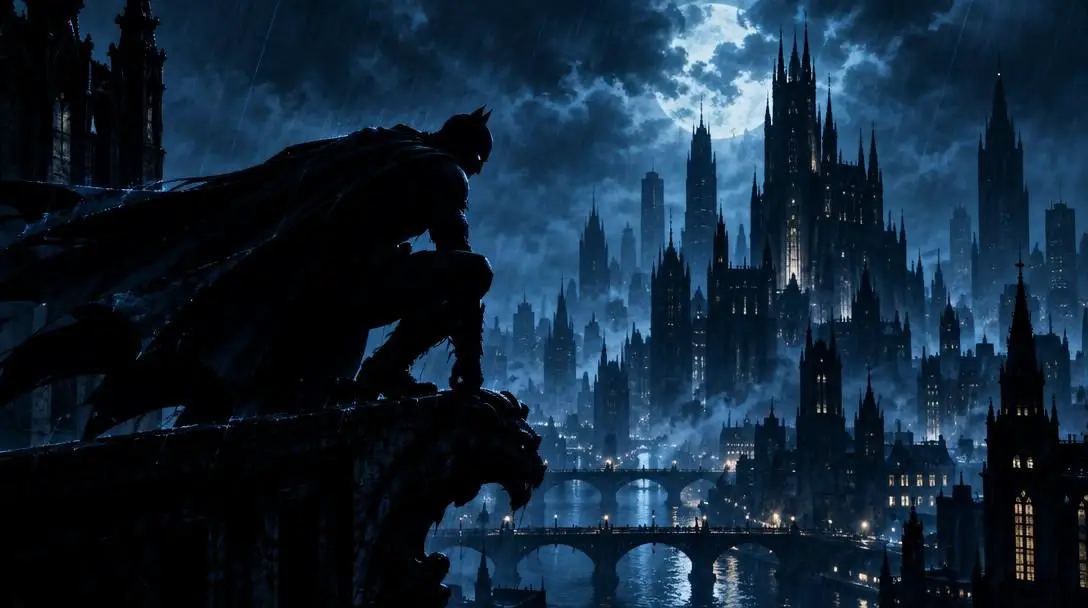
Batman presents a distinctly different moral framework. Known as the Dark Knight, Batman has become synonymous with justice and righteousness despite choosing to operate outside the boundaries of the legal system. As a vigilante, he takes matters into his own hands, yet he governs his crusade with a strict personal moral code. He reflects the intense psychological weight of operating outside conventional legal systems while clinging fiercely to an internal boundary.
A clear illustration of this internal conflict appears in the narrative "The Killing Joke." In this story, the Joker kidnaps and tortures Commissioner Gordon in a calculated effort to shatter his sanity and prove that anyone can be pushed over the edge. After rescuing Gordon, Batman comes face-to-face with the Joker. In that critical confrontation, Batman faces a profound dilemma: should he execute the Joker to end the menace once and for all, or must he bring the villain to justice through the proper channels? Batman deliberately refuses to kill the Joker, recognizing that taking a life would destroy his own moral integrity as a hero. This pivotal moment explores the critical boundary separating genuine justice from vengeful retribution.
Spider-Man
- Key Storyline: "The Night Gwen Stacy Died"
- Opposing Force: Green Goblin
- Core Principle: The inescapable burden of individual accountability
Spider-Man illustrates an ethical framework rooted in duty and individual accountability. Beloved worldwide for his agile combat style and trademark humor, Spider-Man represents the difficult principle that responsibility must always take precedence over convenience or ego. His stories capture the crushing weight of personal accountability and the ripple effects an individual's choices have on the people around them.
This theme is intensely felt in the storyline "The Night Gwen Stacy Died." During a fierce battle against the Green Goblin atop a bridge, Spider-Man tries to save his girlfriend, Gwen Stacy, as she falls, but he ultimately fails to preserve her life. The aftermath of this disaster leaves Spider-Man consumed by immense guilt, forcing him to interrogate the extent of his own responsibility in her tragic demise. This story highlights the painful truth that our actions, mistakes, and even our best efforts can result in devastating outcomes, requiring an individual to take total ownership of their conduct rather than deflecting blame.
A step-by-step approach to evaluating comic book ethics
Readers who wish to look beyond the surface action of comic books and analyze the underlying philosophical themes can use a systematic reading approach. By breaking down the interactions between characters, plot events, and thematic dilemmas, one can uncover the deeper ethical arguments crafted by the authors.
- Identify the core conflict between opposing moral codes. Look at the primary ideological disagreement driving the conflict between the protagonist and the antagonist or antihero, such as Superman's non-violent values clashing with the ruthless tactics of The Elite.
- Evaluate the methods versus the ultimate objectives. Note whether the narrative endorses or critiques the methods characters use to achieve their goals, paying close attention to whether the ends are portrayed as justifying the means.
- Locate the critical point of decision. Examine the climactic moments where a character must make a defining choice between personal impulse and ethical principle, such as Batman's refusal to kill the Joker in "The Killing Joke."
- Examine the tangible consequences of failure and success. Analyze how the story treats the outcomes of these choices, observing whether characters face persistent guilt or moral growth, as seen in Spider-Man's reaction to the death of Gwen Stacy.
- Assess how the narrative addresses institutional versus personal justice. Observe whether the characters place their trust in established legal procedures or if they adopt a vigilante approach, taking justice entirely into their own hands.
- Formulate modern real-world parallels. Reflect on how the fictional ethical problems mirror actual human challenges, such as reconciling the impulse for revenge with the demands of fair justice, or acknowledging individual accountability for tragic errors.
Common misreadings of graphic morality
Analyzing ethical themes in graphic storytelling requires nuance. Readers and commentators often make several common interpretive mistakes when evaluating the moral architecture of comic book narratives.
- Equating superhero vigilantism with an absence of ethical principles: It is a mistake to assume that because a character like Batman operates outside legal structures, he completely lacks boundaries. His internal moral code serves as a firm restraint against falling into pure vengeance.
- Dismissing classic virtues as naive or simplistic: Some readers label characters who refuse to use lethal force, such as Superman, as unrealistic or outdated, missing the author's deliberate point about the courage required to uphold non-violence in the face of violent opposition.
- Confusing personal revenge with the pursuit of genuine justice: A frequent error is assuming that punishing a villain through extreme retaliation is identical to serving justice, a misconception explicitly challenged in "The Killing Joke."
- Ignoring the role of tragic consequences in character development: Overlooking the lasting impact of personal errors, such as Spider-Man failing to rescue Gwen Stacy, reduces complex character growth down to simple physical action sequences.
- Assuming that having great power eliminates moral conflict: It is easy to assume powerful heroes have easy solutions, whereas narratives regularly demonstrate that immense power actually magnifies the weight and consequences of every ethical choice.
The evolving context and psychological cost of righteousness
As you continue reading and analyzing comic books, there are several broader themes and considerations to keep in mind regarding how morality is portrayed on the page. First, consider how the historical context of a story influences the moral debates presented by the writers. As societal perspectives on authority, justice, and violence change over the decades, writers adapt their characters to confront new ethical questions. The tension between Superman and The Elite, for instance, challenges whether traditional values can endure against modern cynicism and calls for immediate, violent retribution.
Second, reflect on the psychological toll that ethical commitments demand from these characters. Upholding a personal moral code, especially in the face of continuous evil, is rarely presented as an easy path. When Batman spares the Joker, he preserves his personal soul and identity, but he must live with the ongoing menace the villain represents. Similarly, Spider-Man's recognition of responsibility brings lifelong sorrow and introspection, showing that ethical maturity often carries a heavy emotional burden.
Finally, examine how these classic narratives continue to shape individual character. The lessons embedded in the struggles of Superman, Batman, and Spider-Man transcend pure entertainment. By reading critically, audiences are encouraged to evaluate their own behavior, to stand firmly by core values, to temper the desire for retaliation with justice, and to embrace personal accountability for their actions in an increasingly complicated world.
Frequently asked questions
Why did Superman refuse to adopt the violent methods of The Elite?
In "What's So Funny About Truth, Justice & The American Way?", Superman rejects The Elite's lethal methods because he believes violent means corrupt noble ends. He maintains that true peace and justice cannot be sustained by abandoning fundamental principles of non-violence, regardless of public cynicism or modern pressure.
Why does Batman refuse to execute the Joker in "The Killing Joke"?
Batman avoids executing the Joker because doing so would erase the critical line separating true justice from vengeful retribution. Crossing that threshold would compromise his personal moral code and destroy his integrity as a hero, effectively letting the Joker win by driving him over the edge.
How did the death of Gwen Stacy change Spider-Man's moral journey?
Failing to save Gwen Stacy forced Spider-Man to confront the inescapable reality of personal accountability. The tragedy demonstrated that even heroic efforts can produce devastating outcomes, cementing his realization that duty demands taking total ownership of one's actions and mistakes rather than deflecting guilt.
Does operating outside the legal system mean a hero lacks ethical rules?
No. As demonstrated by vigilantes like Batman, operating outside legal structures often requires an even stricter personal moral code. His internal discipline prevents vigilantism from devolving into chaotic, self-serving violence.
How does extraordinary power affect a character's ethical decisions?
Extraordinary power magnifies the stakes of every choice rather than making them simpler. With greater capabilities, the potential ripple effects of mistakes, failures, and compromises become far more catastrophic, increasing the character's moral burden.
The bottom line
Comic books remain far more than escapist adventures featuring colorful costumes and dramatic combat. At their core, these narratives serve as modern allegories that explore the limits of justice, the dangers of retributive violence, and the burden of personal accountability. By dissecting the pivotal choices made by characters such as Superman, Batman, and Spider-Man, readers gain a deeper understanding of how timeless philosophical questions can be examined, tested, and applied to the ethical complexities of everyday life.