The Insider’s Guide: 5 Ways to Get to Know the Real New Zealand
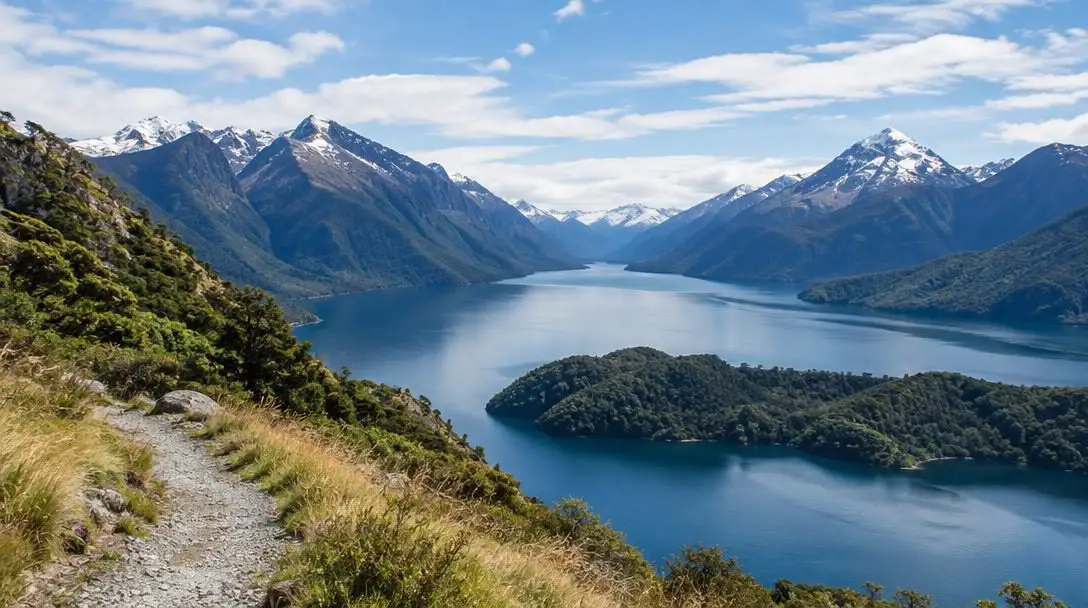
Heading "Down Under" to explore New Zealand offers travelers a rare chance to experience dramatic mountain chains, ancient forests, and a warm, community-minded culture. While many visitors arrive with a conventional checklist of major tourist hubs, uncovering the authentic character of the country means slowing down and exploring just as the locals do.
By engaging with indigenous Maori heritage, savoring regional culinary staples, traversing the country overland and by sea, and seeking out rare native wildlife, you can immerse yourself in the true rhythm of everyday life. This comprehensive guide details five core Kiwi experiences, providing the cultural background, operational logistics, and planning strategies needed to build an unforgettable itinerary across the North and South Islands.
Key takeaways
- Experiencing an authentic Maori haka reveals deep cultural traditions of honor, unity, and tribal identity beyond the sporting arena.
- New Zealand dining balances world-renowned pasture-raised lamb and crisp Sauvignon Blanc with casual beachside fish and chips and bakery mince pies.
- Overland travel by car or intercity bus connects dynamic cities like Auckland and Wellington with natural wonders in Rotorua and Wanaka.
- The three-and-a-half-hour Cook Strait ferry crossing provides a scenic marine link between the North and South Islands through the Marlborough Sounds.
- Spotting the endangered, nocturnal kiwi bird is best achieved through guided night walks on Stewart Island or in specialized nocturnal reserves.
Understanding the Kiwi Way of Life
To fully appreciate New Zealand, it helps to understand the cultural and geographical elements that shape daily routines across its two principal landmasses. New Zealand identity is rooted in an enduring partnership between indigenous Maori heritage and European settler history, supported by an outdoor lifestyle that takes full advantage of the country's diverse natural environment.
Maori culture forms the spiritual and societal foundation of the nation. Far from being a relic of the past, Maori customs, artistic expressions, and protocols are integrated into modern civic life. Experiencing these traditions firsthand gives visitors vital context for understanding the sacred relationship between the people and the land.
The geography of New Zealand also defines how communities interact. Mountain ranges, ocean inlets, and broad pastoral plains mean that travel is an essential facet of living here. Road journeys are not merely holiday excursions; they represent a fundamental way locals stay connected across regional boundaries. Because the country is split by the Cook Strait, maritime crossings are equally vital to national life. Recognizing these everyday realities allows travelers to look past postcard scenery and connect with the genuine Kiwi spirit.
Five Core Experiences to Know the Real New Zealand
Connecting with the heart of New Zealand involves five distinct categories of activity: witnessing cultural ceremonies, dining on local staples, journeying across the highway network, crossing the strait by sea, and discovering rare native fauna.
| Experience | Key Focus | Notable Locations | Primary Highlights |
|---|---|---|---|
| Maori Haka | Cultural Heritage | Cultural centers nationwide | Vocal chanting, body percussion, tribal unity |
| Regional Cuisine | Culinary Traditions | Local bakeries, coastal shacks, vineyards | Pasture-raised lamb, green-lipped mussels, Sauvignon Blanc |
| Overland Travel | Scenic Exploration | Auckland, Wellington, Rotorua, Wanaka | Geothermal valleys, alpine peaks, intercity transit |
| Cook Strait Ferry | Maritime Transit | Wellington to Picton | Marlborough Sounds, open ocean views, outdoor observation |
| Native Kiwi Viewing | Wildlife Preservation | Stewart Island, Franz Josef, Queenstown | Endangered nocturnal birds, active breeding programs |
The Maori Haka
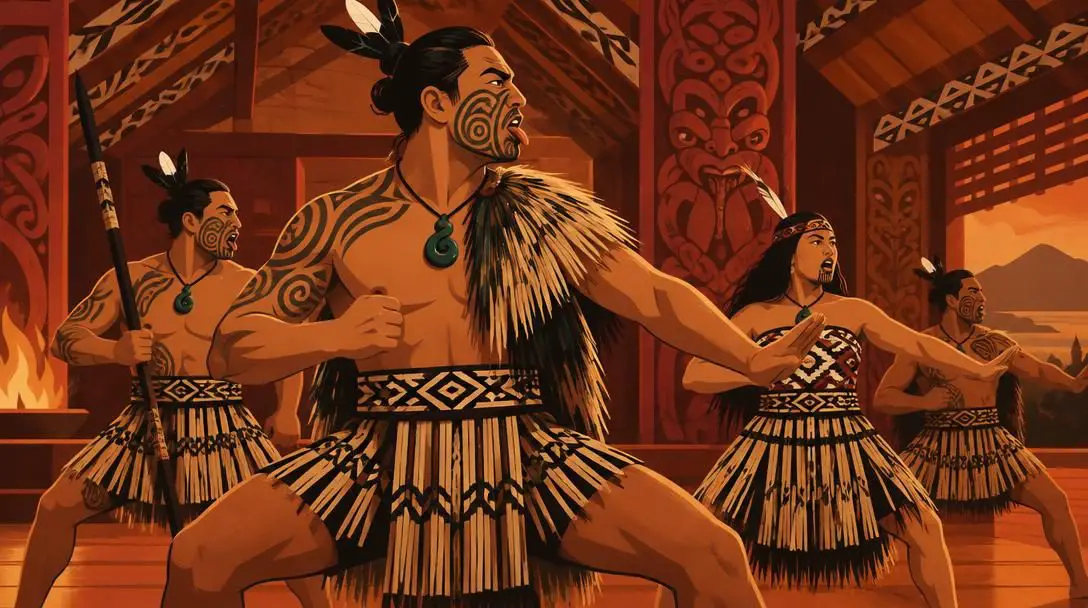
- Origins: Ancient Maori war dance and ceremonial ritual
- Key elements: Foot-stamping, rhythmic body slapping, and vocal chanting
- Modern showcase: Performed internationally by the All Blacks national rugby team
Many international audiences first encounter a haka while watching New Zealand's national rugby team, the All Blacks, perform prior to kickoff on the global stage. However, the Maori haka is far more than an athletic ritual. It is an ancient cultural performance that serves as an assertive expression of passion, solidarity, and ancestral identity, reflecting the living soul of New Zealand's indigenous population.

A haka combines synchronized body percussion, vigorous foot-stamping, wide-eyed facial expressions, and thunderous vocal chanting. While historically deployed on the battlefield by warriors to announce physical strength and intimidate rivals, haka are also performed to welcome honored guests, commemorate significant milestones, celebrate victories, and bind communities together. Across New Zealand, visitors can witness authentic performances at dedicated cultural centers, historic gathering sites, and community venues. Many reputable programs offer participatory segments where visitors learn basic vocal calls and postures, offering a direct, respectful window into Maori values.
New Zealand Lamb and Local Flavors
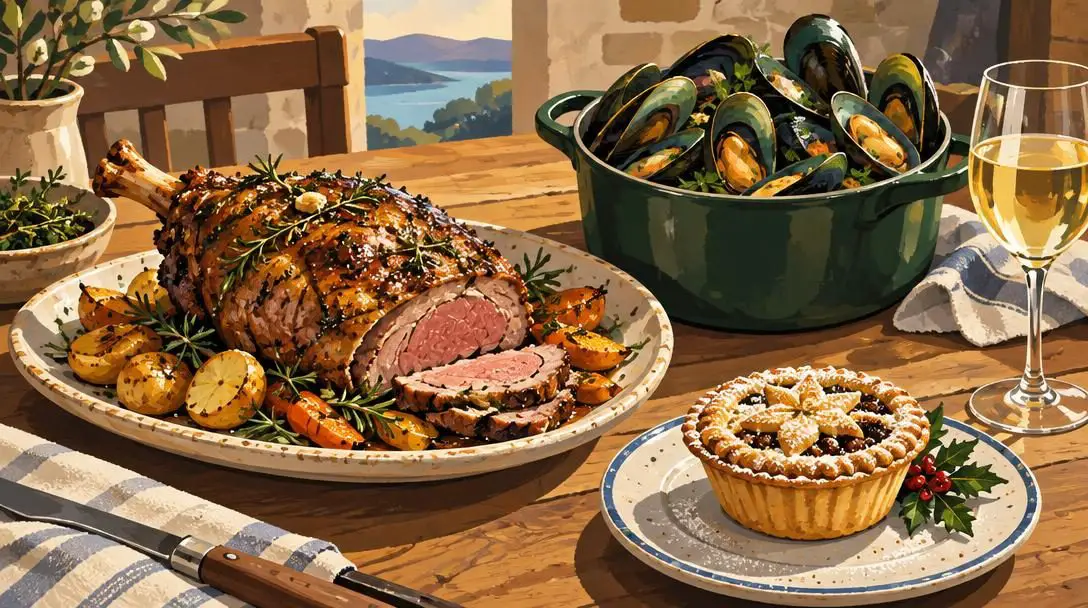
- Signature meat: Pasture-raised tender lamb
- Coastal staples: Crayfish and green-lipped mussels
- Beverage pairing: Crisp, aromatic regional Sauvignon Blanc
New Zealand is globally acclaimed for its tender, succulent lamb, an agricultural staple that features prominently on premier menus around the world. Sampling pasture-raised lamb prepared in its home country is an indispensable culinary experience, yet it represents only one facet of everyday Kiwi gastronomy. The nation's extensive coastlines produce an exceptional abundance of fresh seafood, including sweet crayfish and plump green-lipped mussels, while classic fish and chips remains a beloved weekly tradition often enjoyed directly from paper wrappings on local beaches.
Everyday culinary culture is deeply informal. Warm weekends frequently center around a classic barbecue, known locally as a "barbie," where friends and family gather outdoors to grill meats and seasonal produce. For daytime sustenance while exploring, locals stop at neighborhood bakeries for savory mince pies paired with regional artisan cheeses. To complement these culinary offerings, New Zealand produces world-class vintages, most famously its crisp, expressive Sauvignon Blanc, making a regional wine pairing an effortless addition to any lunch or dinner.
The Scenic Highway and Bus Network

- Transit options: Self-drive routes and intercity bus networks
- Featured hubs: Auckland, Wellington, Rotorua, and Wanaka
- Topography: Geothermal plains, alpine ridges, and glacial waters
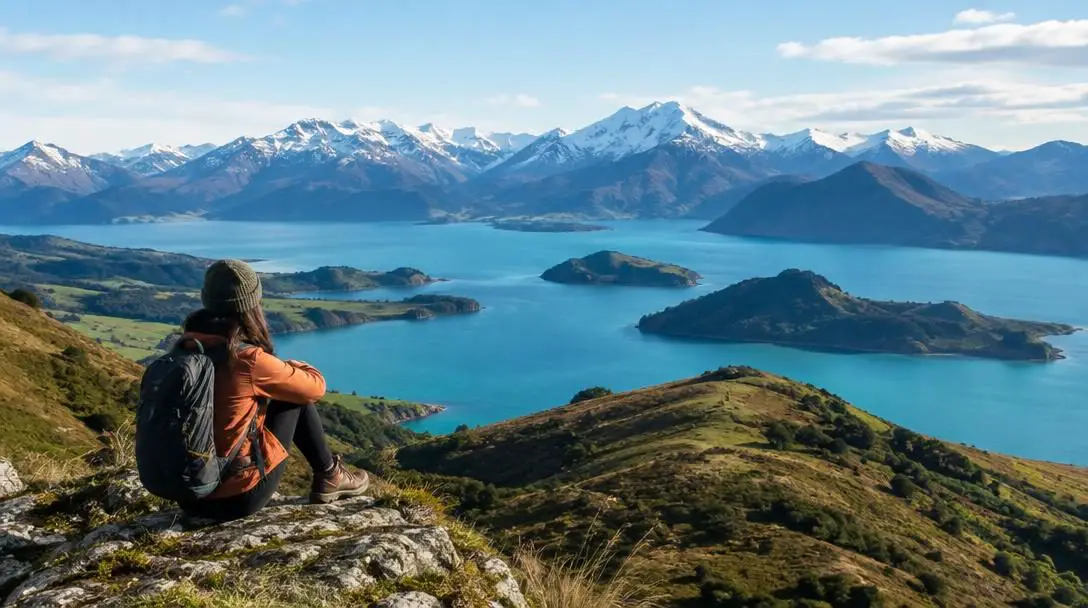
The topography of New Zealand changes rapidly, shifting within a few hours of travel from steaming geothermal vents and sub-tropical beaches to towering alpine ridges and mirror-like glacial lakes. Experiencing this shifting terrain overland is one of the most rewarding ways to absorb the country's raw scale. For those who choose not to drive, an established intercity bus network connects urban centers with rural outposts across both islands.
This public transport infrastructure makes it simple to move between major metropolitan centers like Auckland and Wellington and renowned inland destinations. You can easily reach geothermal hubs like Rotorua, known for bubbling mud pools and cultural parks, or head south to alpine recreation capitals like Wanaka. Traveling slowly along highways and regional routes lets you witness the transitional zones, sheep-dotted pastures, and quiet coastal inlets that lie between commercial centers.
Traveling slowly across the road network allows you to observe the transitional zones, pastoral farmlands, and coastal vistas that lie between major cities.
The Cook Strait Ferry
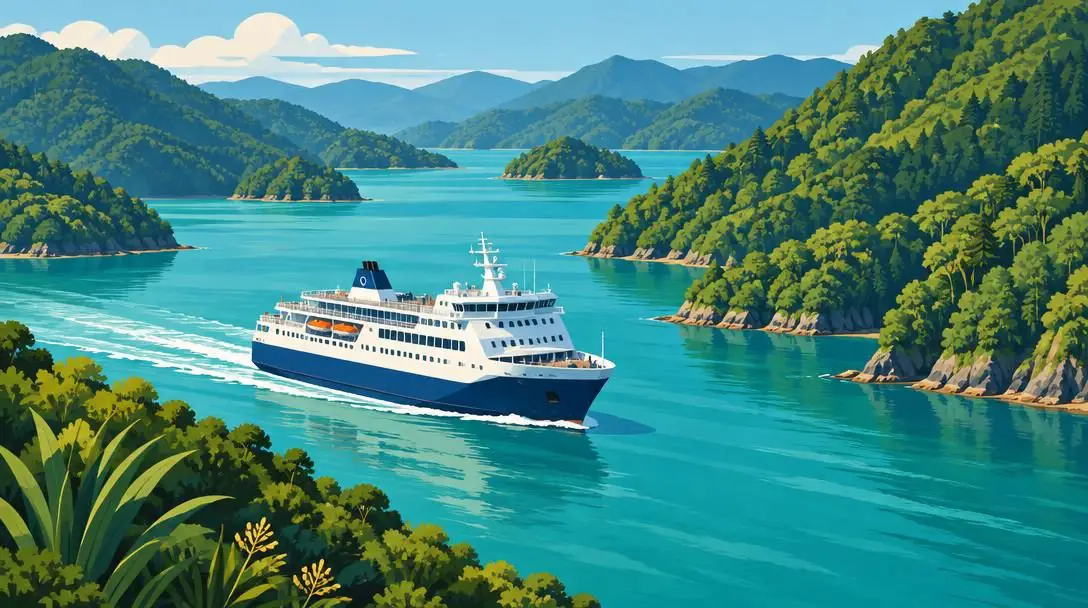
- Primary operators: Interislander and Bluebridge
- Average voyage time: Approximately 3.5 hours
- Route landmarks: Wellington Harbor, Cook Strait, and Marlborough Sounds
While the highway network offers endless scenic drives, a complete journey through New Zealand requires crossing the maritime corridor dividing the North and South Islands: the Cook Strait. Taking a Cook Strait ferry is far more than a simple transit requirement; it is a quintessential Kiwi travel ritual that showcases the country's maritime character.
Two established ferry services, the Interislander and the Bluebridge, run multiple daily sailings between Wellington on the southern tip of the North Island and Picton in the South Island. The journey takes approximately three and a half hours. While vessels offer comfortable interior cabins, free Wi-Fi, and hot meals, most passengers spend the final hour out on the observation decks. Here, the ship navigates the calm, sheltered waterways of the Marlborough Sounds, weaving past steep forested headlands, hidden coves, and emerald waters before docking in Picton.
The Elusive Kiwi Bird
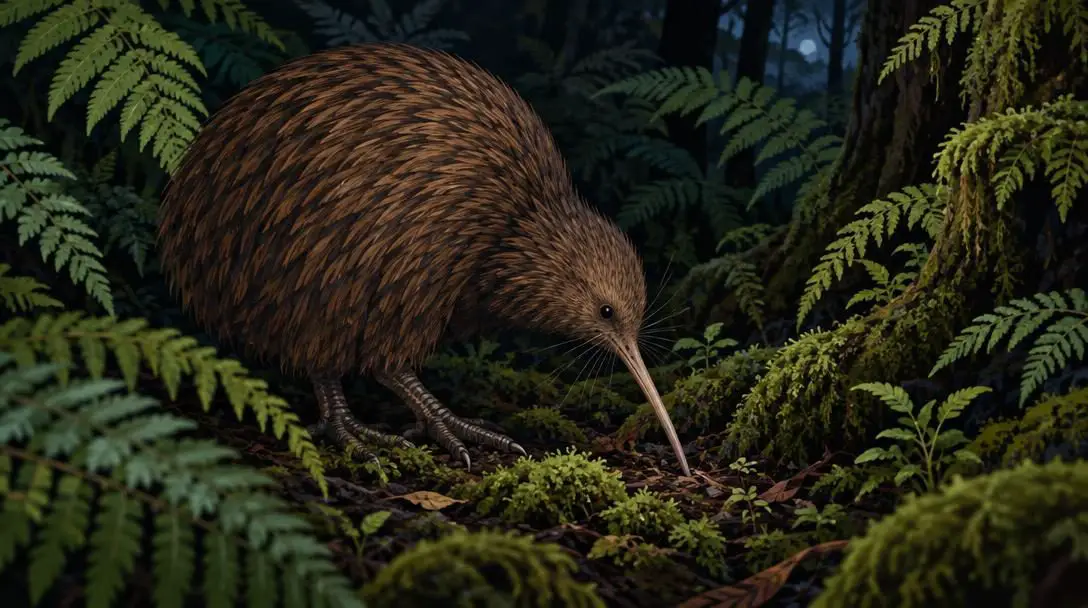
- Distinctive traits: Flightless, nocturnal, acute sense of smell, long probe beak
- Prime wild habitat: Stewart Island coastal forests
- Sanctuary locations: Franz Josef Wildlife Centre and Kiwi Birdlife Park
New Zealand's native wildlife developed across millions of years of evolutionary isolation, producing flightless, ground-dwelling species found nowhere else on Earth. Among these unique animals, the wild kiwi bird stands as the undisputed national icon and a cherished cultural treasure. These nocturnal creatures possess whiskered faces, strong legs, an acute sense of smell, and distinctive long beaks designed to forage for invertebrates beneath damp forest floors.
Because kiwis are nocturnal, well-camouflaged, and vulnerable to introduced predators, encountering one in the wild requires dedication. Stewart Island, situated south of the South Island, is recognized as one of the best locations for spotting kiwis foraging naturally along coastal fringes at dusk. For travelers unable to undertake night treks in remote wilderness, conservation facilities provide ethical viewing opportunities. Centers such as the Kiwi Birdlife Park and the Franz Josef Wildlife Centre operate specialized nocturnal houses and vital breeding projects, allowing visitors to view these remarkable birds while contributing to their preservation.
How to Build Your New Zealand Itinerary
Synthesizing these varied activities into an organized travel schedule requires methodical planning. Follow these five sequential steps to build a well-rounded route:
- Map out a sequential island-by-island route: Organize your journey linearly from North to South, or South to North, to prevent backtracking. Schedule stops in major urban bases like Auckland and Wellington alongside regional excursions to Rotorua and Wanaka.
- Reserve your Cook Strait ferry crossing in advance: Because the three-and-a-half-hour crossing via the Interislander or Bluebridge is the only vehicle-accessible link between the islands, book your space early to secure favorable departure times during peak travel periods.
- Align ground transport schedules: If you are relying on public transit, check intercity bus timetables to ensure smooth connections between city terminals, ferry ports, and regional sights.
- Book cultural presentations and wildlife visits: Secure reservations for authentic haka performances and conservation visits. Check operating hours and nocturnal tour availability for facilities like the Franz Josef Wildlife Centre and Kiwi Birdlife Park, or reserve a guided night walk on Stewart Island.
- Dedicate time for regional food discoveries: Allocate room in your daily schedule to drop into neighborhood bakeries for fresh mince pies, stop at coastal food shacks for local crayfish, and book a winery visit to enjoy pasture-raised lamb with a local Sauvignon Blanc.
Common Travel Pitfalls to Avoid
First-time visitors often encounter logistical oversights that can disrupt their experience. Keep these common travel mistakes in mind as you finalize your plans:
- Underestimating rural drive times: New Zealand's roads are frequently winding, narrow, and hilly. Distance figures can be deceptive; a journey that looks short on a map often takes significantly longer than anticipated due to undulating terrain.
- Rushing through the ferry crossing: Treating the Cook Strait crossing as merely functional downtime means missing dramatic views. Avoid staying indoors on your digital devices during the transit, particularly as the ship navigates the Marlborough Sounds.
- Viewing cultural rituals as simple performances: Approaching the haka merely as photo-worthy entertainment disregards its spiritual gravitas. Take time to listen to the cultural context and historical significance shared by your hosts.
- Assuming wild kiwis are easily found: Many travelers expect to encounter kiwis randomly in urban parks or local nature reserves. Because these birds are nocturnal and endangered, sighting one without a specialized sanctuary visit or guided expedition on Stewart Island is extremely unlikely.
- Focusing exclusively on formal dining: Sticking strictly to upscale restaurants means bypassing authentic community food culture. Missing out on neighborhood bakery pies, roadside barbecues, and casual fish-and-chip shops deprives you of quintessential Kiwi flavors.
Frequently asked questions
How long does the ferry take between the North and South Islands?
The ferry crossing across the Cook Strait between Wellington on the North Island and Picton on the South Island takes approximately 3.5 hours on both the Interislander and Bluebridge services.
Where is the best place to see a kiwi bird in the wild?
Stewart Island is widely regarded as one of the best locations for observing kiwis in their natural habitat, particularly on guided nocturnal walks along the coast. Conservation centers like the Kiwi Birdlife Park and Franz Josef Wildlife Centre also offer guaranteed viewings in nocturnal houses.
Can visitors participate in a Maori haka?
Yes, several cultural venues and centers offer participatory workshops where guests are taught the basic foot-stamping movements, body slapping rhythms, and vocal calls while learning about the history behind the ritual.
Can you travel across New Zealand without renting a car?
Yes, travelers can utilize an extensive intercity bus network that connects major cities like Auckland and Wellington with popular regional hubs such as Rotorua and Wanaka, as well as ferry terminals.
What foods are considered classic Kiwi culinary staples?
Classic Kiwi food traditions include pasture-raised New Zealand lamb, fresh coastal seafood like crayfish and green-lipped mussels, beachside fish and chips, savory bakery mince pies, and home barbecues paired with regional Sauvignon Blanc.
The Bottom Line
Gaining an authentic appreciation of New Zealand requires looking beyond the standard highlights and adopting the rhythms of the people who call these islands home. Whether you are learning the cultural meaning behind a powerful Maori haka, tasting fresh seafood wrapped in paper beside the Pacific ocean, or watching forested islands glide past from the bow of a Cook Strait ferry, real discovery comes from active participation.
By coordinating your transit carefully, respecting local customs, and allowing plenty of time to explore the diverse landscapes between major cities, you will experience the genuine warmth, resilience, and natural majesty that define this remarkable corner of the world.