
The Joy of Hot Air Ballooning: A Guide to Soaring Through the Skies
Hot air ballooning stands as a singular, tranquil adventure that presents sweeping panoramic views alongside an authentic encounter with the elements. Whether planned as an intimate excursion or an invigorating outdoor venture, drifting thousands of feet above the earth creates vivid memories that linger long after touching down. While novice passengers might initially feel uneasy about traveling at high altitudes in an open wicker structure, thorough preparation reveals that hot air ballooning is one of the safest, most peaceful, and most scenic activities in recreational aviation.
As the oldest successful human-carrying flight technology, ballooning connects travelers to a rich aeronautical heritage defined by natural buoyancy rather than modern propulsion. Grasping how the craft relies on thermal energy, learning the nuances of wind navigation, and knowing how to prepare for ground and air conditions ensures that every passenger extracts the greatest possible enjoyment from their time aloft.
Key takeaways
- Hot air balloons operate on basic buoyancy principles, utilizing heated air inside a lightweight envelope to ascend without the aid of engines or steering wheels.
- Skilled pilots navigate directional paths by adjusting their altitude to match differing wind currents layered throughout the atmosphere.
- Comfortable layering and sturdy, closed-toe footwear are vital for handling crisp sunrise temperatures, radiant burner heat, and rural landing pastures.
- Iconic global flight destinations range from the fairy chimneys of Cappadocia to the temple plains of Bagan and the open savannahs of the Serengeti.
- Traditional landing celebrations, often featuring a shared toast of champagne or fruit juice, remain an essential social conclusion to the flight experience.
The history and mechanics of hot air flight
Long before airplanes, helicopters, or gliders conquered the air, early aeronauts realized that trapped, heated air within a lightweight frame could triumph over gravity. Over decades of refinement, hot air ballooning transformed from a perilous scientific experiment into a standardized, reliable sport and sightseeing pastimes enjoyed across the globe. Unlike modern mechanical aircraft that depend on powerful internal combustion engines, spinning propellers, and rapid speeds, balloons move at the precise velocity of the surrounding atmosphere. This unique reliance on natural dynamics creates an unhurried perspective where the ground slides past gently, punctuated only by the occasional roar of the heating system.
Although hot air balloons are manufactured in a dizzying array of sizes, vivid colors, and creative profiles—from traditional teardrop silhouettes to whimsical custom figures—every certified system relies on three interconnected primary components:
- The envelope: The massive, durable fabric bag designed to contain the heated air. Tailored to precise volume specifications, envelopes provide the exact lifting capacity necessary for designated passenger weights and basket equipment.
- The basket: Positioned directly beneath the envelope mouth, this woven compartment accommodates the pilot and passengers, offering sturdy perimeter protection alongside completely unobstructed, 360-degree views of the horizon.
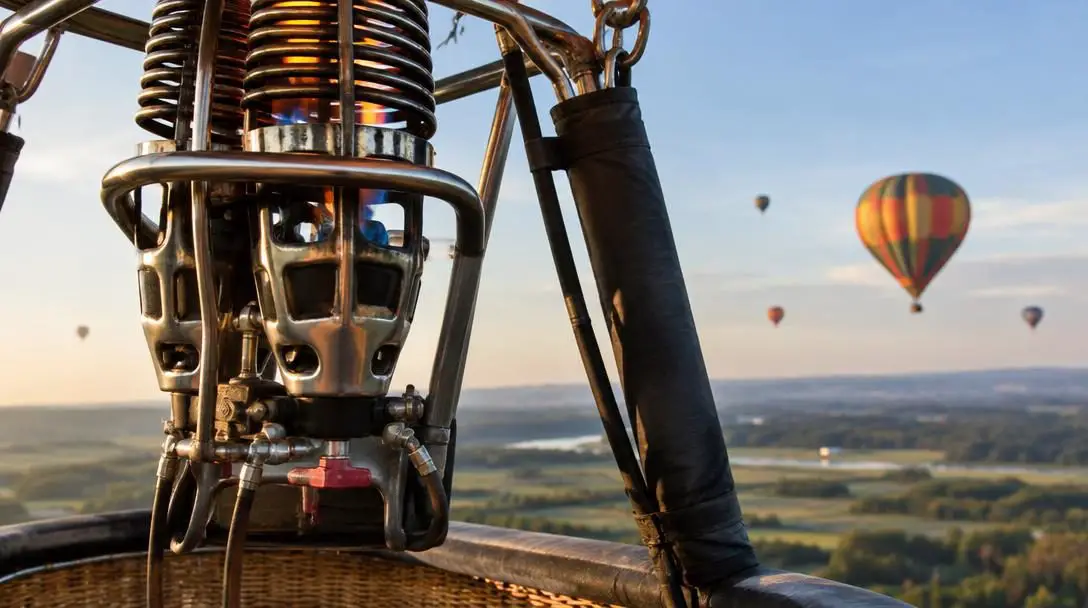
- The burner mechanism: Suspended over the basket frame and pointed directly upward, this high-output burner consumes fuel to heat ambient air as it enters the lower opening of the envelope.
The underlying science behind ballooning rests on fundamental buoyancy principles. When the pilot activates the burner, the air trapped inside the envelope rapidly expands and warms. Because warm air is less dense than the cooler surrounding atmosphere, the internal volume becomes lighter than the displaced exterior air, generating upward lift that carries the entire craft skyward.
How pilots navigate without a steering wheel
A frequent puzzle for first-time observers is how an aircraft devoid of a directional rudder, wings, or a mechanical steering column manages to travel from a launch field to an intentional landing clearing. While horizontal movement is entirely governed by drifting breezes, pilots exert remarkable control over their geographic heading by mastering the vertical axis.
Earth's atmosphere is stratified into distinct vertical layers, each displaying subtle variations in wind speed and directional heading. An experienced aeronaut reads these wind patterns closely. To navigate toward a specific compass point, the pilot introduces additional heat via the burner mechanism, causing the envelope to ascend into a higher wind layer drifting along the desired vector. Conversely, by letting the internal air cool down gradually, the envelope decreases in buoyancy, settling into lower currents that move in an alternative direction. Through continuous, calculated altitude adjustments, pilots skillfully guide their craft over forests, agricultural fields, and topographical obstacles.
Traveling at the exact speed of the wind creates an absolute, peaceful stillness in the air, leaving riders with no sensation of a rushing breeze.
Step-by-step preparation for your flight
Thoughtful advance planning ensures that your excursion remains safe, punctual, and thoroughly relaxing. Approaching your flight systematically eliminates unnecessary guesswork on the launch field.
- Research and select an established operator: Investigate commercial balloon companies thoroughly before booking. Evaluate authentic customer testimonials, read safety reviews, and choose businesses that boast long-standing operational histories and positive customer ratings.
- Verify pilot credentials and maintenance standards: Confirm that the operating company maintains its equipment in pristine condition and that your assigned pilot holds all necessary commercial licenses and passenger-carrying ratings required by aviation authorities.
- Choose functional outdoor apparel: Dress in durable, loose-fitting garments that permit easy movement when stepping over high basket sides. Choose sturdy, closed-toe walking shoes or boots, and wear adjustable layers to balance the brisk morning air against the direct warmth of the overhead burner.
- Arrive early for safety briefings: Punctuality is critical because hot air flights launch during early morning hours when atmospheric thermal currents are calmest. Arriving on schedule allows you to observe the inflation process and listen attentively to mandatory safety instructions.
- Keep personal carry-on gear minimal: Basket floor space is shared equally among passengers and flight gear. Restrict your personal items to small essentials, such as a camera or mobile phone fitted with a secure neck or wrist lanyard, leaving bulky backpacks on the ground.
What to expect during the in-flight experience
After ground crews complete cold-air fan inflation and hot-air burner pressurization, passengers climb into the basket. The pilot opens the fuel valve, generating broad tongues of flame that inject intense heat into the throat of the envelope. Almost imperceptibly, the heavy wicker basket becomes weightless. The aircraft lifts off without the jarring bumps, engine vibration, or rapid acceleration typical of motorized runway travel.
As the balloon establishes its gentle ascent, the horizon expands dramatically. Terrestrial features—winding riverbeds, country roads, patches of woodland, and clustered homesteads—transform into an intricate living map. Because the balloon travels synchronously with the surrounding air mass, there is virtually zero wind chill or breeze blowing against your skin inside the basket. The atmosphere remains profoundly tranquil, allowing riders to marvel at panoramic views in an unhurried, quiet setting.
When the planned airtime concludes, the pilot selects an expansive, unobstructed landing clearing. By allowing the air in the envelope to cool slightly, the balloon enters a steady, gradual descent. Modern landing protocols, executed by seasoned pilots, ensure that the basket settles securely onto the ground with minimal impact.
Five common mistakes first-time flyers make
Avoiding typical beginner missteps guarantees that your maiden voyage remains comfortable from pre-dawn check-in through the final pack-up:
- Wearing open-toed shoes or elevated heels: High heels, sandals, and slip-on shoes are inappropriate for ballooning. Landing areas frequently involve rural agricultural fields, wet meadows, or uneven terrain where ankle support and moisture protection are necessary.
- Dressing in rigid, single-layer clothing: Ambient air temperatures at higher altitudes can feel cool, yet the burner unit just above your head radiates significant thermal energy. Wearing adaptable layers solves both concerns effortlessly.
- Failing to confirm maintenance and safety histories: Never hesitate to inquire about an operator's safety record, equipment inspection routines, or pilot flight hours. Reputable aviation companies are eager to demonstrate their rigorous safety protocols.
- Carrying unsecured electronic recording devices: Passengers eager for aerial photography often lean out over the basket rail. Without secure tethers, a simple slip of the hand results in total loss of your equipment.
- Underestimating early-morning ground chills: Because morning launches take advantage of stable air conditions before sunrise, ground temperatures are often brisk. Arriving without a light jacket can leave you shivering during the initial briefing and balloon inflation phase.
World-renowned ballooning destinations
Hot air ballooning is practiced worldwide, but certain geographical landscapes stand apart for their exceptional visual grandeur, stable meteorological patterns, and scenic variety. The following table provides an overview of five premier flying destinations celebrated globally by aviation enthusiasts.
| Destination | Geographic setting | Distinctive terrain | Primary aerial view |
|---|---|---|---|
| Cappadocia | Turkey | Eroded volcanic valleys | Fairy chimneys and cave dwellings |
| Albuquerque | New Mexico, United States | High desert river valley | Sandia Mountains and Rio Grande |
| Loire Valley | France | UNESCO World Heritage basin | Renaissance châteaux and vineyards |
| Bagan | Myanmar | Misty archaeological plain | Ancient Buddhist temples and pagodas |
| Serengeti | Tanzania | Protected African savannah | Wandering wildlife herds in natural habitat |
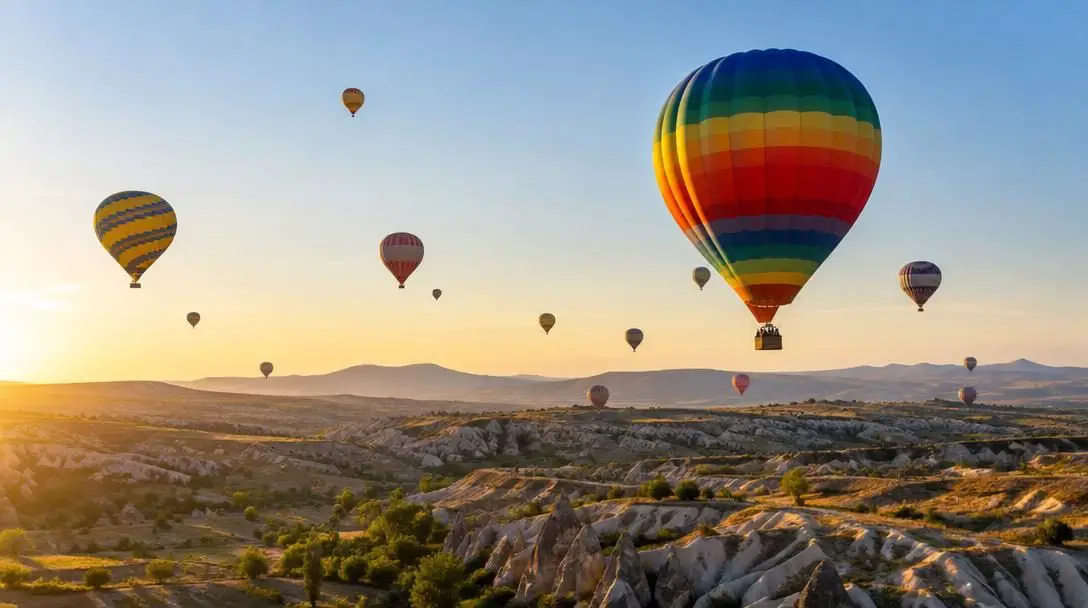
Cappadocia, Turkey

- Location: Central Turkey
- Key features: Ancient cave structures and fairy chimneys
- Flight character: Dozens of colorful balloons launching simultaneously at dawn
Widely regarded as one of the most photographed ballooning corridors on the planet, Cappadocia, Turkey boasts a surreal landscape formed by millennia of natural erosion. Gliding silently above deep cleft valleys, passengers look directly down onto ancient monastic dwellings carved into rock faces, subterranean cities, and geological spires known as fairy chimneys. The daily ritual of countless balloons rising together alongside the morning sun makes this Turkish province a peerless spectacle.
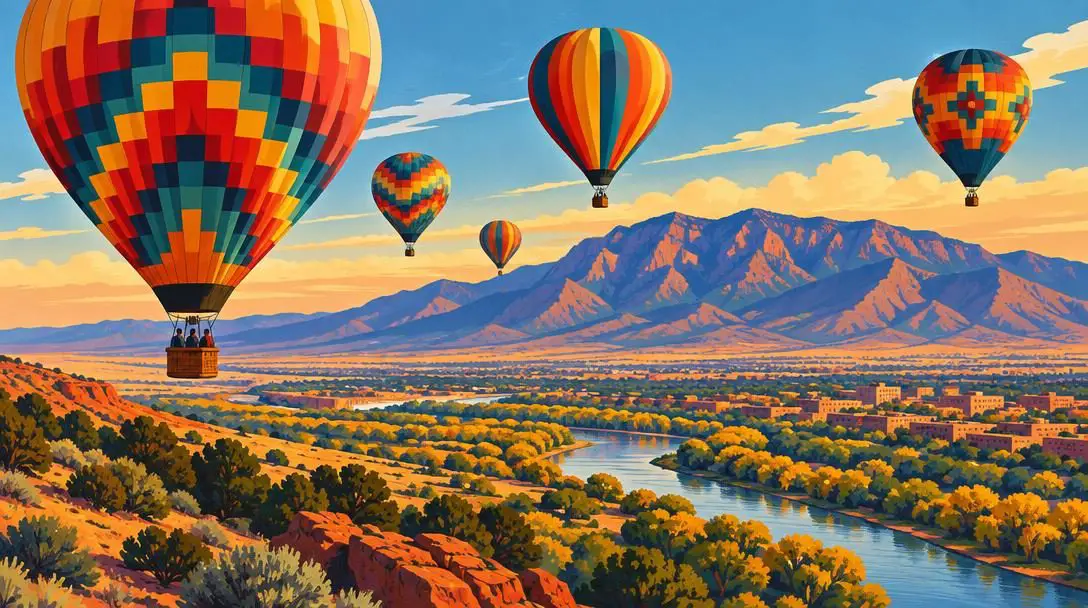
Albuquerque, New Mexico
- Location: Southwestern United States
- Notable landmarks: Sandia Mountains and Rio Grande valley
- Flight conditions: Dependable high-desert weather with specialized atmospheric wind patterns
Renowned for hosting prestigious balloon gatherings, Albuquerque, New Mexico provides optimal meteorological conditions for predictable aerial sightseeing. The desert basin features distinct wind dynamics that allow skilled pilots to maneuver across the Rio Grande valley against the backdrop of the rugged Sandia Mountains. Wide-open desert horizons and sun-drenched skies create premier flying conditions throughout the region.
Loire Valley, France

- Location: Central France
- Designation: UNESCO World Heritage region
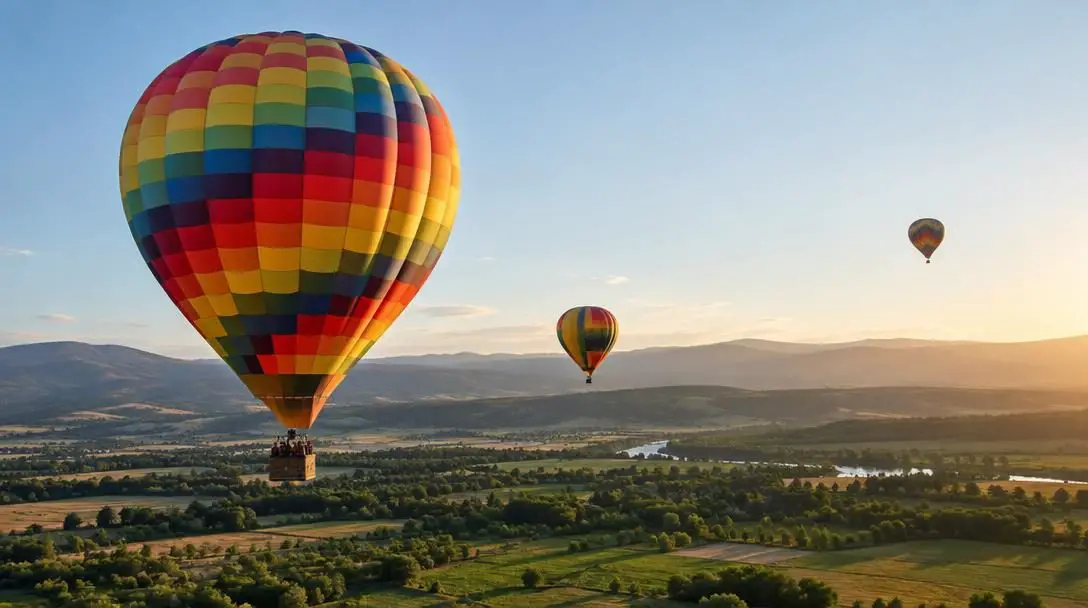
- Visual highlights: Historic châteaux, manicured garden estates, and rolling vineyards
Floating above the Loire Valley, France yields an elegant perspective on French architectural history and verdant agricultural design. Passengers drift lazily past sprawling Renaissance estates, medieval battlements, labyrinthine gardens, and pristine vineyards bordering winding river courses. The tranquil pace of hot air travel matches the graceful rural ambiance of this internationally protected cultural landscape.
Bagan, Myanmar

- Location: Central Myanmar
- Archaeological profile: Thousands of historic religious temples and pagodas
- Visual environment: Misty rural greenery and forested canopies
The ancient plains of Bagan, Myanmar house thousands of historic Buddhist temples, stupas, and sacred pagodas rising above the surrounding forest canopy. Morning balloon flights over Bagan take place amid quiet morning mists, revealing centuries of sacred spiritual architecture standing across lush rural pastures. The absence of motorized noise allows travelers to experience this holy landscape with unmatched reverence and visual clarity.
Serengeti, Tanzania

- Location: Northern Tanzania
- Ecosystem: Vast protected African savannah
- Primary attraction: Undisturbed aerial wildlife observation
A balloon safari across the Serengeti, Tanzania presents wildlife viewing from a vantage point unattainable by traditional safari vehicles. Gliding quietly along the prevailing wind currents, passengers observe roaming herds of game across vast grassland expanses without the mechanical rumble of diesel engines startling the animals. This silent passage provides an authentic, non-disruptive window into the daily habits of African fauna.
Post-flight traditions and next steps
The conclusion of a hot air balloon flight is steeped in historical customs that date back to the earliest eras of manned aviation. Once the basket settles into the recovery field and the ground chase crew secures the envelope, passengers gather for a traditional toast of champagne or chilled fruit juice. This convivial ritual offers pilots, crew, and guests a relaxed moment to share anecdotes, review the flight path, and celebrate their safe return to terra firma.
Upon returning home, take time to catalog and preserve your aerial photographs while the memory of the morning's flight path remains fresh. For many travelers, an initial balloon journey sparks a broader enthusiasm for recreational aviation. Those fascinated by the art of ballooning can expand their involvement by attending regional balloon festivals to watch mass ascensions, booking specialty flights across varied geographical terrains, or even pursuing ground-school lessons to earn a private balloon pilot certification.
Frequently asked questions
How do hot air balloons change direction without a steering wheel?
Pilots alter their flight direction by changing altitudes. Because atmospheric winds flow in varying directions at different heights, the pilot uses the burner to ascend or allows the envelope to cool to descend into a wind layer blowing toward their intended course.
Why do hot air balloon rides take place early in the morning?
Early morning offers the calmest, most stable atmospheric conditions. Sunrise flights avoid the erratic thermal winds and thermal turbulence that typically develop later in the day as the sun heats the ground.
What should I wear for a hot air balloon flight?
Wear comfortable, loose-fitting clothes in layers, topped with a light jacket. Choose sturdy, closed-toe walking shoes or boots suitable for walking through damp or uneven grass, and avoid open-toed sandals or high heels.
Does it feel windy inside the balloon basket while flying?
No, you will generally feel little to no wind against your face. Because the balloon moves at the exact same speed and direction as the prevailing breeze, the basket remains remarkably calm and still throughout the journey.
What happens during the landing process?
The pilot identifies an open, level clearing and reduces the heat inside the envelope to begin a controlled descent. Modern equipment and techniques ensure that the basket touches down smoothly on the ground with the assistance of a trained chase crew.
The bottom line
Hot air ballooning offers a tranquil escape from the noise, speed, and congestion of everyday life. By swapping engines and speedometers for buoyant physics and ambient currents, balloon passengers discover an unhurried, panoramic view of the natural world. With thorough preparation, mindful gear selection, and a licensed, reputable operator, taking to the open sky in a hot air balloon promises an extraordinary, safe, and deeply gratifying aerial journey.