The Joy of Ice Skating: Tips for Skating and Fitness
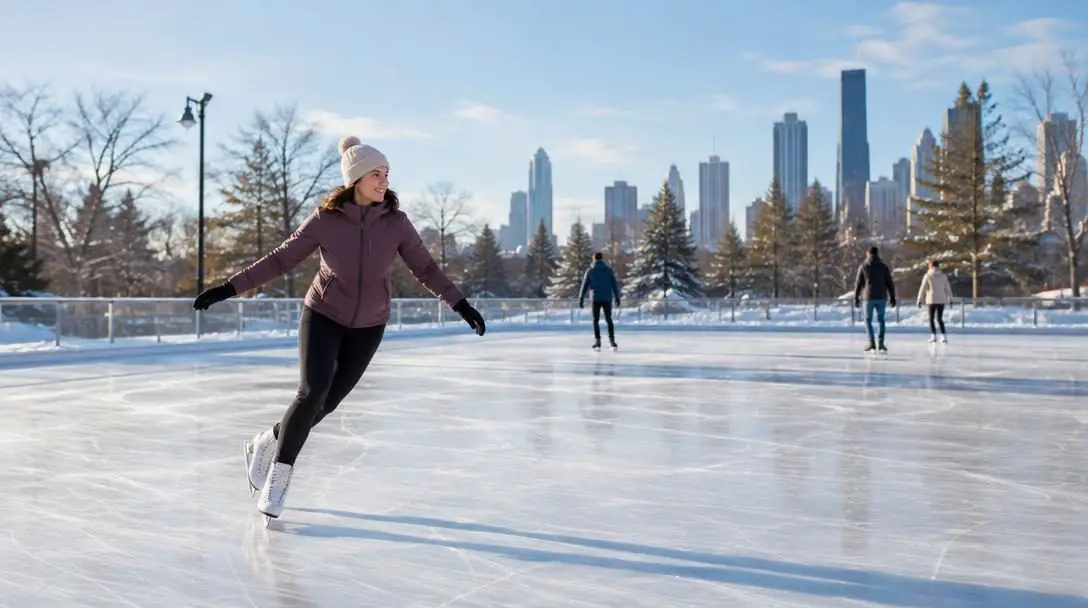
Ice skating is a vibrant, rewarding activity enjoyed by people of all ages across the globe. Whether stepping onto the frozen surface for the very first time or refining technical maneuvers honed over years of practice, visitors to the rink discover an athletic outlet that blends recreation with high-yield physical conditioning. The sensation of gliding across a slick, refrigerated sheet of ice offers a welcome break from monotonous dry-land exercise routines, replacing the heavy impact of pavement running with fluid, near-frictionless travel.
Beyond its charm as a seasonal pastime or weekend social outing, ice skating serves as an all-around workout that strengthens muscles, challenges the cardiovascular system, and sharpens balance and coordination. By learning the physics of edge control, dressing in supportive gear, and honoring basic safety principles, skaters of any background can turn a simple public session into a lifelong foundation for health, athletic progress, and fun.
Key takeaways
- Ice skating delivers a full-body workout that burns up to 500 calories per hour while maintaining a low-impact profile that spares sensitive joints.
- Proper skating mechanics require keeping your head up, shoulders back, knees slightly bent, and toes angled slightly outward in a subtle V-shape.
- Essential protective equipment includes a helmet, wrist guards, and knee pads to mitigate the impact of unexpected falls.
- When losing balance, tuck your chin toward your chest and aim to fall on your knees or buttocks rather than extending your hands.
- Progressing from basic forward glides to advanced crossovers, spins, and jumps depends on consistent practice and mastering controlled stops first.
The unique appeal and culture of the ice rink
For generations, the thrill of gliding across frozen lakes, canals, and indoor arenas has captured the popular imagination. What frequently begins as lighthearted leisure during winter holidays often develops into an enduring personal passion. The modern indoor ice arena provides a sanctuary apart from daily routines, where the crisp chill of the ambient air and the rhythmic scraping of steel blades against chilled ice create an invigorating atmosphere unlike any traditional fitness center.
People flock to public rinks for diverse reasons. For families and groups of friends, the rink functions as a vibrant communal space where people can share laughs, hold hands along the perimeter, and enjoy healthy physical recreation together. For solo athletes and fitness enthusiasts, the ice serves as a testing ground for core stability, discipline, and stamina. Because the barrier to basic recreational participation is relatively low, people across an expansive spectrum of ages—from young children finding their footing to older adults seeking low-impact cardio—can share the same sheet of ice comfortably.
Moving across the ice replaces the harsh pounding of pavement with a dynamic sensation of near-frictionless gliding that is both liberating and physically demanding.
The biomechanics of gliding: how skating movement works
To move across an ice rink smoothly, a skater must adapt to an environment governed by minimal friction. On dry land, walking or running relies on pushing straight backward against a high-traction surface. On ice, pushing straight backward causes the smooth blade to slip uselessly. Instead, skaters must push outward at an angle against the inside edge of the blade, channeling lateral force into forward momentum while the opposite skate glides along its own path.
Mastering this dynamic balance requires deliberate body alignment. Correct posture serves as the anchor for every maneuver, from a cautious first glide to high-speed turns:
- Head position: Keep your head up and look forward toward where you want to go. Looking straight down at your feet drops your center of mass forward and disrupts spinal alignment.
- Shoulder alignment: Pull your shoulders back and down to create an upright, stable spine that keeps your center of gravity squarely over your feet.
- Knee bend: Maintain a slight, flexible bend in your knees at all times. Bent knees function as natural shock absorbers, lower your center of gravity, and create the spring needed to push off forcefully.
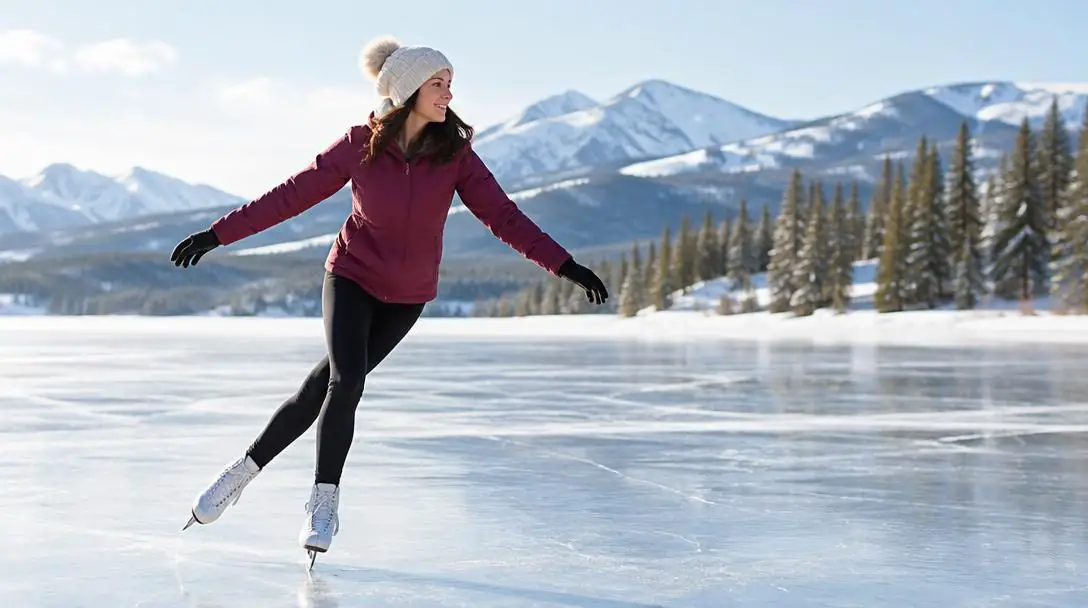
- Foot alignment: Position your feet so the toes point slightly outward in a subtle V-shape, allowing the inside edges of the blades to bite gently into the surface for propulsion.
- Arm carriage: Hold your arms relaxed, slightly bent, and positioned out in front of your body near waist level to help manage subtle balance corrections.
Once this posture becomes second nature, skaters can link together the four foundational techniques of the sport: forward skating, backward skating, stopping, and turning. Forward travel relies on alternating pushes from the inside edge of one blade while gliding on the opposite foot. Backward skating reverses the pressure patterns, using inward and outward blade arcs to maintain momentum. Turning requires shifting your body weight inward toward the center of the arc while keeping your knees bent, and stopping requires angling the blade sideways to shave the ice surface, generating deliberate friction that brings momentum to a smooth, controlled halt.
Ice skating as an efficient fitness regimen
Beyond its recreational charm, ice skating provides a remarkably comprehensive workout. Gliding across the ice can burn up to 500 calories per hour, rivaling popular cardiovascular exercises such as moderate cycling, swimming laps, or jogging. The continuous effort needed to sustain momentum and manage stability turns every public session into a demanding aerobic and muscular challenge.
Because the ice is slick, the body cannot rely on passive balance. Stabilizer muscles throughout the entire kinetic chain must fire continuously. The large lower-body muscle groups perform the bulk of the mechanical work:
- Quadriceps and hamstrings: The sustained knee flexion required in proper skating posture forces the quadriceps to remain under constant isometric tension, while the hamstrings engage to pull and stabilize the leg through each stride.
- Gluteal muscles: Pushing outward at an angle activates the gluteus medius and gluteus maximus, building lateral hip strength that is rarely targeted during standard forward running.
- Calves and ankles: The gastrocnemius, soleus, and smaller stabilizer tendons surrounding the ankle work continuously to adjust blade angle and manage micro-movements against the ice.
- Abdominal and lumbar core: The rectus abdominis, obliques, and erector spinae contract steadily to keep the torso upright, counteracting rotational forces created by alternating arm and leg pushes.
In addition to raw strength and caloric expenditure, skating develops agility, joint flexibility, and fine motor coordination. Crucially, it does so while functioning as a low-impact exercise. Running on concrete or asphalt subjects feet, ankles, knees, and hips to repetitive shock waves every time a heel strikes the ground. Skating eliminates this jarring impact because the blade stays largely in contact with the ice, gliding rather than slamming down. This gentle, flowing movement makes the sport an appealing, accessible choice for individuals managing joint sensitivities, past running injuries, or orthopedic limitations who still desire a vigorous cardiovascular sweat.
Step-by-step guide: preparing for and executing your session
Entering an ice arena without a structured plan can leave beginners feeling intimidated or unsteady. Following an organized series of steps helps ensure that every session on the ice is safe, productive, and enjoyable.
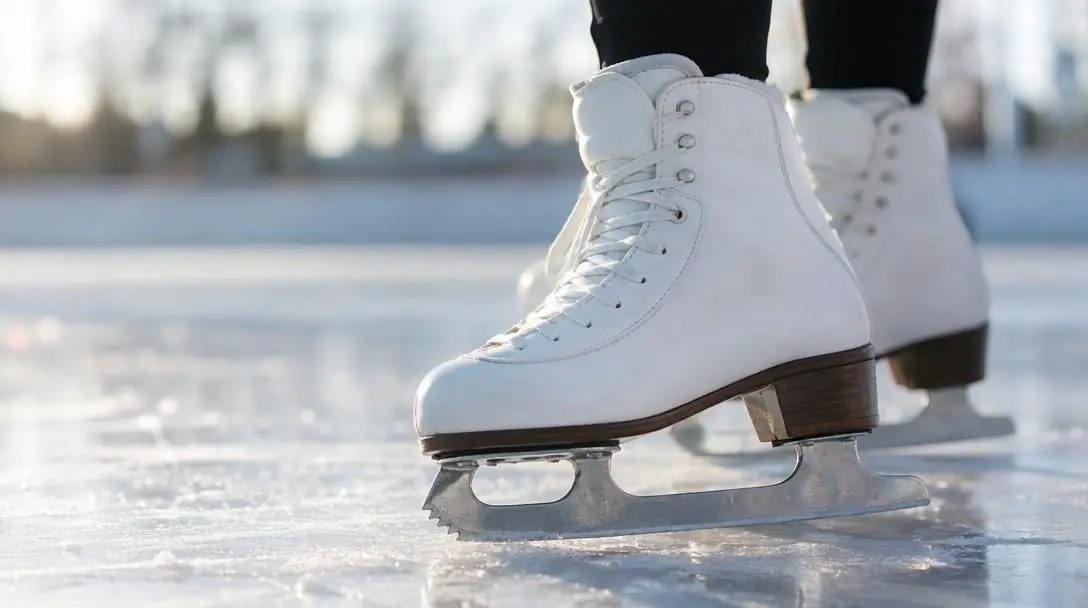
- Select and fit your skates properly. Comfortable, well-fitted skates make all the difference in your time on the ice. When renting or purchasing boots, always wear the exact thick socks you plan to use while skating. Ensure your heel feels locked firmly into the back of the boot without pinching, and check that your toes have enough clearance to lie flat without curling.
- Equip yourself with certified protective gear. Safety is paramount, especially when you are building confidence. Strap on a properly fitted helmet, sturdy wrist guards, and knee pads before heading through the rink doors. These guards absorb high-energy contact and prevent painful bruises or fractures if you slip.
- Step onto the ice and acclimate near the barrier. Enter the ice sheet deliberately through the access gate. Take a few moments to hold onto the perimeter barrier rail. Stand tall with your skates shoulder-width apart, feeling the lack of traction beneath your blades and finding your center of gravity while supported.
- Establish correct baseline posture. Once you feel comfortable standing, release your grip on the railing. Lift your chin to look straight ahead, draw your shoulders back, softly bend your knees, point your toes outward in a gentle V-shape, and extend your hands out in front of your waist.
- Begin with slow, alternating glides. Avoid rushing into speed. Shift your weight onto one foot and make a gentle, angled push off the inside edge of the opposite blade. Glide forward on the supporting foot, then bring the pushing foot back beneath your hips before alternating to the other side. Focus on rhythm and balance.
- Practice controlled stops early in the session. Before attempting faster laps, practice shaving the surface of the ice with your skate blade to come to a full stop. Knowing you possess the ability to halt on command builds mental confidence and prevents dangerous collisions.
- Gradually introduce higher speed and complex skills. Once basic forward movement feels secure, increase your pace and intensity. Challenge your coordination by initiating gentle sweeping turns, working on tight edge changes, or practicing introductory crossovers, small hops, or simple spins.
Safety protocols, falling technique, and rink etiquette
Because ice is dense, unforgiving, and slick, mastering safety practices is just as vital as learning forward propulsion. Unexpected falls happen to every skater, from first-timers to competitive figure skaters and hockey players. The primary distinction between an uneventful tumble and an emergency room visit is understanding how to fall correctly.
When you sense your balance failing, fight the instinctive human reaction to throw your hands out behind or beneath you. Instead, adopt a defensive falling posture:
- Tuck your chin: Immediately bring your chin tightly down toward your chest to lock your neck muscles and keep the back of your head from whipping backward against the hard surface.
- Drop your center of mass: Deepen your knee bend immediately. The lower you are to the ice when balance is lost, the shorter the distance you fall.
- Land on padded areas: Direct the impact toward the fleshier parts of your body, such as your knees or your buttocks. Let protective knee pads absorb the downward shock.
- Get up safely: Once stationary, roll onto your hands and knees. Bring one skate flat onto the ice between your hands, push down through that foot, and bring the second skate underneath you to stand back up.
In addition to personal falling mechanics, maintaining shared rink etiquette ensures that everyone on the ice stays safe. Ice arenas operate like miniature highway systems that depend on mutual predictability:
- Follow traffic flow: Always skate in the direction established by the rink staff, which is typically counterclockwise. Never cut across the current or skate against traffic.
- Maintain a safety buffer: Avoid cutting immediately in front of or behind other skaters. Give beginners, children, and advanced skaters performing maneuvers wide berths so they have space to adjust.
- Scan the ice continuously: Keep your head up and look several yards ahead. Anticipate erratic movements from struggling skaters or fallen individuals so you can alter your path smoothly.
- Keep active lanes open: Never stand or rest in the middle of the skating surface. If you need to catch your breath, adjust your laces, or chat with friends, move safely to the perimeter boards.
Common beginner mistakes and how to fix them
Learning to skate involves reprogramming your natural walking reflexes. Consequently, almost all novices struggle with a familiar set of bad habits that compromise stability and slow down their progression.
- Staring directly at the ice: Fixating on your feet pulls the heavy weight of your head forward, rounding the spine and shifting your balance toward the toe picks or front edges of your blades. Correct this by picking a spot on the opposite wall at eye level and keeping your gaze fixed there.
- Skating on locked, straight legs: Standing completely upright raises your center of gravity and eliminates shock absorption. Whenever you feel unstable, consciously deepen your knee bend to lower your center of mass and regain traction.
- Flailing or lifting the arms: Throwing your arms into the air or flailing them violently when off-balance pushes your torso backward, leading to dangerous backward falls. Train yourself to keep your hands forward, slightly bent, and held at waist level.
- Wearing thin or ill-fitting socks: Trying on stiff rental or purchased skates while wearing paper-thin dress socks causes feet to slide within the boot, resulting in blisters, ankle wobble, and poor edge control. Always lace up while wearing thick, comfortable athletic socks intended for skating.
- Prioritizing speed over basic control: Pushing for high velocity before mastering how to turn, balance on one foot, or come to a full stop leads to panic and severe collisions. Focus strictly on clean posture, edge stability, and controlled stops before adding top-end speed.
Future pathways: figure skating, hockey, and lifelong fitness
Once you achieve comfortable stability on the ice—effortlessly gliding forward, negotiating turns, and halting with ease—the vast world of ice sports opens up before you. Ice skating is not a single, narrow discipline; it provides the baseline foundation for several rewarding athletic endeavors.
If you find yourself captivated by musicality, technical precision, spins, and soaring jumps, you might explore introductory figure skating. This branch deepens your mastery of inside and outside blade edges, fluid footwork patterns like three-turns and mohawks, and controlled rotational maneuvers. Figure skating builds exceptional balance, core power, and artistic flexibility.
If you are energized by rapid bursts of acceleration, agility, and team competition, ice hockey offers an exhilarating next step. Hockey focuses on dynamic edge changes, explosive directional transitions, backward skating, rapid crossovers, and quick stops, all performed while handling a puck and navigating gameplay strategies. It represents one of the fastest, most demanding team sports in the world.
Finally, you may choose to embrace skating simply as a dedicated recreational fitness regimen. Committing to two or three public skating sessions each week offers an invigorating cardio session that cuts through the monotony of sedentary workdays, tones the lower body and core, and supports healthy weight management. Whichever route you choose, steady time invested on the ice yields compounding rewards in personal fitness, confidence, and sheer athletic joy.
Frequently asked questions
How many calories can you burn during an hour of ice skating?
Ice skating is an intense full-body cardiovascular workout that is said to burn up to 500 calories per hour, depending on your body weight, skating speed, and general intensity on the rink.
Is ice skating safe for people with joint pain or past running injuries?
Yes. Ice skating is considered a low-impact exercise because your blades glide across the smooth surface rather than repeatedly slamming against hard pavement. This significantly reduces vertical shock on the knees, hips, and ankles, making it an excellent alternative for individuals seeking cardiovascular conditioning without excess joint strain.
What should you do with your body if you feel yourself falling on the ice?
If you lose your balance, resist the natural urge to catch yourself with outstretched hands, as this can cause wrist sprains or fractures. Instead, tuck your chin firmly toward your chest to safeguard your head, bend your knees to get closer to the surface, and aim to land safely on your knees or buttocks.
What type of socks should you wear when fitting and using ice skates?
You should wear the exact thick socks you plan to use during your skating sessions when trying on or purchasing skates. Thick socks fill out the boot properly, prevent painful pressure points and friction blisters, and ensure the heel remains locked snugly in place.
What protective equipment should beginners wear before stepping onto the rink?
Beginners should equip themselves with certified protective gear before entering the ice, including a properly fitted helmet, wrist guards, and knee pads. These protective items safeguard against high-impact falls and collisions while building confidence on the slick surface.
The bottom line
Ice skating is far more than an occasional holiday diversion; it is an engaging, full-body workout that strengthens major muscle groups, burns hundreds of calories, and challenges balance without punishing your joints. By outfitting yourself with properly fitted skates and protective gear, committing to fundamental posture cues, and learning how to fall safely, you establish the footing needed to glide with total confidence. Whether your ultimate ambition is to execute graceful figure skating spins, sprint across the ice with a hockey stick, or simply enjoy a weekly cardio session with family and friends, consistent practice on the rink transforms the ice from an intimidating sheet of frozen water into a lifelong arena for health, fitness, and fun.