The Magic of Paris – 5 Unique Attractions in This Amazing City
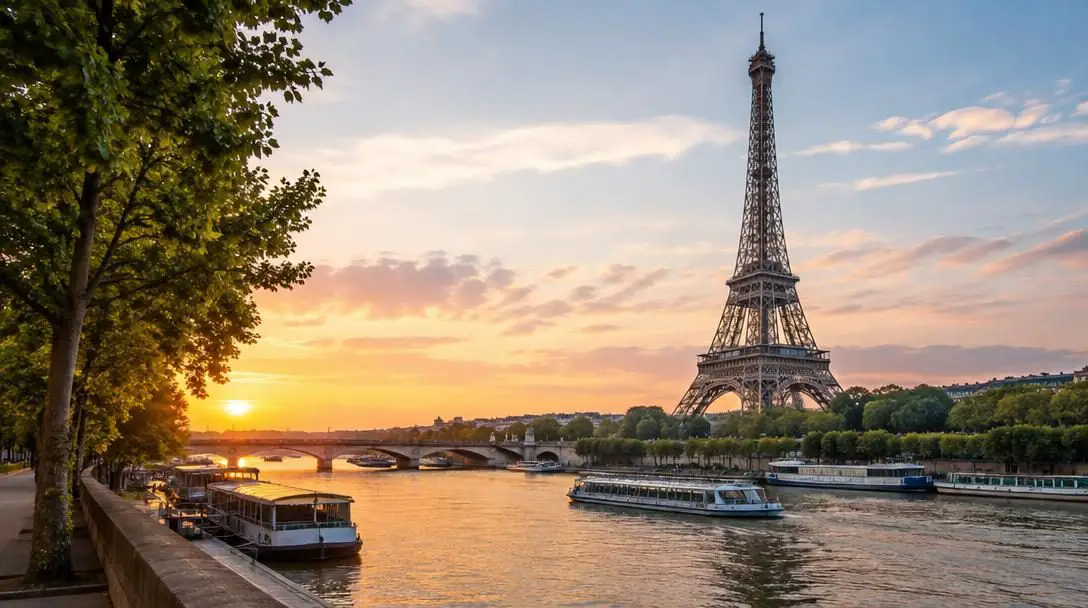
Every year, millions of travelers flock to Paris to admire the graceful ironwork of the Eiffel Tower, the Gothic grandeur of Notre-Dame, and the vast artistic treasuries of the Louvre. These world-famous landmarks define the classic image of the French capital, yet the city harbors unexpected layers of wonder far beyond its grand boulevards and crowded ticket lines. From centuries of underground history to tucked-away hillside agriculture, Paris rewards those who take the time to veer off the beaten path.
Seeking out the city's unconventional sights reveals an entirely different side of Parisian life across the centuries. Visitors willing to explore quieter neighborhoods and curious cultural traditions will uncover medieval homes, working historical fairgrounds, riverside transformations, and subterranean ossuaries that bring the city's multifaceted past and vibrant present into sharp focus.
Key takeaways
- Paris holds historic and seasonal wonders that reveal layers of local heritage beyond standard monuments.
- Many offbeat destinations, such as historic vineyards and private collections, require precise seasonal timing or tour reservations.
- Popular alternative sites enforce strict practical rules regarding visitor baggage, swimming, and entry line management.
- Pairing unconventional attractions with nearby neighborhood walks allows for an authentic, well-paced Parisian itinerary.
At a glance: Five extraordinary Parisian attractions
While Paris is easily navigable, its alternative attractions feature wildly divergent operating seasons, admission guidelines, and historical roots. Planning ahead is vital for securing access to these one-of-a-kind spaces.
| Attraction | Neighborhood or Location | Key Feature | Access Requirement |
|---|---|---|---|
| Museum of Fairground Arts | Bercy district | Carnival attractions from 1850 to 1950 | Advance booking for guided tours; open access during select festivals |
| Le Clos Montmartre | Behind Sacré-Cœur | Historic urban hillside vineyard | Viewable through grates; public entry during the Festival of the Gardens |
| Nicholas Flamel's House | 51 Rue de Montmorency (Marais) | Oldest house in Paris, dating to 1407 | Exterior visible from street; interior accessible via bistro reservation |
| Paris Plages | Banks of the Seine | Seasonal riverside beach with palm trees and sand | Free public access in July and August only |
| The Catacombs | Denfert-Rochereau Ossuary | Subterranean resting place of millions | Timed ticket required; strict baggage limits |
Five remarkable sights that reveal another side of Paris
Shifting your attention away from massive tourist queues toward idiosyncratic collections and storied urban enclaves creates a travel experience grounded in authentic wonder. Each of these five destinations highlights a distinct chapter of Parisian social, architectural, or cultural history.
Museum of Fairground Arts
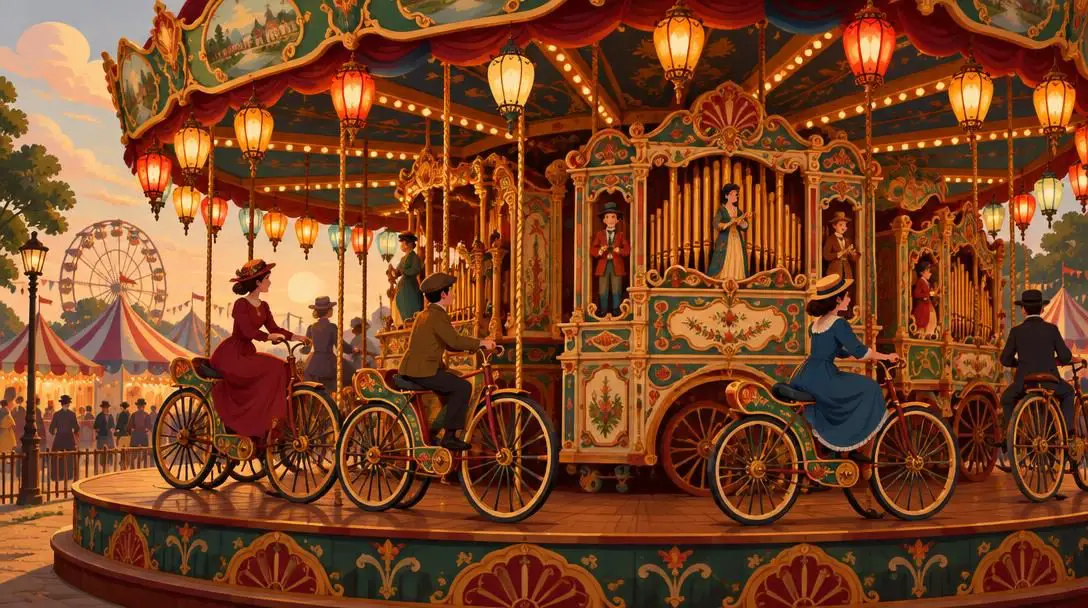
- Era covered: 1850 to 1950
- Signature ride: Manège vélocipédique (bicycle-powered carousel)
- Musical highlight: Mechanical organ dating to 1905
- Special access: European Heritage Days and the Festival of the Marvelous
Located away from the standard museum circuits, the Museum of Fairground Arts preserves the whimsical artistry and mechanical ingenuity of European carnivals and amusement venues active between 1850 and 1950. Stepping into this atmospheric space feels like wandering through a dreamscape of early entertainment, where hand-carved carousels, vintage gaming stalls, and antique performance stages are kept in working condition rather than locked away behind glass.
One of the most captivating highlights of the collection is the Manège vélocipédique, an ingenious historical merry-go-round made of bicycles. Instead of relying on a modern motor, the attraction operates purely on human power: visitors climb onto the vintage cycles, and the carousel begins to spin only when everyone pedals together in unison. Alongside the rides, visitors can listen to the resonant notes of a mechanical organ built in 1905, delivering early twentieth-century music exactly as audiences heard it over a century ago.
Le Clos Montmartre
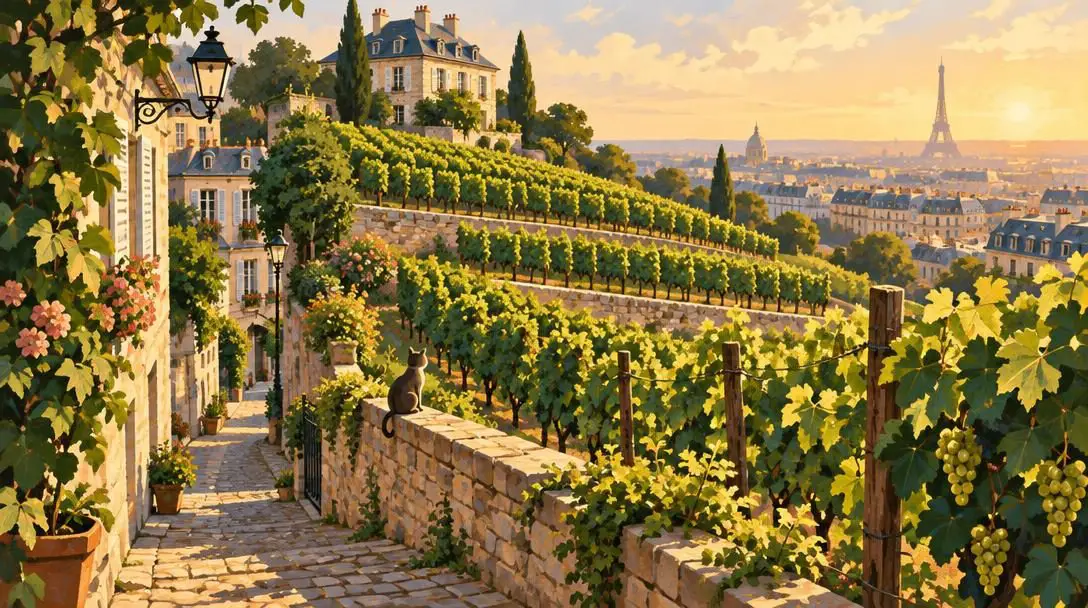
- Location: Behind the Basilica of Sacré-Cœur
- Earliest recorded cultivation: 944 AD
- Regional heritage: Viticulture dating back to Roman antiquity
- Public entry window: Festival of the Gardens in early autumn
Tucked onto a sloping hillside behind the striking white domes of Sacré-Cœur lies Le Clos Montmartre, one of the last functioning vineyards within the city boundaries of Paris. Long before Montmartre became synonymous with bohemian painters and lively cabarets, the hill was part of an extensive agricultural terrain where grapes were tended and pressed for local consumption. Historical records document vine cultivation on this ground as far back as 944 AD, continuing a viticultural legacy that originated in the Parisian basin during Roman times.
Today, the compact vineyard stands as an enduring emblem of the city's agrarian heritage amid cobblestone alleys and residential architecture. For the vast majority of the year, Le Clos Montmartre is closed to daily foot traffic to safeguard the health of the soil and vines. Travelers can view the leafy terraces through perimeter metal grates as they stroll the surrounding streets, but those visiting at the start of fall during the citywide Festival of the Gardens enjoy rare opportunities to walk directly among the vines.
Nicholas Flamel's House
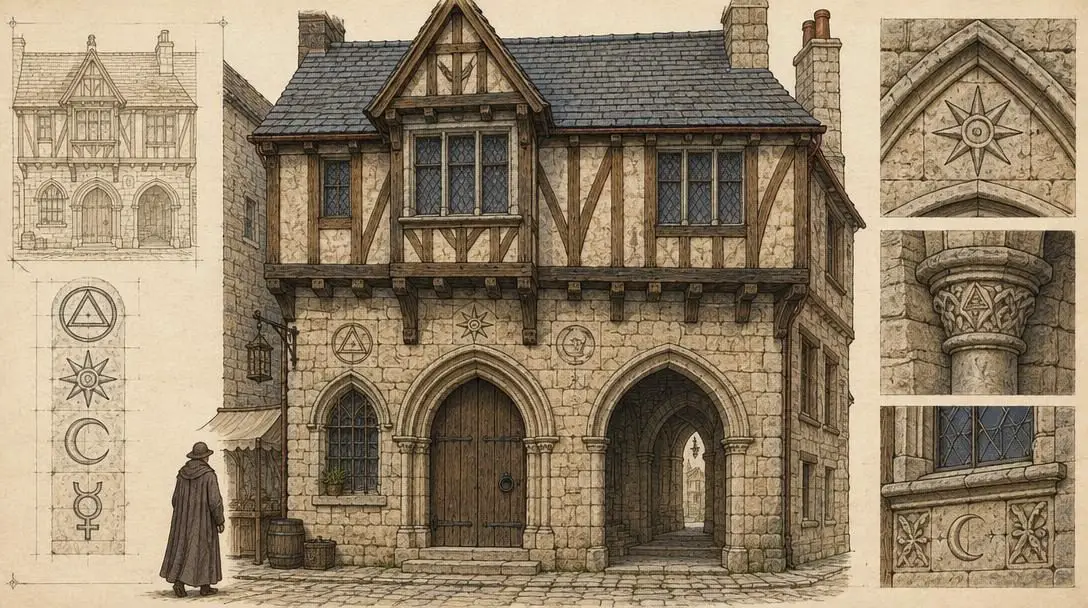
- Street address: 51 Rue de Montmorency, Marais district
- Construction year: 1407
- Historical resident: Nicholas Flamel, legendary alchemist
- Modern use: Michelin-starred bistro (Auberge Nicolas Flamel)
Although Paris has over two millennia of documented urban settlement, its oldest surviving private home dates to 1407. Located at 51 Rue de Montmorency in the vibrant Marais district, the stone structure was originally commissioned by Nicholas Flamel, the historical Parisian notary and manuscript-seller who later gained enduring fame as an alchemist believed to have uncovered the secret of turning base metals into gold. Pop culture enthusiasts will recognize Flamel from his prominent mention in Harry Potter and the Sorcerer's Stone.
Behind the mystical folklore lies a genuine humanitarian mission. Flamel originally built the four-story stone residence as a charitable refuge for the city's destitute population; in exchange for free lodging, residents were simply required to say daily prayers for the souls of Flamel and his wife. The exterior still displays medieval carvings and inscriptions along its lower pillars. Inside, the painstakingly renovated rooms now house Auberge Nicolas Flamel, a Michelin-starred dining destination that combines ancient masonry with sophisticated contemporary French cooking.
Discovering Paris means peeling back centuries of stone, from medieval alchemical dwellings to underground labyrinths holding the memory of millions.
Paris Plages
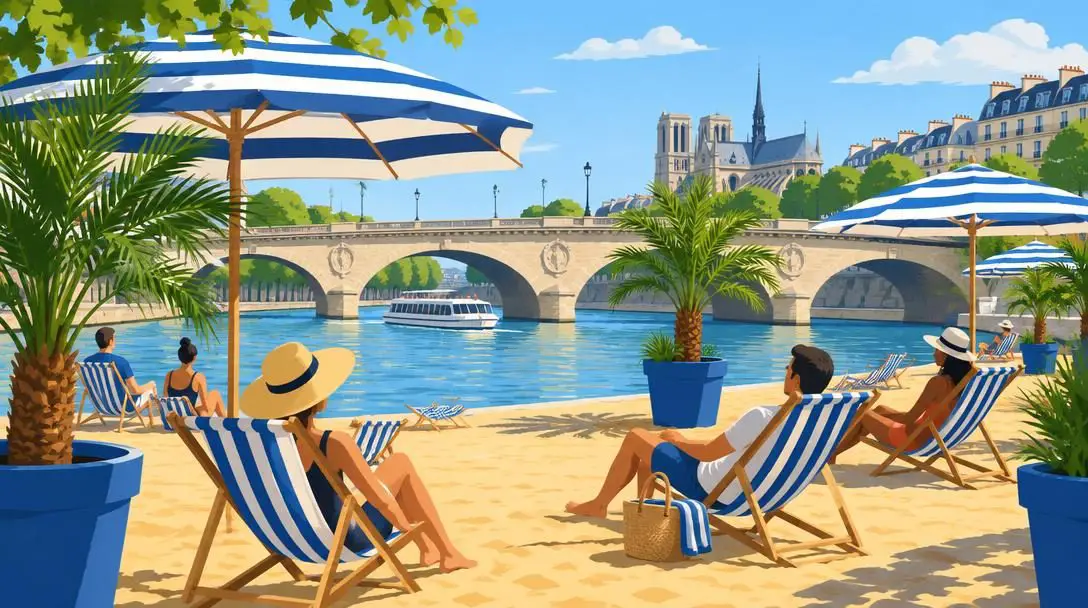
- Operating season: July and August only
- Location: Riverbanks of the Seine
- Admission: Free public access
- Amenities: Palm trees, deck chairs, sun umbrellas, and imported sand
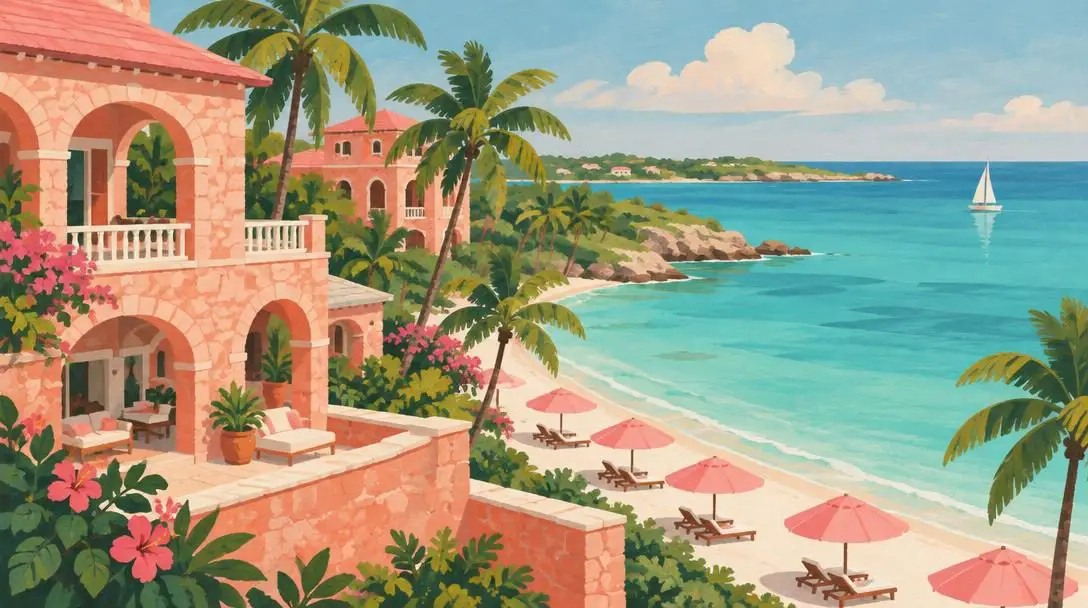
Every summer, the stone quays flanking the Seine undergo an extraordinary transformation known as Paris Plages. Established as a civic amenity to provide leisure opportunities for city residents who are unable to travel away to the coast for holiday breaks, the initiative brings tons of fine sand directly to riverside locations. Since 2022, this seaside atmosphere has enlivened the heart of the capital with vibrant rows of sun umbrellas, genuine palm trees in planters, and comfortable deck chairs laid out for sunbathing.
The entire installation is free to enter, creating a relaxed, egalitarian community environment where visitors can read, lounge, and watch boats drift along the water during sunny afternoons. However, municipal authorities enforce strict rules of decorum and water safety. Topless sunbathing is prohibited along the public quays, and swimming or jumping into the waters of the Seine is strictly forbidden under local regulations.
The Catacombs
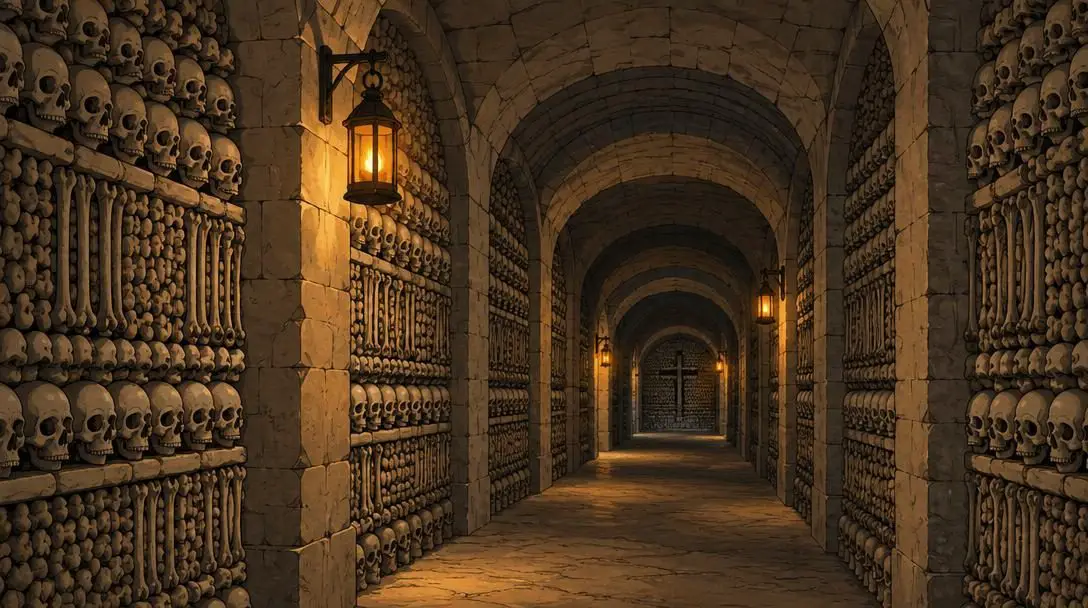
- Official name: Denfert-Rochereau Ossuary
- Contents: Remains of six to seven million individuals
- Establishment period: Late 18th century
- Subterranean origin: Former limestone quarry network
Deep beneath the buzzing traffic and apartment buildings of the 14th arrondissement lies one of the world's most haunting and monumental municipal burial sites: the Catacombs of Paris. Known officially as the Denfert-Rochereau Ossuary, this subterranean complex contains the arranged skeletal remains of an estimated six to seven million former Parisian residents. The site came into being during the late eighteenth century, when centuries of overcrowding in neighborhood parish cemeteries caused severe sanitation and public health crises across the French capital.
Between 1785 and the late 1780s, city authorities undertook the discreet nighttime transfer of bones from above-ground churchyards into the abandoned underground quarries that had supplied building stone for Paris since antiquity. Today, visitors descend dozens of meters beneath street level to navigate a dim, temperature-controlled labyrinth where skulls and femurs are stacked into symmetrical walls and decorative motifs. The walking tour covers a narrow, evocative slice of this massive underground network, offering an unforgettable reflection on the scale of urban development and mortality.
How to organize your unconventional itinerary
To incorporate these five unusual attractions into your travel schedule without unnecessary delays, follow an organized step-by-step approach to bookings, seasonal calendars, and transit planning.
- Lock in your ticketing reservations weeks before departure: The Denfert-Rochereau Ossuary limits the number of visitors inside the tunnels at any given moment, making online advance tickets essential to bypass queues. For the Museum of Fairground Arts, check available slots for scheduled English tours before setting your daily schedule.
- Coordinate your dates with seasonal access windows: If your priority is relaxing along the sand of Paris Plages, you must visit during July or August. If walking through the vines of Le Clos Montmartre is on your list, arrange your travel to coincide with the Festival of the Gardens at the start of autumn.
- Secure fine dining reservations for historical interiors: If you wish to experience the oldest domestic architecture in Paris beyond looking at its exterior, reserve an evening table at Auberge Nicolas Flamel well in advance of your trip.
- Streamline your daypack and personal belongings: Do not attempt to visit the Catacombs directly from an airport or train terminal with rolling suitcases or oversized backpacks. Because there are no luggage lockers available at the entrance, keep personal belongings light and easy to carry.
- Cluster your visits by neighborhood: Pair a morning visit to the Marais district and Nicholas Flamel's 1407 house with museum walks nearby. Similarly, combine a quiet walk behind the Sacré-Cœur basilica to see Le Clos Montmartre with an afternoon exploring the atmospheric alleys of Montmartre.
Mistakes to avoid when visiting alternative Paris
Experiencing these historic and non-standard venues requires navigating specific operational rules. Avoiding these common travel mistakes will keep your journey smooth and stress-free:
- Assuming the vineyard is an open public park: Many travelers journey to Montmartre expecting to walk directly between the vines of Le Clos Montmartre whenever they please. Throughout almost the entire year, you can only admire the property through the perimeter metal grates.
- Arriving at the Catacombs with heavy luggage: Travelers often try to fit the ossuary into their arrival or departure days while carrying large bags. Staff will turn away travelers with bulky luggage, and without storage lockers on the premises, you risk missing your scheduled time slot.
- Looking for riverside sand outside of high summer: Paris Plages operates exclusively across July and August. Travelers visiting during spring, early summer, or autumn will find the quays in their standard concrete condition without beach installations.
- Turning up at the Museum of Fairground Arts without an appointment: Unlike city museums with walk-in entry, this private collection requires guided tour reservations for most of the year, with walk-in access granted only during the Festival of the Marvelous and European Heritage Days.
- Disregarding local rules along the Seine: Although Paris Plages provides sand, umbrellas, and deck chairs, it is not a coastal resort. Remember that sunbathing topless and leaping into the river are strictly prohibited.
Frequently asked questions
Can you drink wine produced from Le Clos Montmartre?
Le Clos Montmartre produces wine from its hillside vines each year, preserving an ancient urban viticultural heritage that dates back to 944 AD and Roman times. The vineyard itself remains closed to casual foot traffic for the majority of the year, opening its gates to the general public only during the Festival of the Gardens at the beginning of fall.
Is Nicholas Flamel's house free to enter?
You can admire the exterior facade and medieval carvings of Nicholas Flamel's house at 51 Rue de Montmorency for free from the street. However, the interior functions as a Michelin-starred restaurant called Auberge Nicolas Flamel, meaning access to the inside requires a formal dining reservation.
Are storage lockers available at the Catacombs?
No storage lockers or coat checks are available at the Denfert-Rochereau Ossuary. Security prohibits oversized backpacks and rolling luggage, so you must leave heavy bags at your accommodation before arriving.
When does Paris Plages take place?
Paris Plages runs exclusively during July and August each year. Outside of this midsummer period, the sand, palm trees, sun umbrellas, and deck chairs along the banks of the Seine are removed.
How can I ride the bicycle carousel at the Museum of Fairground Arts?
To experience the Manège vélocipédique bicycle carousel, you must book an English-speaking guided tour in advance, or visit during special open-house events like the European Heritage Days in September or the Festival of the Marvelous during the final week of December.
The bottom line
Paris is endlessly generous to travelers who venture beyond the usual itinerary. While monumental landmarks like the Louvre and Eiffel Tower showcase the grandeur of the capital, attractions like the Catacombs, Le Clos Montmartre, Nicholas Flamel's house, Paris Plages, and the Museum of Fairground Arts celebrate its eccentricity, resilience, and depth. By paying attention to seasonal openings and booking your tickets well ahead of time, you can experience a rich, multifaceted version of Paris that stays with you long after you return home.