The Magic of Rome – 5 Unique Attractions in This Amazing City
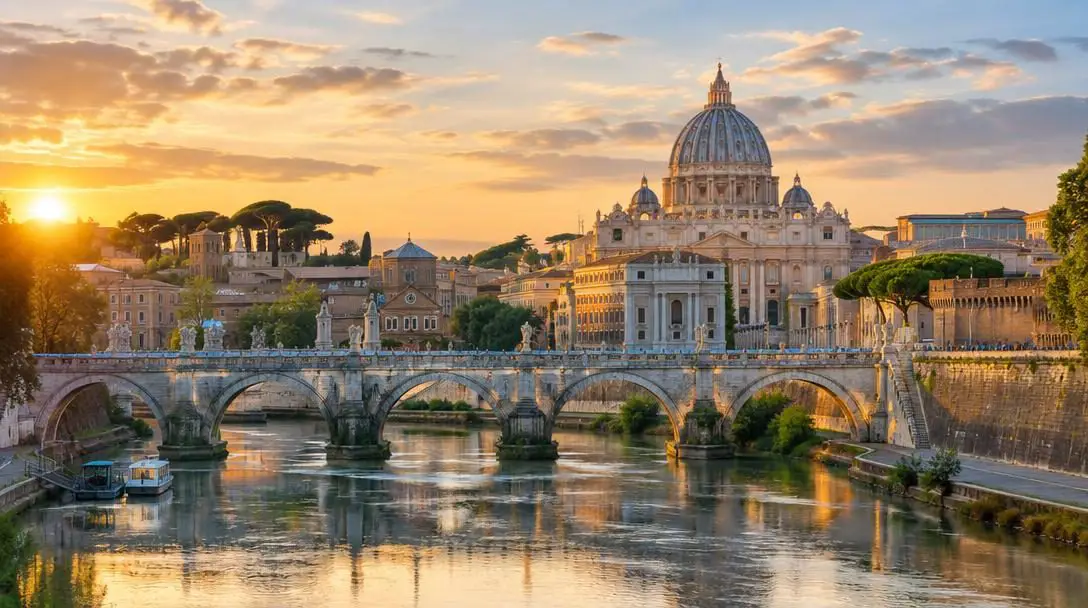
While millions of travelers descend upon Rome each year to marvel at world-famous landmarks like the Colosseum, the Roman Forum, and the Trevi Fountain, the Italian capital harbors countless secondary treasures that tell an equally compelling story. Venturing away from the most heavily crowded avenues reveals a city rich in eccentric architecture, sacred bone chapels, atmospheric medieval alleys, and bustling neighborhood marketplaces that have endured for generations.
By exploring these distinctive, lesser-known destinations, visitors gain a genuine appreciation for Rome's complex evolution across classical antiquity, the Middle Ages, and the modern era. Whether you are intrigued by ancient political drama, macabre religious art, or time-tested culinary traditions, stepping off the predictable tourist route offers an unforgettable perspective on the Eternal City.
Key takeaways
- Rome contains diverse attractions beyond its major ruins, ranging from underground ossuaries to an authentic ancient Egyptian-style tomb.
- Largo di Torre Argentina combines the monumental history of Julius Caesar's assassination site with a functioning modern cat shelter.
- Historic gathering points like Campo de' Fiori and Trastevere showcase Rome's living culture through historic food shops, outdoor market stalls, and seasonal riverfront festivals.
- Visiting specialized sights requires strategic timing, such as arranging advance bookings for the Pyramid of Cestius or arriving early before market closures.
Five distinctive Roman sights at a glance
To help you decide which locations best fit your personal travel style and schedule, the table below provides a quick comparative overview of their historic focus and primary access characteristics.
| Attraction | Historical era | Setting type | Key highlight |
|---|---|---|---|
| Capuchin Crypt | Baroque / Christian era | Subterranean church crypt | Ornate chambers decorated with the bones of 3,700 friars |
| Largo di Torre Argentina | Roman Republic and Empire | Sunken open-air ruins | Assassination site of Julius Caesar and feline sanctuary |
| Trastevere | Medieval to Modern | Historic residential district | Narrow cobblestone alleys, traditional dining, and river life |
| Pyramid of Cestius | 18–12 BC (Augustan era) | Urban funerary monument | Rome's only remaining Egyptian-style pyramid tomb |
| Campo de' Fiori | Established 1869 (Market) | Open public piazza | Centuries-old market traditions and historic food shops |
Five unique attractions to explore in Rome
Rome rewards curious travelers who look past the towering icons and explore tucked-away quarters. Each of the following five destinations reveals a distinct chapter of Roman civilization, offering insight into spiritual devotions, civic upheavals, daily rituals, and architectural experimentation.
Capuchin Crypt
- Location: Church of Santa Maria della Concezione dei Cappuccini
- Contents: Skeletal and mummified remains of approximately 3,700 friars
- Structure: Six interconnected underground chambers
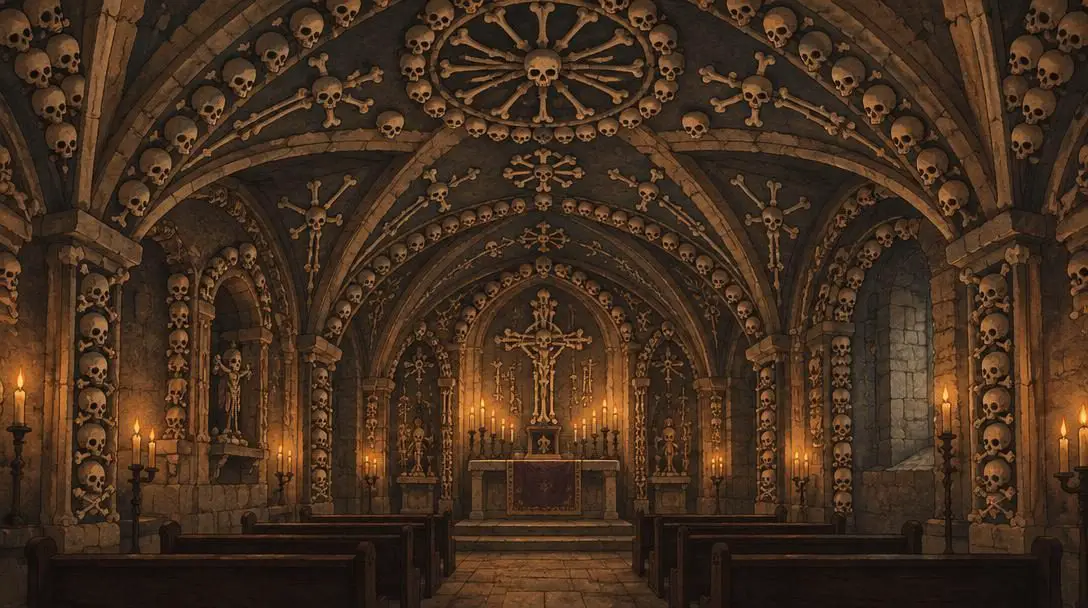
Tucked underneath the church of Santa Maria della Concezione dei Cappuccini, the Capuchin Crypt is one of the most arresting and solemn sights in Italy. Often referred to simply as the Bone Chapel, this underground sacred space consists of six distinct chambers completely adorned with the skeletal remains of roughly 3,700 Capuchin friars. Rather than stacking the bones in hidden ossuary vaults, the religious community painstakingly arranged human skulls, vertebrae, pelvises, and ribcages into ornate decorative patterns, chandeliers, and wall frames across the ceilings and walls.
Far from a frivolous display, the crypt was created as a profound, tangible meditation on mortality and the fleeting nature of earthly life. Visitors walking through the muted underground rooms encounter articulated skeletons still dressed in coarse monastic robes standing in alcoves. Because the crypt is a consecrated Christian burial ground, guests must maintain hushed silence and show deep respect when passing through the corridors.
Largo di Torre Argentina
- Monumental remains: Four ancient Roman temples and the Theatre of Pompey
- Historic event: Assassination of Julius Caesar on the Ides of March
- Modern feature: Popular sanctuary for local rescue cats
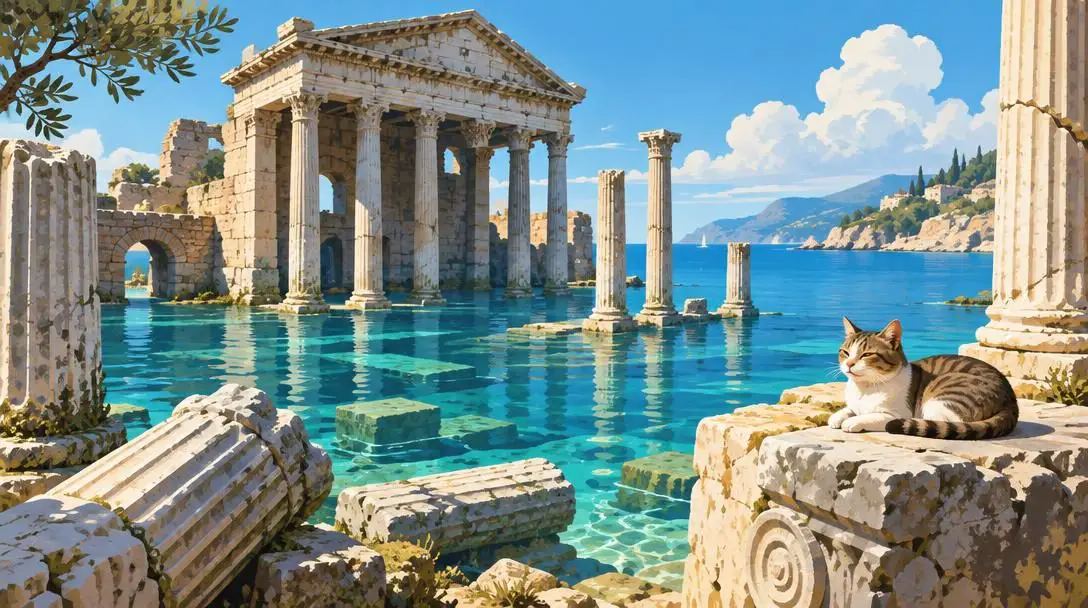
Surrounded by active city bus lines, electric tramways, and bustling modern office buildings, Largo di Torre Argentina is an extensive archaeological excavation sunken right in the heart of urban Rome. This historic square contains the well-preserved structural foundations of four separate Roman temples dating to the Republican era. Most famously, it encompasses the remains of the ancient Curia within the Theatre of Pompey, the fateful location where Julius Caesar was surrounded, betrayed, and murdered by a faction of Roman senators on the Ides of March.
Despite its monumental importance to global history, Largo di Torre Argentina is frequently overlooked by tourists rushing across the city. Pedestrians can walk the street-level perimeter railing and look directly down into the classical masonry. Adding an unexpected, heartwarming contrast to the bloody history of ancient politics, the sunken archaeological site doubles as a beloved cat sanctuary. Travelers can watch dozens of healthy feline residents sunbathing on marble columns and sleeping in shadowed temple recesses while city traffic glides by overhead.
Rome possesses so many legendary monuments that even the very place where Julius Caesar fell can easily fade into the background of everyday life.
Trastevere
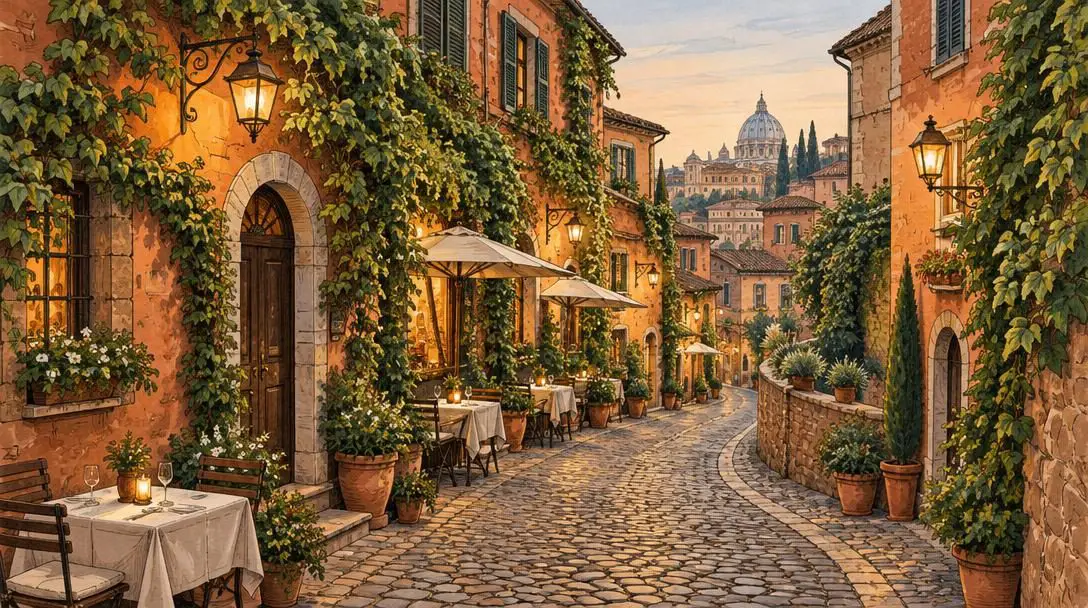
- Atmosphere: Lively Medieval quarter with narrow cobblestone paths
- Known for: Renowned trattorias, bustling pubs, and street performers
- Seasonal attraction: Lungo iL Tevere summer festival along the Tiber
For visitors craving authentic neighborhood character and vibrant street life, Trastevere offers an enchanting departure from marble temples and grand palazzos. Located across the Tiber River from Rome's historic center, this historic Medieval neighborhood is celebrated for its winding, irregular cobblestone alleys, ivy-draped ochre townhouses, and unmistakable bohemian charm. While historically a fiercely independent, working-class enclave of local Romans, it has developed into one of the city's premier evening culinary and social hubs.
By daytime, Trastevere moves at a leisurely pace, with local residents chatting at quiet espresso bars and market vendors tending small stalls. As twilight arrives, the district completely transforms into a magnetic nightlife center. Travelers and locals fill its famed trattorias to feast on classic Roman pastas, while lively craft pubs, outdoor beer spots, and busking street musicians fill the open piazzas with energetic chatter. During the warm summer months, the social energy extends down the riverfront staircases to the waterside embankment, where the Lungo iL Tevere festival hosts open-air dining stalls, pop-up bars, and artisan stands right beside the flowing Tiber.
Pyramid of Cestius
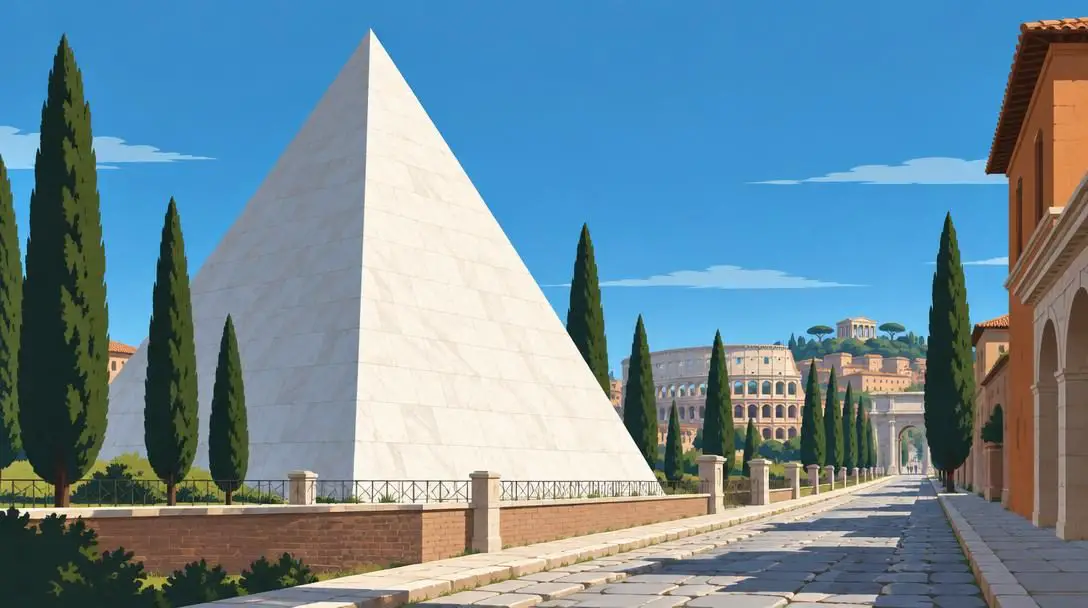
- Construction date: Built between 18 and 12 BC
- Dimensions: Approximately 120 feet in height
- Public status: Interior reopened to tour access in 2015
Spotting a towering, sharp-angled Egyptian pyramid while navigating a modern Roman intersection is always an unexpected thrill. Standing roughly 120 feet tall, the Pyramid of Cestius was constructed between 18 and 12 BC as an extravagant tomb for Gaius Cestius, an influential and wealthy Roman magistrate. Following the Roman Empire's conquest of Egypt, Roman high society developed a sweeping fascination with Egyptian aesthetics, leading prominent citizens to commission obelisks, sculptures, and ambitious geometric funerary monuments across the capital.
The Pyramid of Cestius is the sole surviving Egyptian-style pyramid tomb in Rome today, made all the more striking by its gleaming white marble facade. Positioned directly across from the busy Pyramid Train Station, the structure is easily visible to passersby at any hour from public walkways. For decades, the delicate inner burial chamber was sealed away from public view. Since 2015, however, the interior has been made accessible to visitors on designated days, preserving an astonishing fusion of Roman engineering and ancient Nilotic design.
Campo de' Fiori
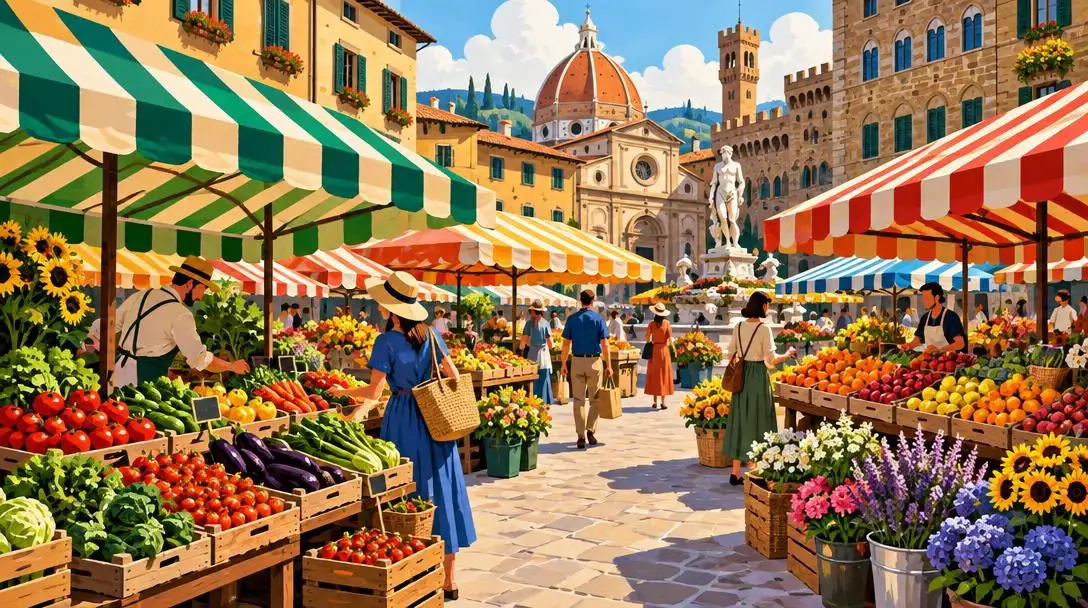
- Founding date: Operating as an open-air market since 1869
- Market hours: Monday to Saturday, roughly 6:00 a.m. to 2:00 p.m.
- Surrounding retail: Historic bakeries and century-old cured meat shops
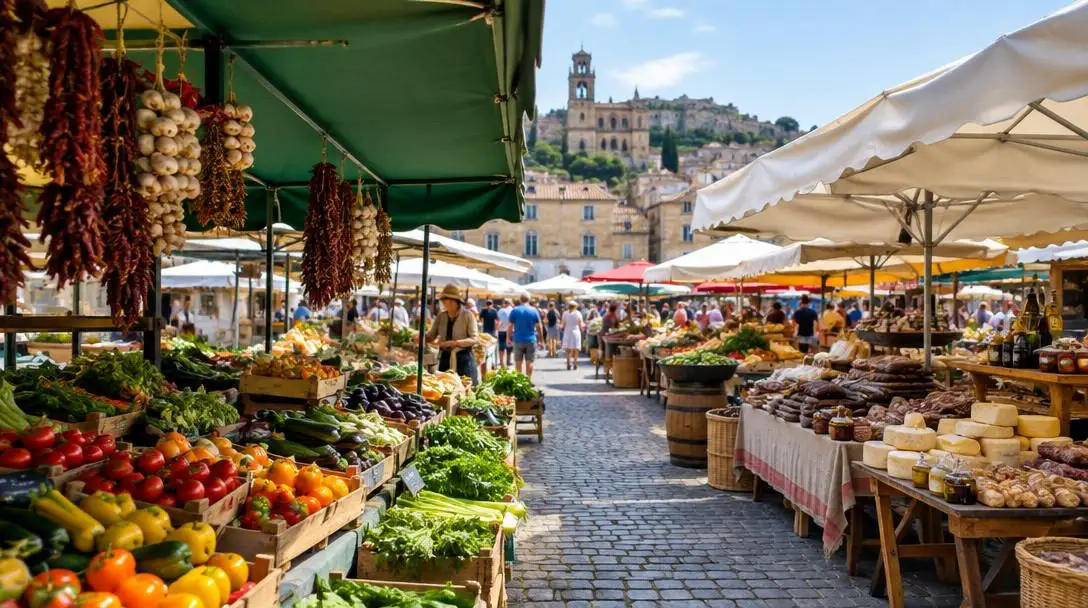
To experience the culinary heartbeat of daily Roman living, head directly into Campo de' Fiori. Originally a flower meadow in the Middle Ages, this bustling piazza has hosted a world-famous open-air market continuously since 1869. From Monday through Saturday, the center of the square fills with vibrant canvas awnings sheltering mountain-high displays of seasonal farm produce, artichokes, citrus fruits, regional cheeses, fresh flowers, and household goods.
The culinary journey does not stop at the market stalls. The true treasures of Campo de' Fiori line the immediate perimeter of the square and branch out into its neighboring side streets. Here, travelers will find traditional bakeries turning out hot flatbreads, artisanal sandwich shops, and venerable specialty grocers specializing in premium cured meats, pecorino cheese, and aged balsamics. Several of these family-operated alimentari and salumerie have been serving neighborhood clientele continuously for a century or more, offering visitors an authentic taste of historic Rome that pre-dates modern supermarket culture.
How to build a seamless itinerary
Connecting underground bone crypts, republican ruins, neighborhood trattorias, and ancient tombs requires a clear operational strategy. Follow these ordered steps to avoid logistical pitfalls and maximize your sightseeing time across Rome:
- Check calendar dates for rare entries: Before finalizing your daily schedule, verify if your travel dates coincide with the second or fourth Saturday of the month so you can arrange entry into the interior of the Pyramid of Cestius.
- Arrive early for market trade: Visit Campo de' Fiori between 6:00 a.m. and late morning on Monday through Saturday to experience the authentic produce bustle before market stalls break down at roughly 2:00 p.m.
- Explore perimeter food shops: After browsing the market stands in Campo de' Fiori, take an hour to walk the adjacent side alleys to visit historic bakeries and cured meat shops that have operated for 100 years.
- Walk across to Largo di Torre Argentina: Stroll over to the sunken ruins during full daylight to inspect the temple podiums, see the Theatre of Pompey where Caesar was murdered, and observe the resident rescue cats.
- Cross the river for evening in Trastevere: As late afternoon turns to dusk, cross the Tiber into Trastevere to explore cobblestone alleys, dine on Roman specialties in local trattorias, or descend to the summer riverwalk.
- Use rail transit for the pyramid: Hop on public transit to the Pyramid Train Station to directly view the Pyramid of Cestius without wasting time navigating complicated pedestrian detours.
- Dress respectfully for the crypt: Dedicate an afternoon hour to the church of Santa Maria della Concezione dei Cappuccini, ensuring shoulders and knees are covered to access the Capuchin Crypt.
Mistakes to avoid when visiting Rome's unusual sites
Travelers accustomed to general sightseeing often find that specialized, smaller attractions run on strict community customs or regulated government timetables. Keep the following mistakes in mind to prevent wasted journeys:
- Arriving at Campo de' Fiori on Sunday afternoon: The outdoor market never operates on Sundays and packs up its stalls by 2:00 p.m. on weekdays and Saturdays. Visiting late will yield an empty square rather than an energetic market.
- Expecting unrestricted access to Cestius' tomb: Many visitors assume the Pyramid of Cestius operates like an ordinary museum with daily walk-in tickets, only to find the ancient burial vault closed shut.
- Rushing past Largo di Torre Argentina: Because it sits beside major transit hubs, tourists often treat the sunken ruins as a glorified traffic island, completely missing its status as the assassination site of Julius Caesar.
- Treating the Capuchin Crypt as a tourist spectacle: The subterranean Bone Chapel is an active religious cemetery containing thousands of deceased brethren; loud talking, casual attire, and disruptive behavior are strictly prohibited.
- Confining Trastevere exploration to daylight hours: While Trastevere is charming during the afternoon, you miss the district's true energy, street musicians, packed trattorias, and riverside festival stalls if you depart before nightfall.
- Ignoring the shops beyond the piazza: Sticking solely to the center of Campo de' Fiori means missing out on legendary century-old meat and cheese shops tucked along the bordering side streets.
Frequently asked questions
Where is the Capuchin Crypt located and how many remains are there?
The Capuchin Crypt is situated beneath the church of Santa Maria della Concezione dei Cappuccini in central Rome. It houses the skeletal and mummified remains of approximately 3,700 Capuchin friars, arranged across six interconnected chambers.
Why is Largo di Torre Argentina historically significant?
Largo di Torre Argentina preserves the architectural foundations of four Roman temples and the ancient Theatre of Pompey. The Theatre of Pompey is the exact historical location where Julius Caesar was assassinated by Roman senators on the Ides of March.
When is the interior of the Pyramid of Cestius open to the public?
While the white marble exterior is visible from public streets at all times, the interior of the Pyramid of Cestius is accessible only on the second and fourth Saturday of each month, requiring visitors to make advance arrangements.
What are the operating days and hours for the market at Campo de' Fiori?
The outdoor market at Campo de' Fiori is open from Monday through Saturday, starting at approximately 6:00 a.m. and closing around 2:00 p.m. It is not open on Sundays.
What is the Lungo iL Tevere festival in Trastevere?
Lungo iL Tevere is an annual summer festival set up along the stone walkways running beside the Tiber River near Trastevere. Visitors can walk down the river steps to enjoy outdoor vendor stalls, local artists, pop-up bars, and varied dining options.
The bottom line
Rome's global reputation was forged by colossal monuments like the Colosseum and the Pantheon, but its soul is equally alive in its quieter, idiosyncratic corners. Taking time to wander past the ancient Roman temples of Largo di Torre Argentina, contemplate human existence in the Capuchin Crypt, admire the daring geometry of the Pyramid of Cestius, sample century-old delicacies in Campo de' Fiori, and embrace the evening warmth of Trastevere will elevate any trip to Italy. By looking beyond the obvious postcards, you discover a textured, living metropolis where millennia of art, faith, history, and community intertwine seamlessly.