The Ultimate Guide to Fashion Life Hacks: 5 Tips for a Stylish and Efficient Wardrobe

Fashion moves at a breakneck pace, driven by rapid seasonal collections and retail shifts that continually introduce new silhouettes, textiles, and color palettes. Because these micro-trends emerge and vanish so quickly, shoppers routinely find themselves accumulating disconnected garments that fail to work together. This cycle leads to physical clutter, financial drain, and overcrowded closets packed with single-use pieces that rapidly deteriorate.
Building a stylish and efficient wardrobe offers an antidote to this unsustainable cycle. Wardrobe efficiency is not about owning fewer garments simply for the sake of minimalism, nor does it require blindly adopting every trend. Instead, it relies on intentional curation, proactive garment preservation, and functional physical organization to ensure that every piece you own serves your daily lifestyle.
Key takeaways
- Functional wardrobes rely on three core principles: total garment visibility, versatile styling foundations, and disciplined fabric maintenance.
- Investing in durable, well-constructed staples yields a higher long-term return than buying high volumes of fast-fashion items.
- Neutral base layers unlock extensive mixing-and-matching opportunities when paired with bold accent pieces and varied textures.
- Proper laundry habits—such as cold-water washing and air-drying—prevent fiber breakdown, color fading, and premature shrinkage.
The core principles of wardrobe efficiency
An efficient closet operates much like a curated toolset: every item should have a defined purpose, integrate smoothly with other pieces, and remain immediately accessible. When a wardrobe is designed around visibility, versatility, and maintenance, dressing becomes an effortless daily routine rather than an exercise in decision fatigue.
Visibility serves as the foundation of any workable storage space. If a garment remains hidden at the back of a deep drawer or buried under bulky winter coats, it effectively ceases to exist. When you cannot see your inventory, you are far more likely to buy unintentional duplicates or continually fall back on the same two or three outfits out of sheer convenience. Designing an accessible space ensures your entire collection remains in active circulation.
Versatility is achieved by balancing neutral anchor garments with expressive focal pieces. Foundational garments in black, white, and balanced neutral tones provide a clean canvas with straightforward lines. Because they lack loud patterns, these base layers can be worn repeatedly across different contexts without appearing repetitive. Introducing textural layers like jackets, cardigans, and sweaters instantly multiplies the styling combinations available from a modest number of items.
Maintenance preserves the financial and material investments you make in your clothing. Every textile features distinct thresholds for moisture, heat, and physical tension. Laundering and storing garments according to their structural needs keeps fibers intact, seams aligned, and colors vibrant across years of wear rather than merely a few wash cycles.
Five core strategies for an efficient wardrobe
Transforming an overwhelming closet into an efficient, personal style hub requires targeted daily habits and intentional purchasing choices. Implementing these five foundational strategies streamlines your morning routine while elevating your everyday aesthetic.
Tip 1: Organize your closet
An organized closet creates immediate visual clarity, allowing you to see every option the moment you open the doors. This transparent setup streamlines daily outfit selection, stops domestic clutter from spilling into living areas, and prevents you from spending money on redundant items you already own.
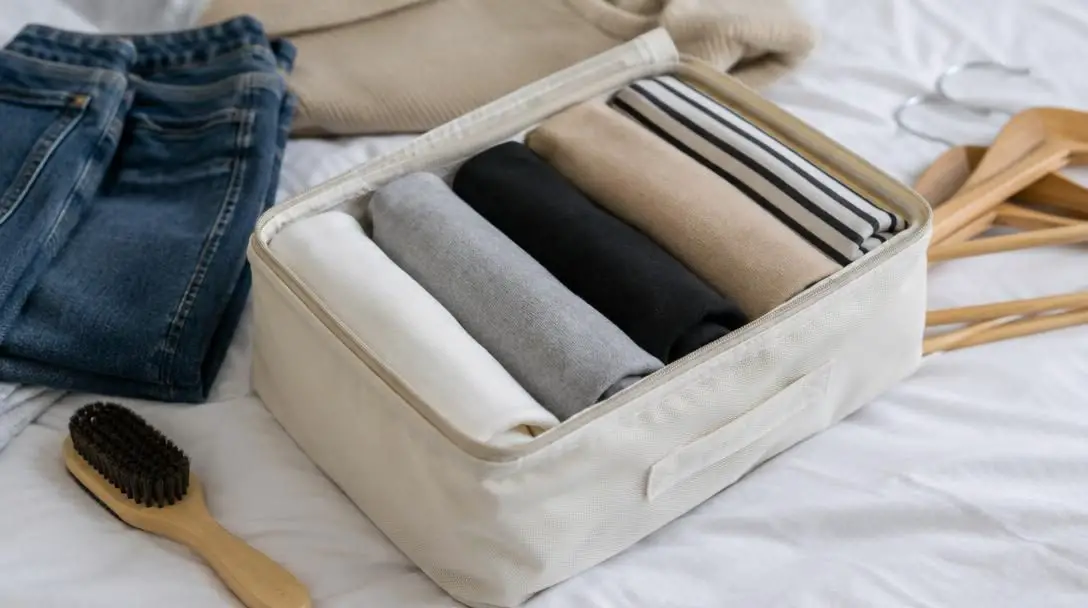
- Conduct an honest decluttering session: Inspect every item in your closet and remove any piece you have not worn within the past year. Sort these unused pieces into bundles to sell or donate to organizations in need.
- Select a logical categorization system: Arrange your remaining clothing by category (such as blouses, trousers, and knitwear), by color gradient, or by occasion (such as professional workwear, casual lounge pieces, and formal wear).
- Install practical organizing tools: Replace mismatched wire or plastic hangers with a single uniform style to create visual harmony, and place dividers on open shelves to keep stacks of folded garments upright and separated.
- Establish a daily return habit: Avoid letting worn garments pile up on bedroom chairs or floor spaces by returning clean clothes to their assigned hangers or drawers immediately after use.
- Schedule recurring closet evaluations: Set dedicated check-in dates throughout the year to prune out items that no longer align with your style preferences or daily routine.
Tip 2: Invest in quality pieces
Purchasing well-made garments yields a significantly higher return on investment than stocking up on disposable fast fashion. Quality clothing lasts through seasons of regular use, drapes properly against the body, and offers exceptional styling versatility. High quality does not necessitate luxury designer labels; rather, it demands an eye for solid structural construction, durable fibers, and thoughtful garment tailoring.
When curating foundational staples, evaluate these five core investment items for structural integrity:
| Core Garment | Primary Material Focus | Critical Construction Checkpoint | Styling Function |
|---|---|---|---|
| Well-fitted blazer | Structured woven fabric | Clean lapel stitching and balanced shoulders | Polishes casual outfits and formal tailoring |
| Classic white shirt | Opaque cotton or linen | Secure button attachment and crisp collar shape | Acts as a crisp base under sweaters and suits |
| Leather jacket | Supple, durable leather | Reinforced pocket seams and heavy-duty hardware | Provides tactile contrast over casual basics |
| High-quality jeans | Durable, robust denim | Sturdy rivets at stress points and even inseams | Serves as a hard-wearing daily bottom layer |
| Comfortable shoes | Supportive leather or resilient uppers | Cushioned footbed and long-wearing outsole | Anchors daily walking outfits with reliable support |
When examining potential additions, verify that the blazer allows your arms full range of motion without pulling across the back seams. Check that your classic white shirt uses sufficiently dense fabric so undergarments remain unseen. For a leather jacket, ensure the lining slides smoothly over knitwear. With denim, choose a comfortable rise with flat, reinforced flat-felled seams, and ensure any everyday footwear provides anatomical arch support along with a resilient sole.
Maintaining an efficient wardrobe is not about owning fewer items for the sake of minimalism, but curating versatile pieces that eliminate daily decision fatigue.
Tip 3: Mix and match
Mastering the technique of mixing and matching unlocks the full utility of your garments, letting you create fresh looks without buying new items. Moving away from rigid, pre-planned outfits reduces clothing expenditures while expanding your daily rotation.
Start by building a stable anchor of neutral basics. Items like black trousers, white crewneck tees, and dark pencil or A-line skirts provide neutral foundations that pair seamlessly with virtually any pattern or tone. Once this base is in place, introduce focal accents—such as a jewel-toned silk blouse, an animal-print cardigan, or patterned trousers—allowing the vibrant piece to command visual attention without clashing.
Layering adds dimension, texture, and seasonal adaptability to simple pieces. You can balance masculine and feminine aesthetics by throwing a rugged denim jacket over a soft, flowing dress, or achieve a smart-casual office look by layering a fine-gauge knit sweater over a structured button-down collared shirt.
Tip 4: Accessorize
Accessories serve as the connective tissue of an ensemble, turning plain separates into a cohesive personal statement. Strategic styling details alter the formality, color temperature, and mood of an outfit without taking up valuable closet space.

- Jewelry: Sculptural statement earrings, layered chains, or minimalist cuff bracelets draw attention toward the face and give simple necklines intentional polish.
- Textiles and headwear: Wrapping an airy woven scarf around your neck introduces visual depth, breaks up large expanses of solid color, and introduces tactile variety, while a structured hat provides a sharp finishing silhouette.
- Handbags: A functional tote, structured satchel, or cross-body bag constructed in neutral tones ties disparate clothing elements together while managing daily carrying needs.
- Footwear: Swapping casual white leather sneakers for polished loafers or sleek ankle boots instantly transitions an identical jeans-and-tee combination from weekend leisure to evening dining.
Tip 5: Take care of your clothes
Consistent garment care protects the structural life of your apparel and ensures fabrics retain their shape, elasticity, and color richness over time. Because synthetic fibers, cellulose weaves, and natural animal hairs react differently to water and friction, universal laundry habits often ruin delicate pieces. Always review the sewn-in care tags before laundering.
Adopting sustainable care habits protects your wardrobe investment:
- Wash with cold water: Cold temperatures clean daily soil effectively while preventing fiber contraction, color bleeding, and premature fabric thinning.
- Air-dry naturally: Avoid aggressive tumble drying; high heat breaks down elastane stretch threads, warps nylon, and weakens cotton yarns.
- Calibrate ironing heat: Align your iron or steamer settings precisely to the fabric type to avoid scorched spots, flattened textures, or permanent shine marks.
- Store in dry, climate-controlled spaces: Keep hanging and folded garments in well-ventilated spaces free of excess moisture to stop musty odors and mildew accumulation.
- Shield garments from direct sunlight and heat: Keep open clothing racks away from direct window exposure and heating vents to avoid faded dye lines and brittle fibers.
Common wardrobe mistakes to avoid
Even with careful planning, common behavioral habits can compromise the organization, longevity, and everyday utility of your closet. Eliminating these five common pitfalls keeps your collection functional and your dressing routine efficient:
- Holding onto clothes for hypothetical futures: Retaining pieces that do not match your current lifestyle, climate, or body shape occupies valuable real estate and creates psychological friction during morning routines.
- Prioritizing trend volume over fabric durability: Accumulating cheap, poorly stitched fast-fashion pieces leads to a closet filled with garments that warp, shrink, or tear after a handful of washings.
- Neglecting fabric care instructions: Laundering all garments identically on hot cycles destroys delicate weaves, fades deep dyes, and shrinks fitted items permanently.
- Overlooking shoe and bag upkeep: Allowing leather shoes to dry out, neglecting worn heel caps, or storing bags without shape support dramatically shortens their working lifespans and degrades an otherwise sharp outfit.
- Crowding garments on hangers: Forcing too many items onto a single clothing rail crushes collar construction, wrinkles delicate fabrics, and obscures visibility, making it nearly impossible to browse your wardrobe easily.
Long-term wardrobe planning and maintenance
Maintaining an efficient wardrobe is an ongoing practice rather than a one-time chore. Once you have established your core rotation of versatile basics and functional investment pieces, monitor how your clothes perform across your actual weekly routine. Notice which silhouettes feel comfortable throughout an entire working day and which textiles hold up best against friction and frequent laundering. Use this real-world feedback to guide any future acquisitions, resisting impulse buys that do not fill an authentic gap in your wardrobe.
Scheduling a brief maintenance session at the beginning of each season ensures your collection remains in peak condition. Use this transitional period to inspect garments for loose threads, missing buttons, or small hem tears before minor wear turns into irreversible damage. Rotating off-season items into breathable storage boxes frees up physical hanging space, preserving closet visibility and ensuring your daily dressing routine stays calm, creative, and efficient year-round.
Frequently asked questions
How often should a wardrobe decluttering session take place?
A full, honest decluttering session should occur at least once a year, focusing on removing items you have not worn in the preceding twelve months. In addition to an annual overhaul, conducting short seasonal evaluations lets you prune out damaged or unworn items as temperatures change.
Why is washing clothes in cold water better for garment longevity?
Cold water places significantly less mechanical and chemical stress on textile fibers than hot water. It prevents dark dyes from bleeding, minimizes fabric shrinkage, and protects delicate woven fibers from snapping or fraying prematurely.
What is the difference between wardrobe minimalism and wardrobe efficiency?
Minimalism strictly focuses on reducing the total quantity of items you own to a bare minimum. Wardrobe efficiency focuses on intentionality, ease of visibility, and versatile styling, ensuring that every garment you own works with others and serves your real-world lifestyle regardless of total piece count.
How do neutral basics make a wardrobe feel less repetitive?
Neutral basics—such as black or white trousers, shirts, and skirts—act as unobtrusive visual foundations. Because they feature clean lines and balanced tones, they can be styled alongside bold statement pieces, patterned layers, or dynamic accessories repeatedly without drawing attention to the repeated base garment.
Why does overcrowding closet hangers damage clothing over time?
Crowding garments tightly together crushes collar and shoulder structures, generates stubborn wrinkles, and exposes delicate fabrics to friction snags from adjacent zippers and hardware. Furthermore, crammed rails prevent you from seeing your inventory, causing you to neglect wearable options.
The bottom line
Curating an exceptional wardrobe does not require an endless stream of fast-fashion purchases or an overflowing closet. By focusing on visibility, durable craftsmanship, modular mixing and matching, and disciplined garment preservation, you create a timeless collection that saves time and money while effortlessly reflecting your personal style.