Top 5 Most Insane Dictators
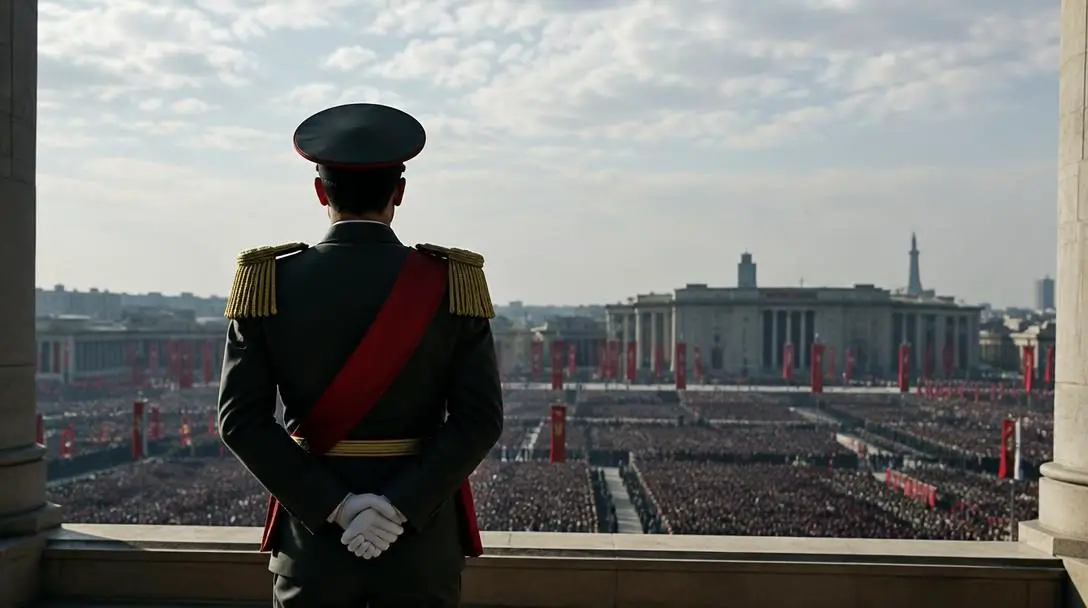
Throughout modern history, various heads of state have exercised centralized, unchecked power over their sovereign territories and populations. While popular commentary frequently attempts to rank or label specific regimes as the most harmful or extreme, such historical assessments are fundamentally subjective and depend heavily on diverse perspectives, cultural contexts, and the analytical metrics selected by observers. Rather than assigning subjective rankings of harm or attempting retrospective psychological diagnoses, historians and political scientists focus on examining the documented institutional actions, state decrees, and personality cults established by unchecked rulers.
A central inquiry among political analysts is whether autocratic leaders exhibited personal instability prior to attaining supreme authority, or whether the complete absence of institutional checks and balances gradually decoupled their decision-making from practical reality. Across various eras, unchecked authority has enabled rulers to prioritize vanity, personal dominance, and eccentric personal philosophies over the basic safety, public health, and economic welfare of their citizens. Examining five documented cases demonstrates how the collapse of constitutional limits allows idiosyncratic executive mandates to reshape entire societies.
Key takeaways
- Evaluating which historical dictator was the most harmful or extreme is fundamentally subjective and varies according to different historical metrics, cultural backgrounds, and analytical perspectives.
- Authoritarian regimes systematically dismantled independent courts, free presses, and legislative oversight to enact decrees centered on personal vanity or ideological obedience.
- Many seemingly erratic state edicts functioned as practical loyalty tests designed to enforce compliance and eliminate internal political dissent.
- State resources were frequently diverted away from basic public infrastructure, healthcare, and education toward executive luxuries and personal cults of personality.
- Objective historical research relies on primary state records, diplomatic cables, and survivor testimonies rather than speculative psychological labels.
Profiles of five absolute rulers
When legal structures offer no mechanism to counter executive decrees, state policy often reflects the unchecked impulses of a single individual. The following profiles outline five twentieth-century leaders who exercised absolute authority, instituted unusual domestic policies, and constructed pervasive cults of personality.
François Duvalier
- Country: Haiti
- Years in power: 1957–1971
- Background: Medical doctor
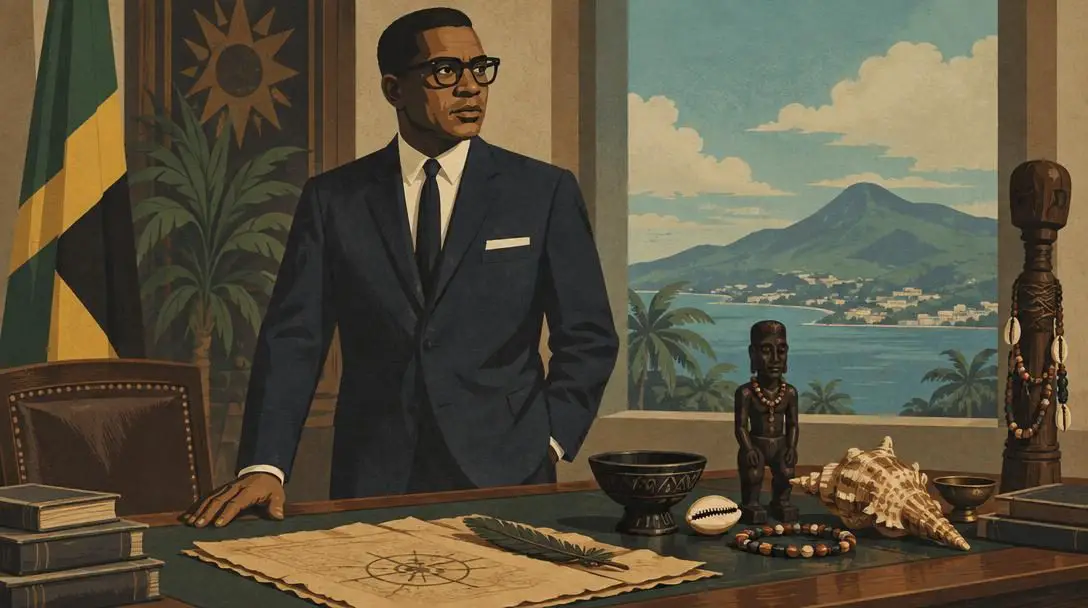
François Duvalier, a former medical doctor who governed Haiti from 1957 until his death in 1971, integrated traditional spiritual beliefs directly into statecraft to solidify his personal authority. Duvalier publicly declared himself to be Baron Samdi, the Voodoo spirit of death, utilizing this persona to cultivate psychological intimidation across the island. He went so far as to assert direct personal responsibility for the assassination of United States President John F. Kennedy, maintaining that his death was the result of a targeted Voodoo curse. To ensure continued spiritual dominion over the deceased American president, Duvalier dispatched an official operative to capture the air near Kennedy's burial site, asserting that collecting this atmosphere granted him ongoing influence over Kennedy's spirit.
Domestically, Duvalier mandated that Haitian youth memorize a state-sponsored political catechism. This publication adapted classic Christian prayers, prominently replacing the wording of The Lord's Prayer to revere the dictator: "Our Doc, who are in the National Palace for life, hallowed be Thy name by present and future generations..." Duvalier's regime was also marked by profound paranoia regarding potential political rivals. Following a failed coup attempt organized by Clément Barbot in 1958, government security forces were unable to track down the fugitive. Duvalier convinced himself that Barbot possessed supernatural shapeshifting powers and had transformed into a black canine. In response, the regime issued an official decree ordering security personnel to shoot every black dog found within the country.
Kim Jong-il

- Country: North Korea
- Years in power: 1994–2011
- Succession: Supreme leader following Kim Il-sung
Kim Jong-il governed North Korea as supreme leader from 1994 until 2011, establishing an exhaustive cult of personality that attributed supernatural and superhuman capabilities to his person. Official, state-sanctioned biographical records distributed to citizens claimed that Kim possessed absolute control over atmospheric weather patterns, altering storms and seasons at will. State publications further asserted an unprecedented biological perfection, insisting that his physical body required neither urination nor defecation. State-run media networks also depicted him as an unmatched athlete, reporting that he routinely shot thirty-eight under par in golf while achieving four to five holes-in-one during every single round he played.
Kim Jong-il maintained an avid personal interest in foreign media, assembling a private archive containing more than twenty thousand Hollywood movies and regarding cinematic James Bond espionage features as authentic documentary records of Western operations. While traveling across the country, he was accompanied by an entourage of women officially organized under the title of the Pleasure Squad. Throughout his governance, the broader North Korean population suffered from severe economic shortages, structural isolation, and widespread famine. Despite these humanitarian challenges, state funds were allocated to maintain an opulent lifestyle for the executive: dedicated flights imported premium cuts of sushi directly from Japan, $350,000 was spent on foreign brandy, a personal cellar housed one thousand bottles of fine wine, and $20 million was directed toward the acquisition of two hundred luxury Mercedes-Benz automobiles.

Francisco Macías Nguema

- Country: Equatorial Guinea
- Years in power: 1968–1979
- Lineage: Son of an indigenous witch doctor
Francisco Macías Nguema ruled Equatorial Guinea with absolute authority from 1968 until he was overthrown and executed in 1979. The son of an indigenous witch doctor, Macías Nguema claimed to possess inherent supernatural abilities and leveraged mystical intimidation as a core instrument of state administration. He once publicly proclaimed that his personal spiritual energy alone was sufficient to generate electrical current for the capital city; when the national power grid inevitably failed, the entire metropolitan area was plunged into complete darkness. Under his administration, modern Western therapies were strictly prohibited and established medical clinics were systematically shut down in favor of traditional practices administered under his supervision.
The regime's repressive measures devastated the nation. Observers and human rights monitors eventually dubbed Equatorial Guinea the "Dachau of Africa," as state executions and forced flight depleted more than half of the country's total population of 300,000 citizens. Macías Nguema utilized lethal violence against perceived adversaries, employing public crucifixions, personally executing the director of the national central bank, and murdering former romantic partners of his mistresses. He stored national financial reserves in cash directly beneath his bed inside a jungle residence, kept a personal collection of human skulls to communicate with spiritual entities, and excised the word "intellectual" from state vocabularies. He ordered the closure of all public libraries and educational institutions, mandated capital punishment for individuals wearing spectacles, and revised the official national motto to declare that no God existed other than himself. His reign concluded when a military tribunal deposed him, leading to his execution by firing squad.
Saparmurat Niyazov

- Country: Turkmenistan
- Years in power: 1985–2006
- Authored text: Ruhnama ("Book of the Soul")
Saparmurat Niyazov initially entered office as an elected executive before dismantling institutional checks to establish autocracy over Turkmenistan, governing from 1985 until his death in 2006. Niyazov authored a comprehensive ideological text titled the Ruhnama, or "Book of the Soul," which was elevated to the center of civic, educational, and spiritual life. He ordered religious communities to grant the Ruhnama equal standing with the Quran, threatening mosques with physical destruction if they refused to display and teach both texts side by side. Schoolchildren were mandated to study the book daily, and adults seeking a motor vehicle operator's license were required to memorize passages from the text before being granted driving credentials.
Niyazov asserted to the Turkmen public that he had established a direct covenant with Allah guaranteeing that anyone who read the Ruhnama three times would secure immediate entry into paradise. Demonstrating his desire to project this influence outward, he arranged for a copy of the volume to be launched into outer space so that extraterrestrial life forms could study its teachings. His governance featured numerous unusual public decrees: he advised citizens to preserve their dental health by gnawing on animal bones rather than seeking professional dental treatments, placed bans on lip-syncing, car radios, and recorded music, and prohibited young adult men from wearing beards or keeping long hair.
Saddam Hussein

- Country: Iraq
- Years in power: 1979–2003
- Ideological model: Joseph Stalin
Saddam Hussein ruled Iraq from 1979 until 2003, consciously modeling his governing methods and administrative apparatus after the Soviet leader Joseph Stalin. Operating under the strategic conviction that intense domestic coercion was necessary to maintain unity in a country divided by deep ethnic identities and sectarian traditions, Hussein relied on widespread state security networks, subjecting thousands of Iraqi citizens to systematic torture and political executions. While portraying himself as a defender of national cohesion and cultural legacy, his directives frequently crossed established societal boundaries.
Despite long-standing prohibitions within all traditional branches of Islam against utilizing human blood for holy calligraphy, Hussein commissioned a project to transcribe a complete copy of the Quran using his own blood. Over a two-year period, medical personnel extracted approximately twenty-seven liters of Hussein's blood to produce the 605-page manuscript. Medical donation authorities observe that extracting twenty-seven liters safely from a single individual would typically require a timeline of approximately nine years, highlighting the aggressive nature of the extraction schedule. In addition to this religious commission, Hussein involved himself in literature, being associated with the allegorical romance novel Zabiba and the King; while foreign intelligence services such as the CIA questioned whether he personally drafted every page, analysts concluded he directly supervised and guided the production of the manuscript.
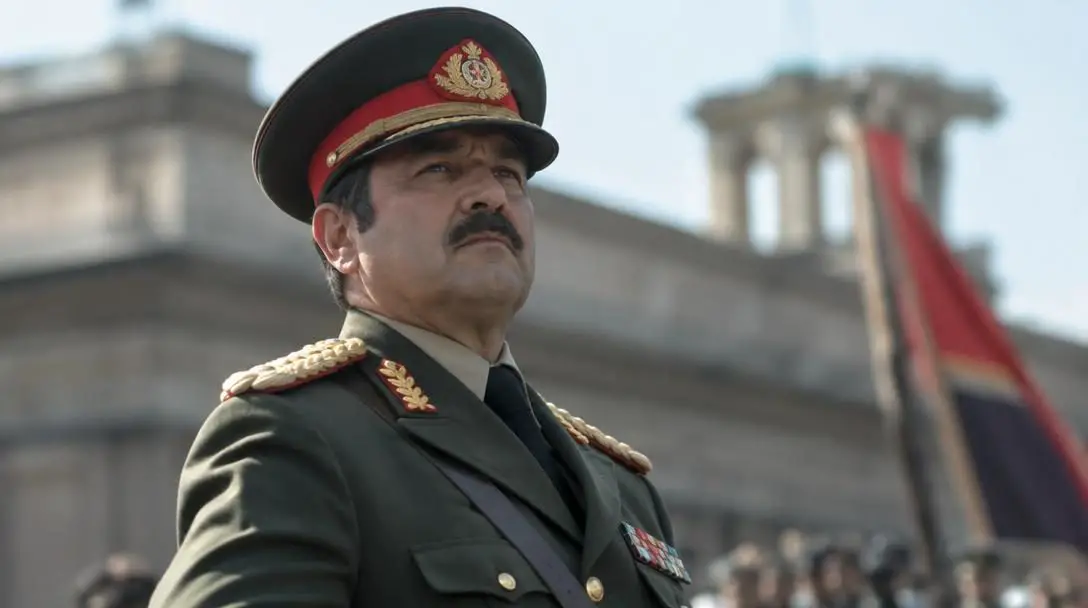
Historical assessments of authoritarian regimes focus on how the absence of constitutional checks permits unchecked personal vanity to dictate state policy.
At a glance: Five historical regimes
The following table synthesizes the distinct administrative traits, unusual mandates, and documented state control mechanisms utilized across these five regimes as documented in historical records.
| Leader | Country | Period in Power | Key Mandate or Cult Element | Primary Mechanism of Control |
|---|---|---|---|---|
| François Duvalier | Haiti | 1957–1971 | Proclaimed himself Baron Samdi; ordered culling of black dogs | Voodoo spiritual intimidation and revised civic catechisms |
| Kim Jong-il | North Korea | 1994–2011 | Claimed control over weather and superior athletic records | Absolute media monopoly, forced reverence, and elite privilege |
| Francisco Macías Nguema | Equatorial Guinea | 1968–1979 | Declared himself sole God; banned modern medicine and eyeglasses | Lethal violence, public crucifixions, and closure of civic institutions |
| Saparmurat Niyazov | Turkmenistan | 1985–2006 | Authored the Ruhnama; mandated its recitation for driver's licenses | Spiritual substitution, licensing mandates, and civic behavioral bans |
| Saddam Hussein | Iraq | 1979–2003 | Commissioned Quran transcribed in 27 liters of his own blood | Stalinist internal coercion, state security terror, and torture |
How absolute control works in practice
The ability of an individual leader to impose idiosyncratic or harmful policies on an entire population depends on specific institutional vulnerabilities. When democratic structures are absent or dismantled, several interlocking mechanisms facilitate totalitarian governance:
- Elimination of independent institutions: Autocrats dismantle judicial independence, dissolve parliamentary bodies, and eliminate competitive elections, rendering the entire legal apparatus an instrument of individual will rather than statutory law.
- Total control of information: State ownership or strict censorship of media channels, literature, and news distribution ensures that official claims—whether involving weather control or supernatural powers—reach the public without counter-reporting.
- Substitution of religion and culture: Traditional religious beliefs and civic associations are either co-opted, modified, or forcibly suppressed. Leaders replace traditional doctrine with customized state catechisms, elevate their own writings alongside holy scriptures, or rewrite national mottos to reflect personal deification.
- Systematic terror and intimidation: Coercive state security services employ lethal force, public torture, and arbitrary executions against dissidents, effectively preempting organized civic opposition and compelling outward conformity.
- Resource diversion: Without budgetary oversight or public transparency, national revenue streams and foreign imports are channeled toward executive luxuries, monument construction, and personal security, leaving public healthcare, nutrition, and schooling neglected.
Practical steps for studying authoritarian regimes
When investigating autocratic states and historical leadership behaviors, researchers, educators, and students must apply rigorous methodologies to separate confirmed historical realities from sensationalized folklore.
- Compile primary state records: Collect official state gazettes, legislative declarations, court records, and propaganda publications published directly during the administration under study.
- Examine dissident and survivor testimonies: Review documented accounts from refugees, political prisoners, and victims of state repression to contrast official state claims with lived human experiences.
- Review diplomatic and intelligence cables: Consult declassified diplomatic dispatches, reports from neutral organizations like the Red Cross, and intelligence evaluations to assess the on-the-ground enforcement of state decrees.
- Analyze economic and public health metrics: Track statistical records regarding national mortality, currency reserves, agricultural output, and literacy to verify the concrete outcomes of executive decisions.
- Apply objective descriptive language: Rely on documented actions and legal policies rather than unverified retrospective psychiatric diagnoses, maintaining analytical neutrality.
Common mistakes when analyzing historical dictators
Researchers and general readers frequently fall into analytical traps when reviewing regimes known for extreme behaviors. Avoiding these common mistakes produces a more accurate historical understanding:
- Overemphasizing absurdity over human harm: Fixating on unusual claims—such as bone gnawing, athletic hole-in-one feats, or supernatural weather control—can inadvertently trivialize the widespread executions, starvation, and fear endured by the populace.
- Assuming universal clinical madness: Categorizing rulers as clinically insane ignores calculated statecraft; many bizarre edicts functioned deliberately as loyalty tests to identify dissidents and enforce total subordination.
- Confusing public compliance with genuine belief: Concluding that citizens sincerely believed extreme propaganda conflates enforced survival behaviors with authentic personal faith.
- Ignoring institutional enablers: Attributing state violence solely to an individual dictator overlooks the vast networks of bureaucrats, military officers, judges, and internal police who actively executed and sustained those policies.
Frequently asked questions
Can historians definitively rank which dictator was the most insane or harmful?
No. Historical and political assessments of harm are inherently subjective and depend on diverse analytical frameworks, varying metrics, and cultural contexts. Rather than assigning subjective rankings, historians examine verifiable administrative policies, human rights records, and institutional impacts.
Why did François Duvalier order the destruction of black dogs in Haiti?
Following an unsuccessful coup attempt led by Clément Barbot in 1958, Duvalier came to believe that the fugitive had used supernatural abilities to transform into a black canine. Because authorities could not locate Barbot, the regime ordered the execution of all black dogs throughout Haiti.
How was the Blood Quran of Saddam Hussein produced?
Hussein commissioned calligraphers to write a 605-page copy of the Quran utilizing his own blood. Approximately twenty-seven liters of blood were drawn over a two-year timeframe, a collection volume that medical specialists note would normally require nine years of safe, spaced donations.
What was the Ruhnama, and how was it enforced in Turkmenistan?
The Ruhnama, or "Book of the Soul," was a philosophical text authored by Saparmurat Niyazov. The state mandated its daily study in schools, required prospective drivers to memorize it to pass licensing exams, ordered mosques to display it alongside the Quran, and even launched a copy into outer space.
What caused Equatorial Guinea to be called the "Dachau of Africa"?
Under Francisco Macías Nguema, state terror, public crucifixions, and arbitrary executions caused more than half of the nation's 300,000 citizens to either be killed or flee into exile. The regime closed hospitals, prohibited modern medicine, and mandated capital punishment for wearing eyeglasses.
The bottom line
The documented records of these five twentieth-century rulers underscore that unchecked governance produces devastating societal outcomes. While popular culture often focuses on the eccentricities of authoritarian leaders—from celestial book launches to supernatural claims of weather control—the historical reality is grounded in the systematic dismantling of legal limits, the suppression of basic human rights, and the diversion of vital resources. When legal mechanisms and civil societies lose their capacity to constrain executive authority, state policy inevitably becomes an instrument for personal vanity, resulting in profound humanitarian costs.