Top 5 Tips For Winning At Scrabble
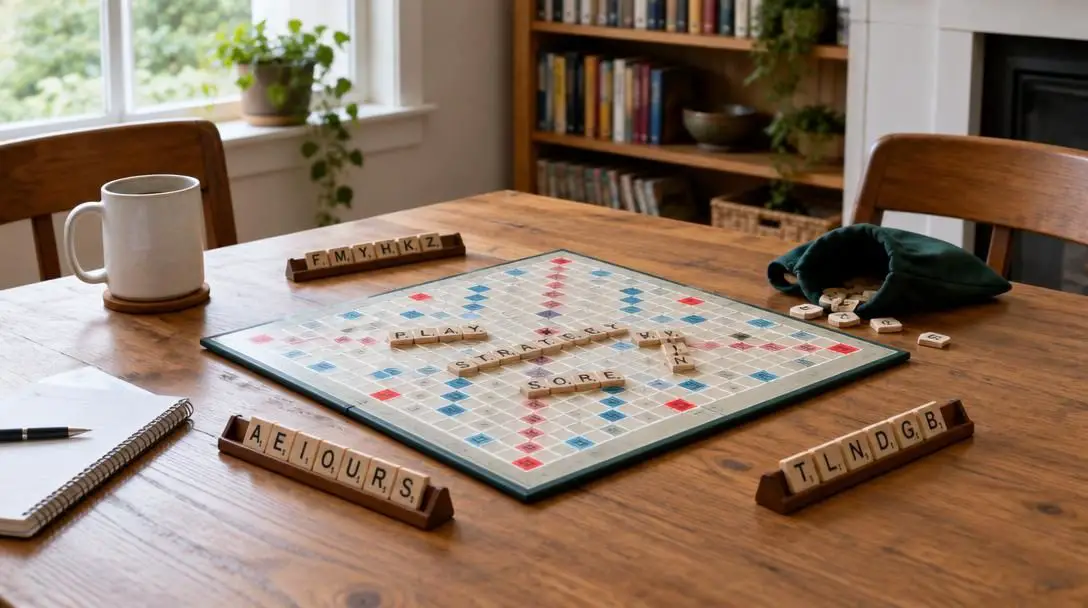
Scrabble is celebrated as a classic board game that seamlessly blends an extensive knowledge of the English language with rigorous, calculated tabletop strategy. While many casual competitors treat the game merely as a test of vocabulary, tournament champions and seasoned players quickly discover that unearthing rare words is only one component of a winning match. The contest unfolds across a strictly limited grid where space is tight, point multipliers occupy critical real estate, and every placed tile permanently shifts the competitive terrain for both opponents.
Because each turn presents a rapidly shifting array of possibilities, winning consistently demands far more than favorable tile draws or an exhaustive mental dictionary. True mastery requires keen spatial awareness, diligent board management, and the ability to strike a delicate equilibrium between high-scoring offensive plays and unyielding defensive control. Understanding the mechanical architecture of the board transforms a seemingly chaotic rack of letters into an organized, point-generating engine.
Key takeaways
- Memorizing the more than 100 valid two-letter words unlocks parallel plays and tight board spaces.
- Maximizing 10-point consonants like Q and Z on multiplier squares drives rapid score accumulation.
- Defensive positioning prevents opponents from easily accessing high-reward triple-word squares.
- Extending existing words with prefixes and suffixes revitalizes awkward racks and captures bonuses.
- Managing rack balance and planning future turns keeps the coveted 50-point all-tile bonus within reach.
The Mechanics of the Board and Tile Scoring
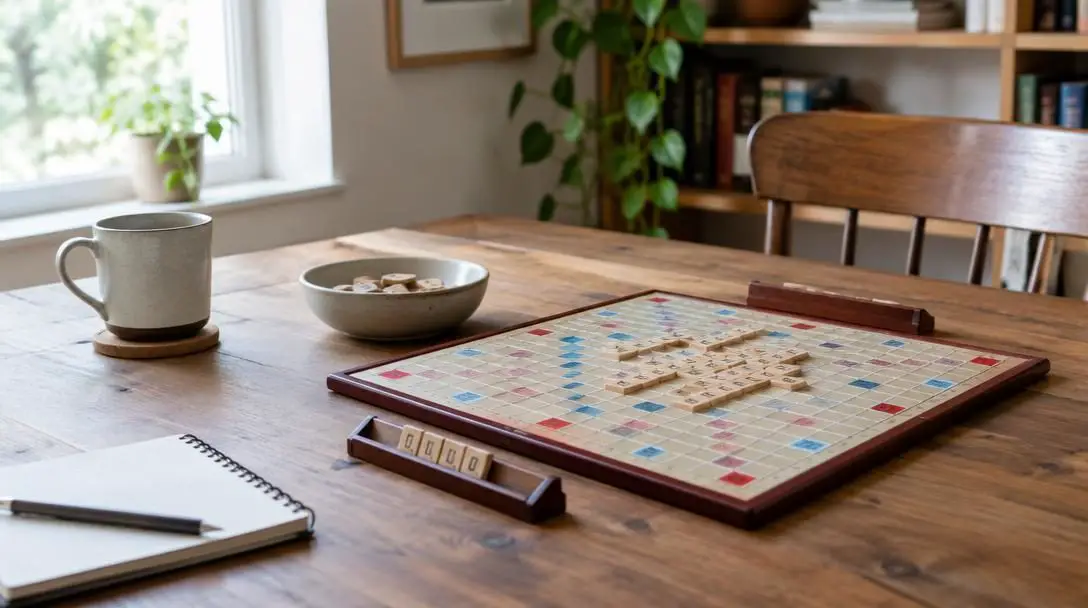
At its foundational level, Scrabble challenges competitors to draw letter tiles from a shared concealed bag, construct interlocking words across a 15-by-15 grid, and tally points based on the individual values of the letters combined with the premium squares scattered across the board. Each competitor maintains a private rack of letter tiles, replenishing their hand at the conclusion of every turn until the bag is depleted and one player exhausts their remaining letters.
The game intentionally assigns values according to frequency and ease of use in the English language. Everyday vowels and frequent consonants, such as E and A, are worth just 1 point each, reflecting how simple they are to weave into common words. In contrast, rare consonants like Q and Z occupy the peak of standard tile values at 10 points apiece. The remaining letters of the alphabet fall along a graduated point spectrum based on their general spelling utility.
Strategic success depends on manipulating the board's designated premium squares, which multiply tile and word values in distinct ways:
- Double-letter squares: Double the point value of the specific tile placed directly onto the square.
- Triple-letter squares: Triple the point value of the specific tile placed directly onto the square.
- Double-word squares: Double the total point value of the entire word crossing the space, including any individual letter multipliers applied during the turn.
- Triple-word squares: Multiply the entire completed word score by three, generating massive point swings across a single play.
- The 50-point bonus: Successfully using all seven tiles from your rack in a single play earns an automatic 50-point bonus added to that turn's score.
| Strategic Focus | Primary Board Target | Key Letters Involved | Primary Objective |
|---|---|---|---|
| Two-Letter Plays | Tight parallel lanes | A, I, O, E, X | Score parallel words and access premium squares |
| High-Point Harvesting | Double & triple letter squares | Q, Z | Extract 20 to 30+ points from single tiles |
| Board Defense | Lanes toward triple-word squares | Difficult consonant clusters | Block opponent counterattacks and restrict scoring |
| Morphological Extensions | Open word prefixes/suffixes | U, N, S, E, D | Recycle board real estate and repurpose dead racks |
| Rack Balancing | Open central board lanes | Vowel-to-consonant ratios | Setup for seven-letter, 50-point bonus turns |
Core Strategies: Top 5 Tips for Winning at Scrabble
To consistently outperform experienced rivals, players must look beyond immediate point totals and implement reliable tactical principles. These five core strategies establish the baseline for commanding the board and controlling the rhythm of any match.
1. Master the Two-Letter Words
There are over 100 acceptable two-letter words in the English language, and committing them to memory is widely regarded as the single most transformative step a player can take. Far from being trivial filler, these short words operate as the structural glue of high-level play. They empower you to construct parallel plays—laying a new word directly alongside an existing one so that every adjacent letter forms a distinct, valid two-letter word.
Parallel plays allow you to score multiple words in a single turn. For instance, knowing niche entries such as aa, ai, oe, and xi enables you to squeeze plays into suffocating board spaces where larger words simply cannot fit. Crucially, sliding a compact word into these cramped crevices frequently grants direct access to coveted bonus squares that your opponent assumed were completely cordoned off.
2. Look for High-Scoring Letters
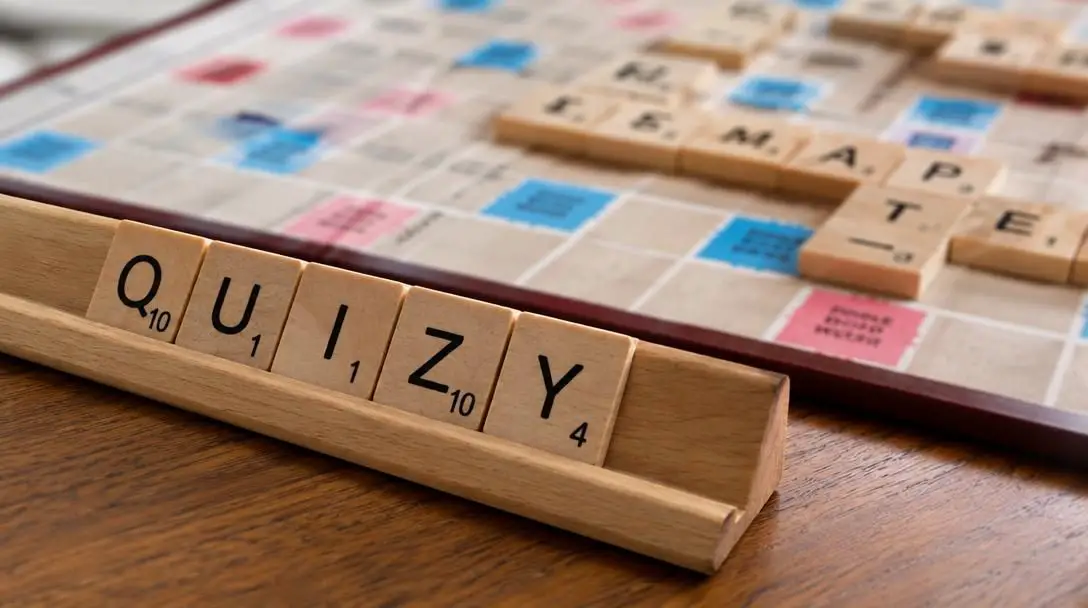
High-value tiles represent the most direct route to building an insurmountable lead. The heavyweight consonants, specifically Q and Z, command 10 points each and should never be discarded casually. The foundational rule of thumb when holding these tiles is to anchor them onto double-letter or triple-letter squares, tripling or quadrupling their baseline value in a single stroke.
At the same time, top-tier competitors never underestimate the quiet utility of modest 1-point tiles like A and E. While an individual vowel does not turn heads on the scoresheet, these versatile letters provide the indispensable connective tissue required to assemble multi-letter words, link across wide board expanses, and bridge your high-scoring consonants to distant premium squares.
A high-scoring move that leaves you holding an unplayable collection of identical consonants will paralyze your next several turns.
3. Play Defensively
Generating points is only half the battle; denying scoring lanes to your adversary is equally vital to securing victory. Thorough defensive play mandates that you evaluate the board through your opponent's eyes before finalizing your move. If laying down a respectable 20-point word inadvertently provides an open runway directly into an exposed triple-word square, the play represents a net liability.
Defensive mastery involves constricting the board when you hold the lead. You can stifle an opponent's scoring options by consuming accessible anchor letters, creating awkward letter clusters that resist easy hook plays, or physically occupying lanes that lead toward high-yield multipliers. When an opponent is desperate for open board real estate, keeping the board closed and congested will severely limit their counterattack opportunities.
4. Use Prefixes and Suffixes
When your rack appears discordant or completely lacking in flow, hunting for entirely new, freestanding words across the center of the board can quickly stall your momentum. Instead, examine the words already established on the grid to identify candidates for front and rear extensions. Prefixes and suffixes permit you to append tiles seamlessly to previously laid words.
A classic example is adding the prefix un directly in front of the established word happy to produce unhappy. Executing an extension allows you to collect points for the entire newly created word while simultaneously linking your remaining letters into perpendicular plays. This method breathes immediate life into awkward hands and provides an elegant mechanism for claiming multiplier squares that cannot be reached through standard placement.
5. Plan Ahead
Executing your moves in a vacuum without analyzing future rack compositions is a surefire way to surrender control of the game. Before firmly pressing your chosen tiles onto the board, pause to evaluate what letters will remain on your rack. Sacrificing your last vowel for an extra three points might feel satisfying in the moment, but stranding yourself with four clunky, uncoordinated consonants can easily cripple your output across the next two or three rounds.
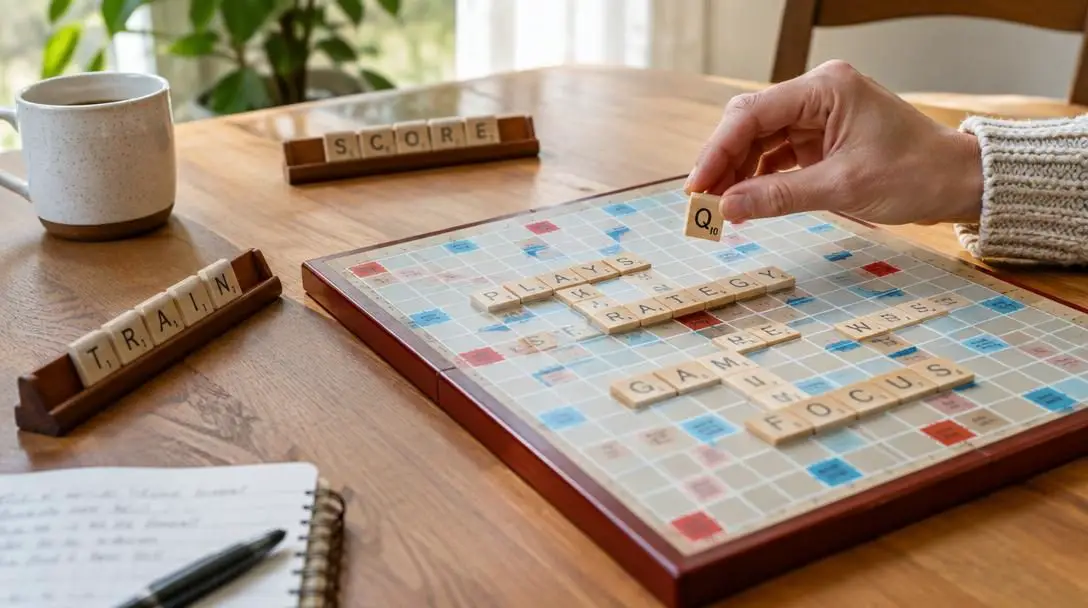
Forward-thinking competitors constantly evaluate the emerging layout of the grid, positioning their racks to drop multiple high-scoring tiles simultaneously in subsequent turns. Furthermore, careful tile curation keeps you in contention for Scrabble's most lucrative milestone: playing all seven tiles from your rack in a single turn to capture the game-changing 50-point bonus.
Practical Steps to Improve Your Match Play
Transitioning from an enthusiastic amateur to a formidable club or tournament player requires establishing disciplined, repeatable habits at the board. Integrating a structured routine into every turn helps you execute complex strategic principles under time pressure.
- Study and memorize groups of high-utility two-letter words systematically, prioritizing unusual consonants like the xi pair alongside flexible vowel clusters such as aa, ai, and oe.
- Examine your rack at the opening of every turn to spot modular building blocks, identifying versatile prefixes like un alongside standard pluralizing and tense suffixes.
- Scan the board's perimeter and outer quadrants to identify exposed double-letter, triple-letter, double-word, and triple-word squares before deciding on a play.
- Calculate your projected rack balance after your proposed word is removed, ensuring you do not discard all your vowels or leave behind an unplayable assortment of consonants.
- Rearrange and count your tiles before committing to a turn to verify whether an alternative combination allows you to deploy all seven letters and secure the 50-point bonus.
- Conduct a final defensive sweep across the grid to verify that your placed word does not open an easy scoring path toward an adjacent multiplier for your opponent.
Common Mistakes to Avoid
Many match losses do not result from poor luck or subpar tile draws, but rather from unforced mental errors. Steering clear of these routine pitfalls will help safeguard your lead and keep your match strategy sound.
- Tunnel vision on long words: Exhausting mental energy searching exclusively for complex, multisyllabic words while overlooking compact, highly efficient plays that position high-point tiles like Q or Z on double or triple multiplier squares.
- Ignoring defensive exposure: Finalizing a decent mid-range play that inadvertently provides your opponent with an unobstructed bridge to an open triple-word score.
- Wasting premium tiles: Squandering a 10-point tile such as Q or Z on an ordinary square with no letter or word multipliers when a small amount of patience could double or triple its point yield.
- Neglecting the 50-point bonus: Settling prematurely for short, low-upside plays instead of actively managing your rack to build toward an explosive seven-tile bingo.
- Overlooking board extensions: Confining your search exclusively to open grid gaps instead of extending existing words via prefixes or suffixes to unlock fresh scoring lanes.
Advanced Tile Tracking and Bag Management
As you refine your core tactics, incorporating tile tracking into your gameplay marks the natural next step toward advanced competition. Scrabble contains a fixed, finite distribution of letter tiles. By noting which high-value letters—such as the Q, the Z, and critical vowels—have already been placed on the grid, you gain valuable insight into the contents of the remaining bag.
During the endgame, when the tile bag is completely empty, tile tracking transforms into complete information. By cross-referencing the tiles on the board and the letters on your rack against the initial game supply, you can deduce the exact letters resting on your opponent's rack. This deduction allows you to accurately anticipate their highest possible score, block their intended lanes, and maneuver toward a guaranteed win.
Frequently asked questions
How many points is the bonus for using all seven tiles in one turn?
Using all seven tiles from your rack in a single turn awards an automatic 50-point bonus, which is added to the standard score of the word you just formed.
Which letters have the highest point value in Scrabble?
The letters Q and Z carry the highest individual point values in the game, yielding 10 points each due to their rarity and difficulty in word formation.
Why are two-letter words considered so important in Scrabble?
Two-letter words allow players to make parallel plays alongside existing words, scoring multiple words in a single turn and opening access to tight, restricted areas of the board.
How does a double-word square differ from a double-letter square?
A double-letter square doubles the point value of only the specific tile placed on that space, whereas a double-word square doubles the point total of the entire word that covers it.
What is rack balance, and why does it matter?
Rack balance refers to maintaining a workable ratio of vowels to consonants in your hand. Preserving balance prevents your rack from becoming stranded with unplayable duplicate letters and increases your chances of forming a seven-letter, 50-point bonus word.
The bottom line
Achieving mastery in Scrabble requires recognizing that vocabulary is merely the fuel for a broader engine of board management, positional awareness, and calculated defense. By memorizing vital two-letter words, positioning high-point tiles onto multiplier squares, defending key lanes, utilizing prefixes and suffixes, and maintaining forward-looking rack balance, you elevate your game far beyond casual play. Regular practice with these foundational strategies will sharpen your match reflexes and turn every rack of tiles into a decisive competitive advantage.