
Understanding Your Strengths And Weaknesses In Order To Choose The Best Career Path – 5 Tips

Navigating the modern professional landscape can easily feel overwhelming when you lack a defined understanding of your individual capabilities. Choosing a fulfilling career path requires deliberate, honest self-reflection, as pinpointing what you naturally excel at and where you encounter difficulty is crucial to locating an environment where you can sustainably thrive. Without an accurate assessment of these traits, professionals frequently drift into positions that generate chronic stress, professional disengagement, or early burnout.
Conversely, developing deep clarity around your natural strengths allows you to target opportunities that make meaningful use of your gifts while mitigating your vulnerabilities. Through a structured self-assessment model based on five essential strategies—leveraging personality assessments, cataloging skills, auditing past roles, gathering third-party feedback, and exploring market demands—you can eliminate guesswork and build an actionable roadmap toward long-term professional fulfillment.
Key takeaways
- Long-term job satisfaction depends on aligning daily occupational duties with your natural cognitive and behavioral strengths.
- Validated personality assessments such as the Myers-Briggs Type Indicator and DISC provide valuable directional insights rather than rigid career prescriptions.
- Auditing past achievements and gathering objective external feedback help identify marketable talents you may otherwise take for granted.
- Thorough career planning balances internal self-knowledge with practical labor realities such as compensation, hiring outlook, and sustainable working hours.
The Foundations of Self-Awareness in Career Development
Career growth is an ongoing, developmental journey anchored entirely in self-awareness. When job seekers enter the workforce guided solely by immediate convenience, societal prestige, or external expectations, they risk entering positions fundamentally misaligned with their core dispositions. While this approach may secure short-term employment, lasting engagement requires harmony between an employee's natural wiring and their daily operational tasks.
In a professional setting, a genuine strength represents more than simple technical competence; it is any area where you repeatedly achieve high-quality outcomes while feeling intellectually or emotionally energized by the effort. A weakness is not an indicator of personal failure, but rather an activity that depletes your energy, demands disproportionate mental exertion, or clashes with your innate aptitudes. Mapping these characteristics is not an exercise in self-criticism, but a pragmatic diagnostic designed to identify where your energy yields the highest return.
A genuine strength is defined not just by technical competence, but by the energy and fulfillment you experience while doing the work.
Five Essential Strategies to Uncover Your Strengths and Weaknesses
Accurate self-evaluation requires balancing introspective analysis with objective measurement and external observation. Relying on any single method leaves critical blind spots, whereas cross-referencing multiple discovery tools builds a grounded, three-dimensional profile of your workplace tendencies.
| Assessment Method | Primary Focus | Key Benefit | Critical Consideration |
|---|---|---|---|
| Personality Assessments | Behavioral patterns and interaction preferences | Reveals optimal workplace environments and communication habits | Serves as an exploratory diagnostic rather than a definitive career decree |
| Skills Inventory | Technical and interpersonal capabilities | Bridges abstract talents with concrete occupational roles | Requires cataloging both acquired proficiencies and innate ease |
| Work Experience Audit | Historical project performance and energy levels | Extracts real-world evidence of engaging versus draining tasks | Demands candid evaluation of past difficulties and friction points |
| Outside Feedback | Perceptions from colleagues, mentors, and peers | Uncovers blind spots and talents you routinely overlook | Requires accepting constructive critique without defensiveness |
| Career Field Research | Market demand, salary benchmarks, and expectations | Aligns personal abilities with viable economic opportunities | Balances aspirational interests with practical day-to-day duties |
1. Take Structured Personality Tests
Standardized diagnostic instruments, such as the Myers-Briggs Type Indicator (MBTI) and the DISC assessment, offer systematic frameworks for examining how you perceive information, make decisions, and interact in collaborative environments. These tests highlight your communication tendencies, typical problem-solving methodologies, and the physical or cultural workplace settings that allow you to operate at peak efficiency.
While personality inventories yield compelling insights into your workplace temperaments, they are designed to stimulate self-reflection rather than issue binding career mandates. They should function as diagnostic stepping stones within a broader inquiry, illuminating how you tend to collaborate with others and manage professional stress.
2. Identify and Catalog Your Core Skills
A comprehensive self-appraisal requires creating a meticulous ledger of your functional abilities, categorized cleanly between technical proficiencies and interpersonal skills. Technical aptitudes involve specialized, teachable capabilities such as software coding, statistical data analysis, or long-form writing. Interpersonal traits encompass dynamic social faculties, including empathetic leadership, team cohesion, active listening, and conflict mitigation.
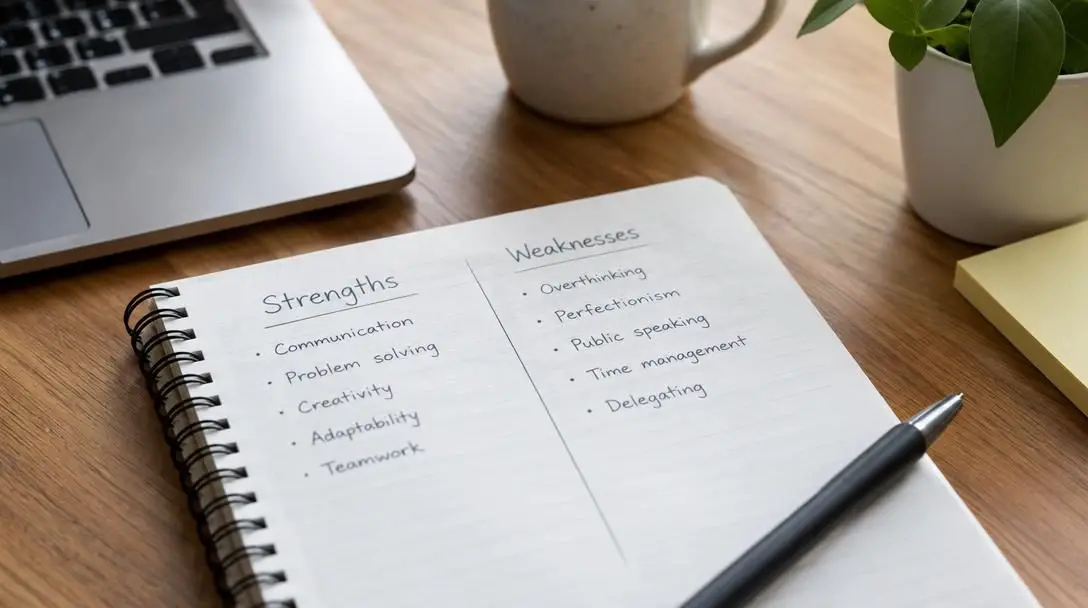
Once documented, these skills can be directly connected to functional business functions. For instance, exceptional writing aptitude and narrative synthesis can lead directly to careers in content strategy, investigative journalism, brand communications, or digital marketing. The objective is to highlight tasks that require minimal mental friction while generating consistent value.
3. Evaluate Your Past Work and Academic Experience
Your previous employment, internships, and academic projects offer concrete evidence of your practical strengths and weaknesses. By conducting a detailed retrospective of your past duties, you can pinpoint specific assignments where you entered a state of sustained focus and productivity, as well as those that left you feeling chronically drained or disengaged.
Isolating these historical patterns reveals the structural components of your ideal role. If project-based data reconciliation consistently produced frustration, roles heavy in numerical compliance may prove poorly suited to your profile. Conversely, if you repeatedly found satisfaction organizing cross-functional team presentations, positions centered on client coordination or project leadership warrant closer consideration.
4. Gather Feedback from Outside Sources
Self-reflection carries inherent subjective bias. Because we inhabit our own routines daily, we frequently suffer from self-perception blind spots—either underestimating our most natural skills or failing to recognize behavioral patterns that undermine our performance. Seeking input from trusted colleagues, managers, friends, and family provides an external mirror to balance your personal assessment.
When conducting these conversations, request specific examples of scenarios where you demonstrated decisive problem-solving, along with transparent observations regarding tasks where you appeared to struggle. Welcoming constructive criticism provides invaluable diagnostic clarity, enabling you to address developmental gaps before they hinder your career trajectory.
5. Research Potential Career Paths
After compiling a profile of your proficiencies and limitations, your findings must be tested against labor market realities. This process involves examining current job descriptions, reviewing expected qualifications, and analyzing whether emerging industries present sustainable economic viability for someone with your specific profile.
Thorough career exploration also requires analyzing baseline compensation tiers, project growth rates, day-to-day operational expectations, and work-life balance considerations. Supplement your desk research by initiating informational interviews with seasoned professionals active in your target fields to establish whether everyday industry routines truly match your expectations.

Step-by-Step Implementation Guide
Translating abstract insights into a concrete career roadmap requires systematic execution. Following an orderly sequence guarantees that your reflections yield practical, actionable conclusions.
- Complete a recognized personality profile, such as the DISC assessment or Myers-Briggs Type Indicator, noting your primary communication habits and preferred team structures.
- Draft a comprehensive skills ledger divided into technical proficiencies (such as coding or copywriting) and interpersonal strengths (such as conflict resolution or team leadership).
- Audit your historical professional experiences by cataloging tasks that felt effortless and engaging alongside responsibilities that caused persistent fatigue or frustration.
- Conduct informational feedback discussions with three to five trusted mentors, peers, or managers to identify blind spots and validate your perceived talents.
- Cross-reference your combined skill profile against contemporary job titles, identifying occupational clusters where your highest-rated attributes are primary requirements.
- Examine the market viability of your target occupations, evaluating current salary expectations, long-term employment outlooks, and baseline educational prerequisites.
- Schedule introductory informational conversations with active practitioners in those industries to verify daily workplace realities before making formal career commitments.
Common Traps to Avoid During Self-Assessment
Career assessment is vulnerable to cognitive missteps that can steer job seekers toward unsuitable commitments. Being mindful of these pitfalls protects you from making hasty or poorly informed professional changes.
- Viewing assessment instruments as life prescriptions: Treating test scores as absolute definitions of your potential limits your mobility; assessments are interpretive guides rather than absolute limits.
- Equating personal fascination with natural competence: Holding a strong interest in a field does not automatically translate into possessing the daily cognitive aptitudes needed to succeed in that operational domain.
- Minimizing innate proficiencies: Assuming that your core talents are effortless for everyone leads to undervaluing your most competitive assets in the marketplace.
- Defensiveness in the face of critique: Rejecting external observations prevents you from diagnosing critical blind spots that could derail collaborative workplace dynamics.
- Ignoring macroeconomic realities: Focusing solely on individual preferences while disregarding salary requirements, geographic availability, or hiring demand leads to financial frustration.
- Hunting for a solitary ideal career: Assuming that there is only one singular role that fits your personality creates paralyzing anxiety; multiple professional paths can satisfy your core strengths.
Translating Diagnostic Insights into Strategic Career Action
Once you have identified your capabilities and pinpointed promising occupational paths, the next phase demands disciplined, incremental execution. Abrupt transitions into unfamiliar fields without adequate preparation often create unnecessary economic and psychological strain.
Begin by comparing your current qualifications against the baseline demands found in active job descriptions. If your self-assessment highlights a natural aptitude for strategic messaging, determine whether you require supplemental credentials, portfolio assets, or technical tools to compete effectively for professional marketing or communication roles. Identifying these skill gaps early enables you to build a focused educational plan.
Next, de-risk your intended career change by testing the waters on a limited scale before making a permanent transition. Seek out freelance commissions, volunteer positions within nonprofit organizations, or formal job-shadowing arrangements alongside established industry specialists. Experiencing daily tasks directly confirms whether your theoretical career interest holds up in practice.
Above all, remember that professional career navigation is an iterative, flexible process. Discovering that a selected path is an imperfect fit is a standard component of professional growth rather than a setback. Armed with a grounded understanding of your personal strengths and weaknesses, you possess the insight needed to pivot thoughtfully toward sustainable professional fulfillment.
Frequently asked questions
How can I tell the difference between a weakness and a skill I simply have not learned yet?
An undeveloped skill is an area where you lack technical exposure or training but can grasp the fundamentals once shown, whereas a true weakness involves tasks that remain persistently exhausting, unintuitive, and mentally draining even after repeated instruction and practice.
Are personality tests like the MBTI and DISC accurate enough to base career choices on?
These assessments provide helpful diagnostic frameworks for identifying your workplace tendencies, optimal team settings, and communication styles, but they should never serve as the sole foundation for career planning; they are best used alongside real-world skills inventories, employment audits, and external feedback.
What should I do if my natural strengths do not align with my personal passions?
Explore hybrid career paths that allow you to deploy your core functional capabilities within your industry of interest—such as applying strong organizational or data skills to operational roles within creative, environmental, or philanthropic organizations.
How can I ask former colleagues for honest feedback without making them uncomfortable?
Approach trusted peers with a clear, specific request, asking them to identify two areas where you demonstrated undeniable effectiveness and one specific operational scenario where you appeared to struggle or could have handled tasks more effectively.
Is it possible for an identified weakness to evolve into a workplace strength over time?
With targeted coaching, practice, and practical experience, you can raise your baseline competence in areas of weakness to a functional professional standard, though these activities will typically demand more deliberate cognitive effort and energy than your innate strengths.
The Bottom Line
Building a successful and sustainable career does not require eliminating every personal limitation. Instead, it demands developing a clear, realistic understanding of your natural gifts, cultivating your technical abilities, and deliberately positioning yourself in roles where your core competencies create value. By anchoring your career trajectory in methodical self-assessment, practical market research, and continuous learning, you can make informed decisions that lead to authentic, lasting professional fulfillment.