Wordle Tips: Most Common Letters in 5-Letter Words

Every round of Wordle begins in identical fashion: a blank canvas of five empty squares, six opportunities to uncover a mystery word, and zero initial hints. Because feedback only begins once your first row is submitted, that opening guess shoulders immense strategic responsibility. Every square entered on turn one either uncovers crucial linguistic territory or squanders valuable deductions. While it can be tempting to launch an expressive, unorthodox word packed with rare consonants like X or Q, relying on long-shot guesses functions like an ill-advised hail mary on the opening snap of a football game. When such an extreme gamble succeeds, it feels inspired, but the underlying mathematical reality makes early failure vastly more likely.
To cultivate a dependable winning streak, dedicated solvers must base their play on the statistical bedrock of the English lexicon. Certain letters appear with overwhelming frequency across five-letter vocabulary, whereas others lurk in only a tiny fraction of solutions. By assembling opening words from the most mathematically common letters and placing them where they naturally tend to sit, you maximize your odds of securing instant green and yellow tiles right out of the gate.
Key takeaways
- The five most frequent letters across five-letter vocabulary are A, E, S, O, and R.
- Letter A appears in more than half of all five-letter entries, closely followed by E in just under half.
- The consonant S dominates both ends of five-letter words, ranking as the most common first and fifth letter.
- Perceived word-game favorites like P and F perform significantly worse in five-letter spaces than players expect, ranking 15th and 20th respectively.
- The letter Q sits dead last in overall utility, appearing in approximately one percent of all candidate words.
The core alphabet: Understanding letter frequency in five-letter words
Word games naturally reward vocabulary breadth, but Wordle is fundamentally a game of probability and constraint satisfaction. The English language relies on structured orthographic rules, meaning specific letters handle the heavy lifting when constructing five-letter words. Vowels act as the structural mortar binding consonants together, while a select cadre of versatile consonants appears repeatedly across hundreds of common word stems.
A helpful mental shortcut for remembering the absolute highest-tier characters is to recall the fabulist Aesop. By taking the five letters in AESOP and swapping the letter P for an R, you produce the five most dominant characters in five-letter language: A, E, S, O, and R. Focusing your early turns on this high-value cohort ensures you test the broadest possible portion of the dictionary in a single stroke.
The letter A
Holding the crown as the single most frequent letter in five-letter vocabulary, A reigns as the king of the alphabet. It appears in more than 50 percent of all valid five-letter terms. Just as naming George Washington as the first President of the United States comes far more easily to memory than recalling the 15th president, James Buchanan, the letter A occupies an undisputed, foundational status in word building. Solvers who omit A from their earliest attempts unnecessarily ignore the single most probable character in the puzzle.
The letter E
Finishing in a close second place overall, the letter E appears in just under half of all five-letter entries. While A edges it out slightly in total word coverage, E possesses exceptional structural utility, functioning frequently as a flexible interior vowel, part of common vowel teams, or an essential terminal silent marker. Testing E early provides dependable data about syllable structure across dozens of common word families.
The letter S
Ranking third overall behind A and E, the letter S is the most common consonant in five-letter vocabulary, appearing in more than 40 percent of Wordle-eligible terms. Fans of classic television game shows like Wheel of Fortune know the traditional bonus round lineup of R, S, T, L, and N, but in five-letter contexts, S stands well ahead of its peers. Its ability to bookend words gives it unmatched utility across the grid.
The letter O
Serving as the fourth most common letter overall, O is present in just under one-third of all five-letter entries. While it does not achieve the ubiquitous reach of A or E, it comfortably outpaces other vowels. Introducing O during early turns helps players rapidly establish whether a mystery word relies on back-vowel structures or softer phonetic blends.
The letter R
Holding the fifth spot on the leaderboard, R is the second most frequent consonant and the only other consonant besides S to cross the 30 percent threshold in five-letter vocabulary. Because R readily combines with other consonants to form initial and final consonant clusters (such as initial blends and r-controlled vowels), identifying or eliminating it early severely restricts the game's remaining search space.
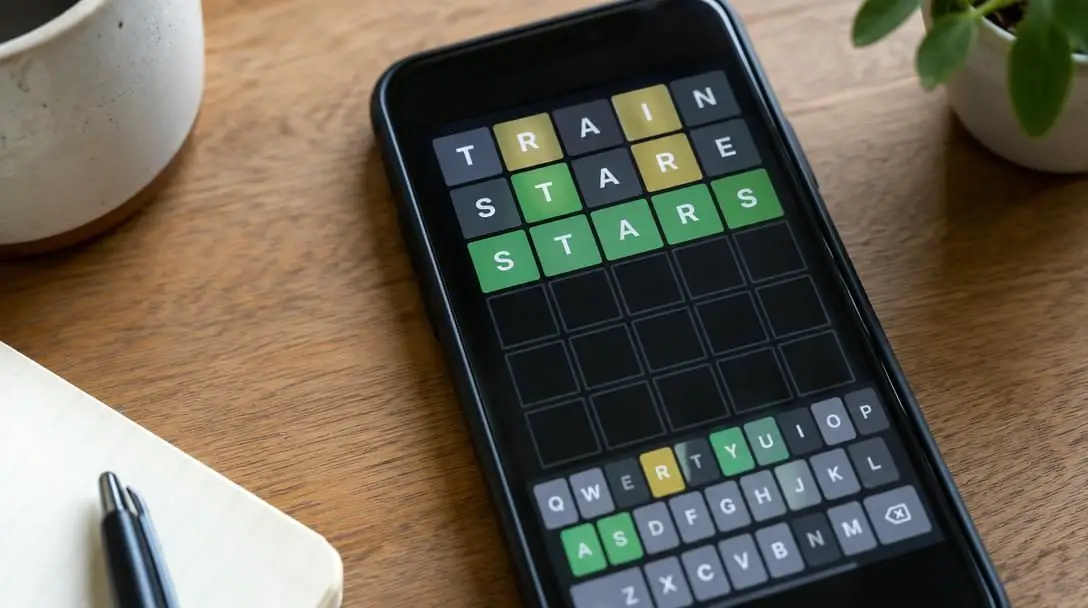
Relying on rare consonants on the opening turn is the equivalent of throwing a desperate hail mary on the first play of the game.
How common letters compare across five-letter vocabulary
Understanding exact frequency tiers helps solvers make nuanced trade-offs between competing word options. While the top five letters form the primary tier, secondary characters like I, L, and N provide vital support when refining guesses on subsequent turns. Conversely, vowels like U behave very differently from their peers.
| Letter | Classification | Approximate Frequency | Primary Positional Role |
|---|---|---|---|
| A | Vowel | Over 50% of words | Dominant in slot 2; strong in slot 3 |
| E | Vowel | Just under 50% of words | Dominant in slot 4; flexible in slot 3 |
| S | Consonant | Over 40% of words | Dominant in slot 1 and slot 5 |
| O | Vowel | Just under 33% of words | Frequent in slot 2 and slot 3 |
| R | Consonant | Over 30% of words | Most frequent in slot 3; strong in slot 2 |
| I | Vowel | Trails closely behind O | Frequent in slot 2 and slot 3 |
| L | Consonant | Approximately 25% of words | Versatile across slots 2, 3, and 5 |
| N | Consonant | Approximately 25% of words | Common in slots 3, 4, and 5 |
| U | Vowel | Just over 20% of words | Least common vowel; standard in slot 2 |
As the comparison table illustrates, treating all vowels equally is a critical strategic error. While A and E appear in roughly half of all possibilities, U acts as the black sheep of the vowel group, occurring in barely one-fifth of solutions. Consonants like L and N, appearing in roughly one out of every four words, provide far more statistical value than lower-tier vowels when planning secondary guesses.
Positional placement: Where letters belong across the five slots
Uncovering which letters reside in the hidden word is only half the puzzle. Because Wordle awards green tiles only when a character is positioned precisely, understanding positional probability allows you to aim high-value letters directly at the slots they are most likely to occupy.
Slot 1: The opening position
The letter S is the most frequent first letter in five-letter vocabulary. Starting an opening entry with S gives your word an immediate mathematical edge, providing the highest baseline probability of turning that critical first square green.
Slot 2: The second position
The letter A is the most frequent second letter across five-letter terms. It effortlessly anchors thousands of standard consonant-vowel combinations, making slot two its single most effective launchpad.
Slot 3: The tricky middle
The center tile is where statistical uniformity gives way to broad distribution. R stands as the most frequent occupant of the third slot, but no single character truly dominates this space. Instead, liquid consonants and vowels share the load, with R, A, I, O, and E all seeing common rotation in this flexible middle pivot.
Slot 4: The fourth position
The letter E is far and away the most common fourth letter. Found across countless word families featuring vowel combinations, dipthongs, and consonant-plus-E patterns, placing E in the fourth square dramatically increases your chances of securing an immediate positional match.
Slot 5: The terminal position
Proving its unmatched versatility, S claims the top spot once again as the most frequent final letter in five-letter language. Placing S at the end of an opener mirrors standard English structural habits, though solvers must remember that Wordle occasionally avoids standard plural nouns in its curated solution lists.
Surprise letters and low-frequency outliers
Knowing which characters to sideline during early turns is just as crucial as knowing which ones to target. Many casual players harbor inflated opinions of certain versatile letters based on experiences in other tabletop pastimes, leading to wasted turns and stalled deductive momentum.

The overvalued letter P
Despite being a staple of everyday speech and conversational vocabulary, the letter P sits squarely in the bottom half of five-letter frequency, ranking 15th overall. Using P in your first-round entry spends valuable space on a letter that fails to appear in the majority of candidate solutions.
The deceptive letter F
In Scrabble, the letter F is celebrated as a four-point tile with respectable flexibility, but in five-letter terms, it ranks 20th in overall frequency. Because F appears predominantly in longer compound words or terms with multiple syllables, employing it early tests far less of the dictionary than players assume.
The bottom five outliers: V, Z, J, X, and Q
At the absolute bottom of the alphabet sit the cellar dwellers of five-letter vocabulary. Moving in descending order toward the least frequent, the bottom five letters are V, Z, J, X, and Q. Sitting dead last, the letter Q appears in approximately one percent of all five-letter words. Dedicating an opening guess to words built around these characters drastically lowers your odds of revealing useful clues.
A step-by-step strategy for daily play
Converting abstract statistical insights into a dependable daily routine requires a disciplined, repeatable approach. Following this systematic sequence ensures that each entry builds logically upon the last while preserving your remaining attempts.
- Select an opener packed with core letters: Formulate a starting word composed primarily of A, E, S, O, and R to test the absolute most common elements of the lexicon immediately.
- Align letters with their highest-probability slots: Structure your guess to respect natural positional trends, such as positioning S in the first or fifth square, placing A in the second slot, or anchoring E in the fourth spot.
- Categorize and evaluate color feedback: Carefully log your results, noting that green tiles fix position, yellow tiles signal inclusion elsewhere, and gray tiles permanently remove characters from future consideration.
- Introduce secondary tier consonants and vowels: If your opener returns mostly gray tiles, remain calm and use your second guess to introduce secondary common letters like I, L, N, or U while re-testing any discovered yellow tiles in new positions.
- Resolve the flexible middle position: If the third square remains unconfirmed, test strong central bridge candidates such as R, A, I, O, or E to see how your outer consonants connect.
- Hold low-frequency outliers in reserve: Refrain from guessing niche consonants like P, F, V, Z, J, X, or Q until previous eliminations force their inclusion as the only remaining logical answers.
Frequent strategic missteps to avoid
Even veteran puzzle solvers occasionally fall into subtle cognitive traps that imperil an otherwise manageable board. Avoiding these common procedural errors preserves valuable turns for tricky endgames.
- Throwing opening hail marys: Guessing words featuring X, Z, or Q on turn one in hopes of an improbable flash of brilliance needlessly sacrifices the most informative turn of the game.
- Overvaluing Scrabble favorites: Treating letters like P (ranked 15th) or F (ranked 20th) as core five-letter building blocks squanders early investigative power.
- Assuming equal vowel distribution: Building early guesses around U instead of A or E works directly against probability, as U appears in barely 20 percent of words compared to A's 50-plus percent.
- Ignoring positional tendencies: Slotting dominant consonants into unnatural spaces—such as placing S anywhere other than the first or fifth square without tactical cause—reduces your chances of landing green tiles.
- Re-entering confirmed gray letters: Accidentally repeating letters that have already been definitively ruled out wastes one of your precious five letter slots on zero new information.
Advanced considerations: Managing word families and the mid-game
Mastering opening probabilities sets a solid foundation, but navigating the mid-game is where winning streaks are sustained. Solvers frequently encounter branching word families where uncovering letters like E, R, and S early reveals a pattern shared by numerous rhyming or structurally similar words.
When staring down multiple valid candidates—such as words ending in common suffixes—blindly guessing one answer after another can exhaust your six attempts before you stumble upon the correct initial consonant. In these critical moments, an exploratory guess packed with diverse unplayed consonants (like L, N, or even lower-tier options like P or F) can test four or five candidate solutions simultaneously, ensuring a safe victory on the subsequent turn.
Frequently asked questions
What is the single most common letter in five-letter words?
The letter A is the most common letter overall, appearing in more than 50 percent of all five-letter vocabulary words. The letter E ranks second, appearing in just under half of all terms.
Which consonant is best to use on an opening guess?
The letter S is the most common consonant in five-letter words, appearing in over 40 percent of eligible terms. It is particularly effective because it ranks as both the most frequent first letter and the most frequent fifth letter.
Why should I avoid using the letter P on turn one?
Although P feels ubiquitous in everyday conversation, it ranks only 15th in overall frequency among five-letter words, placing it in the bottom half of the alphabet. Using it on your first turn tests significantly less vocabulary than choosing A, E, S, O, or R.
Which position in a five-letter word is hardest to predict?
The third position is the most flexible and murky slot on the board. While R is the single most frequent third letter, no single character dominates the space, and vowels like A, I, O, and E all appear regularly in that central slot.
What are the five least common letters in five-letter words?
Moving toward the least frequent, the bottom five letters are V, Z, J, X, and Q. The letter Q is the least common character of all, appearing in only about one percent of candidate five-letter words.
The bottom line
Wordle rewards patience, analytical deduction, and respect for linguistic probability. By anchoring your opening turns in the high-frequency cohort of A, E, S, O, and R, you systematically maximize the information extracted from every guess. Pairing this knowledge with sensible positional placement and disciplined elimination of rare letters transforms daily play from an unpredictable gamble into a dependable, satisfying routine.