5 Abandoned Olympic Venues Perfect For Olympic Explorers
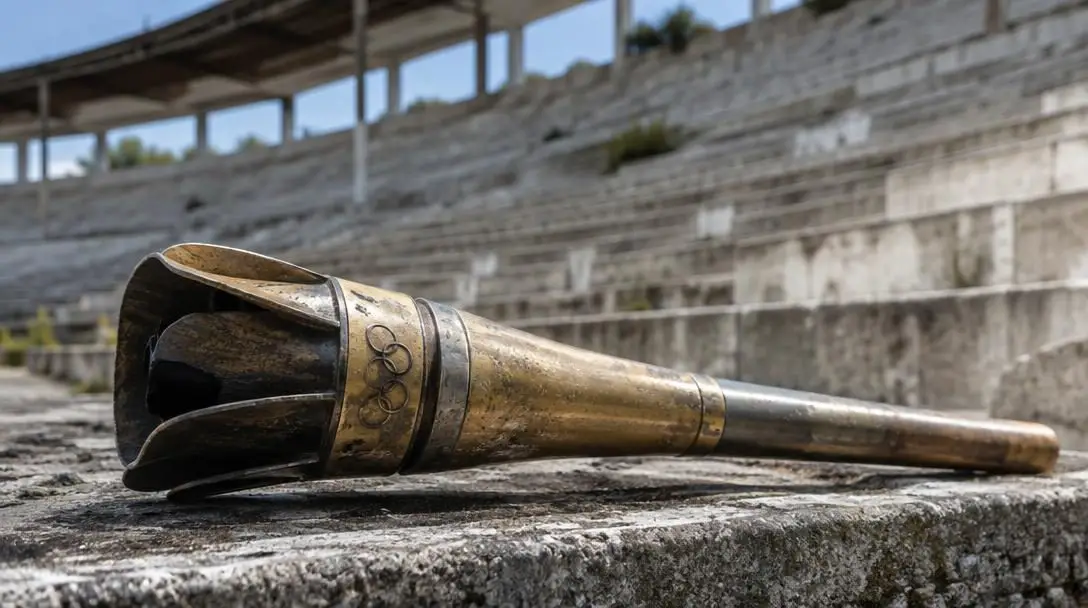
Urban exploration and modern architecture frequently intersect in abandoned mega-structures, yet few derelict sites evoke the scale and grandeur of former Olympic venues. While certain host communities—such as Los Angeles, California—successfully repurpose their athletic complexes for long-term collegiate or commercial use, many hosts around the world struggle to find utility for vast, single-purpose sporting complexes once the closing ceremonies conclude. In places like Athens, Greece, monumental facilities built at staggering expense were swiftly surrendered to economic realities and ecological reclamation.
The Olympic Games gather athletes from around the globe to contest specialized, niche disciplines in host countries that do not necessarily maintain strong domestic traditions in those sports. When international competition finishes, the towering grandstands, concrete tracks, and artificial waterways require tremendous financial resources to stay operational. For urban explorers, historians, and photographers drawn to modern ruins, these neglected athletic complexes provide a compelling lens into global ambitions, geopolitical turbulence, and the inevitable return of nature.
Key takeaways
- Host cities frequently construct hyper-specialized venues that lack domestic sporting demand or funding once international competitions conclude.
- Without continuous maintenance, complex mechanical systems and concrete stadiums deteriorate rapidly under climate exposure and natural overgrowth.
- Catastrophic events such as the Bosnian War and regional financial crises have accelerated the total abandonment of Olympic infrastructure in cities like Sarajevo and Athens.
- Derelict venues present serious physical hazards, including drained aquatic basins, unstable concrete cantilevers, and dark subterranean facilities.
- Responsible exploration requires understanding local access laws, respecting sensitive geopolitical histories, and practicing low-impact exploration methods.
The Anatomy of Mega-Event Abandonment
Constructing an Olympic park demands a massive commitment of land, raw materials, and public capital. Host cities routinely build specialized facilities such as enclosed velodromes, pumped whitewater kayak courses, refrigerated bobsled runs, and vast aquatic complexes. While these stadiums meet the exacting technical standards mandated by international sporting federations for two weeks of global broadcasts, they rarely translate into viable municipal recreation hubs.
When an Olympic host country lacks a deep domestic grassroots base or active recreational participation in specialized events, maintaining these facilities becomes a crippling civic expense. Facilities require continuous electrical power, certified structural inspections, sophisticated water filtration, and round-the-clock facility personnel. If local economies stumble or political administrations reprioritize municipal budgets toward basic services, ongoing sports facility maintenance is routinely eliminated. Devoid of care, architectural masterworks surrender to wind, rain, temperature swings, and opportunistic plant growth.
Without continuous municipal funding and grassroots sports participation, massive monuments of international triumph rapidly degenerate into hollow architectural ruins.
The transition from a glistening venue to a derelict wasteland follows an established, predictable sequence across different climates:
- Post-Event Decommissioning: Organizers dismantle temporary bleachers, stage lighting, broadcast cabins, and temporary signage while city planners debate whether remaining permanent stadiums can be privatized or converted to municipal parks.
- Utility Shutdown: When ongoing operating budgets prove unsustainable, civic authorities turn off the power grid, drain millions of gallons of pool water, and shut down high-volume mechanical pumps.
- Perimeter Fencing and Isolation: To deter trespassers and limit legal liabilities, jurisdictions erect perimeter fences; however, the lack of active personnel reduces oversight and invites illegal dumping, graffiti, and decay.
- Natural Reversion: Weeds, shrubs, and saplings push through stress fractures in exposed concrete slabs, drained basins gather stagnant rainwater, and unmanaged vegetation swallows spectator seating bowls.
At a Glance: Abandoned Olympic Sites Across the Globe
| Host City | Olympic Year | Primary Derelict Venues | Core Catalysts for Abandonment |
|---|---|---|---|
| Sarajevo, Bosnia and Herzegovina | 1984 Winter Games | Mount Trebević bobsled track, Igman ski jumps | The Bosnian War and subsequent infrastructural destruction |
| Athens, Greece | 2004 Summer Games | Softball arena, field hockey center, canoe/kayak slalom | National sovereign debt crisis and lack of domestic sport demand |
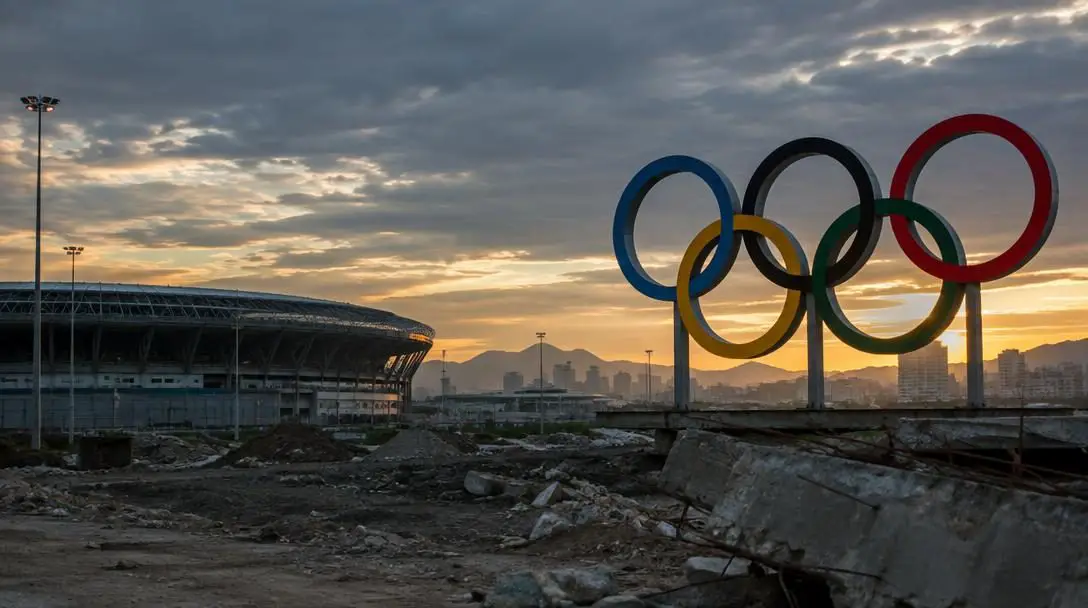
| Rio de Janeiro, Brazil | 2016 Summer Games | Aquatics stadium, beach volleyball courts | Post-games fiscal depletion, corruption, and tropical weathering |
| Beijing, China | 2008 Summer Games | Chaoyang beach volleyball stadium, specialized tracks | Centralized urban shifts and surplus niche venues |
| Berlin, Germany | 1936 Summer Games | Elstal Olympic Village, historic training pool | World War II devastation, Soviet military use, and regional division |
5 Historic Olympic Venues Reclaimed by Time and Nature
From Cold War winter runs scarred by armed combat to sun-scorched Mediterranean waterways, these five historic Olympic host cities house some of the most striking architectural ruins in modern athletic history.
Sarajevo, Bosnia and Herzegovina
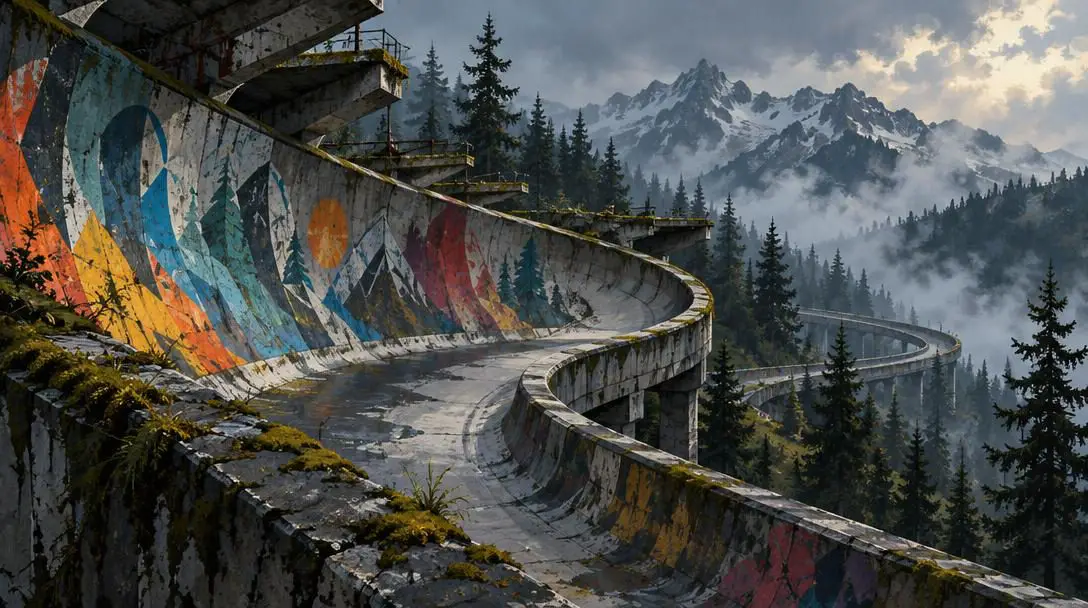
- Olympic Games: 1984 Winter Olympics
- Identified ruins: Ski jump complex, concrete bobsled and luge track
- Primary cause of neglect: Outbreak of the Bosnian War
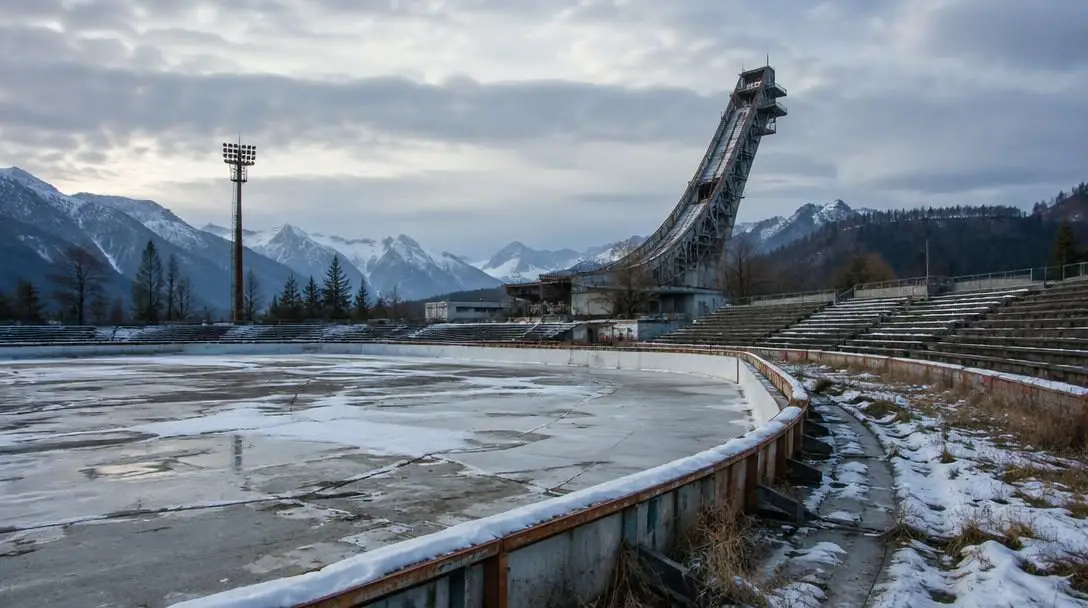
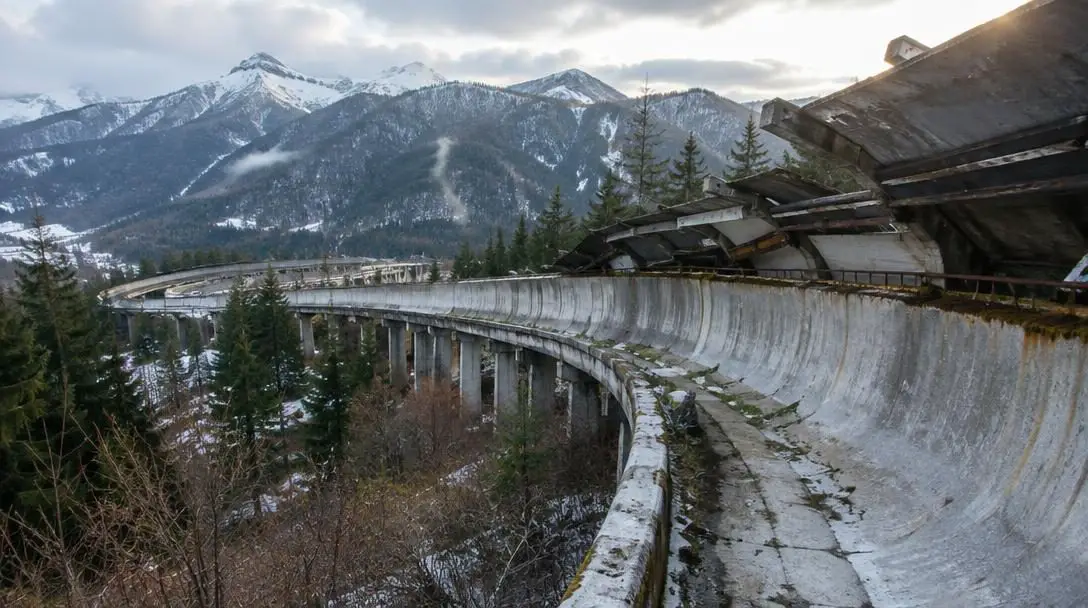
The capital of Bosnia and Herzegovina hosted the 1984 Winter Olympics, staging an event celebrated internationally as a triumphant showcase of athletic coordination and hospitality. However, the venues enjoyed only a brief peacetime legacy. Less than a decade after the closing ceremonies, the Bosnian War erupted, engulfing the region in conflict for over three years. During the siege of the city, the surrounding mountain venues became tactical military positions and battlegrounds, suffering heavy artillery damage and systemic destruction.
Today, the concrete ski jump towers stand as silent, weathered sentinels overlooking the mountain forests. Further down the slopes, the serpentine concrete bobsled and luge track has been reclaimed by thick forest growth and covered in vibrant layers of street art, tags, and memorial graffiti left by urban explorers and world travelers. Sarajevo serves as a harrowing case study in how sudden geopolitical catastrophe can transform state-of-the-art sports facilities into wartime casualties and evocative modern ruins.
Athens, Greece
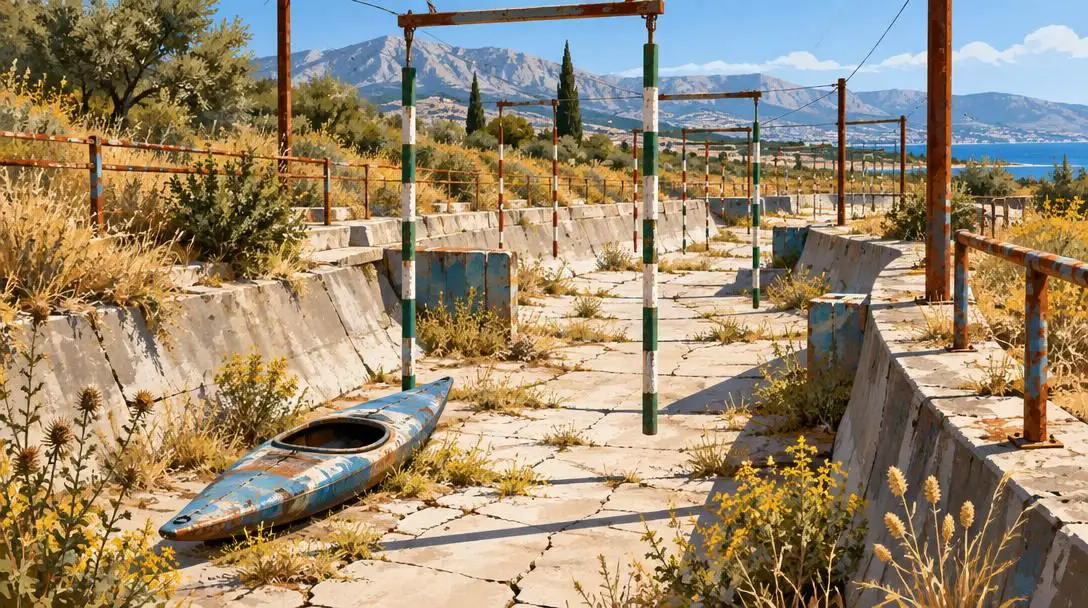
- Olympic Games: 2004 Summer Olympics
- Identified ruins: Softball arena, field hockey stadium, canoe and kayak slalom
- Primary cause of neglect: National sovereign debt crisis
The 2004 Summer Olympics represented an emotional milestone for the Olympic movement as the games returned to their historic birthplace in Athens. In an effort to present a cutting-edge metropolis to the world, Greece embarked on a sprawling construction program, borrowing heavily to complete glistening, custom-built stadiums across the Attica peninsula. While marquee structures like the central Olympic Stadium continue to host soccer matches and events, an overwhelming number of peripheral venues were entirely discarded once the competition ended.
Following the games, severe economic turbulence swept through Greece, making the maintenance of niche sports facilities impossible. Venues dedicated to sports with limited domestic followings—such as the softball stadium, the field hockey center, and the artificial whitewater canoe and kayak course—fell into total disrepair. Today, these facilities feature sun-warped plastic seating, perimeter chain-link fences choked with weeds, and cracked concrete watercourses littered with debris, presenting a sobering physical testament to the financial hangover of mega-event spending.
Rio de Janeiro, Brazil
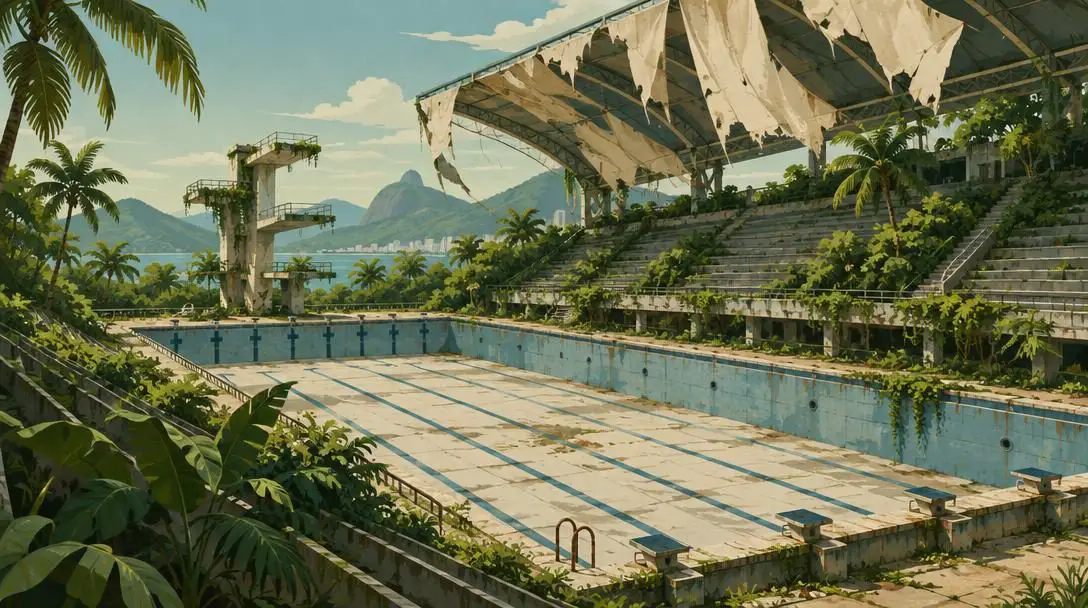
- Olympic Games: 2016 Summer Olympics
- Identified ruins: Olympic Aquatics Stadium, beach volleyball arena
- Primary cause of neglect: Rapid post-event funding cuts and tropical humidity
Rio de Janeiro was chosen as the first South American city to host the Olympic Games for the 2016 Summer Olympics. The host nation invested heavily across the metropolitan area, erecting massive structures that included a 16,000-seat basketball arena, an elite golf course, and multiple temporary arenas designed to handle dense spectator crowds. Similar to Brazil's experience hosting the FIFA World Cup around the same period, maintaining this vast array of newly developed infrastructure proved unsustainable once the international spotlight shifted.
Within mere months of the closing ceremony, severe neglect took hold. By 2017, the Olympic Aquatics Stadium stood gutted and dark, its enormous competition pools drained, its interior murals peeling, and its exterior tapestries tattered by wind. In other areas of the Olympic park, the beach volleyball structures were overtaken by dense tropical vegetation, with spectator bleachers buckling and collapsing under exposure to humidity and coastal rains, illustrating how quickly untended structures deteriorate in tropical environments.
Beijing, China
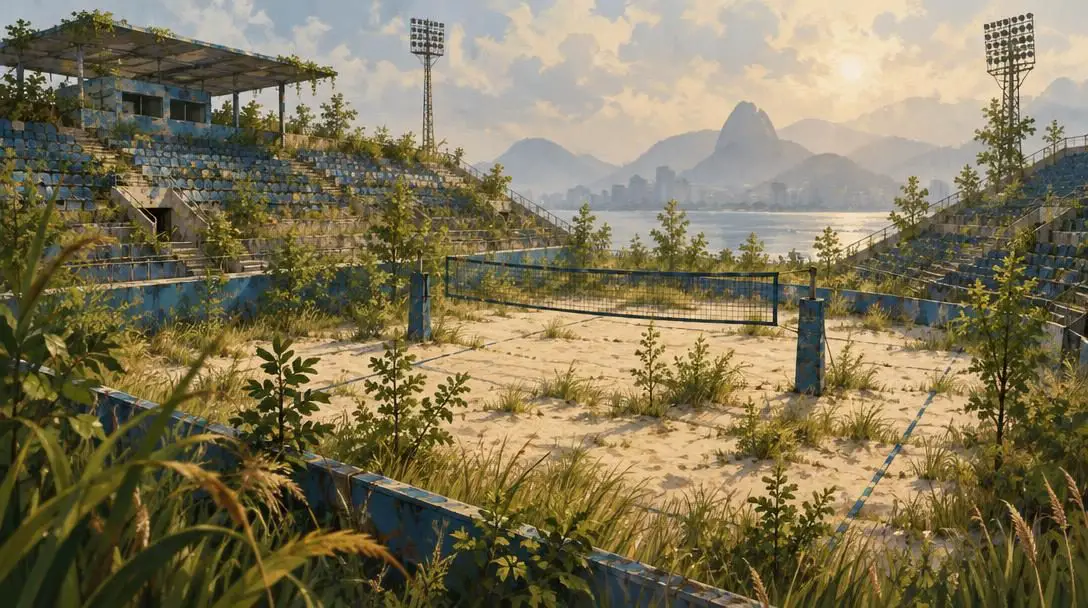
- Olympic Games: 2008 Summer Olympics (and 2022 Winter Olympics)
- Identified ruins: Chaoyang beach volleyball stadium, rowing and kayaking courses
- Primary cause of neglect: Surplus specialized venues lacking post-games public integration
China used the 2008 Summer Olympics to signal its 21st-century economic and industrial capabilities. Awarded the games in 2001, municipal authorities dedicated seven years and nearly $2 billion to constructing expansive, architecturally striking venues across Beijing. While flagship stadiums like the National Stadium (the "Bird's Nest") and the National Aquatics Center (the "Water Cube") were successfully adapted for ongoing events and later repurposed for the 2022 Winter Olympics, numerous outer competition sites were discarded.
The Chaoyang beach volleyball stadium serves as a prominent example of this selective abandonment. While the perimeter grandstand seats remain structurally intact, the sand court has transformed into a miniature forest of wild grasses, weeds, and small trees, with the exterior facade collecting thick layers of urban grime and pollution residue. Other specialized venues, including remote kayaking and cycling spaces, were cordoned off behind metal barriers immediately after 2008, left unstaffed, and gradually swallowed by natural groundcover.
Berlin, Germany
- Olympic Games: 1936 Summer Olympics
- Identified ruins: Elstal Olympic Village, training swimming pool
- Primary cause of neglect: World War II conflict, Cold War military garrisoning, and decay
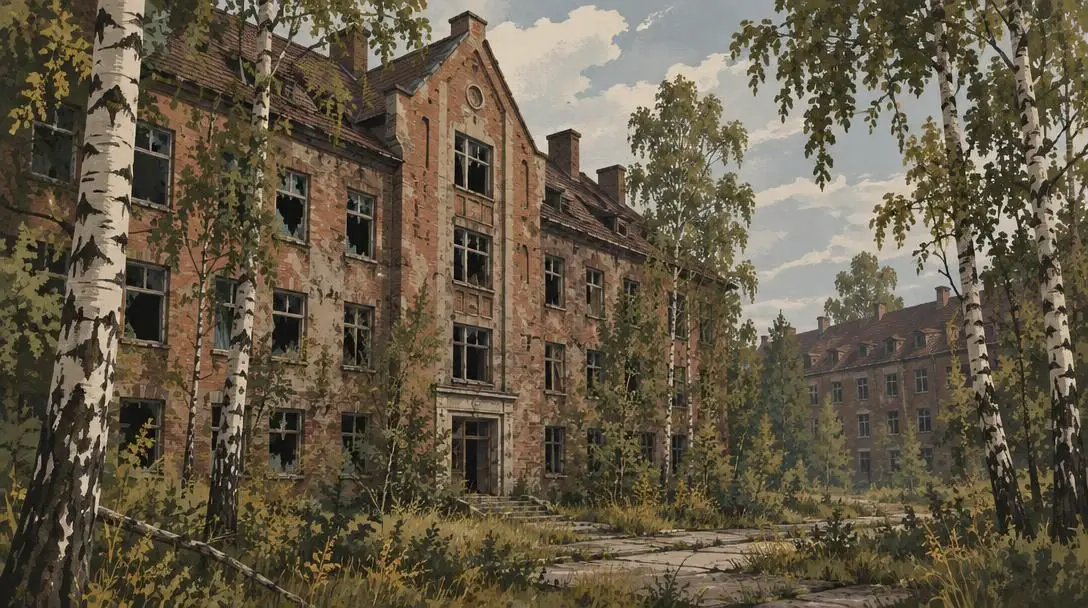
The 1936 Summer Olympics in Berlin were weaponized by Adolf Hitler and the National Socialist regime as an international propaganda showcase. The infrastructure constructed for these games experienced dramatic, turbulent transformations over the following decade. World War II broke out just three years after the games concluded, inflicting damage across Germany's sports infrastructure. Following the war, the historic Olympic Village in Elstal, located on the western outskirts of Berlin, fell under the control of the Soviet military, which converted the athlete dormitories and facilities into barracks and an army hospital.
Following the withdrawal of Soviet forces in the 1990s, substantial portions of the village were left exposed to moisture, vandalism, and unchecked natural decay. The roof of the village's indoor swimming pool has partially caved in, floor tiles have buckled, and vegetation sprouts freely across historic exercise plazas. While Berlin's central Olympiastadion underwent extensive modern restorations to remain an active cultural and athletic landmark, the crumbling remains at Elstal serve as a somber, multi-layered monument to wartime devastation and 20th-century geopolitical division.
Essential Field Protocols for Olympic Explorers
Because Olympic complexes are constructed to accommodate hundreds of thousands of spectators, exploring their abandoned remains demands a different tactical approach than navigating small residential or commercial ruins. Explorers should utilize a methodical process to safely tour these sprawling grounds:
- Investigate Legal Ownership and Boundary Classifications: Research whether an abandoned venue sits on open municipal parkland, private development zones, or restricted military and police training property. Fencing, signage, and surveillance systems can shift overnight based on civic redevelopment contracts.
- Inspect Structural Bearings and Concrete Integrity: Olympic venues lean heavily on vast, cantilevered reinforced concrete slabs. Look for spalling concrete, deeply rusted internal rebar, collapsing bleacher footings, and weakened staircases before stepping onto elevated viewing decks or diving platforms.
- Plan Expeditions Around Daylight Windows: Because decommissioned venues have had their electrical feeds severed for years or decades, deep concourses, press boxes, and subterranean locker rooms are plunged into total darkness. Carry primary and secondary illumination gear and conclude rooftop or track walks well before sunset.
- Equip for Rugged, High-Mileage Terrain: Olympic parks cover hundreds of contiguous acres. Explorers must navigate unmaintained, cracked concrete avenues, thorny overgrowth, dry water basins, and steep grades such as bobsled trajectories and ski jump stairs. Sturdy, puncture-resistant outdoor boots are essential.
- Execute Strict Low-Impact Exploration: Keep derelict stadiums preserved for subsequent historians and photographers. Avoid forcing access through locked barriers, leave historical remnants and faded directional markers undisturbed, and carry out all refuse brought to the site.
Mistakes to Avoid When Touring Derelict Stadiums
Navigating massive modern ruins carries inherent environmental and physical challenges. Avoid these frequent mistakes when visiting former Olympic sites:
- Underestimating Unprotected Drops and Edge Hazards: Olympic aquatic facilities, diving wells, and artificial kayaking courses feature sheer vertical concrete walls plunging into deep, dry basins. In the dark or through dense weeds, these unrailed edges become severe fall hazards.
- Ignoring Geopolitical Sensitivity and Cultural Context: Sites like the Mount Trebević bobsled run in Sarajevo or the Elstal Village outside Berlin hold painful associations with wartime trauma, armed siege, and totalitarian oppression. Explorers should approach these locations with solemnity, avoiding frivolous or disrespectful behavior.
- Misjudging Walking Distances Across Venues: Olympic complexes were deliberately engineered to spread crowds across sprawling campuses. Underestimating the distance between the main stadium and outlying facilities—such as shooting ranges, rowing lakes, and velodromes—can leave explorers exhausted, dehydrated, or stranded after nightfall.
- Dismissing Hidden Environmental Hazards: Derelict stadiums frequently harbor stagnant pools of disease-carrying mosquito larvae, exposed electrical conduits that may retain backfed power, rusted sheet metal edges, and aggressive thorn hedges. Moving carelessly through overgrown turf without verifying footholds can lead to serious injury.
Frequently asked questions
Why don't Olympic host cities demolish these venues if they aren't being used?
Demolition is exceptionally costly, especially for massive reinforced concrete structures built to strict earthquake, wind, and spectator-load specifications. In many cases, cash-strapped municipalities lack the millions of dollars required to safely raze the stadiums, clear the debris, and remediate the underlying land, leaving abandonment as the least expensive immediate alternative.
Is it legal to visit and explore abandoned Olympic venues?
Legal access varies dramatically by location and jurisdiction. While sites like the Sarajevo bobsled track on Mount Trebević are located in open, publicly accessible mountain parklands, others—such as parts of Athens' Hellinikon complex or venues in Beijing—are sealed behind security fences, monitored by municipal security, or classified as private property where trespassing is strictly prohibited.
Why do summer venues seem to decay faster than winter venues?
Summer venues frequently feature vast aquatic components, such as competition swimming pools, diving basins, and pumped whitewater slalom rivers. Once water filtration, chemical treatment, and mechanical pumping cease, moisture accelerates concrete spalling, promotes mold and weed proliferation, and ruins subterranean piping systems far faster than dry structures.
Do all modern Olympic host cities abandon their facilities?
No. Cities like Los Angeles, London, and Salt Lake City have established successful legacy blueprints by partnering with local universities, relying heavily on temporary or demountable venues, and integrating primary stadiums into permanent professional sports leagues and community public transit corridors.
The Bottom Line
The ruins of modern Olympic games illustrate the unpredictable gulf between grand international ambition and long-term civic utility. When host nations construct hyper-specialized architectural wonders without clear, funded post-event strategies, the resulting venues inevitably succumb to economic strains, political upheavals, and natural decay. For the thoughtful urban explorer, traversing the weathered bobsled runs of Sarajevo, the drained pools of Rio, or the sun-cracked kayak courses of Athens offers a haunting, educational encounter with the tangible remnants of our recent global past.