
5 Crazy Facts About Tea

Tea has long stood as one of the most culturally significant and widely enjoyed beverages on the planet. From simple morning routines in kitchen corners to extravagant traditional tastings in dedicated tea houses, this humble leaf infusion bridges ancient history and contemporary lifestyles across every inhabited continent. People are passionate about their tea for good reason: beyond delivering a comforting aroma and rich flavor profile, it offers a broad spectrum of recognized health benefits while remaining remarkably accessible to everyday consumers.
Most regular drinkers are well aware of their personal brewing habits, their favorite supermarket brands, and roughly how much they spend on a hot mug or chilled glass each week. Yet behind the familiar rituals of boiling water and steeping leaves lies a world of astonishing records, bizarre agricultural traditions, and historical accidents. Understanding its historical roots, its economic spectrum, and its staggering diversity allows anyone who enjoys a warm mug or a cold glass to appreciate the beverage on a much deeper level.
Key takeaways
- Emperor Shennong of China is credited with discovering tea in 2,737 BC when a stray leaf drifted into boiling water, while formal documentation emerged by the 2nd century BC.
- While an everyday cup costs between $0.25 and $0.40, historic varieties like Ming Dynasty-linked Da Hong Pao reach astronomical valuations of $600,000 per pound.
- Nearly 70 million Americans drink iced tea daily, a chilled tradition that gained national momentum following Richard Blechynden's presentation at the 1904 St. Louis World's Fair.
- Beyond standard designations like green or oolong, the global market contains more than 3,000 distinct subtypes of tea with unique characteristics.
- Great Britain consumes 100 million cups of tea every single day, translating to 36 billion cups annually across a population of roughly 67.2 million people.
The Five Crazy Facts That Define the World of Tea
The global story of tea is packed with statistical extremes, from ultra-rare collector auctions to massive daily consumption habits that shape entire national economies. Exploring these five remarkable facts illustrates how an ancient leaf infusion evolved into an international staple enjoyed in countless distinct ways.
| Rank | Subject | Key Figure or Date | Significance |
|---|---|---|---|
| 5 | Da Hong Pao | $600,000 per pound | Ming Dynasty heritage tea representing the pinnacle of the luxury collector market. |
| 4 | Iced Tea | Nearly 70 million daily drinkers | American staple popularized at the 1904 St. Louis World's Fair by Richard Blechynden. |
| 3 | Emperor Shennong | 2,737 BC | Legendary Chinese ruler credited with the accidental inception of hot leaf brewing. |
| 2 | Diverse Tea Cultivars | Over 3,000 varieties | Botanical diversity that parallels the wide variety of culinary peppers across the globe. |
| 1 | Great Britain | 100 million cups daily | Nationwide habit accounting for 36 billion cups per year across 67.2 million residents. |
Da Hong Pao
For the vast majority of consumers, tea is celebrated as one of the most economical beverages in the world, averaging between $0.25 and $0.40 per cup. This affordability is central to why it maintains such an enduring presence in pantries worldwide. However, the high-end luxury tier of the tea trade operates on an entirely different financial scale, where collector-grade leaves command prices comparable to fine art or rare precious gems.
Among the most exclusive leaves in existence, varieties such as Tieguanyin, vintage Narcissus, specialized luxury presentations of PG Tips, and Panda Dung Tea command prices ranging between $1,500 and $35,000 per pound. Yet the undisputed king of luxury tea is Da Hong Pao. Tracing its lineage back to the Ming Dynasty, authentic original cuttings of this legendary Chinese tea are valued at an astonishing $600,000 per pound. These exceptional leaves are treated as priceless cultural treasures rather than simple pantry goods, harvested under strict controls and reserved for momentous diplomatic and historic occasions.
Iced Tea
While hot tea remains the global baseline, chilled tea represents an enormous commercial and cultural force, particularly within the United States. Today, nearly 70 million Americans drink iced tea every single day, making it a definitive staple of American dining culture and warm-weather refreshment.
The journey toward widespread iced tea consumption began long before modern refrigeration became standard. The earliest documented print references to iced tea date back to the 1820s, with recipes and descriptions appearing with greater frequency throughout the 1860s and 1870s. However, the drink's true national breakthrough occurred at the 1904 World's Fair in St. Louis, Missouri. Concessionaire Richard Blechynden found that fairgoers sweltering in the summer heat had little interest in hot beverages. By pouring his brewed tea over blocks of ice, Blechynden popularized chilled tea on an unprecedented scale, transforming it into an enduring American institution.
Emperor Shennong
- Era: 2,737 BC
- Region: Ancient China
- Discovery: Accidental infusion from a falling tea leaf
- Documentation: Written records firmly established by the 2nd century BC
Tea ranks among the oldest recorded beverages known to humanity, with its origins intertwining historical archaeology and classical mythology. The most widely accepted origin story traces back to 2,737 BC in ancient China under the reign of Emperor Shennong, a celebrated ruler known in lore for his agricultural and herbal discoveries.
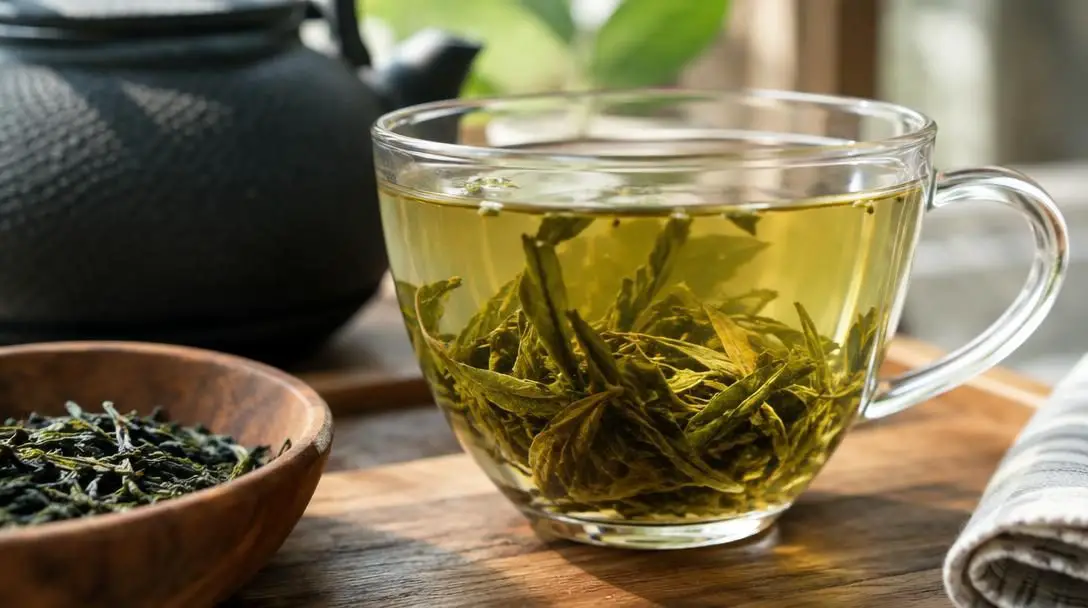
According to legend, Emperor Shennong was resting outdoors while his servant boiled drinking water over an open fire. A gust of wind shook a nearby wild branch, causing a single fresh tea leaf to fall directly into the bubbling pot. Intrigued by the resulting aroma and the changing hue of the water, Shennong sampled the liquid, was delighted by its refreshing taste, and chose to investigate the plant further. While this poetic narrative remains rooted in ancient folklore, archaeological and written records confirm that tea usage was firmly established by the 2nd century BC, with texts from that period explicitly noting that tea preparation had already been practiced for generations.
Diverse Tea Cultivars
When the average person reflects on tea, they generally think of a handful of broad categories: green tea, black tea, herbal infusions, and oolong. While these broad classifications serve general commerce well, they barely scratch the surface of the plant's actual botanical and agricultural diversity. In total, there are over 3,000 different types of tea cultivated around the globe.
A helpful way to conceptualize this staggering variety is to consider culinary peppers. While most shoppers recognize common bell peppers or jalapeños, specialists understand that hundreds of distinct pepper cultivars exist, each featuring subtle variances in soil requirements, heat levels, and aromatic depth. Tea operates under identical principles. Unique terroirs, seasonal harvesting windows, and precise oxidation methods produce thousands of distinct subtypes—such as rolled Tieguanyin or mineral-rich rock teas—that carry highly specialized flavor characteristics unfamiliar to the casual consumer.
Great Britain
- Population: Estimated 67.2 million people
- Daily consumption: 100 million cups
- Annual volume: 36 billion cups
- Regular drinkers: 75 percent of the national population
Few countries are as synonymous with tea culture as Great Britain. While many nations embrace tea as a casual option, British society has woven the beverage into the very fabric of its daily rhythm, transcending demographics, social backgrounds, and age brackets.
Across an estimated national population of 67.2 million people, Brits consume an eye-opening 100 million cups of tea every single day. Over the course of a full calendar year, that daily ritual adds up to an incredible 36 billion cups. The statistics underline just how universal the habit is: approximately three quarters (75 percent) of the population drink tea regularly, 58 percent consume two or more cups per day, and a mere 12 percent report that they never drink tea at all.
With daily consumption reaching 100 million cups across a population of roughly 67.2 million people, tea has transcended ordinary refreshment in Great Britain to become a defining cultural pillar.
Background: The Evolution of a Global Staple
To fully grasp how tea evolved into the international juggernaut it represents today, one must trace its journey from a localized herbal infusion into an indispensable commodity traded on every ocean. What began as an accidental discovery under Emperor Shennong in 2,737 BC gradually transformed early Chinese domestic life. By the 2nd century BC, written records confirmed that tea was no longer an experimental curiosity, but an established dietary staple enjoyed for its therapeutic qualities and revitalizing character.
Over successive dynasties, Chinese growers refined cultivation, roasting, and preservation methods. The development of hyper-specialized regional teas reached an artistic zenith during the Ming Dynasty, an era that gave birth to legendary productions like Da Hong Pao. Agriculturalists realized that identical tea bushes yielded wildly divergent sensory profiles when grown on distinct rocky slopes or exposed to specific microclimates. This artistic appreciation established a tradition of treating premium tea not as an undifferentiated crop, but as an artisan craft deserving high financial appraisal.
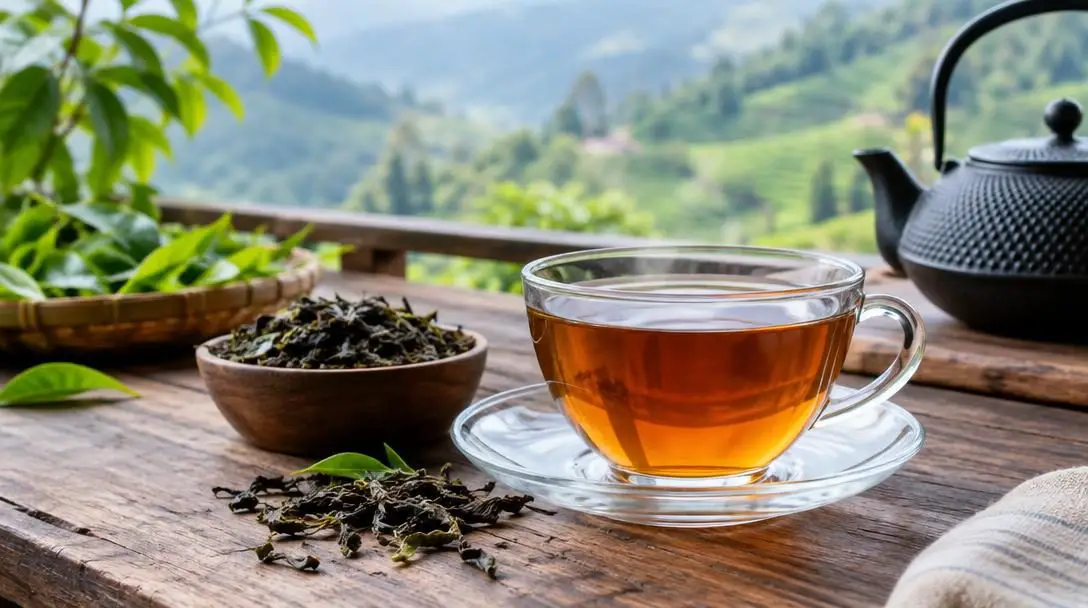
As maritime trade routes linked Asia to Europe and the Americas, local cultures adapted tea to their own palates and social customs. Great Britain incorporated the brew so deeply into its domestic schedule that afternoon tea became a social requirement, laying the groundwork for today's 36-billion-cup annual habit. Across the Atlantic, American consumers gravitated toward colder refreshments, driven by early 19th-century recipes and Richard Blechynden's 1904 World's Fair innovation. Today, whether enjoyed hot in a British sitting room or served over ice across the American South, the leaf retains its status as a universal connector.
How Tea Works: Varieties and Economics
At its scientific core, brewing tea is a process of solvent extraction: hot or cold water draws out volatile aromatic compounds, catechins, caffeine, and amino acids from the processed leaves of Camellia sinensis. Yet the commercial expression of this simple chemical process spans an extraordinarily broad economic spectrum.
On the everyday retail level, standard tea offers unmatched cost efficiency. At an average cost of $0.25 to $0.40 per cup, households can maintain consistent daily hydration and enjoy recognized health benefits without burdening their grocery budgets. This budget-friendly nature explains why broad populations can sustain multiple cups per day without financial strain.
Conversely, the luxury tier of the tea trade functions under classic principles of scarcity, craftsmanship, and historic prestige:
- Specialty Cultivars: Teas like Tieguanyin, vintage Narcissus, and Panda Dung Tea demand between $1,500 and $35,000 per pound due to labor-intensive harvesting techniques and hyper-specific growing conditions.
- Historic Relics: Original-growth Da Hong Pao reaches $600,000 per pound because the surviving mother bushes tied to the Ming Dynasty yield minute quantities of leaves, creating an ultra-exclusive collector market.
- Mass-Market Accessibility: Standard blends bridge the gap, proving that high consumer demand can keep premium taste profiles widely accessible across global supermarket shelves.
Step-by-Step Brewing Guide for Hot and Iced Tea
Extracting the optimal flavor profile from any tea variety requires attention to water temperature, leaf measurement, and steeping duration. Follow this practical sequence to prepare a balanced cup, whether you prefer a traditional hot infusion or a refreshing chilled glass.
- Select Your Tea Variety: Choose from the thousands of subtypes available worldwide, deciding between everyday whole-leaf blends, floral oolongs like Tieguanyin, or historic dark leaves.
- Measure Your Water and Leaves: Maintain an appropriate leaf-to-water ratio. Using too few leaves produces a thin, watery brew, while using too many creates an unpleasantly astringent concentration.
- Heat the Water: Bring fresh water to a temperature suited to your chosen leaf. While boiling water works well for robust teas, delicate green or lightly oxidized leaves thrive in slightly cooler water.
- Monitor the Steeping Time: Submerge the leaves and track the infusion carefully. Remove or strain the leaves after the recommended duration to prevent bitter tannins from overwhelming the palate.
- Cool for Iced Preparation: If preparing iced tea like the 70 million daily American consumers, brew the infusion slightly concentrated, let it cool down to room temperature, and pour it over ice.
- Serve and Enjoy: Drink the finished tea plain to evaluate its natural sweetness and complex finish, or incorporate accompaniments to suit your personal preference.
Common Mistakes to Avoid When Brewing Tea
Even though steeping tea is an approachable culinary skill, minor procedural oversights can dramatically degrade the flavor of your cup. Avoid these common missteps to ensure the best possible experience:
- Over-steeping the leaves: Leaving tea leaves in hot water indefinitely releases excessive bitter tannins, masking the pleasant flavor compounds that Emperor Shennong first prized in 2,737 BC.
- Pouring rolling boiling water on fragile teas: Subjecting delicate green or unfermented oolong teas to violently boiling water can scorch the leaves and destroy their nuanced floral notes.
- Treating all 3,000 varieties identically: Assuming that every tea cultivar behaves the same way in the teapot results in uneven results; every subtype requires tailored care just like distinct culinary peppers.
- Chilling hot tea rapidly in the freezer: Forcing freshly brewed hot tea to cool down rapidly in a freezer often results in cloudiness and a dull, altered taste profile; let it cool naturally before adding ice.
- Improper leaf storage: Exposing dry tea leaves to excessive moisture, ambient light, or nearby pungent spices causes rapid deterioration of their delicate aroma.
What to Consider Next on Your Tea Journey
Once you understand the historical milestones and economic diversity of tea, you can take deliberate steps to expand your personal palate and explore the wider world of infusions:
- Sample beyond standard grocery options: Venture past ordinary commercial tea bags and sample regional oolong varieties, artisanal green teas, or aged teas to experience the spectrum of 3,000 global cultivars.
- Compare hot and cold extractions: Experiment with both traditional hot steeping and chilled iced tea formats to discover how serving temperature influences the perception of sweetness and body.
- Assess value versus everyday enjoyment: Evaluate how