
5 Environmental NGOs Making The World A Better Place
Environmental non-governmental organizations, widely known as NGOs, serve as critical guardians of the planet's fragile ecosystems. Because these groups operate independently of state authorities and commercial industry, they possess the autonomy needed to confront ecological degradation without political compromise. From uncovering illegal environmental exploitation to negotiating statutory protections, these independent entities act as vital intermediaries between citizen concern and institutional policy.
Our planet faces interconnected challenges that include rapid deforestation, marine degradation, and climate change driven by fossil fuel consumption. While international treaties and domestic laws provide frameworks for conservation, they often falter without aggressive monitoring and outside pressure. Non-profit conservation bodies address this gap by combining scientific research, civil mobilization, and economic certification to protect vital habitats and defend communities vulnerable to environmental disruption.
Key takeaways
- Environmental NGOs operate free from government control, enabling them to hold state bodies and commercial enterprises accountable.
- Leading organizations employ diverse tactics, ranging from grassroots protests and market-based certification to rigorous empirical research.
- Landmark victories include shielding the Antarctic from commercial exploitation, curbing illegal logging in Southeast Asia, and setting emissions caps.
- Lasting conservation success requires addressing human welfare alongside ecological protection, ensuring fair compensation for local workers.
At a glance: Prominent global conservation groups
While hundreds of non-profit entities contribute to ecological protection, several organizations have established exceptional international influence through targeted operational strategies.
| Organization | Primary Focus Area | Key Strategic Mechanism | Global Footprint |
|---|---|---|---|
| Greenpeace | Climate change and marine protection | High-profile direct campaigning | Offices across 40+ countries |
| The Rainforest Alliance | Forest ecosystems and biodiversity | Sustainable business and forestry certification | Worldwide collaborative programs |
| Oceana | Marine ecosystems and fisheries | Science-based policy reform | International advocacy hubs |
| World Wide Fund For Nature (WWF) | Forests, freshwater, oceans, and grasslands | Field investigation and statutory advocacy | Global operational presence |
| 350.org | Fossil fuel phase-out and global warming | Decentralized grassroots mobilization | Active networks in 188+ countries |
Profiles of five environmental NGOs making an impact
Each of the following organizations addresses global conservation through distinct methods, ranging from consumer-facing market standards to peaceful mass demonstrations.
Greenpeace

Greenpeace is recognized internationally as one of the most visible champions of environmental protection. With established offices in more than 40 countries, the organization maintains an extensive international apparatus capable of challenging both multi-national corporations and sovereign states. The group directs substantial resources toward curbing greenhouse gas emissions, advocating for dramatic reductions in global carbon footprints, and protecting vulnerable marine habitats from industrial destruction.
- Global footprint: Formal offices in more than 40 countries
- Core focus: Combating climate change and preserving marine life
- Landmark victory: Protecting the Antarctic from commercial exploitation
Over several decades of active campaigning, Greenpeace has secured monumental ecological safeguards. Among its most enduring triumphs was spearheading the initiative that legally shielded the Antarctic from commercial exploitation. In marine environments, the organization’s persistent pressure has actively halted destructive overfishing practices across delicate coral reef ecosystems, demonstrating the efficacy of sustained public visibility.
The Rainforest Alliance

The Rainforest Alliance tackles conservation through a collaborative framework that links ecology with commercial markets. Rather than treating economic activity and nature preservation as mutually exclusive, the organization partners with national governments, commercial enterprises, and forest-dwelling communities. This approach establishes durable operational standards that protect delicate tree canopies and biodiversity while sustaining local livelihoods.
- Core mission: Conserving wildlife and forest ecosystems
- Primary mechanism: Sector-specific sustainability certification
- Social standard: Guarantees fair wages for forestry workers
The centerpiece of the organization's mission is its globally recognized certification program. Operations within the forestry and agricultural sectors that demonstrate responsible environmental practices earn certification credentials. This framework requires businesses to actively conserve local natural resources while guaranteeing fair, living wages to workers, ensuring that conservation efforts provide tangible social and financial stability to rural populations.
Oceana
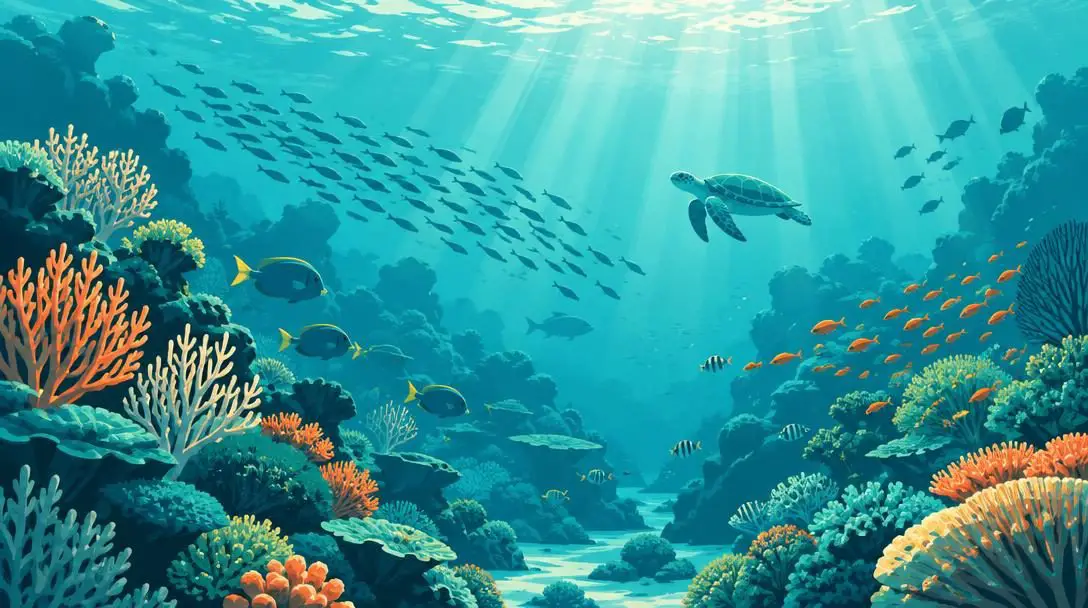
Oceana stands as the largest international advocacy organization focused exclusively on protecting and restoring the world’s oceans. Its campaigns target the primary drivers of marine degradation: unsustainable commercial fishing, plastic and chemical pollution, offshore industrial energy development, and oceanic warming caused by climate change. Oceana works under the principle that healthy oceans can sustainably feed millions if properly managed.

- Core mission: Halting industrial ocean destruction
- Primary methodology: Empirical, science-based data gathering
- Primary targets: Unsustainable fisheries, pollution, and offshore energy
To achieve lasting change, Oceana relies heavily on credible scientific research rather than public rhetoric alone. By conducting detailed marine studies and assembling empirical data on fish populations and habitat loss, the organization directly approaches maritime regulators and corporate executives. These evidence-based presentations persuade policymakers to overhaul fishery guidelines, limit destructive bottom trawling, and reduce industrial runoff across critical marine corridors.
World Wide Fund For Nature (WWF)

Founded in 1961, the World Wide Fund For Nature (WWF) brings decades of institutional experience to global environmental defense. The organization’s mandate spans an immense breadth of natural habitats, actively managing conservation initiatives across terrestrial forests, freshwater river basins, fragile oceanic reefs, and vast open grasslands across every continent.
- Year established: 1961
- Habitat focus: Forests, freshwater rivers, oceans, and grasslands
- Major breakthrough: Uncovering illegal logging syndicates in Southeast Asia
WWF's on-the-ground investigative operations have generated lasting legislative protections worldwide. A standout achievement involved uncovering vast, clandestine logging networks operating inside nominally protected reserves across Southeast Asia. By documenting the supply chains and publishing incontrovertible evidence of illegal timber extraction, WWF forced regional governments to enact stringent environmental protection statutes that continue to safeguard remaining forest tracts today.
350.org

350.org was established to confront the root drivers of global warming, focusing specifically on ending reliance on fossil fuels like coal, oil, and gas. Operating through an agile, decentralized organizational model, the non-profit has fostered grassroots activist networks across more than 188 countries. Its central objective is building unstoppable public momentum to accelerate the transition toward renewable energy infrastructure.
- Geographic presence: Grassroots networks in over 188 countries
- Primary focus: Ending fossil fuel combustion and raising climate awareness
- Historic mobilization: Coordinated 100,000+ marchers at the 2009 Copenhagen Summit
The organization marked a major milestone during the 2009 Copenhagen Climate Summit, coordinating peaceful street actions that brought more than 100,000 citizens together to protest government inaction. Despite police attempts to disperse the gathering, the demonstration created intense pressure on assembled delegates. This collective pressure contributed directly to subsequent climate frameworks establishing clear limits on allowable emissions for participating nations.
Independent non-profit organizations give an enduring voice to fragile ecosystems that cannot advocate for themselves in corporate boardrooms or halls of power.
How non-governmental organizations drive systemic change
The achievements of international NGOs are not accidental; they stem from deliberate operational methodologies designed to challenge entrenched political and industrial interests. While individual groups specialize in specific arenas, most successful organizations utilize a core set of strategic tools.
Empirical research and evidence gathering: Conservation advocacy fails if it cannot withstand scientific scrutiny. Organizations like Oceana and WWF prioritize on-the-ground investigations, deploying marine biologists and forestry experts to collect hard data. Verifiable findings on declining fish stocks or habitat loss provide the factual leverage required to convince legislators to intervene.
Direct legislative advocacy: Non-profit groups operate within formal corridors of power to draft, sponsor, and defend conservation statutes. By submitting specialist testimony during parliamentary hearings and collaborating with regulatory agencies, NGOs help translate ecological necessities into enforceable national laws and binding international conventions.

Grassroots mobilization and civil assembly: Widespread public participation serves as a vital check against political inertia. Groups like 350.org demonstrate that coordinated, peaceful demonstrations can force environmental concerns onto political agendas during critical international summits, transforming dispersed public concern into unified political pressure.
Market-based certification systems: Legal regulations are only one route to environmental reform. The Rainforest Alliance’s certification framework uses consumer purchasing power to transform corporate behavior. By setting clear operational metrics for timber harvesting and agriculture, NGOs incentivize private enterprises to adopt sustainable methods voluntarily.
Practical steps for supporting environmental organizations
Individual citizens possess significant leverage when backing independent conservation organizations. Meaningful support requires moving beyond casual awareness to engage in deliberate, sustained actions that reinforce non-profit campaigns.
- Support certified sustainable supply chains: Purchase items bearing recognized environmental certifications, such as the Rainforest Alliance seal. Prioritizing products that guarantee both habitat preservation and fair wages encourages more corporations to reform their sourcing.
- Participate in public regulatory consultations: When environmental groups identify proposed legislation or regulatory rollbacks, submit public comments, contact elected officials, and vote in favor of binding limits on industrial pollution.
- Read and circulate peer-reviewed findings: Study the investigative reports published by organizations like Oceana and WWF. Sharing factual data on ocean depletion and deforestation helps counter misinformation within your social and civic circles.
- Join localized civic actions: Participate in peaceful local demonstrations organized by decentralized groups such as 350.org. Visible public presence demonstrates community support for aggressive emissions reductions.
- Contribute resources directly to independent bodies: Provide financial contributions or volunteer labor to reputable NGOs. Because these groups accept no state administrative control, independent public funding is essential to maintain their investigations and legal efforts.
Common mistakes to avoid in conservation advocacy
Well-meaning supporters often encounter pitfalls that diminish the effectiveness of their advocacy efforts. Recognizing these common errors ensures that personal commitments translate into productive outcomes.
- Confusing NGOs with statutory enforcement agencies: Independent non-profits do not possess police powers, regulatory authority, or the ability to unilaterally pass laws. Expecting an NGO to directly arrest polluters overlooks the fact that these organizations operate by influencing governments, which alone possess statutory enforcement authority.
- Ignoring the human and economic dimension of ecosystems: Attempting to preserve wild areas while ignoring local human populations rarely succeeds. Durable conservation requires economic alternatives and living wages for community members who depend on regional natural resources for survival.
- Focusing solely on personal consumer habits: While individual recycling and energy conservation are beneficial, macro-level ecological threats require structural policy reforms. Landmark protections, such as banning commercial extraction in the Antarctic, require collective political mobilization.
- Assuming environmental victories are permanent: Regulatory victories are frequently targeted by commercial lobbying for repeal. Even landmark protections, like Southeast Asian logging bans, require continuous outside oversight by watchdog NGOs to prevent illegal rollbacks.
Connecting local efforts to international treaties
Understanding the link between local environmental initiatives and sweeping international agreements is essential for sustained progress. While summits like the 2009 Copenhagen conference set high-level frameworks and pollution ceilings, the actual reduction of emissions occurs at municipal, regional, and national levels.
Citizens can track how their immediate municipal policies align with global targets by monitoring local wastewater management, regional energy procurement, and municipal zoning rules that protect watershed habitats. When local communities enforce rigorous emissions standards and maintain urban green spaces, they transform the abstract goals of global climate treaties into functional reality.
Frequently asked questions
What makes an environmental organization an NGO?
An environmental non-governmental organization is entirely independent of governmental control. While these groups may engage with state agencies and participate in legislative hearings, they receive no direct administrative direction from the state, enabling them to impartially scrutinize public policy and corporate practices.
How do independent NGOs finance their operations?
Independent NGOs rely primarily on public donations, philanthropic foundation grants, membership fees, and volunteer assistance. Avoiding direct state control preserves their ability to conduct investigations and lobby against government-sanctioned industrial projects without conflicts of interest.
Why is market certification an effective conservation strategy?
Certification schemes, like the model used by the Rainforest Alliance, harness consumer purchasing preferences to change commercial practices. By guaranteeing that certified products adhere to environmental standards and fair wage protections, NGOs motivate companies to clean up supply chains to maintain market competitiveness.
What was the historic result of the 2009 Copenhagen Climate Summit protest?
The peaceful mobilization of more than 100,000 citizens organized by 350.org helped pressure assembled global leaders to draft a subsequent Climate Treaty. This framework established specific caps on industrial emissions that participating nations could produce without facing penalty costs.
Can individual lifestyle adjustments replace the work of conservation NGOs?
No. While individual lifestyle choices reduce personal ecological footprints, systemic challenges like illegal industrial logging, commercial marine extraction, and fossil fuel reliance require policy shifts, legal treaties, and corporate accountability that only organized, large-scale advocacy can secure.
The bottom line
Environmental non-governmental organizations remain indispensable defenders of the natural world, bridging the divide between scientific consensus and concrete public policy. Through a combination of public mobilization, economic incentives, scientific research, and direct legal advocacy, organizations like Greenpeace, the Rainforest Alliance, Oceana, WWF, and 350.org have established enduring protections for global ecosystems.
Lasting environmental preservation cannot rely on political institutions or corporate goodwill alone. By remaining informed, backing science-based advocacy, and supporting independent non-profit initiatives, citizens around the world play an active role in safeguarding our shared planet for generations to come.