5 Music-Related Podcasts That Will Keep You Tuned In
Music-focused podcasts have fundamentally transformed how listeners engage with audio art, shifting the experience from passive background listening to active, analytical appreciation. Instead of simply enjoying a catchy beat or a memorable hook, curious audiences can now unpack the mechanical structures, emotional narratives, historical precedents, and studio techniques behind their favorite recordings. Whether exploring why a chorus sticks in the brain, hearing iconic performers unpack classic master tracks, or evaluating how digital distribution shapes the charts, audio journalism provides an unprecedented gateway into the musician's craft.
By blending deep commentary, music theory, and firsthand narrative accounts, digital audio programming bridges the divide between casual listening and critical evaluation. The right audio series equips you with the vocabulary and historical perspective needed to understand how arrangement, sound design, and sociocultural forces shape the sounds of yesterday and today.
Key takeaways
- Specialized music podcasts illuminate the hidden mechanics of songwriting, from stem-level production choices to music theory fundamentals.
- Leading shows feature firsthand artist accounts, providing rare glimpses into how iconic tracks like The Cranberries' "Dreams" were composed.
- Audio journalism uncovers the broader cultural and business landscapes of music, including the shifting accuracy of industry charts and global protest music.
- Adopting a structured routine—such as listening to a source track immediately before and after an episode breakdown—significantly deepens musical retention and critical perception.
Top music podcasts at a glance
| Podcast | Hosts | Primary Focus | Highlighted Topic or Guest |
|---|---|---|---|
| Switched On Pop | Nate Sloan and Charlie Harding | Music theory, pop mechanics, and industry trends | Episode 165: "When Billboard Charts Fail" |
| Song Exploder | Hrishikesh Hirway | Artist-led, stem-by-stem track deconstructions | Dolores O'Riordan on The Cranberries' "Dreams" |
| Rolling Stone Music Now | Brian Hiatt and Brittany Spanos | Music journalism, industry news, and long-form artist interviews | 50th-anniversary career interview with Bruce Springsteen |
| Our Lives, Our Sounds | Akala | Global music traditions, cultural identity, and social activism | "Bitter Lake" with Afghan activist Elaha Soroor |
| Sound Opinions | Greg Kot and Jim DeRogatis | Album reviews, critical debate, and music history deep dives | Episode #806: Dick Dale and early 1960s amplifier reverb |
5 standout music podcasts to upgrade your listening
Switched On Pop
- Hosts: Nate Sloan and Charlie Harding
- Core Format: Theoretical and mechanical song breakdown
- Key Episode: "Episode 165: When Billboard Charts Fail"
Hosted by musicologist Nate Sloan and songwriter Charlie Harding, Switched On Pop provides listeners with an intellectual lens through which to evaluate modern commercial music. Rather than dismissing chart-topping tracks as superficial, the hosts dig into the precise musical mechanics that make modern pop irresistible. They dismantle recordings stem by stem, isolating hidden counter-melodies, syncopated rhythms, clever harmonic resolutions, and digital production tricks. In doing so, Sloan and Harding prove that top-40 hits often utilize sophisticated songwriting techniques that rival celebrated historical compositions.
Beyond musical analysis, the show investigates structural disruptions across the modern recording industry. In "Episode 165: When Billboard Charts Fail," Sloan and Harding examine how traditional ranking systems struggle to reflect actual public consumption in the streaming era. They demonstrate how platforms like Spotify and Apple Music have upended longstanding chart formulas, revealing the gap between algorithmic streams and cultural impact.
Song Exploder
- Host: Hrishikesh Hirway
- Core Format: Intimate, artist-guided stem deconstruction
- Notable Feature: Dolores O'Riordan analyzing The Cranberries' "Dreams"
Created and hosted by Hrishikesh Hirway, Song Exploder flips the standard interview format on its head by removing the host's voice almost entirely from the final edit. Hirway acts as an expert narrative editor, prompting musicians to dismantle their master recordings track by track and explain the exact creative decisions behind each element. Artists isolate vocal tracks, drum beats, synthesizer layers, and string arrangements, sharing the intimate stories and emotional struggles that gave birth to every individual sound.
One striking example of this intimate format is an archival episode featuring the late Dolores O'Riordan discussing the composition of The Cranberries' classic track "Dreams." O'Riordan broke down the song's distinctive chord progression, detailing how her childhood immersion in classical music inspired its unusual harmonic movement. By presenting raw, unmixed stems alongside candid reflections, the podcast offers an unfiltered view of the songwriting process.
Rolling Stone Music Now
- Hosts: Brian Hiatt and Brittany Spanos
- Core Format: Journalistic roundtable, criticism, and veteran interviews
- Standout Episode: 50th-anniversary career retrospective with Bruce Springsteen
Leveraging more than fifty years of music reporting history, Rolling Stone Music Now translates legendary print journalism into an engaging weekly audio format. Hosts Brian Hiatt and Brittany Spanos offer seasoned commentary on the week's biggest music news, album drops, and cultural controversies. The show balances historical rock, soul, and pop canonization with critical evaluations of emerging underground styles, internet-driven movements, and mainstream chart shifts.
The program regularly secures conversations with industry icons and behind-the-scenes record producers. In an expansive 50th-anniversary installment, the show featured a rare, in-depth conversation with Bruce Springsteen. Springsteen reflected on his extensive creative legacy, the philosophy undergirding his songwriting, and his place within American rock history, showcasing the depth of reporting that sets the show apart.
Our Lives, Our Sounds

- Host: Akala
- Core Format: Sociocultural exploration and international storytelling
- Standout Episode: "Bitter Lake" featuring Elaha Soroor
Hosted by British rapper, author, and poet Akala, Our Lives, Our Sounds explores how audio expression intersects with identity, political struggle, and human resilience. Akala approaches music not merely as entertainment or commercial product, but as an indispensable vehicle for social transformation capable of crossing borders, challenging dogma, and uniting communities across historical divides.
The podcast frequently spotlights international creators who create art despite severe sociopolitical opposition. In the episode titled "Bitter Lake," Akala speaks with Afghan singer, composer, and activist Elaha Soroor. Soroor shares how she utilizes traditional musical motifs and modern arrangements to openly challenge institutional gender norms and advocate for women's rights in Afghanistan, illustrating the transformative global power of independent audio expression.
Sound Opinions
- Hosts: Greg Kot and Jim DeRogatis
- Core Format: Dual-critic discourse, record reviews, and historical spotlights
- Key Episode: Episode #806 honoring Dick Dale
Billed as the world's only rock-and-roll talk show, Sound Opinions brings together veteran music critics Greg Kot and Jim DeRogatis for passionate, well-argued discussions covering the contemporary music landscape and historical audio milestones. The co-hosts blend sharp record reviews, live in-studio sessions, and genre surveys, offering listeners an energetic masterclass in music appreciation and critical debate.
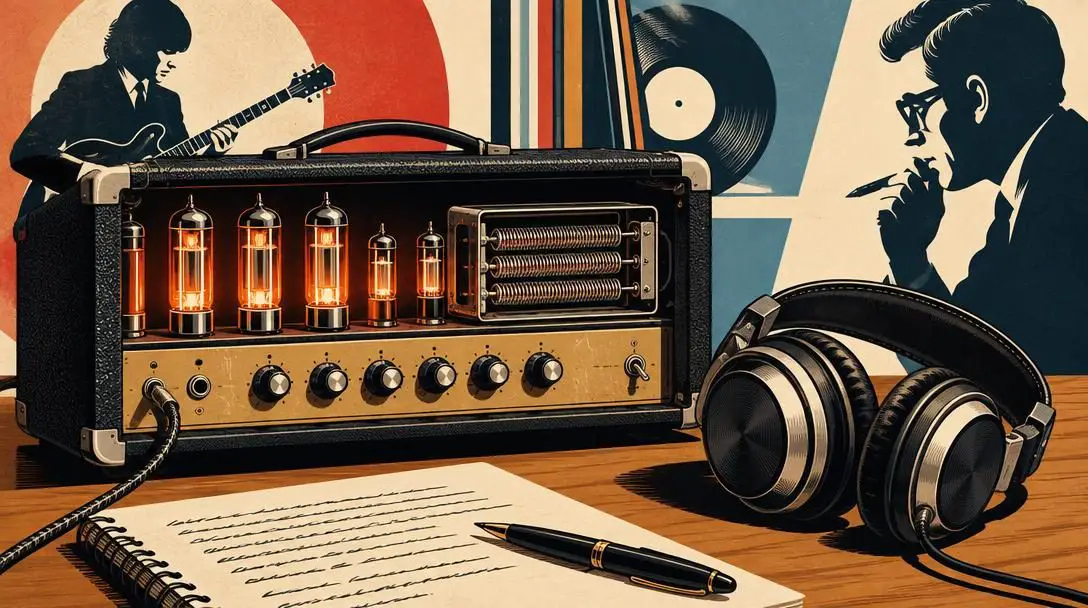
Kot and DeRogatis also dedicate substantial time to chronicling the technical innovations that built modern rock. In Episode #806, they paid tribute to the "King of the Surf Guitar," Dick Dale. The hosts thoroughly unpacked Dale's sonic legacy, highlighting how his collaboration with equipment manufacturers led to the heavy, dripping amplifier spring reverb that defined surf music in the early 1960s and altered the trajectory of amplified rock guitar.
Podcasts combine the investigative storytelling depth of long-form print journalism with real-time audio playback, turning complex music theory into an intuitive sensory experience.
How music journalism evolved from print to podcasts
Before digital audio feeds became common, music commentary was primarily distributed through physical magazines, newspaper columns, and terrestrial radio. Publications like Rolling Stone created the standard for artist profiles and critical record reviews, offering audiences vivid descriptions of how songs felt and sounded. Meanwhile, specialized disc jockeys introduced regional audiences to underground sounds and fresh genres within the confines of scheduled broadcasting.
However, traditional analog mediums faced clear limitations. Print journalists could describe a vocal inflection, an unexpected modulation, or a distortion pedal, but they could never play that specific moment directly for the reader. Terrestrial radio, while capable of playing the finished record, was tightly bounded by commercial programming clocks and format constraints, leaving little room for granular, stem-by-stem analysis or extended musicology lectures.

Modern podcasting solves these limitations by merging long-form journalistic critique with instantaneous, high-fidelity audio playback. Instead of relying entirely on prose, a podcast host can talk about a specific polyrhythm, play that isolated drum track, and then blend the bassline back in to demonstrate how the groove functions. This format gives listeners an unprecedented window into the recording studio and the composer's mind.
5 distinct production models in music podcasting
Different podcasts rely on distinct structural frameworks to analyze sound. Understanding these production models will help you find the approach that matches your personal curiosity:
- Theoretical and mechanical breakdowns: Exemplified by Switched On Pop, this model examines harmony, melody, meter, and studio effects. Hosts explain how deliberate technical adjustments evoke specific emotional reactions, while also assessing the business systems—such as streaming calculations—that track modern songs.
- Artist-led deconstructions: Used by Song Exploder, this approach lets the songwriter or producer tell their own story, anchored by raw stems. The music itself serves as the narrative spine, showing how disparate instruments combine to build a cohesive piece of music.
- Journalistic interviews and panels: Seen on Rolling Stone Music Now, this format relies on experienced reporters who synthesize historical reporting, industry news, and long-form artist interviews to place current music trends in their cultural context.
- Sociocultural investigations: Found on Our Lives, Our Sounds, this framework treats musical traditions as living artifacts of social struggle, examining how artists like Elaha Soroor use song to resist political repression and reshape cultural norms.
- Critical dialogue and musicology deep dives: Embodied by Sound Opinions, this format uses the dynamic back-and-forth of two experienced critics to evaluate new releases while archiving critical historical moments, such as Dick Dale's pioneering use of amplifier reverb.
A step-by-step routine for deeper listening
To extract the most value from analytical music podcasts, treat each episode as an interactive listening session. Use this five-step sequence to sharpen your musical ear:
- Select an episode covering a familiar recording: Start by picking an episode featuring a song you already know well, such as The Cranberries' "Dreams" on Song Exploder. Working with a familiar piece allows you to compare your established perception of the music against the creator's true technical intent.
- Revisit the source song with focused attention: Before pressing play on the commentary, listen to the target song from start to finish using good headphones. Pay attention to how the instruments are balanced across the stereo field, the contour of the vocal line, and the subtle textures in the background.
- Listen to the analytical breakdown: Play through the podcast episode without multitasking. Take note of the exact moments when critics or musicians isolate stems, identify chord changes, or point out studio production techniques you have previously missed.
- Replay the original track immediately: Once the podcast concludes, immediately listen to the complete master track again. You will quickly discover that your ears now isolate background harmonies, guitar tone characteristics, and rhythm structures that were previously invisible to you.
- Branch out into unfamiliar territory: Once you understand the host's analytical framework, pick episodes spotlighting artists, genres, or global traditions you have never heard before, using the commentary as a guided introduction to fresh sounds.
Common mistakes when listening to music analysis
Engaging with music podcasts is an intuitive hobby, but listeners frequently slip into habits that diminish what they can learn from these analytical deep dives:
- Listening in noisy, distracted environments: Because music podcasts demonstrate micro-details—such as subtle reverb decays, vocal doubling, and quiet basslines—listening over cheap phone speakers or in loud traffic will cause you to miss the exact audio cues being discussed.
- Dismissing pop music as mechanically trivial: It is easy to assume that commercial chart music lacks artistic substance. However, analytical shows consistently prove that modern pop utilizes elaborate production choices, precise vocal editing, and clever music theory designed to maximize audience engagement.
- Focusing entirely on the lyrics: Many casual listeners pay attention only to vocal delivery and lyrical meaning. Analytical podcasts demonstrate that chord structures, mixing choices, and instrumental arrangements carry just as much emotional weight as the words themselves.
- Skipping episodes with unfamiliar names: Passing over an episode because you do not recognize the featured band cuts you off from unexpected musical discoveries. Exploring a deep dive into an unfamiliar pioneer like surf guitarist Dick Dale can unlock an entirely new appreciation for music history.
How to expand your musical horizons
Once you develop the habit of analytical listening, you can branch out into adjacent areas of music appreciation, production, and history:
- Investigate historical recording hardware: After learning how pioneers like Dick Dale used early amplifier reverb units, research how tape delays, vintage tube microphones, and early analog mixing consoles shaped the sonic textures of 1960s and 1970s rock.
- Learn core audio engineering terminology: Developing a basic understanding of audio engineering concepts like stems, compression, equalization, and transients will make theoretical explanations on shows like Switched On Pop even more rewarding.
- Monitor streaming and chart mechanics: Keep an eye on how streaming services like Spotify and Apple Music alter song structures, track lengths, and Billboard tracking methodologies, as discussed by Nate Sloan and Charlie Harding.
- Seek out regional music traditions: Follow the lead of Our Lives, Our Sounds by researching non-Western musical scales, traditional instruments, and international protest music to understand how global artists address social issues across borders.
Frequently asked questions
Do I need to understand music theory to enjoy these podcasts?
No. While shows like Switched On Pop discuss musical theory, the hosts translate technical concepts into accessible, clear terms. They use audio examples and stems rather than sheet music, making the concepts understandable for listeners without formal music training.
What is an audio stem in music production?
An audio stem is an isolated track or group of tracks from a full recording, such as only the vocals, the bassline, or the drums. Podcasts like Song Exploder use stems so audiences can hear individual musical components without being obscured by the rest of the mix.
Why do digital streaming platforms create problems for the Billboard charts?
As explored in Switched On Pop Episode 165, traditional Billboard charts were built around physical record sales and terrestrial radio plays. The rise of streaming platforms like Apple Music and Spotify introduced new consumption patterns that do not always align with traditional popularity measurements.
How did Dick Dale influence modern guitar sounds?
As explained by Greg Kot and Jim DeRogatis on Sound Opinions, Dick Dale worked closely with equipment manufacturers to push the limits of guitar amplification in the early 1960s, pioneering the heavy use of spring reverb that became the sonic signature of surf music and influenced rock guitar.
Can music podcasts introduce me to international protest artists?
Yes. Series like Akala's Our Lives, Our Sounds focus specifically on global music and social activism, showcasing how artists like Afghan musician Elaha Soroor use their songs to challenge political systems, borders, and gender expectations.
The bottom line
Engaging with music podcasts shifts listening from an unexamined habit into a deeply rewarding sensory and intellectual hobby. Rather than merely hearing a catchy melody, you begin to recognize the intricate drum stems, classical chord foundations, and historical sound engineering innovations that make a track resonate. Whether you immerse yourself in the detailed mechanics of Switched On Pop, the vulnerable studio reflections of Song Exploder, the investigative journalism of Rolling Stone Music Now, the global cultural activism of Our Lives, Our Sounds, or the sharp historical commentary of Sound Opinions, these shows provide a masterclass in modern audio culture. By picking an episode, listening closely to the master stems, and re-evaluating the full mix, you will never hear your favorite songs the same way again.