
How to Make Your Resume Stand Out in a Crowded Job Market

In today's highly competitive employment landscape, securing an interview requires far more than a basic chronological summary of past jobs. With hiring teams receiving dozens or even hundreds of applications for a single open role, employers are forced to make rapid screening decisions. When a submitted document is visually cluttered, difficult to navigate, or disconnected from the specific criteria of the position, it is almost immediately eliminated from consideration.
To capture the attention of decision-makers, job seekers must treat the resume as an active marketing tool rather than a passive career archive. Navigating modern recruitment systems demands a clear understanding of automated screening tools, reader psychology, and strategic positioning. By aligning your documented qualifications directly with organizational needs, you can transform your resume into a compelling narrative that demands a closer look.
Key takeaways
- Modern hiring relies on applicant tracking systems and rapid initial sweeps by recruiters, making clarity and keyword alignment essential.
- Tailoring your qualifications to individual job descriptions significantly improves your chances over submitting generic applications.
- Highlighting quantifiable achievements and measurable outcomes delivers concrete proof of your workplace value.
- Balancing technical proficiencies with demonstrated soft skills gives employers a complete picture of your collaborative capabilities.
Understanding the Modern Hiring Funnel
Before writing or revising an application, it is essential to understand the journey a resume takes through modern hiring pipelines. When you submit your materials, they rarely reach the desk of a hiring manager or department head right away. Instead, they must first pass through a structured multi-stage vetting process designed to filter high volumes of candidates down to a manageable shortlist.
At the initial stage, many organizations rely on an applicant tracking system (ATS) to manage applicant intake. This software scans incoming files, organizes candidate profiles, and parses text for specific keywords, phrases, and qualifications that match the employer's predetermined criteria. Resumes that reflect the terminology of the original job posting are ranked favorably and flagged for review, while submissions lacking these critical terms risk being filtered out before a person ever sees them.
Applications that clear automated filters advance to human recruiters and hiring personnel, who face their own time constraints. During an initial visual sweep, a reviewer typically spends only a few seconds scanning the page. They search for relevant job titles, clean formatting, identifiable accomplishments, and a healthy balance of technical and interpersonal strengths. A visually clear, structured layout enables reviewers to locate critical information instantly during this high-stakes window.
A strong resume is not merely a record of where you have worked; it is an active marketing document designed to present your background in a compelling, accessible manner.
Core Strategies to Build a Standout Resume
Differentiating yourself from a deep pool of competitors requires a deliberate, multi-faceted approach. Rather than relying on standard duty descriptions, apply these core principles to craft an engaging professional narrative.
Targeted Customization for Every Application
Submitting the identical generic resume to every opening is one of the most common missteps job seekers make. Employers want to see how your specific background solves their immediate operational challenges. By carefully reading the job description and customizing your text to emphasize directly relevant experience, you immediately demonstrate that you are uniquely suited for that particular vacancy.
Clean Visual Architecture and Modern Formatting
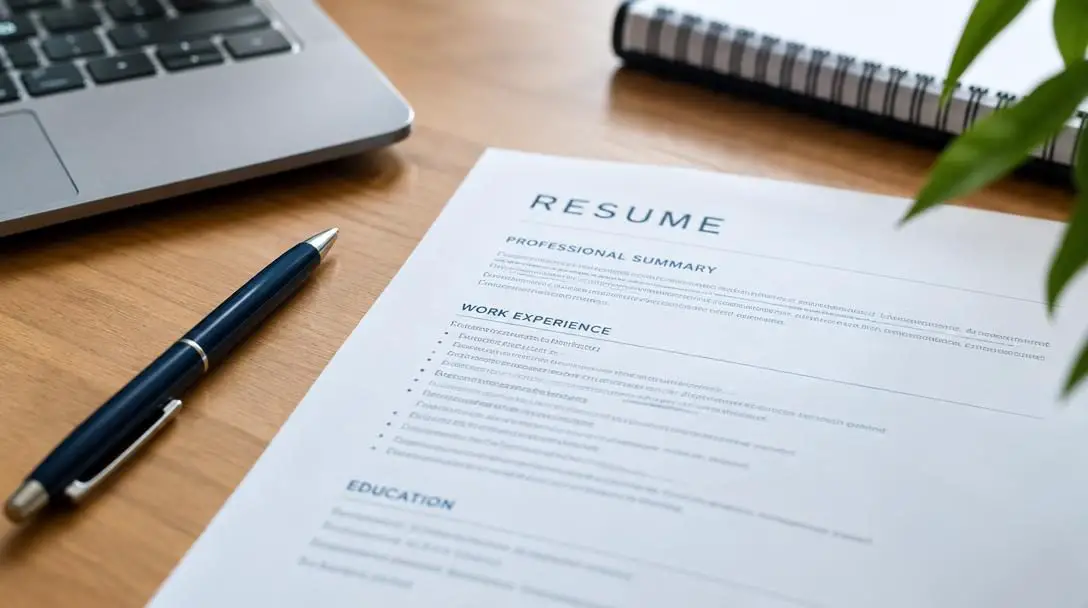
Your resume functions as an immediate visual reflection of your personal brand. A modern, uncluttered design creates a strong initial impression and guides the reader's eye naturally down the page. Select clean, highly legible fonts and avoid busy layouts, decorative borders, or complex multi-column structures that distract from your career history. Utilizing organized, concise bullet points allows key milestones to emerge clearly during rapid evaluations.
Measurable Achievements Over Daily Tasks
Routine task descriptions explain what you were assigned to do, but they fail to show how well you performed. Focus on showcasing achievements and providing quantifiable results using metrics, statistics, and percentages. For example, detailing how you increased sales revenue by a specific percentage provides tangible, verifiable proof of your past contributions, making your track record far more compelling than a generic list of duties.
Strategic Keyword Integration for ATS Compliance
Bridging the gap between software algorithms and human reviewers requires integrating the precise phrases found in the job posting. Weaving these keywords naturally throughout your professional experience, technical skill sections, and introductory statement helps your document successfully pass through automated screening filters. Furthermore, using industry-standard terminology signals to human readers that you thoroughly understand the expectations of the field.
An Engaging Summary or Objective Statement
Positioned prominently at the top of your document, a brief introductory statement serves as an initial hook. This introductory section should succinctly capture your primary qualifications, core expertise, and background while expressing clear enthusiasm for the target role. A focused opening frames the rest of the application and provides immediate context for the reader.
Evidence-Based Soft Skills
Technical competency is only one component of workplace success. Modern employers place substantial value on interpersonal capabilities, including communication, teamwork, leadership, and problem-solving. Instead of simply listing these traits in a disconnected bulleted list, embed concrete examples within your work history that illustrate how you used these skills to solve operational problems, resolve conflicts, or support your colleagues.
Rigorous Multi-Layered Proofreading
Even an impressive career history can be derailed by careless oversights. Spelling mistakes, inconsistent spacing, and grammatical errors compromise your credibility by suggesting a lack of thoroughness. Quality control requires reviewing the document multiple times and having an objective third party evaluate the text before submission.
Step-by-Step Guide to Polishing Your Document
Revising an existing resume or drafting a new one from scratch can feel daunting. Following a structured sequence ensures that you cover both technical and qualitative requirements systematically.
- Deconstruct the job posting: Examine the target listing line by line, highlighting required qualifications, core responsibilities, and repeated industry terms.
- Select an appropriate visual layout: Establish a clean aesthetic with generous white space, consistent margins, and standard, easily legible typography.
- Draft an introductory hook: Write a tailored summary statement that outlines your core qualifications and enthusiasm for the position.
- Refactor your employment history: Rewrite past experience into active bullet points centered on accomplishments rather than passive day-to-day task lists.
- Introduce quantitative metrics: Add specific numbers, statistics, and percentages to your achievements to illustrate the scope of your impact, such as revenue growth.
- Incorporate keywords naturally: Distribute relevant terms from the job posting throughout your career history, skills list, and summary.
- Showcase interpersonal strengths: Highlight instances where problem-solving, communication, teamwork, or leadership drove positive outcomes.
- Conduct a detailed review: Check for visual consistency, correct grammar, and accurate spelling, then ask a friend or family member to review the final draft for clarity.
Critical Application Pitfalls to Avoid
Understanding what to omit is just as important as knowing what to include. Candidates frequently eliminate themselves from consideration by falling into easily preventable submission habits.

- Distributing generic applications: Sending the same uniform resume to multiple positions without tailoring the content to individual specifications.
- Relying on passive task lists: Describing basic job functions rather than communicating specific accomplishments and tangible value.
- Ignoring target terminology: Omitting the precise keywords and phrases used in the posting, which limits visibility in applicant tracking systems.
- Overcomplicating the visual presentation: Introducing cluttered graphics, busy designs, or illegible fonts that detract from the content.
- Omitting interpersonal capabilities: Failing to demonstrate essential soft skills like teamwork, problem-solving, and communication within professional descriptions.
- Drafting unfocused opening statements: Writing lengthy, generic summaries that do not articulate a clear connection to the specific role.
- Skipping thorough proofreading: Submitting materials with preventable typos, grammatical flaws, or visual inconsistencies due to rushed preparation.
- Failing to get outside feedback: Relying solely on software checks without having a trusted peer or family member review the file for tone and readability.
Next Steps: Aligning Your Entire Job Search Strategy
A polished, standout resume is an essential foundation, but it represents only one component of a broader recruitment journey. To maximize your momentum once your application is finalized, you must coordinate your supporting materials and prepare for the evaluation stages that follow.
Ensure that any accompanying documents, such as a cover letter, match the messaging and visual standards of your resume. Your cover letter should reinforce the same tailored narrative, highlighting identical core achievements, qualifications, and enthusiasm while expanding on your motivation for joining the specific organization. Consistency across all materials establishes a cohesive personal brand that reinforces your professional credibility.
You must also prepare to defend and expand upon your resume during the interview process. Hiring managers routinely ask candidates to provide detailed background on the metrics, accomplishments, and examples cited in their documents. Revisit your notes so you can confidently discuss the context behind your results, explain how you applied your technical expertise, and narrate real-world examples of your leadership and problem-solving abilities.
Finally, implement an organized system to track every submission. Save a copy of the specific tailored resume and the original job posting for every vacancy you target. When an employer contacts you for a preliminary interview, having immediate access to the exact document they reviewed enables you to speak directly to the achievements that earned you their interest.
Frequently asked questions
Why is tailoring my resume necessary for every single job application?
Tailoring ensures that your application directly reflects the unique requirements and terminology of the specific role. It allows you to align your experience with the employer's needs, helping you clear automated screening systems and demonstrating to human reviewers that you are uniquely qualified for their opening.
How does an applicant tracking system (ATS) affect my job search?
An ATS scans, sorts, and ranks resumes based on predetermined criteria set by the employer, specifically looking for keywords and phrases from the job listing. If your resume lacks the relevant terminology, it may be filtered out before a human hiring manager ever reviews it.
What is the best way to demonstrate soft skills on a resume?
Rather than merely listing attributes like communication or leadership in a skills section, integrate concrete examples within your professional history. Describe specific situations where your problem-solving, collaboration, or teamwork helped resolve a challenge or delivered a successful project outcome.
Why are quantifiable metrics so important in employment descriptions?
Quantifying your results with numbers, percentages, or statistics provides measurable proof of your past impact. Citing specific outcomes, such as increasing sales revenue, shows the tangible value you delivered to previous employers rather than just listing assigned responsibilities.
Who should review my resume before I submit it?
In addition to conducting multiple self-reviews, you should ask a friend or family member to review the final draft. An outside reader can spot subtle grammatical errors, awkward phrasing, or formatting inconsistencies that automated spell-check software might miss.
The bottom line
Standing out in a crowded job market requires moving past the outdated notion that a resume is simply an employment record. By approaching your document as an intentional marketing tool, you can bridge the gap between automated software filters and human decision-makers. Tailoring your content to each role, framing your experience around measurable outcomes, maintaining a clean visual hierarchy, and highlighting both technical and interpersonal strengths will ensure your application commands attention.
Combining these resume enhancements with consistent cover letters, structured application tracking, and thorough interview preparation creates a unified, professional campaign. Investing the time to refine your application materials transforms a standard job search into an effective strategy that regularly secures interviews.