Improve Your Vocabulary For Better Scrabble Play
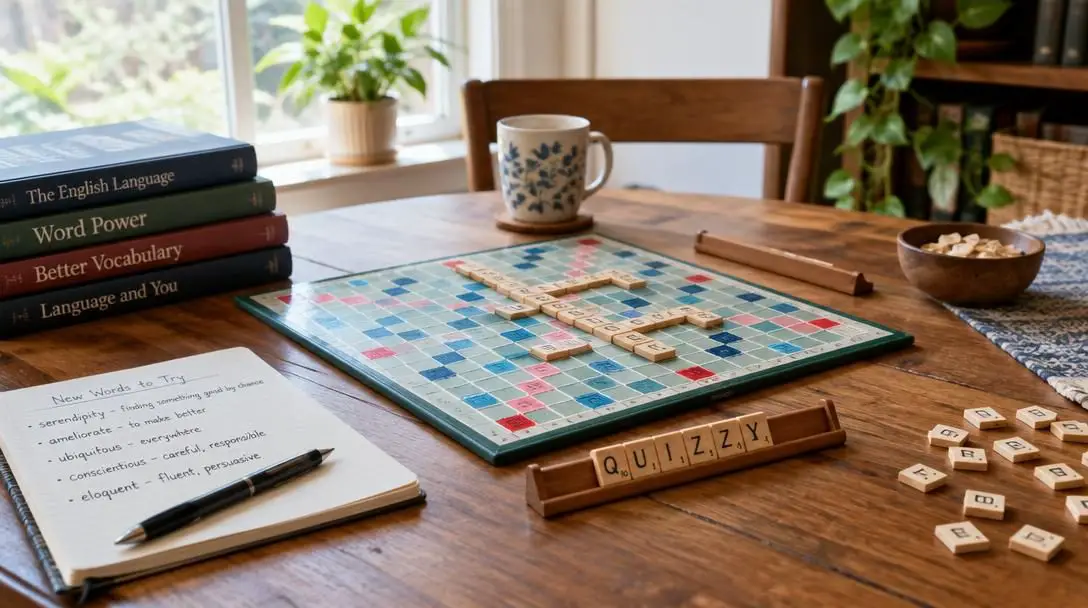
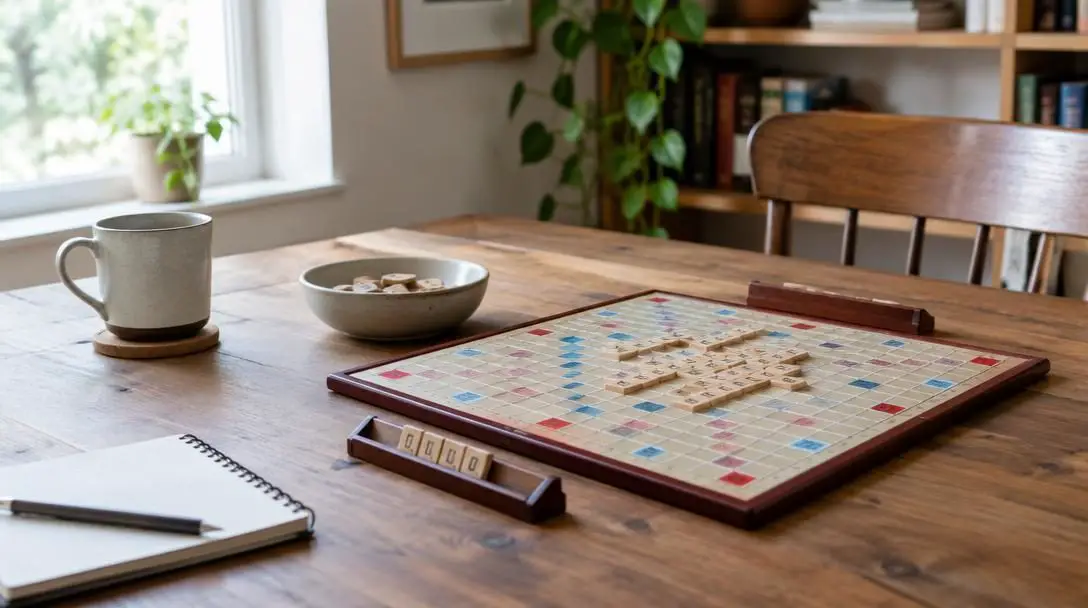
Scrabble has remained a beloved classic across living rooms, competitive tournaments, and casual gatherings for more than 80 years. At its core, the game challenges participants to construct words from a rack of random letter tiles, with each individual character assigned a specific point value based on its rarity and utility. While many play purely for recreation, Scrabble is fundamentally an intellectual contest that rewards linguistic recall, pattern recognition, and tactical problem-solving under changing board conditions.
Excelling at the game requires a deliberate balance between having a rich vocabulary and executing sharp spatial strategy. Even the most comprehensive mental dictionary cannot secure a win if tiles are placed without regard for board geometry, bonus squares, or defensive positioning. Conversely, brilliant spatial reasoning accomplishes little without the vocabulary necessary to exploit scoring openings. Understanding how linguistic study directly informs competitive board tactics is the essential first step toward steadily improving your game.
Key takeaways
- Scrabble performance relies on a balance between an expansive vocabulary and sharp spatial board positioning.
- Mastering short words and parallel placements allows players to score multiple intersecting words on a single turn.
- High-scoring tiles like "Q" and "Z" require targeted study to avoid rack congestion and maximize scoring potential.
- Active study methods, such as maintaining a vocabulary notebook and reading diverse genres, reinforce word retention.
- Balancing casual games, competitive play, and AI practice against opponents like Jasper accelerates tactical growth.
How Linguistic Recall and Board Mechanics Collide
To see measurable improvement in your matches, you must examine how vocabulary interacts with the physical layout of the Scrabble board. Scoring high is rarely about playing the longest words you know; rather, it is about identifying valid words that fit into precise tactical board environments. Every turn forces you to assess a random draw of tiles on your rack, examine open lanes across the grid, and retrieve valid letter combinations from your memory.
A deep vocabulary transforms ordinary turns into dynamic opportunities. When your mental lexicon is limited, difficult tile distributions often feel unplayable, leading to wasted turns or low-scoring moves. Expanding your knowledge of unusual word formations, alternative spellings, and specialized terms allows you to adapt to whatever letters you draw. Rather than waiting for ideal combinations that rarely appear, skilled players use their vocabulary to manipulate awkward racks into productive board positions.
Maximizing High-Value Tiles and Intersectional Words
Standard Scrabble assigns premium point values to letters that are historically difficult to play, most notably "Q" and "Z." In competitive settings, these high-value letters represent both substantial opportunities and distinct risks. If you hold these tiles without knowing how to play them effectively, they clog your rack, reduce your flexibility, and force defensive plays. Learning specific, often obscure words that feature "Q" and "Z" allows you to convert difficult draws into immediate scoring surges.
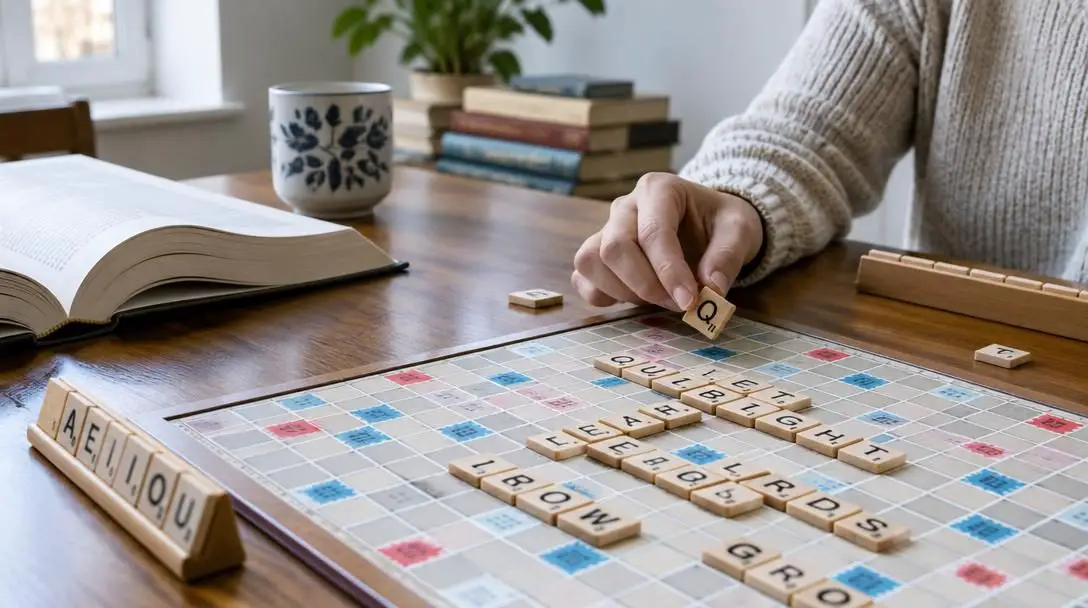
When you place a word parallel to another, every adjacent letter creates a brand-new, valid cross-word, maximizing your point total on a single turn.
Parallel word placement is one of the most reliable mechanics for generating high scores. Instead of merely tacking letters onto the end of an existing word or building outward at a right angle, you can place an entire word directly adjacent and parallel to one already on the board. In doing so, every adjacent letter forms a fresh cross-word. A five-letter word played parallel to an existing five-letter word can yield six distinct scored words in a single move: the main word played plus five individual two-letter cross-words.
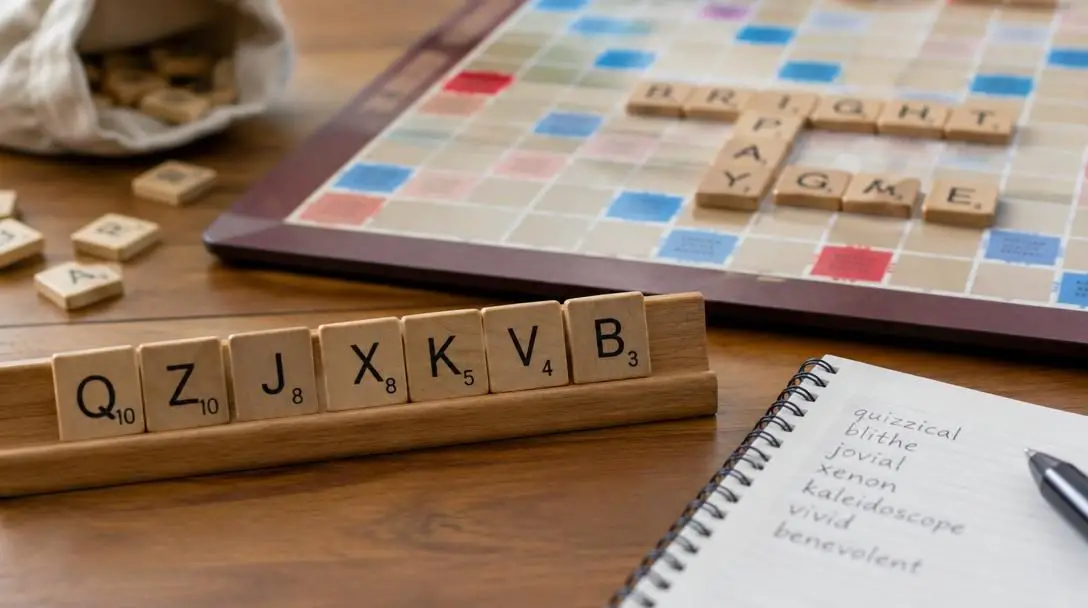
Executing parallel plays demands complete familiarity with two-letter and three-letter words. These short terms act as the connective tissue of the board, enabling tight clusters of tiles that rack up points from multiple directions simultaneously. Without a working knowledge of short utility words, executing profitable parallel placements is virtually impossible.
Core Methods for Building an Actionable Game Lexicon
Expanding your working vocabulary for competitive play requires deliberate, structured habits away from the board. Rather than relying on passive exposure, players who see dramatic score gains actively cultivate their mental word banks through three proven approaches.
Reading Widely Across Diverse Genres
One of the most natural avenues for discovering new vocabulary is consistent, varied reading. Engaging with fiction, non-fiction books, newspapers, and periodicals exposes you to language across different historical eras, academic disciplines, and cultural contexts. While everyday speech tends to rely on a predictable set of familiar phrases, printed publications regularly feature formal, technical, and obscure terms. This broad linguistic exposure expands your recognition of unusual letter sequences and provides natural context for words you might otherwise encounter only on a dry word list.
Maintaining an Active Vocabulary Notebook
Encountering a new word while reading is only useful if you take deliberate steps to retain it. Passive scanning rarely cements terminology into your long-term memory. When you spot an unfamiliar term in print, make a point to record it immediately and consult a dictionary for its definition and part of speech. Keeping a dedicated vocabulary notebook—organized either chronologically or thematically—creates an active personal reference log. Reviewing this notebook on a regular basis moves newly discovered words from passive recognition into your active recall memory, making them accessible during fast-paced games.
Studying Targeted and Curated Word Lists
While general reading builds broad linguistic intuition, competitive Scrabble often hinges on words that rarely appear in standard literature. Curated word lists, readily available online, catalog valid game terminology ranging from everyday speech to archaic and obscure entries. Serious players regularly isolate high-utility categories for focused memorization, including lists of two-letter words, three-letter stems, words containing "Q" without an accompanying "U," and terms centered around high-point tiles like "Z," "J," and "X." Short, focused study sessions with these lists yield rapid improvements in board vision.
Evaluating Your Practice Environments
Improving your game requires applying new vocabulary across different playing formats. Each competitive environment provides distinct feedback, testing your ability to spot words under varying degrees of pressure and strategic difficulty.
| Practice Format | Opponent Type | Primary Strategic Benefit | Key Limitation |
|---|---|---|---|
| Casual Matches | Friends and family | Low-stress testing of new words in relaxed settings | Rarely exposes advanced defensive play or spatial blocking |
| Competitive Matches | Experienced human players | Observation of advanced tile management and placement tactics | Opportunities for real-time turn analysis and replays are limited |
| Solo AI Training | Jasper computer opponent | Rigorous tactical feedback and optimal move evaluation | Lacks the psychological element of over-the-board human play |
Practicing against a specialized digital opponent like Jasper offers unique advantages for dedicated players. Jasper's advanced AI models are designed specifically for word games like Scrabble, providing consistently challenging moves while highlighting where your tile placement, bonus-square utilization, and rack management could have been optimized. Balancing casual social games with rigorous AI analysis ensures both steady enjoyment and rapid tactical development.
A Structured Routine to Elevate Your Scrabble Play
Translating theoretical vocabulary knowledge into higher scores requires a repeatable, disciplined routine. Following these practical steps will help you systematically expand your word bank and refine your board execution:
- Commit to a daily reading habit that spans fiction, non-fiction books, newspapers, and specialized magazines to maximize exposure to diverse terminology.
- Maintain a dedicated vocabulary notebook, writing down unfamiliar terms along with their definitions and parts of speech as soon as you encounter them.
- Locate curated word lists online, prioritizing collections of two-letter utility words, high-scoring terms, and words containing difficult letters such as "Q" and "Z."
- Conduct short, focused memorization sessions each week to review curated lists and reinforce valid words in your active memory.
- Engage in regular games with friends and family to practice spotting newly learned words in an enjoyable, relaxed atmosphere.
- Compete against more skilled human players to observe advanced board strategies, rack preservation techniques, and clever tile placements.
- Incorporate solo practice sessions against Jasper to study optimal move decisions and receive objective feedback on your board positioning.
- Actively hunt for parallel placement opportunities on every turn, evaluating whether playing alongside existing words produces higher combined scores.
Frequent Strategic and Study Mistakes to Avoid
Even diligent players can fall into unproductive habits that stall their vocabulary retention and lower their board scores. Recognizing these common pitfalls helps you allocate your study time and tile resources far more efficiently:
- Overvaluing raw memorization: Assuming that memorizing thousands of obscure words is sufficient on its own. Neglecting spatial board placement, multiplier squares, and defensive awareness leaves you vulnerable to players with sharper tactical instincts.
- Focusing exclusively on long words: Overlooking short utility words in pursuit of seven-letter plays. Short words form the foundation of high-scoring parallel plays that frequently outscore longer, isolated words.
- Hoarding high-value letters: Holding onto difficult tiles like "Q" or "Z" across several turns in the hope of finding a massive play. This clogs your rack, limits your valid combinations, and drags down your average scoring rate.
- Scanning past unfamiliar terms: Reading broad material without actively recording and looking up unknown words, resulting in missed opportunities to expand your lexicon.
- Neglecting your vocabulary notebook: Writing down words without scheduling periodic reviews, leaving the terms in passive memory where they remain inaccessible during timed turns.
- Avoiding challenging competition: Sticking exclusively to easier opponents to protect your win record rather than testing your skills against advanced players or AI platforms like Jasper that reveal tactical weaknesses.
- Ignoring parallel scoring lines: Placing words entirely in open space across the board without intersecting existing tiles, leaving easy multi-word scoring opportunities unexploited.
Frequently asked questions
How does reading widely improve my Scrabble performance?
Reading widely across fiction, non-fiction, magazines, and newspapers exposes you to language and word patterns rarely used in daily conversation. This broader exposure enhances your pattern recognition and helps you identify playable word combinations more readily on your rack.
Why are short words so critical in competitive Scrabble?
Short two-letter and three-letter words serve as the connective tissue for parallel placements. When you place a word parallel to another, every touching tile must form a valid cross-word. Knowing these short terms allows you to create multiple scoring words on a single turn.
What is the best way to handle difficult letters like "Q" and "Z"?
The best approach is to memorize curated lists of valid words featuring "Q" and "Z," particularly short words and "Q"-words that do not require a "U." Playing them quickly prevents rack congestion and converts high point values into immediate board scores.
How does playing against the AI opponent Jasper help my game?
Jasper utilizes advanced AI models built specifically for word games like Scrabble. Practicing against Jasper offers rigorous competition while providing objective feedback on your decisions, helping you identify missed parallel placements and rack management errors.
Is keeping a handwritten vocabulary notebook better than digital notes?
Writing words by hand, noting definitions, and reviewing them regularly encourages active processing. Whether kept on paper or digitally, the key is maintaining an organized, thematic reference log that you review frequently enough to move new terms into your active recall memory.
The bottom line
Elevating your Scrabble play is a continuous journey that marries vocabulary expansion with tactical board awareness. By reading widely, maintaining a dedicated vocabulary notebook, memorizing curated lists of high-value and short utility words, and testing your skills against diverse opponents—from casual family groups to advanced AI opponents like Jasper—you can steadily transform your linguistic knowledge into dominant board play. Grab your letter rack, organize your notes, and put these practical techniques to work in your next match.