Is Mastodon Better Than Twitter?

Micro-blogging has defined real-time communication on the internet for well over a decade. For most of that history, the public square was largely synonymous with a single corporate service: Twitter. Users gathered by the hundreds of millions to read concise updates, track breaking news headlines, converse with public figures, and participate in sprawling cultural discussions. However, the nature of social platforms began undergoing major shifts as questions of ownership, governance, and user autonomy came to the forefront of online discourse.
Mastodon emerged in 2016 as an alternative model to the prevailing centralized networks, quietly cultivating an audience of open-source enthusiasts, privacy advocates, and community builders. That dynamic changed dramatically on October 27, 2022, when Elon Musk took over Twitter and privatized the company. The resulting changes in platform leadership, moderation, and corporate priorities triggered a massive user migration toward Mastodon, thrusting the independent micro-blogging network into the international spotlight as a serious contender.
Key takeaways
- Mastodon operates on an open-source, decentralized federation of independent servers, preventing any single owner from buying or altering the entire network.
- Twitter retains a much larger audience of approximately 206 million active users compared to Mastodon's community of around 2 million users.
- Mastodon offers a 500-character post limit alongside customizable visibility controls, while Twitter caps standard posts at 280 characters.
- Direct messages on Mastodon are not yet end-to-end encrypted, though platform leadership has stated the feature is planned.
- Mastodon relies entirely on community-funded hosting without platform-level monetization, raising distinct long-term questions regarding infrastructure costs.
Architecture and ownership: Centralized giant versus federated web
To evaluate whether Mastodon is better than Twitter, one must first examine the stark divergence in how both platforms are built and governed. Twitter functions as a centralized, singular service owned by Elon Musk. Every user signs up under the same corporate umbrella, enters into an agreement with a single company, and navigates a single, global terms-of-service agreement. All content moderation policies, software roadmaps, and algorithmic changes are executed from the top down by a central executive authority.
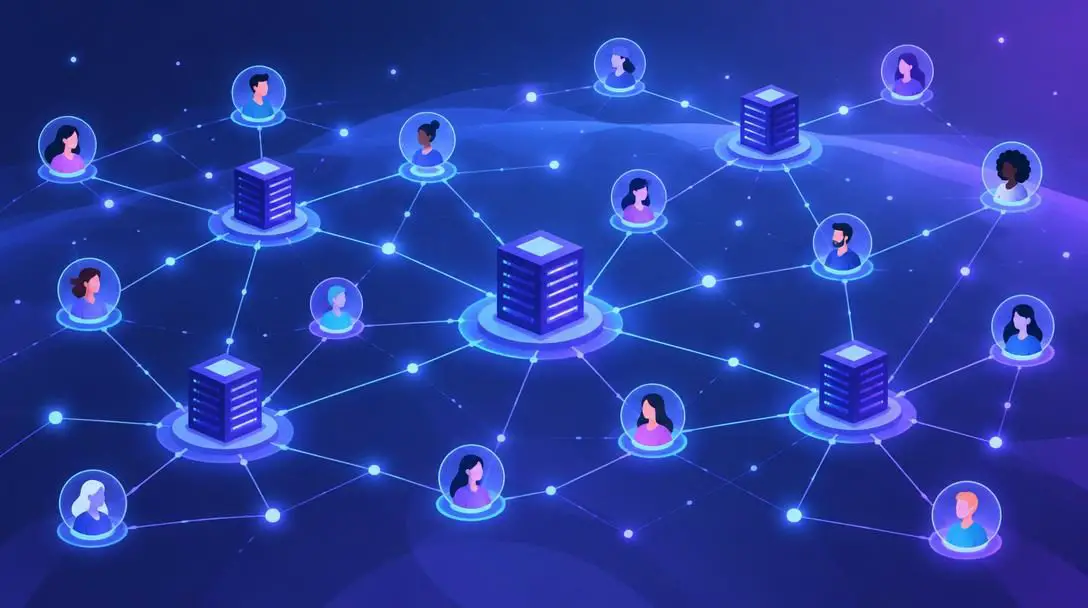
Mastodon, by contrast, is completely decentralized. It is not owned by any individual or corporation. Instead, the network is composed of independently operated servers running open-source code across the world. Despite residing on separate physical infrastructure, these independent servers communicate through common protocols, forming an interconnected collective known as the fediverse. A user registered on an art-themed server can follow, reply to, and share posts from a user hosted on a server dedicated to technology, local government, or general conversation.
"The code is free, open-source software, and nobody can change the license or take it back retroactively, and all of the different servers are owned by other people."
As Mastodon founder Eugen Rochko pointed out when describing the platform's foundation, the software's open-source licensing makes hostile corporate takeovers structurally impossible. If an individual server operator behaves erratically or changes their terms abruptly, users can migrate their profile data to another server within the network. Because the underlying code belongs to the public, the platform cannot be unilaterally discontinued or monetized by an outside buyer.
The platforms at a glance
Both services share basic micro-blogging conventions, including following profiles, publishing short updates, and favoriting entries across desktop web browsers and smartphone apps. Yet their core metrics and structural designs diverge sharply.
Mastodon
- Founded: 2016
- Founder: Eugen Rochko
- Active users: Approximately 2 million
- Default character limit: 500 characters
Mastodon functions as an open-source federation where thousands of individual administrators manage their own communities. Prominent cultural figures including George Takei, Neil Gaiman, and Stephen Fry have established homes across its decentralized instances, giving the network cultural legitimacy despite its non-commercial structure.


- Acquired by Elon Musk: October 27, 2022
- Active users: Approximately 206 million
- Default character limit: 280 characters
- Infrastructure: Centralized corporate service
Twitter stands as the historical standard for micro-blogging, delivering immediate access to real-time global news events and high-velocity engagement. Its centralized infrastructure accommodates a vast global audience, providing unparalleled distribution for individuals, journalists, and global organizations seeking maximum public exposure.
| Feature | Mastodon | |
|---|---|---|
| Network structure | Decentralized federation of independent servers | Centralized corporate infrastructure |
| Active user base | Approximately 2 million | Approximately 206 million |
| Character limit | 500 characters | 280 characters |
| Primary feed mechanism | Chronological timelines | Algorithmic engagement feed |
| Monetization | None (community-funded servers) | Commercial operational model |
Feature comparison: Nuance, reach, and user control
When interacting with these platforms day to day, the technical differences translate directly into distinct user experiences. Evaluating which service suits your needs requires looking at several functional areas:
Character capacity: Twitter limits standard updates to 280 characters, requiring users to rely on multi-part threads to convey complex arguments. Mastodon's default 500-character limit grants nearly double the space, allowing for contextual nuance, proper attribution, and thorough explanations within a single entry.
Audience size and engagement: Twitter's massive base of roughly 206 million active users generates high-velocity interactions and rapid virality. In contrast, Mastodon's 2 million active users produce a quieter, more deliberate conversational environment. While breaking news circulates on Mastodon, posts rarely achieve the staggering numerical engagement metrics common on Twitter.
Feed mechanics: Twitter relies on algorithmic recommendation engines built to prioritize high-engagement, often controversial discussions to keep readers active. Mastodon eliminates algorithmic sorting in favor of strict chronological timelines. On Mastodon, your home feed shows only posts published by accounts you deliberately follow, arranged by publication time.
Financial sustainability: Twitter relies on traditional commercial models to fund its global server clusters, engineering teams, and bandwidth. Mastodon features no built-in monetization, platform ads, or tracking software. While this ensures a clean, commercial-free interface, it shifts operating expenses entirely to independent server operators. These administrators pay out-of-pocket or rely on voluntary community donations, raising questions about whether small instances can afford continuous hosting costs over years of sustained growth.
Step-by-step: How to transition to Mastodon
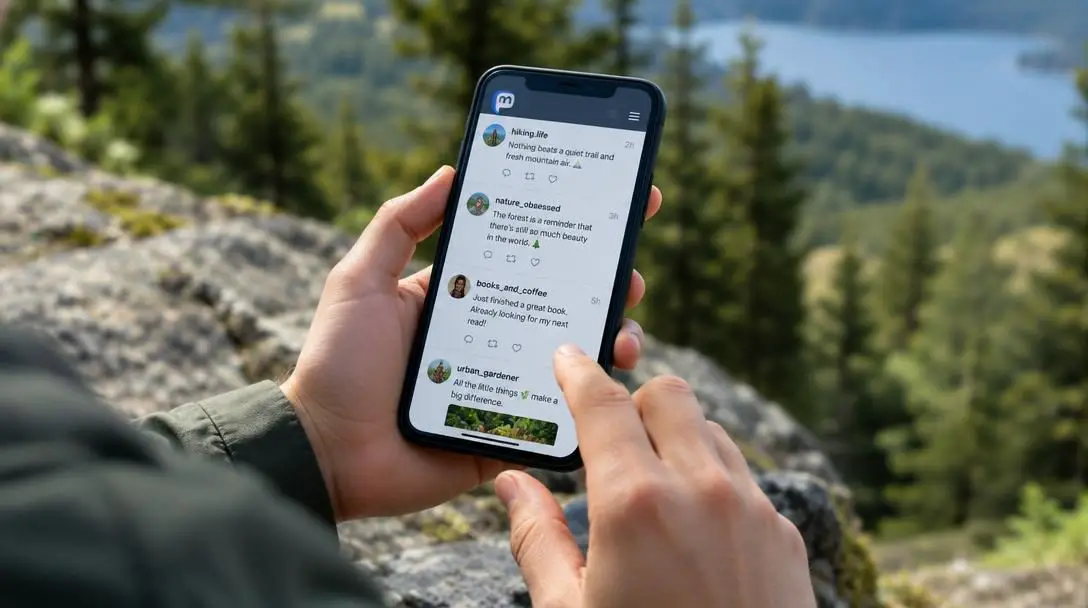
Migrating to a federated network requires a different approach than signing up for a conventional social media site. Because no central homepage controls the entire system, joining involves choosing your gateway into the wider fediverse.
- Select a server: Browse directory lists to find a server that matches your regional location, personal interests, language, or professional field. Remember that servers communicate with one another, so you can still follow users on different servers.
- Review server rules: Carefully inspect the moderation guidelines of your prospective host. Server operators establish their own acceptable-use policies, and joining a community requires agreeing to abide by those local expectations.
- Register your account: Complete registration and claim your handle. Your full public address will mirror an email format (such as @name@server.domain), which allows people on other servers to search for and follow you.
- Find your contacts: Populate your timeline by searching for friends, colleagues, or prominent figures who have joined the network, such as Neil Gaiman, Stephen Fry, or George Takei.
- Explore your timelines: Familiarize yourself with the three main views: your home timeline (people you follow), the local timeline (all public posts on your specific server), and the federated timeline (public posts across the broader interconnected network).
Common mistakes new users make
Navigating Mastodon's federated system can be confusing for people accustomed to corporate platforms. Avoiding these common missteps will ensure a smoother transition:
- Worrying about server lock-in: Many beginners delay signing up because they fear picking the wrong instance will isolate them from friends. In practice, cross-server federation enables you to follow and converse with anyone across the entire network, regardless of hosting location.
- Assuming direct messages are confidential: Mastodon gives users granular control over who sees standard public posts, but private notes are not yet end-to-end encrypted. Avoid sending sensitive credentials or proprietary data through direct messages until official cryptographic protections are implemented.
- Waiting for an algorithm to feed you content: Without an engagement algorithm pushing popular content onto your screen, a brand-new Mastodon feed will look blank. You must actively follow accounts and hashtags to build an interesting, active home timeline.
- Ignoring local community codes of conduct: Unlike Twitter's universal rules, each Mastodon server enforces its own behavioral standards. Failing to review your server's expectations regarding post formatting, content warnings, or topic restrictions can result in warnings or account suspension by volunteer moderators.
- Overlooking server stability: Independent administrators host instances out of goodwill or small community donations. Registering on a fragile, single-person server that lacks an active maintenance plan increases the risk of unexpected service interruptions.
Frequently asked questions
Can Mastodon users talk to people on Twitter?
No. Mastodon and Twitter are entirely separate platforms built on incompatible technical architectures. You cannot follow, reply to, or message a Twitter user directly from a Mastodon account.
Why does Mastodon have so many different servers?
Mastodon is decentralized, meaning no single company owns the network. Independent entities host individual servers that link together using shared open-source protocols, creating a cooperative network rather than a single corporate silo.
Are direct messages on Mastodon private and encrypted?
While direct messages are restricted to the participants mentioned in the post, they are not currently protected by end-to-end encryption. Server administrators possess the technical ability to read messages stored in their databases, although Mastodon has stated that end-to-end encryption is planned for future platform updates.
Does Mastodon show ads or promoted posts?
No. Mastodon does not feature corporate advertisements, sponsored posts, or algorithmic tracking. Server infrastructure costs are funded independently by operators and community donations rather than advertising revenue.
Can someone buy Mastodon like Elon Musk bought Twitter?
No. Mastodon's underlying code is free and open source, and the network consists of thousands of independent servers owned by different people and organizations. An investor could purchase individual servers, but no single entity can purchase or control the broader federated network.
The bottom line
Determining whether Mastodon is better than Twitter depends on what you value most in a digital community. For users unsettled by Twitter's corporate direction under Elon Musk, Mastodon provides a resilient, decentralized refuge. It offers a generous 500-character writing window, eliminates invasive advertising algorithms, and ensures that platform governance remains distributed among independent communities. High-profile figures like George Takei, Neil Gaiman, and Stephen Fry demonstrate that cultural discourse can flourish outside traditional corporate silos.
However, Twitter remains unmatched in raw scale. With approximately 206 million active users, it is still the primary engine for global breaking news, real-time institutional announcements, and broad cultural reach. Mastodon's community of 2 million active members provides a more intimate environment, but its reliance on unmonetized, community-funded servers presents ongoing infrastructure challenges.
You do not need to make an immediate, exclusive commitment to either network. Many internet users maintain their presence on Twitter to monitor global news feeds while simultaneously building a profile on Mastodon to explore decentralized networking, enjoy quieter chronological feeds, and support an open-source future for social media.