Learning About Our Forebears – The Curious Joys of Genealogical Research
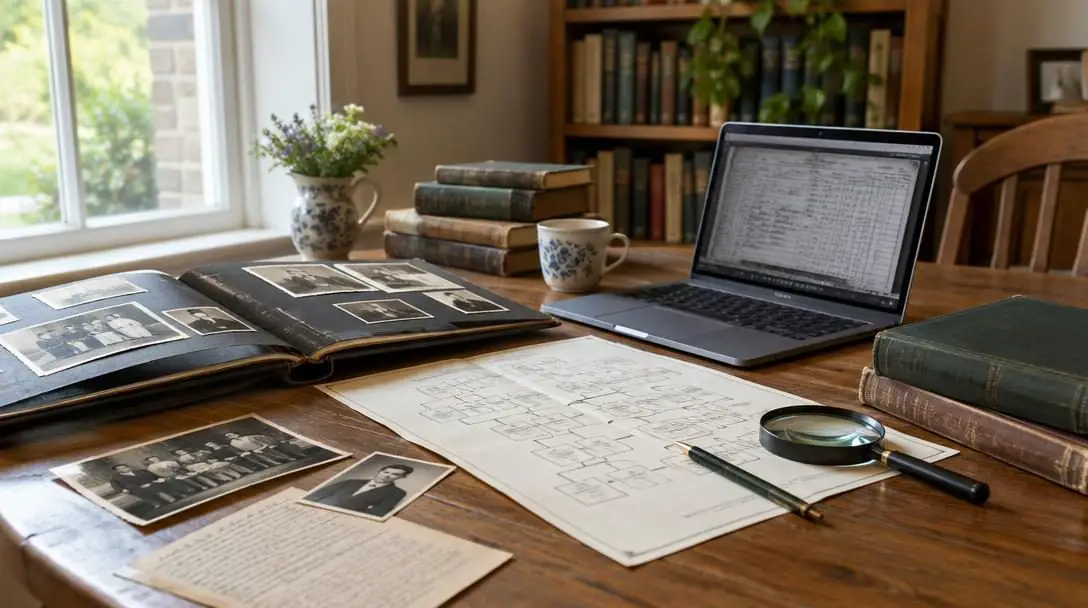
Most people can easily name their parents, describe their grandparents, and perhaps recount a colorful anecdote about a great-grandparent. Beyond that intimate generational circle, however, the clarity of personal heritage tends to fade into scattered recollections and unsubstantiated family lore. Learning where we come from is one of the most rewarding intellectual endeavors an individual can undertake, transforming vague folklore into a documented narrative of survival, migration, and cultural endurance.
Genealogical research is the disciplined pursuit of identifying forebears, proving familial connections, and constructing an unbroken family tree across centuries. While ancient societies often reserved genealogical tracing for royalty, titled nobility, and the adjudication of legal inheritance disputes, the craft has evolved into a democratic, accessible journey for everyday people seeking a tangible link to the past.
Key takeaways
- Genealogical research moves backwards systematically through time, relying on verified primary documentation rather than speculation.
- Documenting family history preserves irreplaceable memories, safeguards fragile heirlooms digitally, and establishes a heritage roadmap for future generations.
- Ancestral records provide critical health insights by mapping hereditary risks like heart disease, diabetes, and longevity patterns.
- Building a family tree requires avoiding common pitfalls such as skipping generations or assuming individuals sharing identical names are the same person.
The Multi-Faceted Rewards of Exploring Your Lineage
Embarking on the genealogical path delivers benefits that span intellectual discovery, emotional grounding, preventative healthcare, and social connection. By examining the lives of those who came before, family researchers enrich both their present lives and the legacy they leave behind.
Preserving Living History for Future Generations
One of the primary motivations for undertaking family research is the urgent preservation of fragile history. Older relatives often carry memories, ancestral traditions, and firsthand accounts that risk vanishing forever if they are not intentionally recorded. Taking the time to document this information now ensures that younger relatives and future descendants inherit a rich, accurate narrative. Furthermore, contemporary family historians benefit from digital preservation tools, making it straightforward to digitize fragile paper records, letters, and vintage photographs before physical decay sets in.
Discovering Personal Identity and Lost Heritage
Understanding who we are frequently starts with understanding where our families lived and what customs shaped their world. When individuals uncover their ancestral geographical roots and ethnic backgrounds, they often revive traditions, culinary practices, and observances that faded across generations. It is not uncommon for family historians to discover ancestral ties to countries they never realized were part of their bloodline, prompting fresh cultural curiosity and a renewed sense of global identity.
Uncovering Critical Medical and Longevity Insights
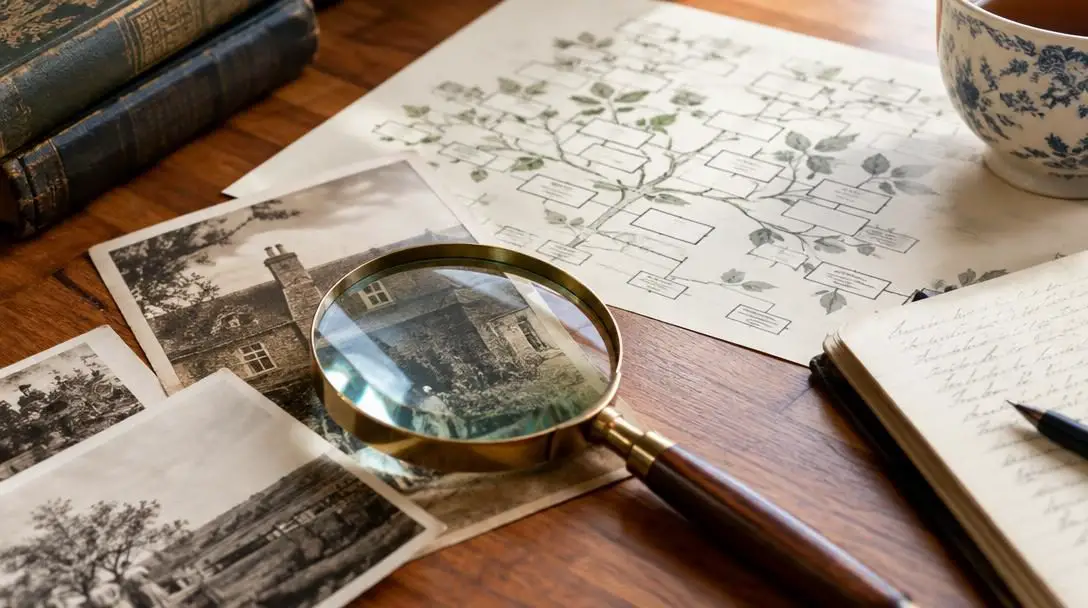
Beyond historical curiosity, family history has immediate utility in modern healthcare. Physicians regularly ask patients to provide a comprehensive medical family history to calculate hereditary risk profiles. Methodical genealogical investigation helps pinpoint recurring conditions such as heart disease, diabetes, and various forms of cancer across ancestral branches. Identifying these generational health trends allows individuals and their offspring to implement early screening and preventative lifestyles. Conversely, confirming that multiple ancestors enjoyed extended longevity—living well into their nineties or beyond—can offer reassuring context about one's genetic background.
Reconnecting Distant Relatives and Strengthening Family Bonds
Over time, extended families naturally scatter due to career moves, domestic changes, and geographic separation. Family history initiatives act as a catalyst for reconnection, offering a meaningful reason to reach out to estranged or distant relatives. Sharing discoveries through photo albums, multimedia video presentations, and organized binders turns reunions into collaborative events. Older relatives are given an appreciative audience for their recollections, while younger generations gain an introduction to relatives who lived long before they were born.
Drawing Inspiration from Ancestral Resilience
History books frequently celebrate prominent historical figures, but the most deeply resonant stories of perseverance are often embedded in one's own pedigree. Many lineages contain individuals who survived religious or political persecution, endured forced migrations, or undertook harrowing journeys from poverty to stability. Realizing that your own ancestors navigated severe hardships instills a personal sense of resilience and perspective when facing modern challenges.
Discovering the resilience of ancestors who endured persecution or poverty reveals that ordinary families routinely navigated extraordinary history.
How Genealogical Research Functions
Genealogical research is fundamentally a forensic historical methodology. Rather than leaping back centuries to find a captivating figure, researchers work strictly backward from the known to the unknown, securing each link with reliable evidence before attempting to cross into an earlier generation.
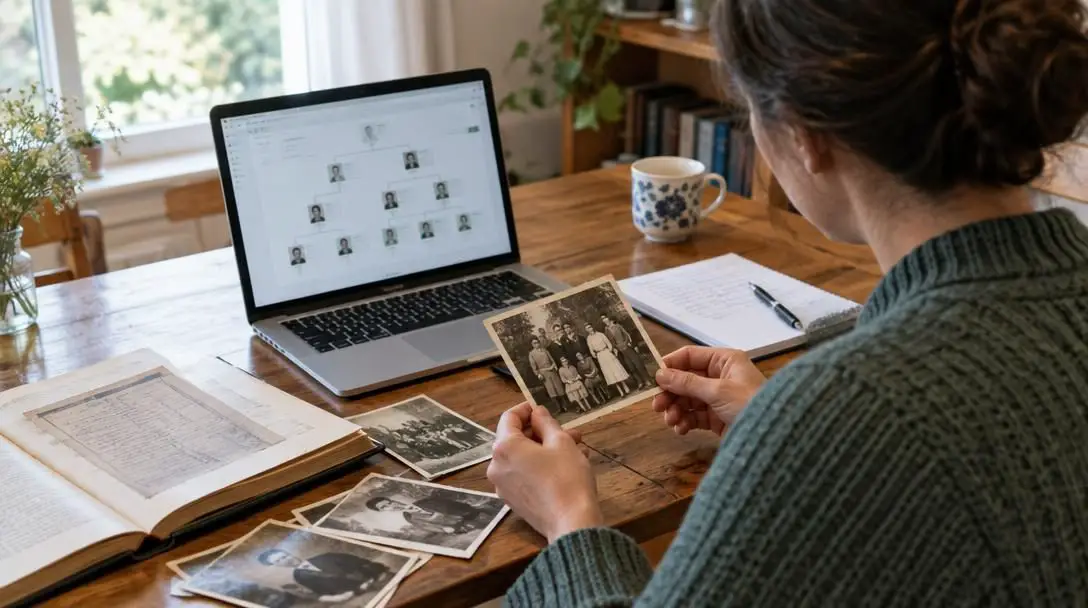
The practice relies on classifying historical materials into primary and secondary sources. A primary source represents a document, register, or artifact generated at or near the time of an event by a direct participant or official observer. Secondary sources, by contrast, are synthesized accounts, compiled family books, and later reflections that provide useful context but carry higher risks of transcription error and factual omission.
| Evidence Category | Primary Creation Context | Representative Records | Research Application |
|---|---|---|---|
| Civil Vital Records | Recorded by civil authorities immediately following an event | Birth registrations, marriage licenses, death certificates | Establishes exact dates, parentage, legal names, and marital status |
| Parish & Church Registers | Maintained contemporaneously by clergy or ecclesiastical clerks | Infant baptisms, religious marriages, parish burials | Bridges gaps prior to the inception of government vital registration |
| Census Returns | Periodic government enumerations of entire populations | Federal and state household census schedules | Captures whole family structures, occupations, ages, and birth states |
| Immigration & Travel Files | Compiled at ports of departure, arrival, or naturalization courts | Ship passenger manifests, naturalization records, passport dossiers | Traces transatlantic journeys, original foreign residences, and arrival dates |
| Secondary Accounts | Written years after the event by family or local historians | County histories, family bibles, personal memoirs | Supplies preliminary research leads that require primary corroboration |
A Step-by-Step Blueprint to Researching Your Lineage
Launching a genealogical search does not require expensive institutional subscriptions or specialized credentials. By progressing through an organized series of actions, anyone can construct a well-documented family chart.
- Document your known personal history: Begin by listing yourself, your siblings, your parents, and your grandparents. Note down exact dates of birth, marriage, and death, alongside residential locations, religious affiliations, and burial grounds.
- Conduct oral history interviews: Schedule focused conversations with your oldest living relatives. Pose open-ended inquiries concerning childhood homes, family occupations, military service, cultural traditions, and migration memories.
- Search the home for physical heirlooms: Examine existing family artifacts, including annotated photo albums, family bibles, old passports, military discharge papers, scrapbooks, and citizen naturalization papers for overlooked dates and maiden names.
- Retrieve government vital records: Request official birth, marriage, and death documents from municipal, county, or national archives to verify relationships between children and parents.
- Examine federal census schedules: Track families through sequential decennial censuses. These documents trace household movements, changes in economic standing, and changes in household composition every ten years.
- Investigate immigration and passenger lists: Consult border crossing entries, naturalization petitions, and ship manifests to bridge the gap between your domestic ancestor and their country of origin.
- Organize findings and compile physical archives: Establish a clean filing system using digital folders and physical archival-safe binders to catalog records by family branch, making your research easy to share at family reunions.
Pitfalls to Sidestep in Ancestral Research
Because historical archives encompass millions of fragmented names, researchers must maintain rigorous standards of verification. Avoiding customary analytical traps prevents the accidental adoption of incorrect lineages.
- The same-name trap: In small towns and ancestral villages, first cousins frequently shared identical first and last names in honor of common grandparents. Cross-reference ages, spousal names, and residential tracts to avoid conflating two distinct individuals.
- Blind reliance on unverified digital trees: Crowdsourced online pedigree trees provide helpful leads, but they frequently harbor unverified assumptions, transposed dates, and phantom parents. Always treat another researcher's tree as a hypothesis until verified by primary documents.
- Skipping intermediate generations: Attempting to leap straight from a known great-grandparent to an alluring historical figure breaks the chain of evidence. Every parental link must be supported by official documentation before moving earlier.
- Disregarding phonetic variations: Discarding a record because a surname contains an extra letter or an alternate vowel can obscure vital evidence. Surnames were fluid in eras preceding standardized spelling and identification cards.
- Ignoring negative findings: When exhaustive searches in a specific county yield no trace of an ancestor, that absence itself constitutes evidence. Forcing an ancestor into local records when evidence points elsewhere derails accurate research.
Frequently asked questions
Where should a beginner start when researching family history?
Begin with yourself and work backward. Record everything you know with certainty regarding names, dates, and locations for your parents and grandparents before consulting public archives or interviewing extended family.
How can genealogical research help with personal medical care?
Tracing your family tree uncovers patterns of hereditary illness such as heart disease, diabetes, and certain cancers across multiple generations, giving healthcare providers valuable data to recommend targeted screenings and preventative lifestyle adjustments.
What is the difference between a primary and a secondary genealogical source?
A primary source is an official document created contemporaneously with an event by an eyewitness or official, such as a birth register or census schedule. A secondary source is written later, such as a compiled county history or personal memoir, and carries a higher risk of error.
Why is it dangerous to accept online family trees without checking them?
Online family trees created by other hobbyists often contain merged identities, unverified rumors, and skipped generations. Relying on them without examining the underlying primary sources can introduce major inaccuracies into your own pedigree.
What should I do if an ancestor's name is spelled differently in historical records?
Accept spelling variations as normal. Historically, scribes, census enumerators, and immigration officials wrote names phonetically based on how they sounded, meaning the same individual's surname might appear under several spellings across their lifetime.
The bottom line
Genealogical research transforms historical study from an abstract collection of historical dates into an intimate chronicle of human endurance. By systematically gathering records, interviewing relatives, and avoiding common research errors, anyone can recover their ancestral narrative. Tracing your forebears preserves living memories, clarifies medical history, and connects you to the broader story of how your family arrived in the present day.