The Art of Glass Blowing: Creating Beautiful Glass Objects
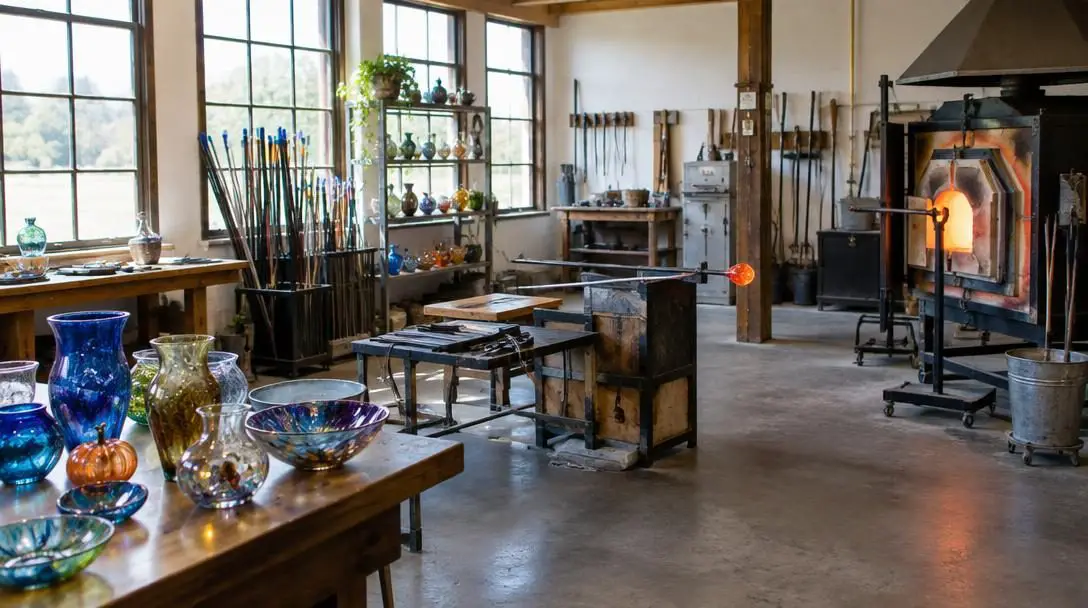
The art of glass blowing stands as one of humanity's most captivating creative disciplines, fusing intense thermal energy, fluid mechanics, and personal artistic expression. For centuries, artisans and craftspeople have transformed raw, glowing material into refined vessels, bridging the gap between functional household objects and high-concept fine art.
Working with molten glass requires an extraordinary balance of physical coordination, spatial intuition, and material discipline. Because the medium continuously transitions between liquid and solid states, a glassblower must command time, gravity, and thermal equilibrium to coax delicate, durable forms out of an elemental furnace environment.
Key takeaways
- Glass blowing transforms molten, syrup-like glass into hollow objects through rhythmic rotation, controlled inflation, and precise mechanical manipulation.
- The fundamental hot-shop toolkit relies on five essential implements: the blowpipe, punty rod, marver surface, jacks, and shears.
- The production sequence centers on three mandatory phases: gathering raw glass, shaping the pliable form, and annealing the finished object in a specialized oven.
- Thermal gradients allow artists to inflate hollow walls, while gradual annealing prevents catastrophic internal stresses and shattering.
- Artistic signatures emerge through color integration techniques like frit, powders, and color rods, paired with silhouettes inspired by natural and industrial forms.
The Essential Studio Toolkit
Before an artisan initiates a gather from the melting furnace, every piece of shaping and handling equipment must be pristine, arranged in strict operational sequence, and set within immediate reach of the bench. The rapid cooling rate of hot glass leaves no margin for error or misplaced tools. Each implement serves a targeted function, designed to manage heat transfer, guide contours, or sever material without sacrificing structural stability.
| Tool | Physical Construction | Primary Function | Role in Shaping Process |
|---|---|---|---|
| Blowpipe | Long, hollow metal tube | Gathers molten glass and delivers breath | Maintains safe operator distance while inflating initial bubble |
| Punty (Pontil) | Solid metal rod | Provides bottom structural support | Enables vessel transfer to free the top rim for opening and detailing |
| Marver | Thick steel or polished stone table | Cools exterior skin and centers mass | Creates aerodynamic profile and balances thermal distribution |
| Jacks | Two-bladed flexible metal spring tool | Constricts necks and flares open profiles | Controls vessel diameter, establishes rim flares, and scores detachment lines |
| Shears | Hardened metal cutting scissors | Cuts and trims pliable glass gathers | Removes excess material and cuts decorative glass applications cleanly |
The Blowpipe
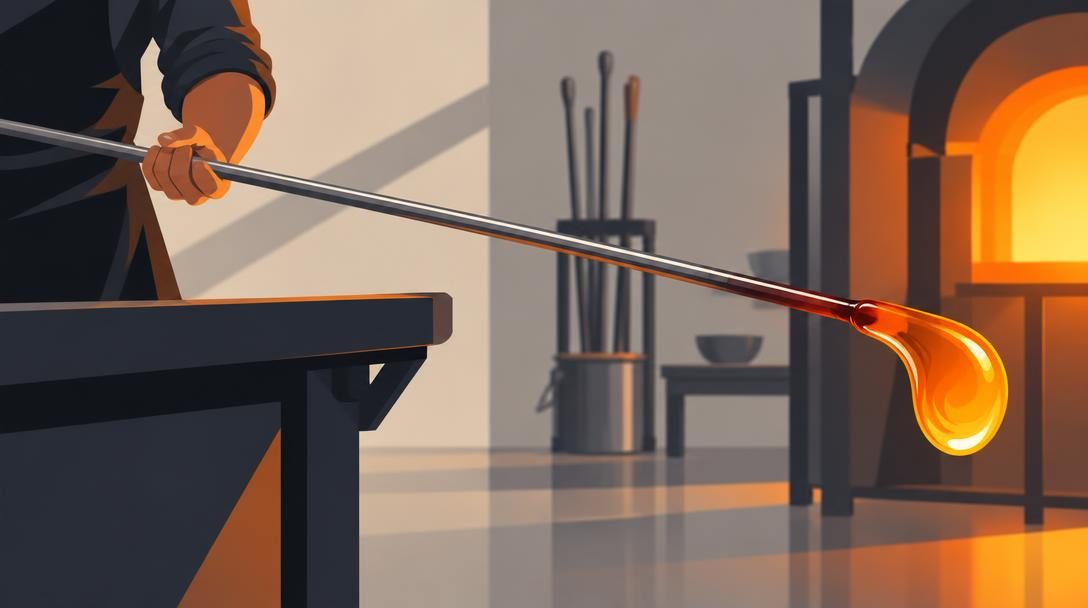
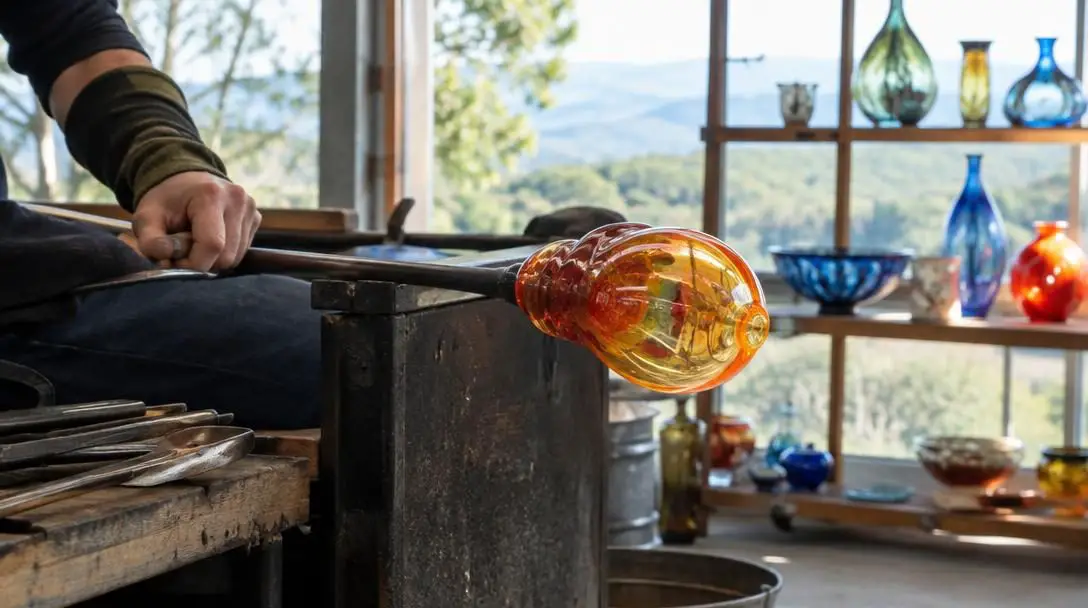
The blowpipe is the primary conduit connecting the artisan's breath to the fluid medium. Engineered as an extended, hollow metal tube, it creates a safe physical buffer between the glassblower's body and the radiant heat emanating from the furnace and molten gather. By preheating the tip and rotating it through the melt, the artist secures the initial mass. Puffs of air directed down the bore expand the trapped thermal pocket, creating the primary internal void of any blown vessel.
The Punty
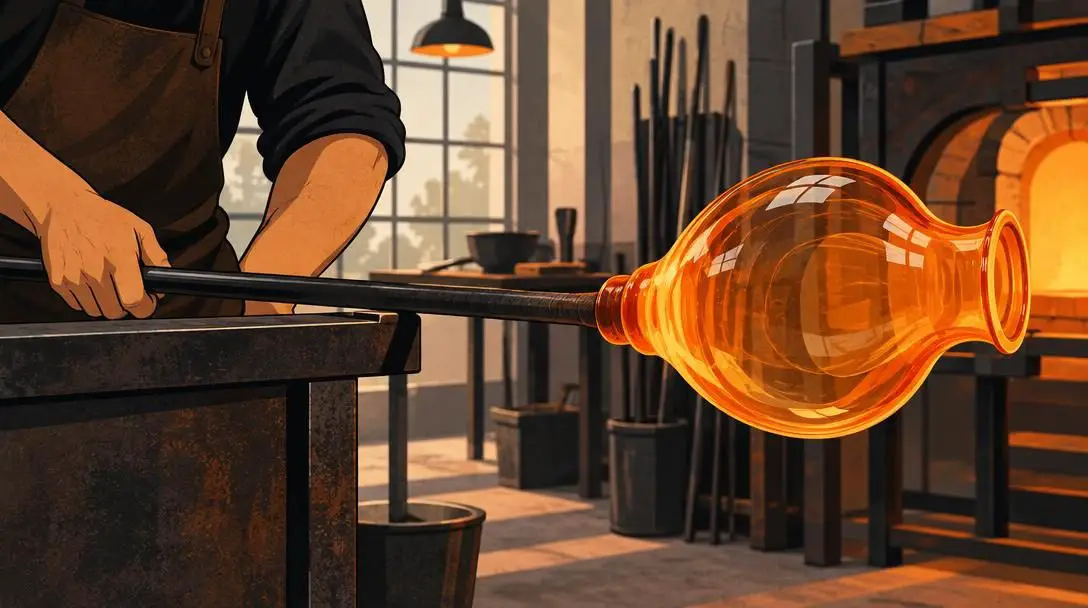
Known interchangeably as a pontil, the punty is a solid metal rod designed to support a vessel from its base during the secondary phase of shaping. Once an inflated form has achieved its preliminary body proportions, a tiny gather of hot glass bonds the punty to the bottom of the piece. This mechanical bridge permits the blowpipe to be broken off, freeing the constricted neck and mouth of the vessel for reheating, opening, trimming, and flaring without obstructing the rim.
The Marver
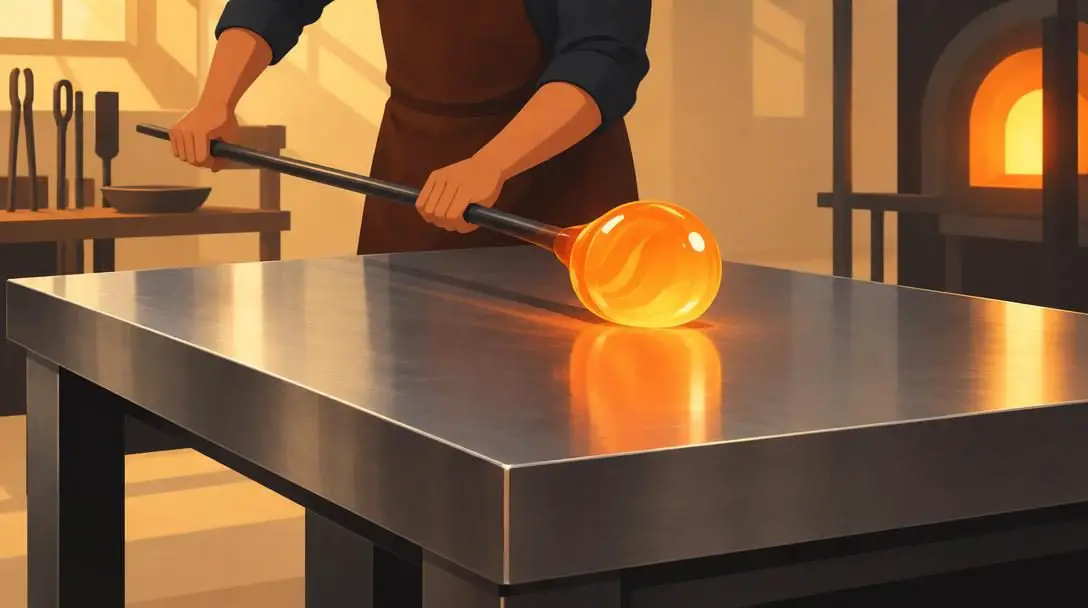
The marver is a heavy, perfectly flat working surface manufactured from thick steel plate or dense stone. Rolling molten glass across its flat plane immediately establishes rotational concentricity around the pipe axis while chilling the outer surface layer. This chilling effect sets a structural outer boundary that keeps the gather centered, preparing it for uniform air inflation and dissipating localized hot spots.
Jacks
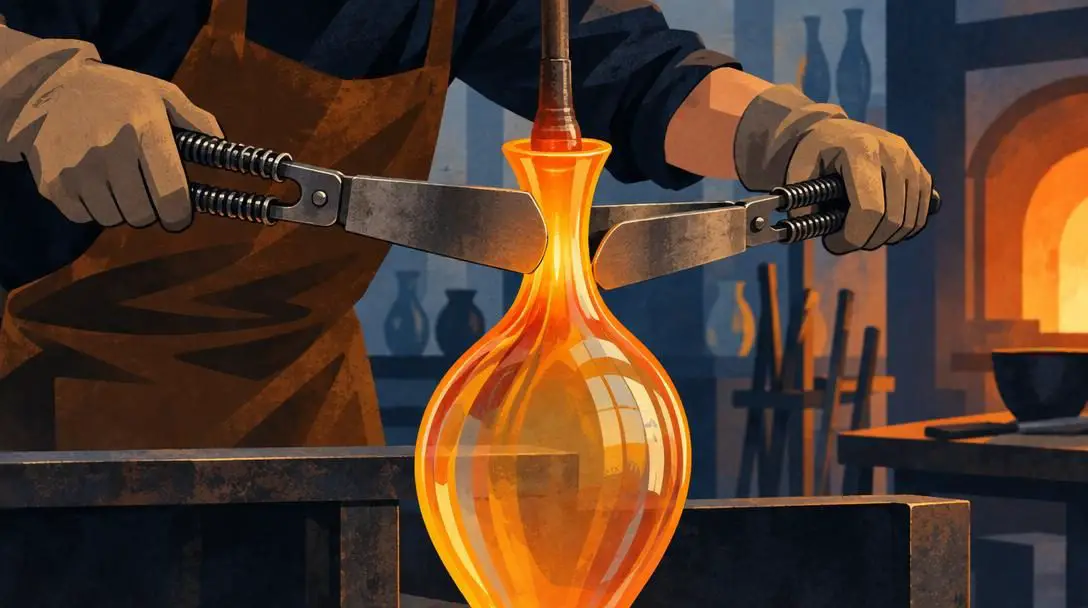
Recognized by their distinctive wishbone or tweezers-like spring structure, jacks feature two elongated, tapered blades that function as an extension of the artist's hands. By applying delicate pressure along the spinning glass, an artist uses jacks to groove a sharp constriction near the blowpipe, flare open wide mouths, establish shoulder contours, or calibrate the precise wall profile of an expanding piece.
Shears
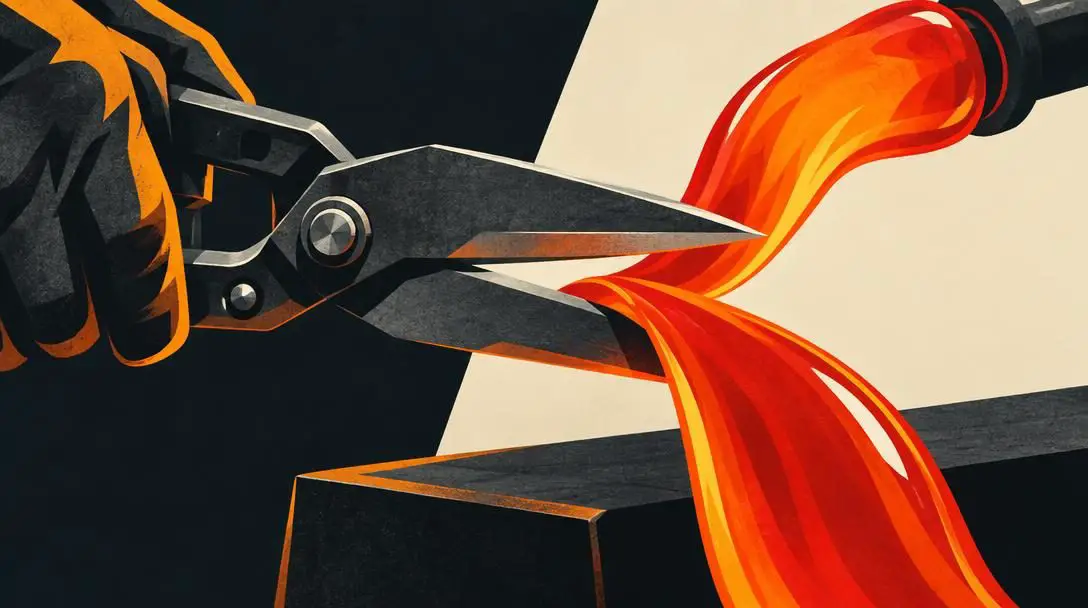
Engineered specifically for hot working, shears are heavy-duty scissors that cut through molten gathers with minimal drag. When a gather exceeds the intended proportions or an uneven lip requires truing, shears slice away the excess pliable glass. They are equally critical for trimming applied bits, handles, or decorative color additions before those components solidify.
Thermodynamics and Fluid Behavior in Hot Glass
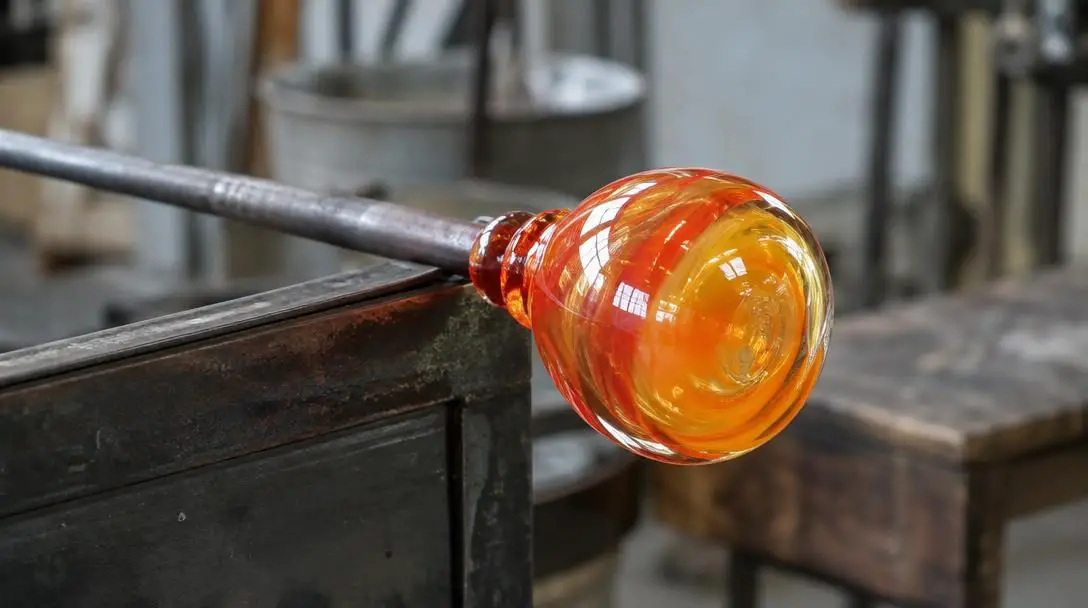
Glass does not behave like water or crystalline metals, which freeze instantly at a single, fixed phase-change point. Instead, molten glass transitions through a continuous gradient of working viscosities as it cools. Inside the high-temperature melting furnace, it resembles a viscous liquid comparable to thick syrup or warm honey. At these elevated levels, surface tension and gravitational pull dominate its behavior.
The moment an artist withdraws a gather into ambient room temperature, the immediate air contact flash-cools the surface layer into a firmer exterior "skin." This thermal gradient between the hot, elastic interior and the cooler, supportive perimeter is what makes glass blowing physically possible. When the glassblower puffs air into the blowpipe, the pressurized breath seeks the path of least resistance, forcing the hotter, less viscous interior outward against the firm outer boundary.
Because gravity constantly threatens to pull hot glass out of alignment, uninterrupted rotation is the foundation of structural control.
If glass cools down too far, it turns stiff, vitreous, and resistant to tooling. Attempting to blow or compress cold glass introduces fracture lines or structural failure. To counteract this, artists continually return the work to an auxiliary heating chamber to restore its working plasticity. Conversely, overheating causes the piece to liquefy, warp, and droop off-axis. Maintaining a continuous, steady rotation on the studio bench or pipe stands remains the only way to neutralize gravitational pull and keep the vessel balanced.
The Glass-Blowing Process: A Practical Step-by-Step Guide
While studio methods adapt to the complexity of the piece, the complete cycle of hot glass working follows three overarching movements: gathering, shaping, and annealing. Executing these stages requires methodical progression from the furnace opening to the final cool-down cycle.
- Equipment preparation: Clean and inspect all bench instruments, ensuring shears, jacks, calipers, and punties sit arranged in correct ergonomic order within arms-reach of the bench.
- Gathering the molten glass: Preheat the tip of the blowpipe, insert it into the furnace, and execute a steady rotational turn through the liquid glass bath to wrap a balanced gather onto the pipe end.
- Marvering and centering: Transfer the glowing gather to the steel marver plate, rolling the mass along the surface to smooth the perimeter, balance heat distribution, and establish a centered cylindrical bullet.
- Initiating the bubble: Place the lips against the cool mouthpiece of the pipe and supply a short, firm burst of air, capping the opening with a thumb so the expanding, trapped air forces open a central interior void.
- Manipulating and shaping: Rest the pipe across bench rails, keeping it in continuous rotation while utilizing jacks to define the neck, wooden tools or pads to smooth contours, shears to trim waste, and gradual breaths to enlarge the internal capacity.
- Transferring to the punty: Fuse a second rod tipped with a hot glass gather to the base of the vessel, score the jack line at the neck with water or metal contact, and deliver a firm tap to sever the vessel from the blowpipe.
- Opening and detailing the rim: Reheat the punty-supported vessel in the auxiliary chamber and insert jacks into the exposed opening, rotating continuously while expanding the blades outward to spin out the final rim profile.
- Severing from the rod: Carry the finished piece over to an insulated pad or protective catch surface, delivering a sharp rap to the punty joint to cleanly fracture the temporary connection.
- Controlled annealing: Place the red-hot vessel immediately into a programmed annealing oven to hold the piece at its stress-relief temperature before beginning a multi-hour gradual descent to room temperature.
Classic Glass Objects and Structural Forms
The flexibility of glass allows craftspeople to produce both utilitarian wares intended for daily domestic use and freeform artistic commissions. Mastery of the craft involves understanding how various profiles react to wall thickness, rotational speed, and tooling pressure.
Bowls and Plates
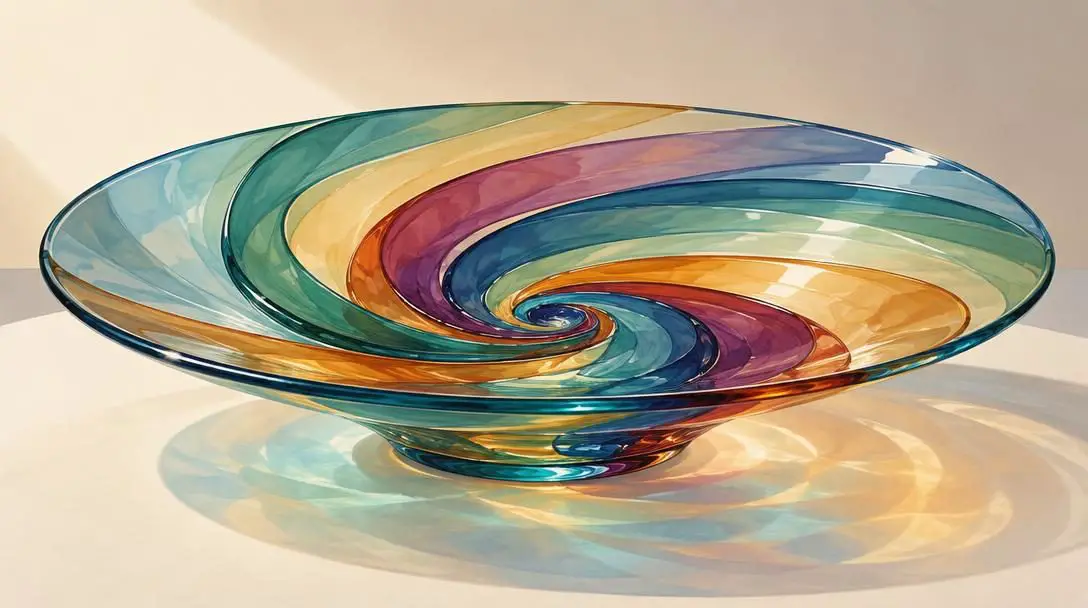
Functional tableware pieces such as bowls and plates represent a foundational test of centrifugal force control. To produce wide, shallow vessels, the glassblower must open the form from its punty mount and spin the rod with calculated speed. Spinning too rapidly causes the softened perimeter to flare uncontrollably outward into an uneven disc, while insufficient rotation fails to overcome surface tension, leaving the plate thick, narrow, and cupped. Proper wall balance from the base to the outer lip is necessary to prevent table rocking and uneven structural weight.
Vases
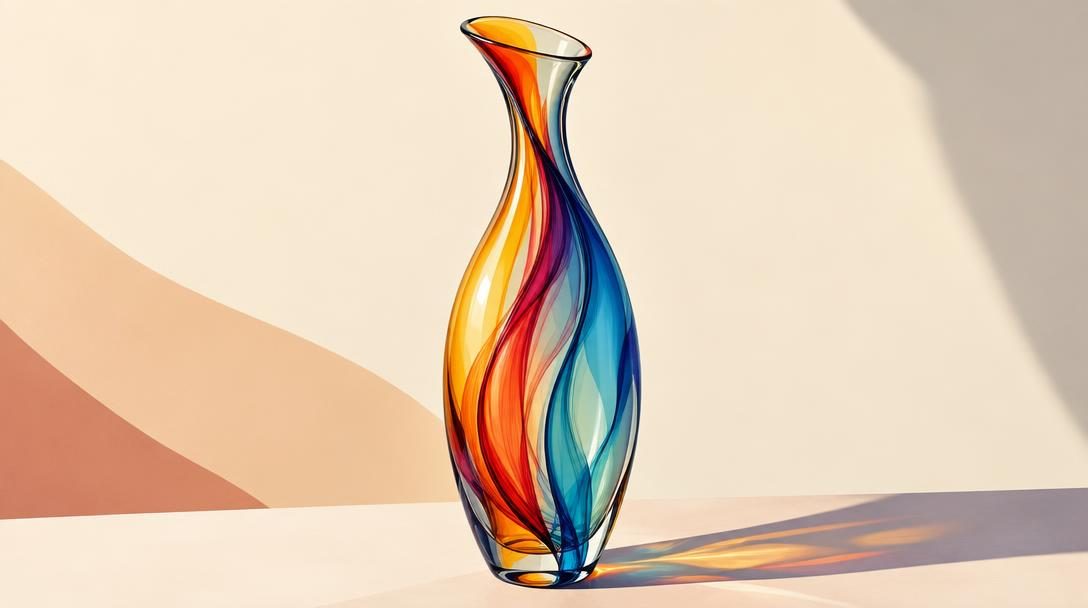
Vertical vessels like vases offer expansive canvases for showcasing internal layers, surface color patterns, and dramatic silhouettes. Because a vase relies on significant vertical elongation, an artist must control heat along the length of the bubble, preventing the top shoulder from collapsing while stretching the lower body. Managing heat ensures that wall thickness remains uniform from the sturdy base up through slender bottle necks or expansive, flared urn openings.
Sculptures

Unlike hollow, volume-focused vessels, hot-worked sculptures frequently dispense with functional cavities in favor of solid glass assembly and abstract expression. Artists build sculptural objects through solid gather tooling, fusing multiple blown or cast components, and scoring intricate surface textures directly into the glass mass. Sculptural pieces communicate conceptual narratives or figurative forms, demanding intense stamina to manage heavy glass weights that cool at uneven rates.
Creative Expression Through Color, Pattern, and Silhouette
Every piece of blown glass reflects an interplay of technique and creative signature. Because molten clear glass acts as an optical amplifier, integrating mineral colorants and manipulating external profiles transforms simple physics into expressive visual art.
Color application takes several physical forms:
- Crushed color frit: Ranging from fine powders to coarse granules, rolling a hot clear gather over frit beds embeds color beneath external glass coatings.
- Powdered color veining: Fine glass powders melt rapidly on contact, allowing the artisan to create soft gradients, opaque blocks, and smoky clouding effects.
- Preheated color rods: Solid rods of concentrated colored glass can be fused onto the clear gather, pulled, and drawn into precise linear accents.
- Twisting and drawing: Once color is fused to the gather, rotating the pipe at opposing angles to manual tools twists straight stripes into dramatic spirals, waves, or marbled patterns.
Design inspiration typically stems from the natural world or architectural geometry. Craftspeople frequently borrow curves from garden flower petals to shape ruffled vase rims, replicate the fluted spiral geometry of seashells in twisted bowls, or draw upon clean industrial silhouettes to produce sleek modern decor. The interplay between refractive clarity, trapped bubbles, and vibrant color veins creates objects that shift their appearance dynamically based on ambient lighting conditions.
Studio Safety Standards and Common Technical Errors
The intense thermal output of glass-melting furnaces—often operating above several hundred degrees—demands strict behavioral protocols and dedicated personal safety gear. Minor lapses in tool handling or temperature awareness lead rapidly to ruined work or serious personal injury.
To avoid structural flaws and studio accidents, artists actively guard against five frequent missteps:
- Allowing rotation to stall: Pausing rotation for even a couple of seconds while glass remains soft allows gravity to pull the gather downward, resulting in lopsided walls, off-center bubbles, or catastrophic floor drops.
- Inflating unevenly heated glass: Forcing air into a gather that has one cold side and one hot side causes the hot side to balloon thin while the cool side remains motionless, permanently ruining symmetry.
- Skipping the annealing cycle: Allowing hot glass to cool on an open bench causes the outer surface to contract while the interior core remains thermally expanded. This imbalance locks in massive internal stress, causing the object to violently shatter hours, days, or weeks later.
- Wearing synthetic apparel: Studio workers must wear natural fibers like heavy cotton, closed-toe leather work boots, and safety eyewear equipped with lenses designed to filter radiant glare and deflect errant thermal pops.
- Mishandling punty attachments: Underheating the punty connection causes the vessel to fall off during aggressive neck tooling, while overheating the punty fuses the metal rod too aggressively, tearing a hole in the bottom during separation.
Frequently asked questions
What is the difference between a blowpipe and a punty?
A blowpipe is a long, hollow metal tube used to gather the initial glass from the furnace and introduce air to inflate hollow vessels. A punty (or pontil) is a solid metal rod used to hold the base of the glass piece once the main bubble is formed, freeing the top opening so the artisan can trim, flare, and finish the rim.
Why is the annealing process mandatory for finished glass objects?
Annealing cools hot glass gradually over hours inside a dedicated, temperature-controlled oven. Because the outside of hot glass cools faster than the inside when exposed to room air, skipping this controlled descent creates severe internal stress gradients that will cause the glass to crack or violently shatter under thermal shock.
How does a glassblower center molten glass on the pipe?
Immediately after gathering from the furnace, the artist rolls the glowing glass along the flat metal or stone surface of a marver. This rolling motion cools the outer skin evenly, balances thermal energy, and produces an aerodynamic, concentric shape centered along the pipe's axis of rotation.
What causes blown glass to become lopsided during inflation?
Lopsided glass occurs when an artisan blows into a gather that has uneven temperature distribution. The hotter side of the glass stretches outward rapidly under breath pressure, while the cooler side resists movement, pulling the entire vessel out of alignment.
What clothing materials are safest for working in a hot glass shop?
Glassblowers should wear non-synthetic, natural fiber clothing such as 100% cotton, paired with closed-toe leather footwear and protective eye protection. Synthetic fabrics like polyester or nylon must be avoided because they melt against the skin when exposed to intense radiant heat or stray hot glass shards.
The Bottom Line
Glass blowing remains one of the world's most enduring artisan traditions because it demands total engagement with heat, gravity, and breath. From the initial gather on the blowpipe to the final hours inside the annealing oven, every finished bowl, vase, or sculpture captures a dynamic moment of liquid physics frozen permanently into solid form.