The World of Model Trains: Building and Operating Your Own Railroad
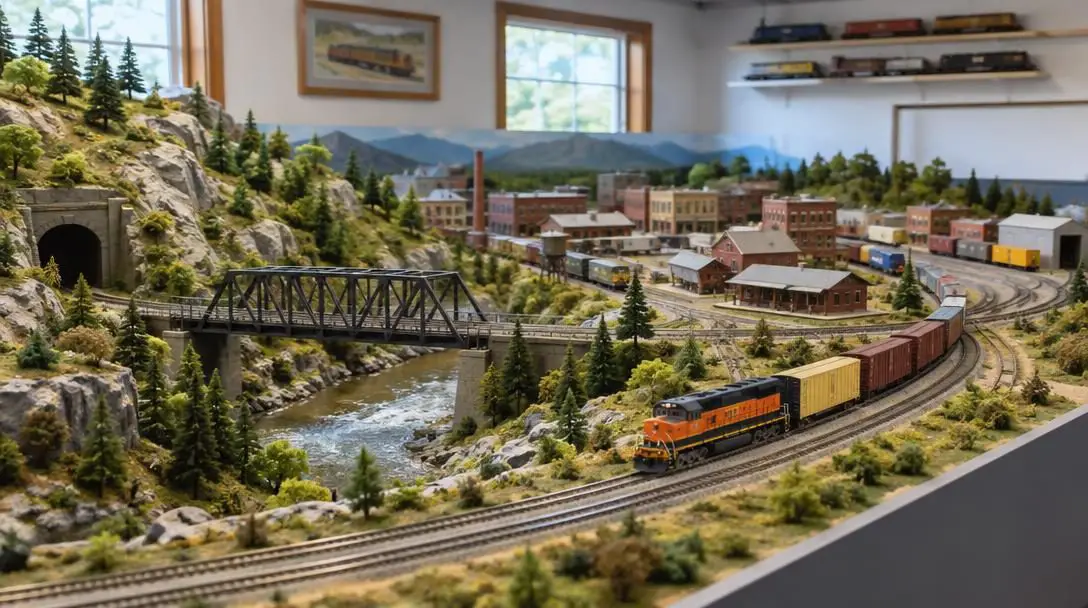
Model railroading is a pastime steeped in craftsmanship, engineering, and creative storytelling. Whether you are assembling your very first starter loop or orchestrating an empire that spans an entire basement, building and running a miniature railroad provides an expansive creative outlet. The craft bridges civil engineering, scenic artistry, architecture, and electronics, challenging builders to solve real-world logistical problems in miniature scale.
Every layout serves as an evolving, three-dimensional canvas. By mastering track geometries, electrical current delivery, terrain carving, and realistic operational procedures, modelers can recreate bustling industrial freight corridors, dramatic mountain passes, or quiet rural depots right inside their homes.
Key takeaways
- Selecting the appropriate scale depends on your available floor space, financial budget, and fine motor dexterity.
- Reliable train performance requires an integrated foundation of rigid benchwork, precision track alignment, and an evenly distributed electrical network.
- Digital Command Control (DCC) provides independent locomotive operation, sound effects, and directional lighting on a single track.
- Methodical construction, thorough clearance testing, and routine maintenance prevent the most common mechanical stalls and derailments.
The Appeal and Engineering of Miniature Railroading
At its heart, model railroading allows an individual to step into multiple professional roles at once: civil engineer, town planner, architect, landscape artist, and rail dispatcher. An empty platform transforms into a dynamic miniature world that captures the geography, industry, and history of a specific era or region.
What sets the hobby apart from standard static modeling is its careful equilibrium between technical precision and creative craftsmanship. On the technical side, builders compute scale mathematics, calculate track gradients, wire electrical buses, calibrate digital decoders, and fine-tune locomotive gearboxes. On the creative side, modelers paint panoramic backdrops, sculpt landforms from plaster and foam, weather rolling stock with simulated rust and industrial soot, and arrange lifelike community vignettes.
Because there are always new branch lines to draft, structures to build, or industrial sidings to service, a model railroad layout is almost never truly finished. It remains an adaptable platform that matures alongside its builder's evolving interests and technical capabilities.
Choosing the Right Scale for Your Space
The foundational choice for any new model railroad project is selecting a scale. In model railroading, scale denotes the precise mathematical ratio comparing the miniature train to its real-world counterpart, known as the prototype. Your choice dictates physical track dimensions, the radius required for curves, the level of surface detail, and how much equipment can fit into a given room.
| Scale | Proportion Ratio | Relative Footprint | Primary Advantage |
|---|---|---|---|
| HO Scale | 1:87 | Moderate | Broadest commercial availability and balanced detail |
| O Scale | 1:48 | Large | Substantial weight, visual presence, and bold detail |
| N Scale | 1:160 | Compact | Expansive scenery and long runs in minimal space |
HO Scale (1:87)
- Proportion: 1:87 to the prototype
- Space Need: Moderate floor space or spare room
- Market Availability: Broadest selection of kits and rolling stock
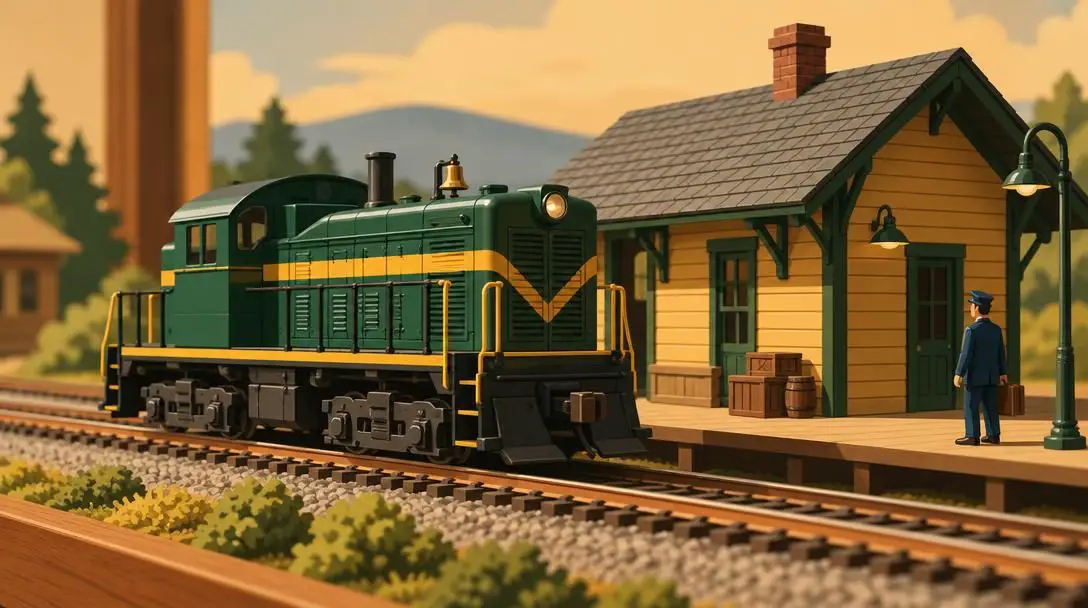
As the most widely adopted scale in the world, HO scale represents an ideal compromise between spatial demands and tactile detail. At 1:87 proportion, individual locomotives and rail cars are large enough to display intricate mechanical parts, yet compact enough to negotiate modest rooms without requiring structural renovations. Equipment, track varieties, and structure kits in HO scale are ubiquitous in local hobby stores and online catalogs, making it an exceptionally accessible entry point for beginners.
O Scale (1:48)
- Proportion: 1:48 to the prototype
- Space Need: Expansive rooms or dedicated basements
- Visual Trait: Heavy mass with prominent, high-visibility details
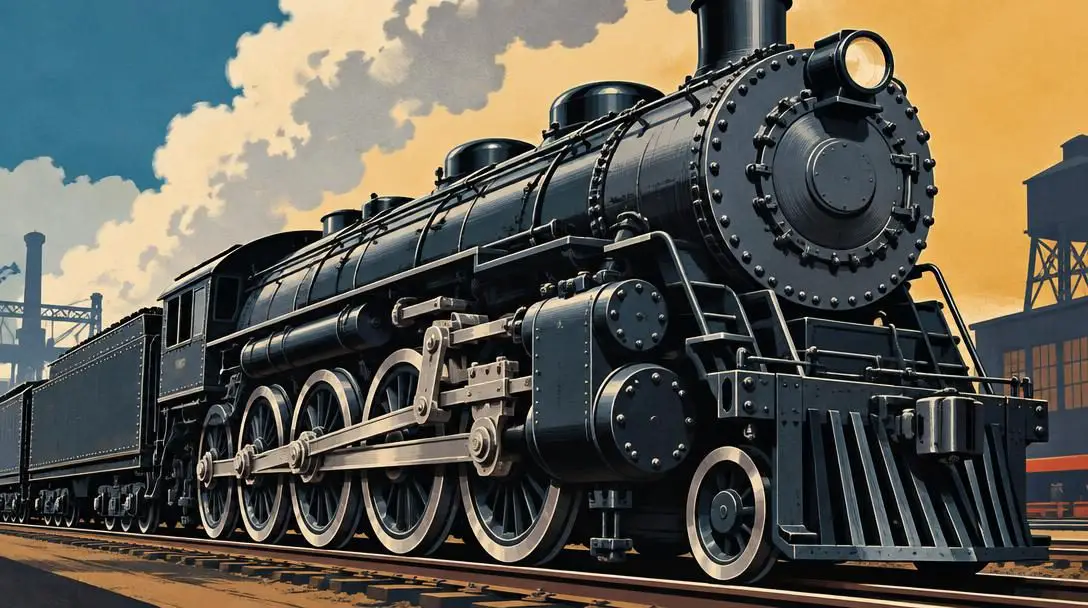
O scale models deliver striking visual heft and presence. Built at a 1:48 proportion, these substantial locomotives and cars showcase fine piping, rivets, and interior cabin appointments that can be clearly appreciated from several feet away. However, their larger size requires broad curve radii and expansive room dimensions. Designing realistic classification yards, long passing sidings, and broad track sweeps in O scale requires a generous physical footprint.
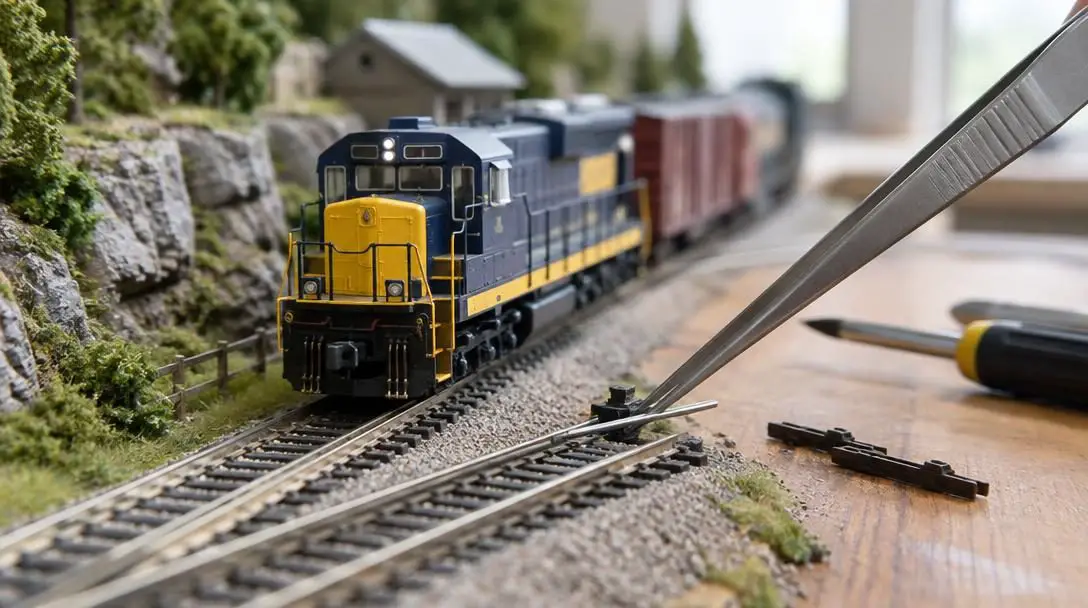
N Scale (1:160)
- Proportion: 1:160 to the prototype
- Space Need: Small footprints, such as hollow-core doors
- Visual Trait: Vast landscape-to-train visual ratio
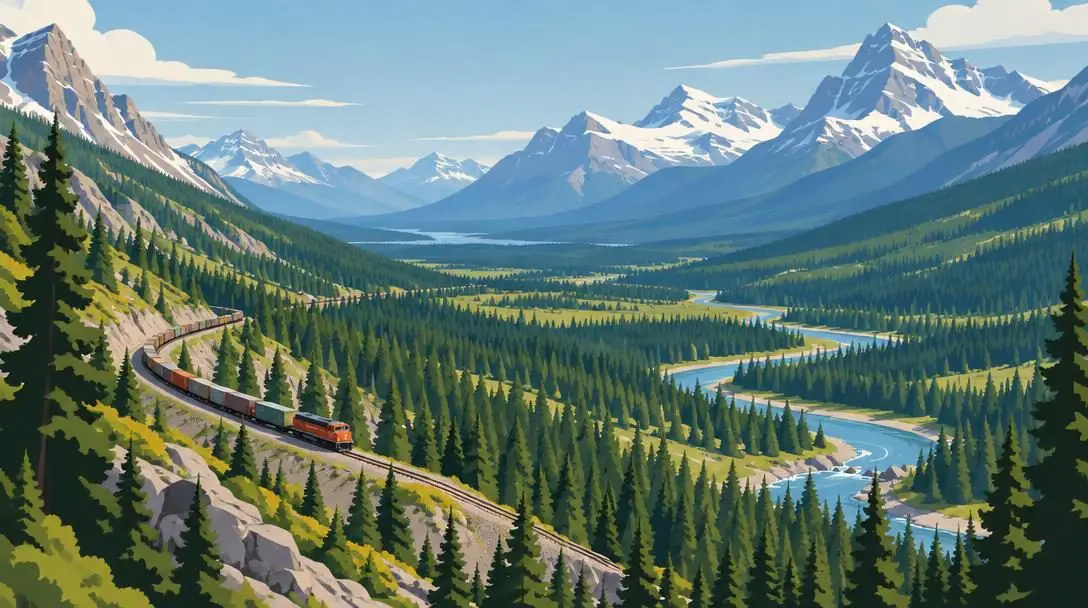
Measuring roughly half the size of HO, N scale operates at a 1:160 proportion. This compact footprint allows modelers to build sweeping mainline routes, expansive mountain corridors, and sprawling urban terminals within limited confines, such as an apartment alcove or a standard hollow-core interior door. The trade-off lies in assembly complexity; the minuscule parts and fine track tolerances demand steady hands and keen motor coordination during construction and tracklaying.
Systems and Mechanics: How Model Railroads Work
A functional model railroad relies on four closely interlocked elements: rigid structural benchwork, precise track geometry, an electrical distribution network, and properly weighted rolling stock. If any one of these subsystems is compromised, overall operational reliability deteriorates rapidly.
A model railroad layout is an evolving canvas that balances rigorous civil engineering with expressive artistic craftsmanship.
The structural foundation, known as benchwork, carries the entire layout. It must maintain rigidity and resist ambient temperature or humidity shifts, as any warping directly twists the track above it. Fastened to the benchwork is the roadbed and track. Model trains rely on the same fundamental mechanical principles as full-scale railroads: metal wheel flanges ride against the inside edge of the rail head. Consequently, misaligned rail joints, abrupt elevation changes, or overly tight curve radii will cause flanges to pick the rail and derail.
The steel or nickel-silver rails serve as the physical guides for rolling stock while simultaneously acting as the electrical conduits delivering power to the locomotive's motor.
Traditional direct current (DC) layouts regulate train speed by increasing or decreasing the voltage applied across the rails, with polarity determining direction. Controlling multiple locomotives independently on DC requires complex wiring schemes that partition the layout into electrically isolated blocks governed by manual toggle switches. Conversely, Digital Command Control (DCC) routes constant track voltage combined with high-frequency digital data packets. Each locomotive contains an onboard decoder that responds exclusively to its unique digital address. This allows operators to run multiple trains independently on the same continuous line, activate headlights, sound realistic horn blasts, and trigger load-responsive engine chuffs without block switching.
Step-by-Step Layout Construction
Building a successful layout requires a logical progression. Attempting to rush ahead to scenic painting or running trains before the underlying structural and electrical systems are verified will result in recurring operational failures.
- Design a track plan: Draft a comprehensive layout schematic on paper or using planning software. Map out all mainline tracks, industrial spurs, passing sidings, bridges, and scenic clear zones before cutting lumber.
- Construct the base and benchwork: Assemble a sturdy, level timber or shelf grid. Ensure the frame is cross-braced and perfectly flat to prevent track joints from buckling over time.
- Form the terrain: Sculpt foundational land contours, hill profiles, tunnel interiors, and riverbeds using extruded foam board, wire mesh, or plaster-infused wraps before permanently fixing track in place.
- Lay and secure the trackwork: Affix track to cork or foam roadbed using fine adhesives or track nails. Maintain smooth, sweeping transitions into curves, verify that rail joints are deburred and level, and check tunnel and bridge clearances.
- Wire the electrical system: Run a heavy-gauge power bus beneath the framework and solder lighter feeder wires directly to the rails at frequent intervals. Connect controls for powered turnouts and accessories.
- Add structures and scenery: Install depots, factories, bridges, and residential buildings. Apply earth-toned base paints, static grass, realistic ballast between rail ties, and detailed backdrops.
- Test and refine: Test track integrity by running locomotives and your longest rolling stock through every turnout, reverse loop, and grade at both high speed and low switching crawls to spot and fix mechanical binding.
Scenic Detailing and Environmental Realism
Scenery transforms an abstract assembly of track into a living, believable world. The landscape communicates the geographic setting, the specific season of the year, the historical era, and the regional economy that justifies the railroad's existence.
Essential components for developing convincing scenery include:
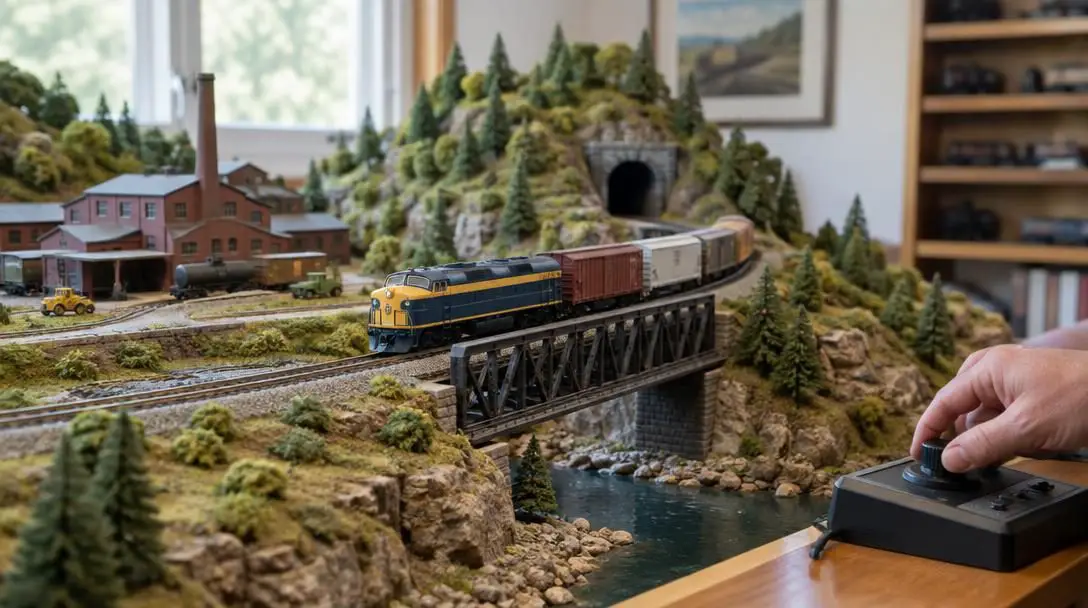
- Structures and architectural kits: Depots, freight transfer docks, trackside grain elevators, engine houses, and worker dwellings give trains a logical human purpose and define the era.
- Scenic backdrops: Hand-painted or photo-realistic backdrops attached to the rear walls extend the horizon, producing the convincing visual illusion of distant mountain ranges, forests, or skylines.
- Lineside infrastructure: Crossbucks, functioning track signals, mileposts, telegraph poles, security fencing, and illuminated streetlights tie the rail corridor directly into its surroundings.
- Vehicles and figures: Period-appropriate automobiles, work trucks, rail maintenance crews, and townspeople introduce life, scale, and motion to trackside scenes.
Operating Your Miniature Railroad
Once construction reaches an operational state, running trains shifts from watching cars travel in passive circles to simulating real-world rail logistics. Prototype railroads exist to move freight and passengers efficiently, and replicating these logistics turns a layout into a dynamic puzzle.
Operating sessions can simulate the daily activities of real train crews:
- Classification switching: Breaking down incoming freight consists in a yard and sorting cars by destination track.
- Local freight switching: Operating a local train to deliver empty boxcars to factories and pull loaded hopper cars from trackside mines or grain depots.
- Mainline scheduling: Coordinating fast express passenger services and slow through-freights without creating mainline bottlenecks or head-on conflicts.
Operating realism is further elevated by modern DCC sound systems. Decoders fitted with miniature speakers produce authentic prime mover acceleration, brake air releases, grade-crossing whistle signals, and wheel squeal along sharp curves, creating an immersive multisensory experience.
Critical Pitfalls to Avoid
Novice model railroaders often run into preventable frustrations during their initial builds. Avoiding these common traps saves time, money, and frustration:
- Rushing track alignment: Laying track hastily is the leading cause of chronic derailments. Rough rail joints, kinks inside turnouts, and sudden grade variations cause wheel flanges to climb the rails.
- Neglecting electrical bus distribution: Relying on a single pair of power feeder wires across a medium or large layout causes voltage drop, resulting in sluggish locomotives and stalling on distant track segments.
- Overcrowding available surface area: Squeezing too much track onto benchwork leaves no space for believable terrain, roads, or structures, resulting in an unrealistic appearance.
- Leaving messy surface wiring: Stringing bright wiring across scenic surfaces ruins visual realism. Route all power leads beneath the sub-roadbed or conceal them behind terrain.
- Using unstable benchwork materials: Thin, unbraced tabletops or damp framing lumber will sag, warp, and twist as environmental humidity changes, pulling track completely out of alignment.
Long-Term Maintenance and Upkeep
A smooth-running layout requires routine care. Because model locomotives collect power through direct mechanical contact between tiny wheel treads and the rail heads, the electrical interface is highly sensitive to airborne dust, scenery adhesive overspray, loose ballast grit, and rail oxidation.
Keep your railroad operating reliably by establishing three regular maintenance habits:
- Clean rails consistently: Wipe rail surfaces with specialized electrical contact cleaners, dedicated track-cleaning blocks, or track-cleaning cars to remove non-conductive oxidation and dirt layers.
- Inspect wheel sets: Scrape away built-up oil, lint, and grime rings from locomotive pickup wheels and rolling stock wheel treads using fine hobby picks or cotton swabs.
- Lubricate moving mechanisms: Sparingly apply plastic-compatible synthetic oil to locomotive motor bearings and side-rod pins, and grease internal gearboxes to prevent premature mechanical wear and motor strain.
Frequently asked questions
Which scale is best for a beginner with limited space?
N scale (1:160) is typically the best choice for hobbyists with minimal floor space because an intricate layout can easily fit on a compact tabletop or hollow-core door. However, if space permits, HO scale (1:87) remains the most popular starting point due to its balance of handling comfort and broad parts availability.
What is the difference between DC and DCC control systems?
Direct current (DC) systems control train speed by varying the electrical voltage across the entire track, which means all locomotives on that block run at the same speed. Digital Command Control (DCC) provides constant track power and transmits digital signals to individual decoders in each locomotive, allowing independent control of multiple trains on the same track.
Why do model trains derail on curves and turnouts?
Derailments typically result from poor track geometry, such as rail joints that are not flush, curves with too tight a radius for the rolling stock, kinks at turnout entry points, or twisted benchwork beneath the trackbed.
How do I prevent voltage drops on long model train routes?
To avoid voltage drops and locomotive stalls, install a continuous heavy-gauge power bus wire beneath the layout benchwork and solder smaller electrical feeder wires up to the track every few feet.
What materials make the best foundation for model railroad benchwork?
A sturdy framework built from dimensional lumber or high-grade plywood, cross-braced and topped with extruded insulation foam or solid plywood sub-roadbed, provides a warp-resistant foundation that keeps tracks aligned through seasonal humidity swings.
The Bottom Line
Model railroading is an enduring and deeply rewarding pastime that synthesizes practical engineering skills with creative landscape design. By selecting a scale that fits your lifestyle, building an unyielding structural base, planning your track geometry carefully, and wiring an adequate electrical distribution system, you can avoid the common frustrations that challenge new builders. Whether you focus on meticulous historical realism or the dynamic puzzle of dispatching freight operations, building your own railroad creates an engaging miniature world that can be explored, refined, and enjoyed for decades to come.