
The Joy of Roller Skating: Tips for Skating and Fitness
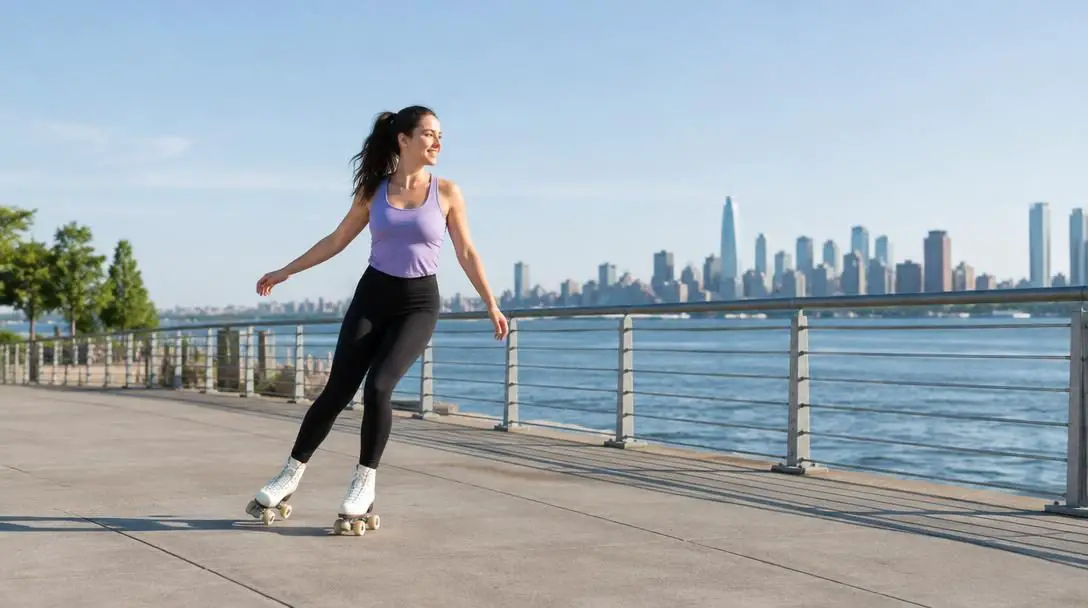
Roller skating has remained a beloved pastime for generations, seamlessly uniting outdoor recreation with genuine athletic conditioning. Whether gliding across polished hardwood rinks, cruising along beach boardwalks, or navigating neighborhood trails, moving on wheels transforms a standard workout into an invigorating, dynamic pursuit suitable for participants of virtually every age and experience level.
Beyond its nostalgic charm, roller skating functions as an efficient, low-impact full-body workout that builds balance, cardiovascular endurance, and muscular power. With an initial investment in comfortable skates and essential protective gear, skaters can tailor their sessions to casual social cruising, rigorous interval training, or technical artistic maneuvers.
Key takeaways
- Roller skating provides an effective full-body cardiovascular workout that develops leg strength, engages core stabilizers, and protects joints from harsh repetitive impacts.
- Maintaining an athletic stance with knees bent and weight distributed across the balls of the feet is vital for shock absorption, balance, and fall prevention.
- Protective gear—including a certified helmet, wrist guards, knee pads, and elbow pads—is essential equipment for skaters at every skill tier.
- Regular skate maintenance, such as wiping down boots, checking axle bolts, and replacing worn toe stops and bearings, ensures consistent performance and skater safety.
Physical and mental health benefits of skating
Sustained physical activity is most sustainable when it feels genuinely fun, and roller skating delivers substantial physiological and psychological rewards without the monotony of conventional gym machines. Because the sport requires constant interaction with momentum and surface variations, it stimulates both body and mind throughout every session.
From an aerobic perspective, continuous skating elevates the heart rate and enhances cardiovascular endurance, strengthening the heart and lungs over time. Unlike high-impact activities such as running, skating involves smooth, gliding motions that generate minimal concussive shock on knees, ankles, and hips. Simultaneously, the lower body performs heavy resistance work. The quadriceps, hamstrings, gluteals, and calf muscles work in continuous coordination to drive forward propulsion, while the adductor and abductor muscles along the hips stabilize each single-leg glide.
The upper body and torso are equally involved in movement execution. The deep core musculature—including the rectus abdominis, obliques, and lower spinal erectors—must fire steadily to keep your posture upright and aligned over a shifting base of support. Meanwhile, natural arm swings help maintain forward momentum and counteract rotational forces generated by the legs.
The mental benefits of roller skating are just as compelling. Concentrating on edge control, rhythmic cadence, and balance demands focused attention, offering an active mental reset from daily stress. Navigating turns, mastering new skills, and gaining speed releases mood-elevating endorphins and fosters personal confidence. Furthermore, skating easily doubles as an engaging social outlet, allowing friends and family members to connect, support one another, and pursue active health as a community.
Skating replaces the harsh impact of pavement pounding with a low-impact, fluid glide that builds endurance and strengthens stabilizing muscles.
Biomechanics: How skating propulsion and balance work
Unlike walking or running, roller skating does not rely on pushing directly backward against the ground. Attempting to step forward on rolling wheels as if walking pushes the skate backward without transferring force, leading to awkward slipping and lost momentum. Instead, skating relies on lateral weight transfer.
Propulsion happens when you press your skate outward and slightly backward at an angle against the edges of the wheels. As one skate pushes diagonally, your full body weight settles over the opposite skate, allowing that skate to track forward in a balanced, controlled glide. Once the pushing leg completes its extension, it recovers underneath your hips, and the cycle repeats on the other side.
Stability on skates depends directly on the skater's center of gravity. Standing tall with straight, locked knees positions the body's mass high and back, which makes any small surface bump capable of knocking you off balance. When you bend your knees and flex forward at the ankles and hips, your lower joints serve as organic shock absorbers. Keeping your weight centered over the balls and arches of your feet—rather than resting heavily on your heels—keeps the wheels securely underneath your core and prevents backward falls.
Essential beginner foundations: Gear, fit, and venue
Starting out with the right equipment and environment prevents early frustration and ensures safe, steady progression. Skaters should focus on proper fit, surface quality, and reliable protective padding before attempting complex footwork.
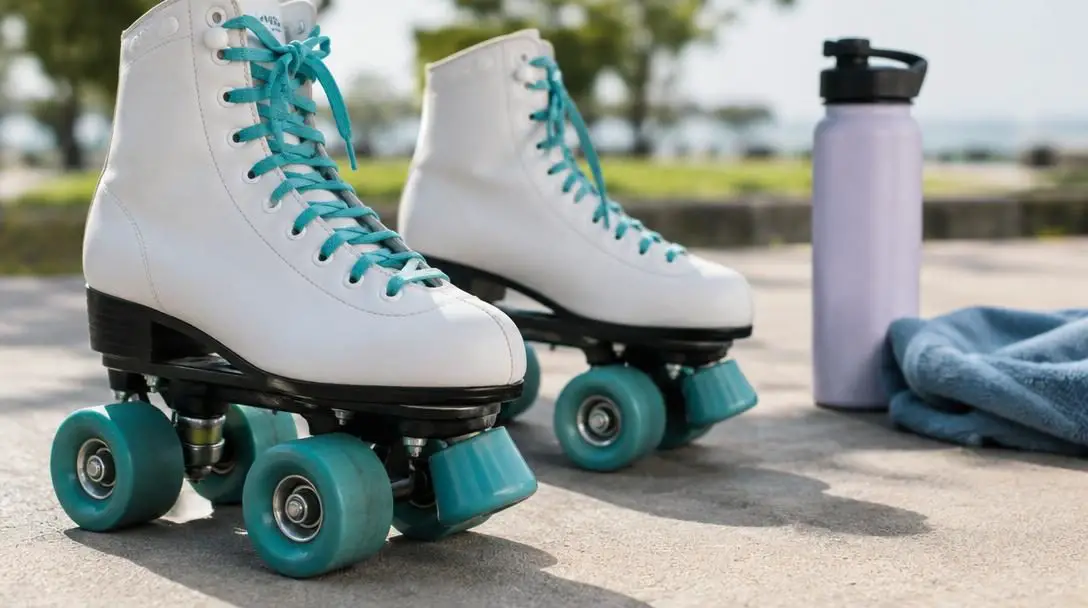
When selecting roller skates, prioritize a snug, supportive fit over loose comfort. A skate boot should hold your heel firmly in place without slippage while supporting your arch and ankle. Your toes should lie flat near the front cap without being pinched or curled. If a boot is too wide or too large, your foot will slide internally, producing painful friction blisters, foot cramps, and reduced control over your wheels. Investing in well-manufactured skates constructed from sturdy materials guarantees dependable trucks, smooth bearings, and durable boot support.
Choosing an appropriate venue is equally crucial for early success. Beginners should avoid uneven outdoor asphalt riddled with cracks, gravel, twigs, or steep inclines. A single stray pebble can cause small wheels to catch abruptly. Search for smooth, level surfaces such as indoor wooden roller rinks, freshly paved outdoor basketball or tennis courts, smooth concrete patio slabs, or clean, wide park paths away from vehicular traffic.
Protective equipment must never be considered optional. A standard safety setup includes:
- Helmet: Protects the head against hard impacts during sudden slips or backward falls.
- Wrist guards: Feature rigid splints along the palm to absorb direct shock and prevent hyperextension during forward falls.
- Knee pads: Cushion kneecaps from harsh ground impact and allow skaters to slide safely to a stop on plastic caps.
- Elbow pads: Shield delicate joint bones from contusions and abrasions when balancing arms hit the surface.
Step-by-step guide to your first skating session
Stepping onto wheels for the first time can feel intimidating, but systematically working through fundamental body mechanics establishes comfort, stability, and control.
- Secure all protective gear—helmet, wrist guards, elbow pads, and knee pads—before putting on and tightly lacing your skates.
- Stand up initially on a non-rolling surface, such as a patch of grass, a carpeted floor, or a thick rubber mat, to get accustomed to the elevated height and weight of the boots.
- Set your feet parallel, hip-to-shoulder-width apart, with your knees bent comfortably over your toes, chest angled slightly forward, and arms outstretched to the sides for balance.
- Practice shifting your weight smoothly from your left foot to your right foot on the stationary surface, noticing how your core muscles automatically engage to stabilize your center.
- Step carefully onto a smooth, flat skating surface. Position your heels together with your toes angled slightly outward, creating a gentle "V" shape with your feet.
- Begin taking small, deliberate marching steps forward. Avoid rolling immediately; instead, pick up your feet gently while maintaining soft knees.
- Transition your marching steps into gentle diagonal pushes. Push outward and back with one foot, shifting your center of mass over the front gliding skate.
- Return the pushing foot back underneath your hip before starting the next stride to preserve a compact, stable base of support.
- To stop safely, drop your hips low, bring your skates parallel, and apply gentle backward pressure on your toe stop or perform a soft T-stop by dragging the inside wheels of one trailing skate behind you.
Exploring advanced skating disciplines
Once you develop steady balance, controlled stopping power, and smooth forward stride mechanics, roller skating offers several specialized paths that challenge athletic conditioning and technical precision.
| Discipline | Primary Focus | Ideal Surface | Key Equipment Trait |
|---|---|---|---|
| Rink and Dance | Rhythm, spins, edge work, footwork agility | Smooth indoor hardwood or polished concrete | Hard wheels (95A–103A), high-top boot for ankle support |
| Speed Skating | Aerodynamic velocity, rapid cadence, endurance | Indoor banked tracks, flat tracks, smooth velodromes | Low-cut boots, long wheelbases, large high-rebound wheels |
| Road and Trail | Distance cruising, obstacle navigation, scenery | Outdoor asphalt, paved park trails, concrete boardwalks | Soft wheels (78A–82A) to absorb ground vibrations and cracks |
Tricks and maneuvers
Diving into technical maneuvers such as spins, jumps, and crossovers elevates your edge awareness and dynamic balance. Crossovers, which involve crossing the outside skate cleanly over the inside skate while navigating a curve, allow skaters to generate acceleration around corners rather than bleeding speed. Executing jumps and rotational spins demands sharp timing, deep knee flexion on landings, and disciplined core engagement.
Speed skating
Speed skating shifts the focus toward explosive lower-body power and maximum cardiovascular capacity. Skaters drop into a deep, aerodynamic crouch that lowers wind resistance and places the gluteal muscles and quadriceps under sustained mechanical tension. Strides become wide, forceful, and rapid. Training for speed improves anaerobic capacity, elevates lactate thresholds, and builds high-level leg endurance.
Road and trail skating
Taking your skates onto public trails and park greenways brings an adventurous element to your workout routine. Trail skating challenges your reaction time, requiring you to scan ahead for small stones, utility covers, sidewalk seams, fallen leaves, and pedestrian traffic. Outdoor distance cruising conditions your stabilizers to adapt continuously to varying pavement textures and gentle elevation changes.
Structuring a roller skating fitness routine
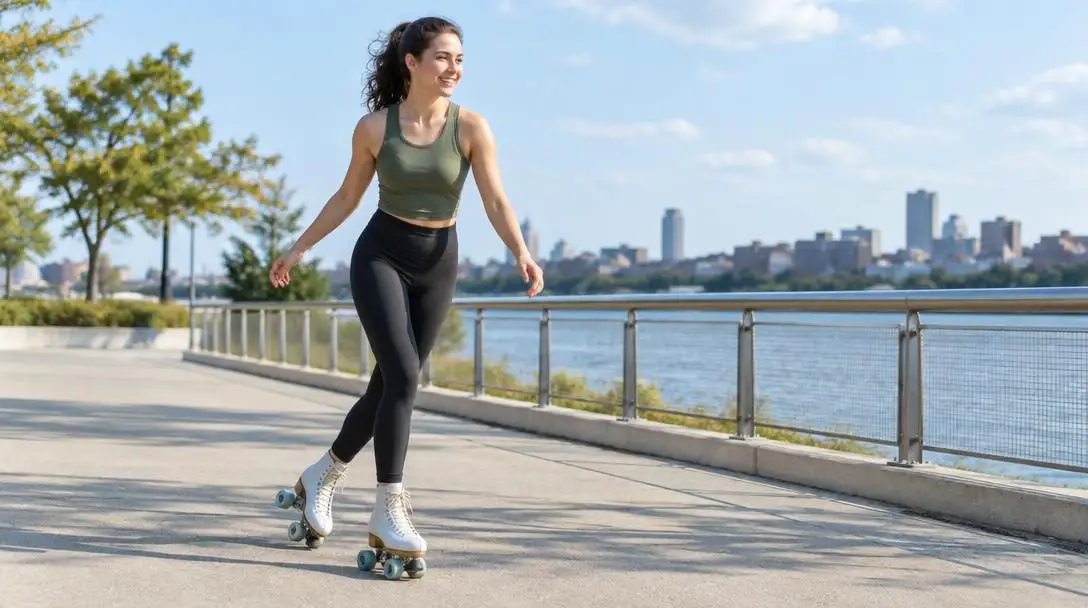
Roller skating serves as a versatile conditioning platform. Whether your goal is fat loss, aerobic base building, or lower-body muscular development, structuring your sessions ensures progressive athletic improvement over time.
Beginners should start with two to three weekly sessions lasting 20 to 30 minutes, allowing their joints, feet, and postural muscles to adapt to the unique stresses of skating. As your stamina expands, you can extend your cruising duration or implement high-intensity intervals to elevate cardiovascular demand. Incorporating specific drills directly into your skate sessions provides a comprehensive full-body workout:
- High-intensity skating sprints: Alternate between 60 seconds of steady, moderate-tempo cruising and 20 to 30 seconds of all-out maximum-effort sprinting. Repeat for 6 to 8 cycles to build anaerobic speed and explosive push power.
- Backward skating intervals: Skating in reverse targets the hamstrings, calf heads, and lower back muscles from an inverted angle, refining your neuromuscular coordination and spatial awareness.
- Curved crossover laps: Set up a circular or oval track and complete dedicated crossover laps in both clockwise and counter-clockwise directions, ensuring balanced strength development across both lateral hip complexes.
- Off-skate core planks: Step off the track onto grass or a workout mat to perform 45-to-60-second planks between skating intervals. A rigid core directly translates to better posture, reduced lower-back fatigue, and cleaner edge control on skates.
Common mistakes to avoid on wheels
Mastering roller skating requires unlearning common defensive reflexes that actually hinder stability. Staying conscious of your posture and habits will keep your progression safe and efficient.
- Locking your knees upright: Straightening your legs forces your center of gravity upward, transforming small bumps into major tipping hazards. Keep your knees bent and relaxed at all times.
- Staring down at your skates: Glancing downward tilts your head and neck forward, throwing off your spinal balance and preventing you from spotting ground hazards, other skaters, or approaching turns. Keep your chin up and eyes focused several yards ahead.
- Leaning back onto your heels: Placing weight behind the center of the skate boot causes the wheels to roll out from beneath you forward, causing abrupt backward falls. Always distribute weight through your midfoot and balls of your feet.
- Neglecting safety equipment: Skimping on knee pads or wrist guards due to overconfidence leaves you susceptible to painful bruises and joint injuries when an unexpected stumble occurs.
- Skating on improperly fitted boots: Lacing boots too loosely allows ankles to wobble unstably, while tying them excessively tight can cut off blood flow and cause debilitating foot cramps. Adjust laces for a secure, supportive, yet comfortable grip.
Routine skate maintenance and hardware care
A well-maintained pair of roller skates ensures smooth gliding performance, prolongs the lifespan of your gear, and safeguards against sudden mechanical breakdowns at high speeds. Establish a regular inspection and cleaning routine after every few sessions.
After skating outdoors, wipe down your skate boots, plates, and wheels with a soft, clean cloth to remove accumulated moisture, grit, and street dust. Dirt allowed to sit on wheel hubs eventually finds its way past bearing shields, where it acts like sandpaper against internal steel balls, causing premature wear and sluggish rotation.
Routinely inspect your hardware using a dedicated skate tool. Ensure axle nuts are tightened securely; wheels should spin freely without excessive side-to-side rattling on the axle. Check toe stop lock nuts or set screws to verify that stops will not twist loose while braking. Examine the polyurethane cushions (bushings) on your trucks for signs of cracking or hardening, which can restrict turning responsiveness.
Be prepared to replace consumable parts as they wear down:
- Wheels: Over time, hard stops and outdoor abrasion wear down wheel diameter or produce uneven flat spots. Rotate wheels periodically between left and right skates to ensure even wear across all edges.
- Bearings: When bearings begin to squeak, rattle, or resist spinning freely even after surface cleaning, remove, clean, and re-lubricate them with specialized speed oil, or replace them entirely.
- Toe stops: Braking naturally grinds down rubber and polyurethane toe stops. Replace them before the rubber wears down to the metal stem to protect both your boots and indoor skating floors.
Frequently asked questions
Is roller skating as good of a cardiovascular workout as running?
Yes. Roller skating provides a cardiovascular workout comparable to running while producing significantly less impact shock on the knees, hips, and ankles. Sustained skating burns substantial calories, builds heart and lung capacity, and engages a broader variety of stabilizer and lateral leg muscles than traditional straight-line jogging.
What is the difference between indoor and outdoor skate wheels?
The primary difference lies in wheel hardness, measured on the durometer scale. Outdoor wheels are soft (typically 78A to 82A), which allows them to compress over cracks, rough asphalt, and small debris for a smooth roll. Indoor wheels are harder (ranging from 90A to 103A), providing lower rolling resistance, faster roll speeds, and responsive slide on smooth rink floors.
How can beginners safely practice falling down?
Beginners should practice falling on grass or mats while wearing full protective pads. Drop your center of gravity by crouching down low, lean forward, and aim to land on your knee pads first, sliding forward onto your wrist guards and elbow pads. Avoid falling backward or catching yourself with straight, rigid arms, which can injure wrists and tailbones.
How tight should roller skates be laced?
Roller skates should fit snugly around the heel, midfoot, and ankle without cutting off circulation or pinching your toes. Your heel should remain locked in place when you bend your knees. If your toes feel numb or your arches cramp quickly, your laces may be pulled too tightly across the bridge of your foot.
Can roller skating help strengthen core muscles?
Yes. Roller skating demands constant balance on an unstable rolling surface. Your deep abdominal muscles, obliques, and lower back muscles must stay active throughout every stride to stabilize your pelvis, support your posture, and counteract the shifting forces of lateral leg pushes.
The bottom line
Roller skating remains one of the most rewarding ways to combine full-body athletic conditioning with pure recreation. By mastering basic biomechanics, investing in properly fitted gear, wearing protective pads, and maintaining your equipment, you can safely transform any smooth pavement or indoor rink into your personal training ground. As your confidence grows, integrating varied intervals, trail cruising, and technical footwork will keep your fitness journey engaging, effective, and fun for years to come.