
The Joy of Skateboarding: Tips for Beginners and Pros
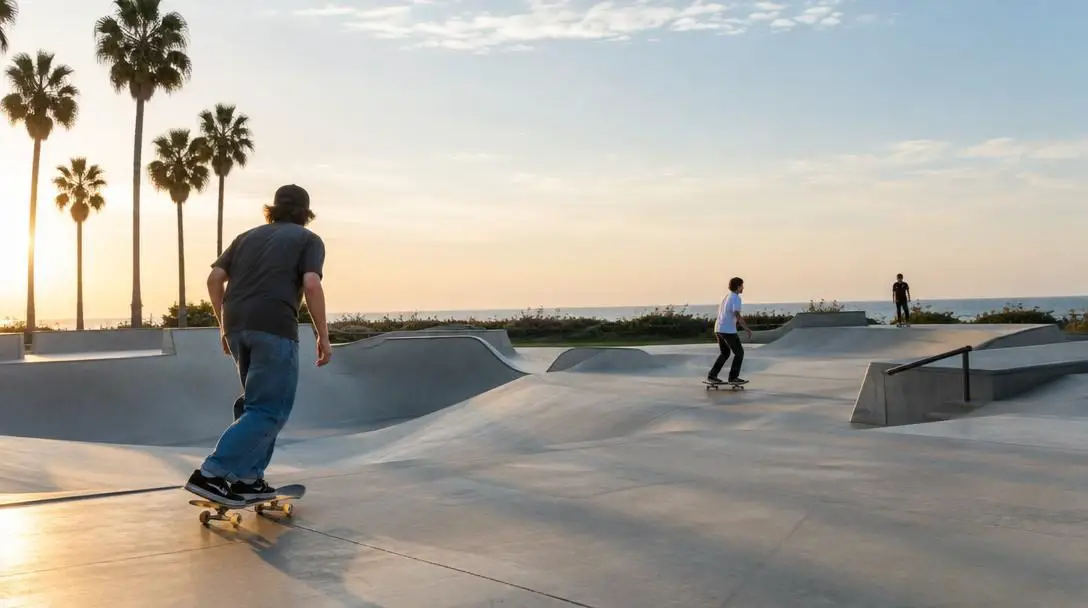
Skateboarding has transformed dramatically over the decades, evolving from an informal sidewalk diversion into a globally recognized athletic pursuit and cultural movement. At its core, the activity is defined by individual creativity, personal expression, and relentless determination. Whether a newcomer is stepping onto a deck for the very first time or a seasoned veteran is refining complex maneuvers, the distinct sensation of gliding on four wheels offers an unmatched outlet for kinetic energy. The culture thrives on viewing the world from an unconventional perspective, turning everyday open spaces into functional terrain.
Unlike conventional team sports governed by strict playing fields, standardized rules, and rigid schedules, skateboarding invites participants to engage with urban architecture in a completely open-ended manner. Curbs, flat concrete pads, stairwells, and public plazas become venues for experimentation and personal style. Skaters develop distinctive stances, trick selections, and visual aesthetics, forming a supportive and diverse global community. Beginners and professionals alike bond over the shared challenges of learning, gathering in public parks and plazas to celebrate each breakthrough along the journey.
Key takeaways
- Skateboarding delivers a rigorous mental and physical workout that enhances balance, reflexes, and cardiovascular fitness while sharpening problem-solving skills.
- Selecting the proper deck style, specialized flat-soled footwear, and comprehensive safety pads ensures better control and prevents severe injuries.
- Beginners build fundamental confidence through a methodical four-step progression focusing on static balance, rolling mechanics, ollies, and safe falling habits.
- Advanced skaters maintain long-term progression by experimenting with trick variations, challenging unfamiliar obstacles, and routinely servicing their hardware.
The Physical and Mental Benefits of Skateboarding
Embarking on the journey to learn skateboarding presents a formidable physical and cognitive challenge. For beginners, the initial learning curve feels steep because a skateboard is inherently unstable underfoot. The balance required to stay upright while rolling forward is unfamiliar to the body, requiring patience and grit to overcome early awkwardness. However, pushing through those initial hurdles yields tremendous personal satisfaction and substantial holistic rewards that influence daily life.
From an athletic standpoint, skateboarding functions as a rigorous full-body workout. Navigating uneven terrain and executing maneuvers demands quick reflexes, high-level core stability, and precise coordination between the legs, torso, and arms. Continual pushing, carving, and jumping build significant cardiovascular endurance, boosting overall physical stamina over time. The functional balance developed on the board enhances proprioception and spatial awareness, offering physical advantages that carry over into other athletic activities.
Mentally, the sport is an exercise in focus, emotional discipline, and intellectual persistence. Landing a technical maneuver rarely happens on the first attempt; instead, it requires dozens or even hundreds of repetitive trials. Skaters must systematically diagnose why an attempt failed, whether due to improper foot placement, delayed timing, or poor weight distribution. This iterative analytical process improves real-time problem-solving abilities and cultivates mental resilience, teaching participants to view setbacks as valuable feedback rather than permanent roadblocks.
Understanding Essential Skateboarding Equipment
Before rolling onto the pavement, acquiring the proper gear is fundamental to safety, progression, and overall enjoyment. Skateboarding gear is divided into three primary categories: the board itself, specialized footwear designed to interact with grip tape, and protective armor. Selecting gear tailored to your specific riding ambitions prevents unnecessary frustration and reduces the likelihood of avoidable injuries.
Standard Street Skateboards
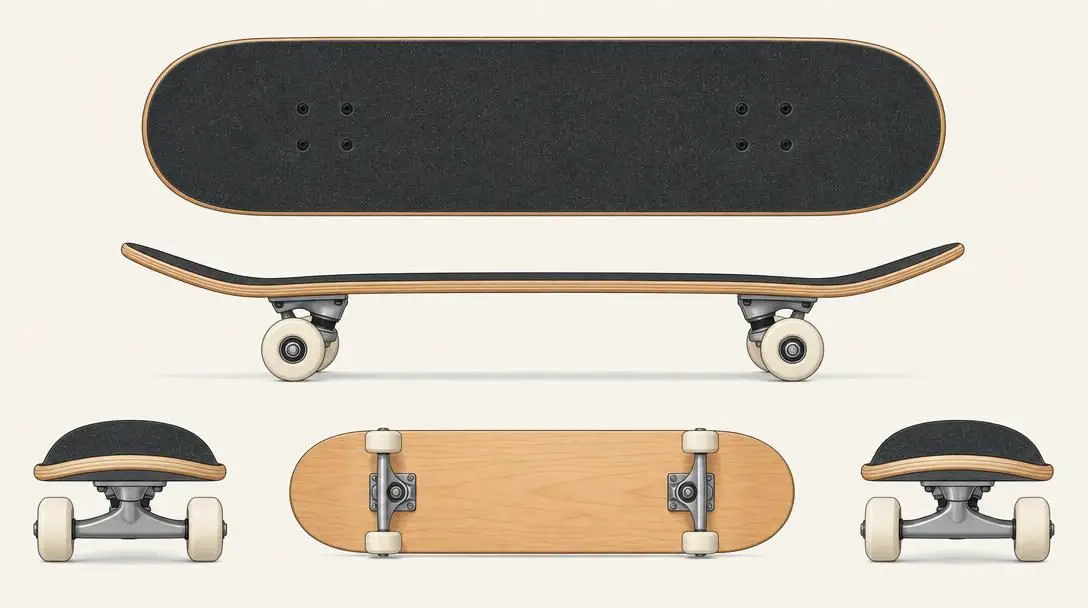
Standard street skateboards are the most common style seen in modern skateparks and street environments. These boards feature symmetrical or near-symmetrical wooden decks characterized by upward-curving kicks on both the nose and tail. This distinctive dual-kick profile provides the leverage needed to pop the board off the ground, launch aerial tricks, and navigate obstacles such as ledges, rails, and transition ramps. Street decks are compact, agile, and rigid, offering immediate responsiveness underfoot for technical maneuvers.
Longboards
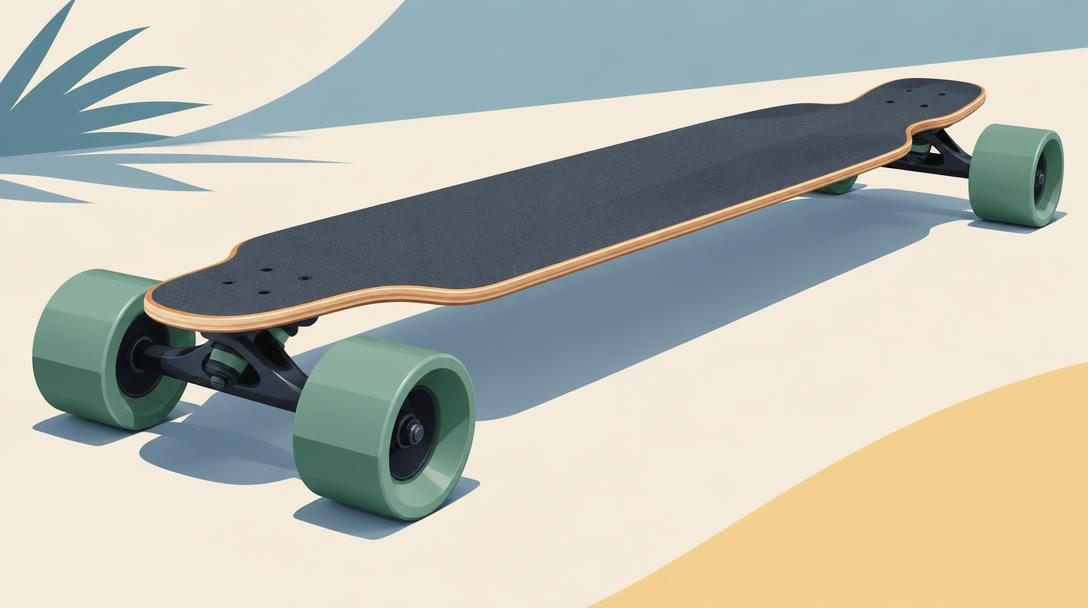
Longboards feature a significantly longer and wider deck geometry compared to traditional street setups. Designed specifically for smooth cruising, transportation, and wide-radius carving, longboards offer maximum stability at moderate speeds. Their extended wheelbase and larger, softer wheels absorb road vibrations and roll effortlessly over cracks, pebbles, and rough asphalt. While unsuitable for technical flip maneuvers, longboards provide an exceptionally comfortable, surf-like riding experience for open roads and long paths.
Dedicated Skateboarding Shoes
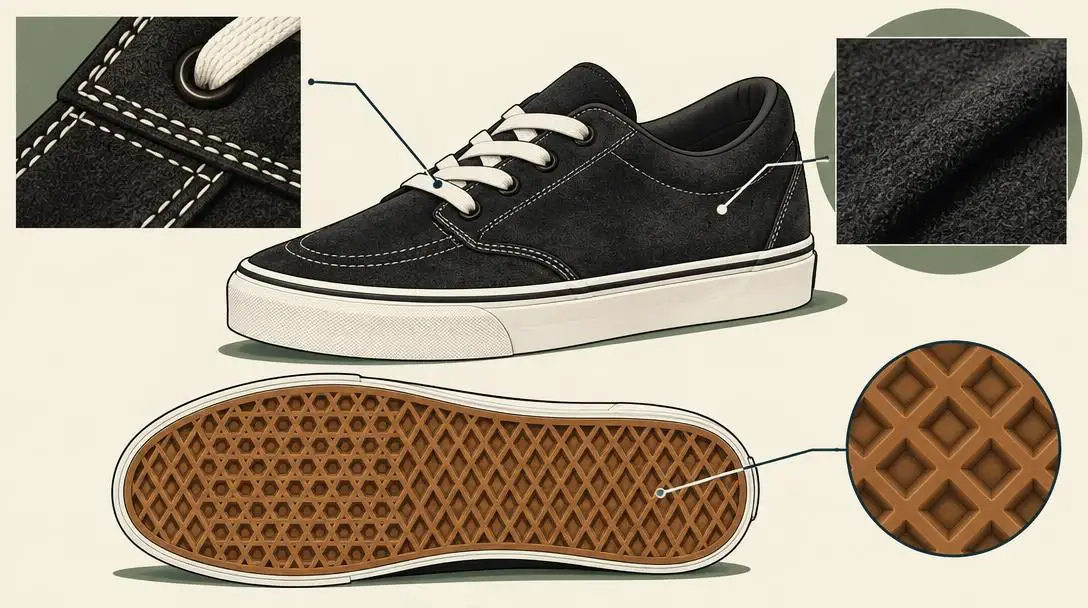
Attempting to ride a skateboard in running shoes, cross-trainers, or standard sneakers can compromise safety and board feel. Running shoes feature thick, contoured soles and rounded edges that destabilize foot placement on a flat deck. In contrast, authentic skate shoes are constructed with flat, durable rubber soles designed to grip the coarse texture of grip tape. They feature reinforced upper materials to resist abrasions, alongside structured padding that delivers essential foot and ankle support during high-impact landings. Established, trusted footwear brands in the skateboarding industry include Vans, DC, and Etnies.
Personal Protective Safety Gear
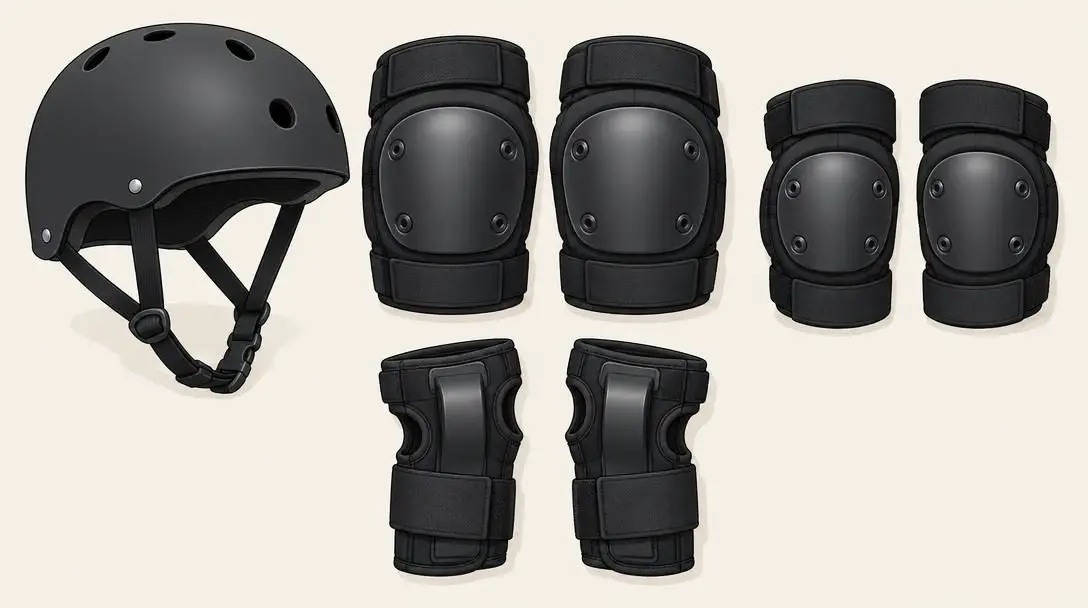
Protective padding is indispensable equipment for skateboarders of all backgrounds, from absolute novices to elite professionals. A comprehensive personal safety setup consists of a certified helmet, knee pads, elbow pads, and rigid wrist guards. Wrist guards absorb force during forward falls, while dense knee and elbow pads enable riders to slide safely across ramps and pavement without suffering abrasions or fractures. Wearing high-grade protective gear mitigates the risk of catastrophic trauma, granting skaters the psychological freedom to push past fear.
| Equipment Category | Primary Design Feature | Intended Use Case | Key Performance Benefit |
|---|---|---|---|
| Standard Street Skateboard | Dual-curved kicks on nose and tail | Technical maneuvers, ledges, and skateparks | Maximum pop and technical maneuverability |
| Longboard | Elongated, wide deck with extended wheelbase | Distance commuting and wide-radius carving | Exceptional balance and smooth vibration dampening |
| Skate Shoes (Vans, DC, Etnies) | Flat vulcanized or cupsole rubber outsoles | All riding styles and terrain | Enhanced board grip and targeted ankle stability |
| Protective Gear Set | Impact-absorbing foam and hard plastic caps | Everyday practice and obstacle training | Injury prevention and confidence reinforcement |
Skateboarding invites participants to look at everyday architecture and open spaces in a completely new light, transforming ordinary concrete into a canvas for individual expression.
Step-by-Step Fundamentals for Beginners
Advancing safely in skateboarding requires a sequential approach. Rushing into complex maneuvers before securing fundamental muscle memory often results in severe falls or prolonged frustration. By breaking down the introductory phases into progressive milestones, beginners establish the structural balance necessary for lifelong success on a board.
- Establish Static Balance: Place your skateboard stationary on a non-rolling surface, such as a patch of grass or smooth, flat concrete. Practice stepping on and off the deck deliberately, ensuring your feet rest directly above the hardware bolts. Shift your body weight forward and backward, flexing your knees to establish a centered, stable stance without allowing the board to slip away.
- Practice Rolling Motion: Once standing on the board feels comfortable, relocate to a flat, open concrete surface. Position your front foot over the front hardware bolts pointing slightly forward, and use your back foot to push gently against the ground. Bring your back foot onto the tail bolts as momentum builds, keeping your knees bent to lower your center of gravity and absorb surface vibrations.
- Master the Ollie: As the foundational trick for nearly all modern technical maneuvers, the ollie elevates the board into the air without the use of hands. Begin by popping the tail downward against the ground with your rear foot while simultaneously sliding the side of your front foot up the grip tape toward the nose. Practice this jumping and leveling motion repeatedly on flat, open ground before attempting to clear objects or jump onto ledges.
- Learn to Accept Falling: Falling is an inevitable, necessary component of the skateboarding learning process. When a bail occurs, tuck your chin, avoid catching yourself on straight, rigid arms, and allow your body to roll or slide along your protective pads. Analyzing why a fall happened helps you correct foot placement and weight distribution on subsequent attempts.
Progression Strategies for Advanced Skaters
Reaching an advanced skill level is a major achievement, yet sustained progression requires deliberate intent. Experienced riders often plateau when they fall into repetitive comfort routines, practicing only the maneuvers they have already mastered. Maintaining continuous growth demands expanding creative horizons while actively managing physical risks.
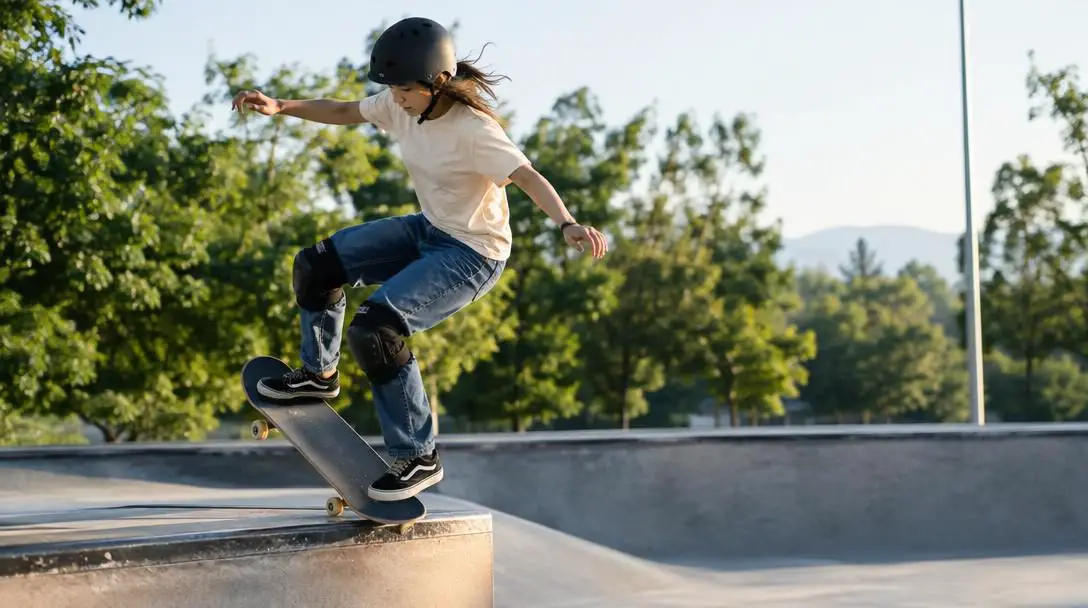
- Push Personal Boundaries: Continual progression is the heartbeat of skateboarding. Challenge your existing repertoire by altering your execution speed, rolling into steeper transition bowls, or attempting familiar tricks down novel stairs, across gaps, or onto unusual ledges. Modifying approach angles or landing into manual balances injects freshness into established skills.
- Prioritize Ongoing Safety: Because advanced maneuvers entail greater velocity, higher impact forces, and taller obstacles, the potential severity of injury rises substantially. Experienced skateboarders should resist the urge to discard protective gear, especially when exploring unfamiliar street spots, massive ramps, or high-speed descents where margins for error are razor-thin.
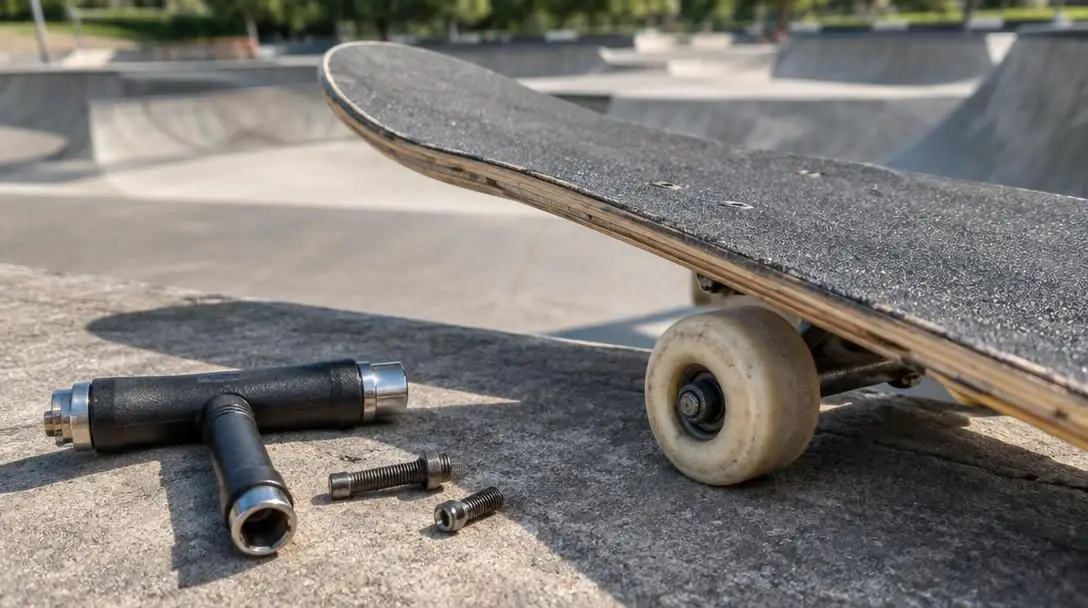
- Maintain and Upgrade Equipment: High-performance skating places intense mechanical stress on hardware. Decks lose their crisp snap due to razor tail and micro-fractures, truck bushings wear down, and wheel bearings accumulate dirt. Regularly inspect your setup for structural flaws, replacing worn decks, tuning truck tightness, and upgrading to premium bearings to keep board control instantaneous.
Frequent Pitfalls and How to Avoid Them
Every skateboarder encounters obstacles during their journey, but many common plateaus and injuries stem from avoidable mistakes. Remaining conscious of these frequent pitfalls will keep your practice sessions safe, enjoyable, and continually productive.
- Skipping Safety Equipment: Discarding a helmet or pads out of convenience or overconfidence is one of the most perilous errors a skater can make. Even minor slip-outs can cause concussions or broken wrists that keep you off the board for months.
- Rushing Past the Fundamentals: Attempting advanced flip maneuvers before mastering clean pushing, steady carving, and dependable flat-ground ollies invariably leads to poor mechanics, balance instability, and loss of board control.
- Riding the Wrong Board for Your Goals: Trying to navigate technical street obstacles with a large cruising longboard, or commuting across rough, cracked pavement on small, hard street wheels, creates unnecessary friction. Always match your deck profile and wheel durometer to your primary environment.
- Neglecting Hardware Maintenance: Riding on chipped wooden plies, rusted bearings, or loose kingpins impairs board responsiveness. A brief visual inspection before each session guarantees the deck pops predictably when executing maneuvers.
- Letting Frustration Stall Progression: Because trial and error is intrinsic to skating, failing repeatedly on a new trick can trigger burnout. Treat missed attempts as diagnostic data, stay patient, and take short breaks when frustration begins to cloud your focus.
Next Steps for Long-Term Skateboarding Growth
As you solidify your foundational abilities and develop a distinct aesthetic, several strategic steps will help guide your future evolution within the skateboarding culture. First, diversify the physical environments you skate. Exploring neighborhood skateparks, smooth industrial parking structures, and purpose-built community plazas exposes you to different concrete textures, transitions, and obstacle heights, sharpening your versatility.
Second, immerse yourself in the local skateboarding scene. While solo practice builds focus, skating alongside peers provides invaluable community motivation. Observing how experienced skaters position their feet, manage speed, and distribute their weight reveals subtle technical cues that are difficult to grasp in isolation. The mutual encouragement shared among skaters attempting difficult maneuvers creates lifelong friendships and accelerates individual learning.
Finally, continue tailoring your hardware setup as your preferred discipline clarifies. Skaters leaning toward transition and bowl carving typically benefit from wider decks and larger wheels, whereas technical street skaters favor narrower platforms for rapid flip rotation. By balancing safe habits, dedicated mechanical practice, and active community participation, your connection to skateboarding will remain deeply fulfilling for years to come.
Frequently asked questions
Why is it important to wear dedicated skateboarding shoes instead of running sneakers?
Skateboarding shoes are built with completely flat, durable rubber soles that maximize surface contact with the board's grip tape, providing critical traction and stability. Running sneakers feature thick, elevated heels and curved profiles that undermine lateral balance and wear out rapidly against abrasive grip tape.
What is the difference between a longboard and a standard street skateboard?
A standard street skateboard features a rigid deck with upward-curving kicks on both ends, designed specifically for popping ollies, grinding obstacles, and executing aerial tricks. A longboard has an extended, wider deck built for smooth cruising, long-distance pushing, and wide carving across open pavement.
How does the ollie work and why is it considered foundational?
The ollie works by snapping the board's tail firmly against the ground while simultaneously dragging the front foot upward along the grip tape to level the deck out in mid-air. It is foundational because it serves as the launching mechanism for nearly all subsequent street and park maneuvers, including ledge grinds and flip tricks.
How can beginners safely practice falling without getting injured?
Beginners should always wear a complete set of safety gear, including a helmet and wrist guards. When balance is lost, riders should resist catching themselves with rigid, extended arms; instead, they should lower their center of gravity, bend their limbs, and roll through the impact across their protective pads.
How does skateboarding improve mental health and cognitive focus?
Skateboarding demands intense presence, self-discipline, and repeated trial and error. The process of diagnosing mechanical mistakes on failed trick attempts cultivates patience and analytical problem-solving, while finally mastering a difficult maneuver reinforces personal self-esteem and confidence.
The bottom line
Skateboarding is far more than an energetic hobby; it is a creative athletic discipline that merges cardiovascular conditioning, physical coordination, and cognitive tenacity. By starting with balanced fundamentals, honoring safety requirements, and selecting equipment suited to your riding goals, anyone can experience the thrill of rolling on four wheels. Embracing the journey with patience and community camaraderie transforms every curb and open plaza into an opportunity for lifelong personal progression.