Top 5 Heavenly Bodies Levels That Will Test Your Skills to the Max
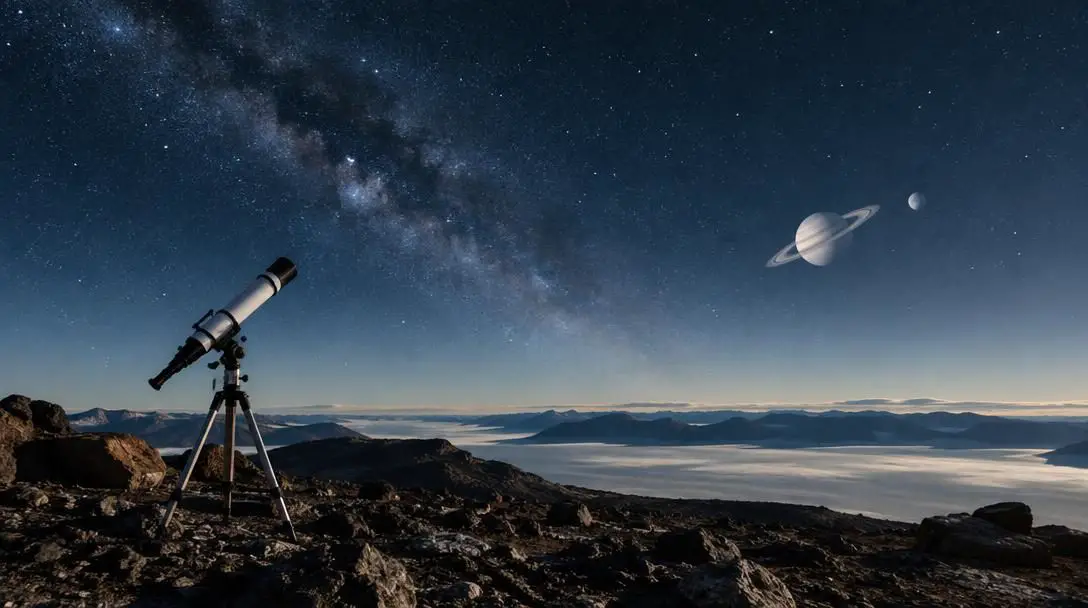
Venturing into the cosmos represents the pinnacle of scientific curiosity and technological ambition. While the night sky displays thousands of calm, luminous pinpricks, the physical reality of the universe is defined by raw gravitational forces, intense radiation fields, and vast, frozen voids that punish the slightest miscalculation. For spacecraft navigators, robotic engineers, and astrophysicists, certain celestial targets present hurdles that push human capability to its absolute limit.
Traversing deep space is fundamentally different from travel within Earth's protective cocoon. Beyond our atmosphere, vehicles lack ambient friction to slow down, solar radiation bombards delicate electronics, and communication signals take minutes or hours to span interplanetary distances. Understanding the specialized demands of the most extreme environments in our solar system and beyond reveals what it truly takes to pilot robotic scouts across the cosmos.
Key takeaways
- Operating around Jupiter requires mitigating extreme radiation belts capable of destroying unhardened electronic guidance systems.
- Landing on Mars presents a notorious deceleration paradox, requiring heat shields, parachutes, and retro-propulsion to survive its thin atmosphere.
- Saturn's ring system demands hyper-precise orbital plotting to prevent hypervelocity impacts with debris ranging from micrometric dust to house-sized boulders.
- Deep-space journeys to Pluto and the Kuiper Belt must overcome billions of miles of transit through bitter cold, dim sunlight, and severe communication lag.
- Studying black holes eliminates conventional direct imaging, compelling astrophysicists to rely on gravitational wave detection and advanced telescope arrays.
The Harsh Realities of Navigating Deep Space
Every mission into deep space must reckon with physical dynamics that have no direct analogue on Earth. In terrestrial transportation, vehicles rely on atmospheric drag and ground friction to manage velocity and direction. In contrast, spacecraft move through a vacuum where momentum is conserved indefinitely unless altered by rocket propulsion or gravitational encounters. Navigators must therefore treat gravity not merely as a downward pull, but as an interactive orbital highway where planets, moons, and rings continuously reshape a flight path.
Compounding these dynamic orbital challenges is the reality of interplanetary communication latency. Because electromagnetic signals travel at the finite speed of light, commands sent from ground control centers on Earth cannot steer a spacecraft in real time when millions or billions of miles away. As an exploratory probe descends into an alien atmosphere or weaves through a crowded satellite network, it must rely entirely on autonomous navigation systems, pre-loaded routines, and onboard sensors to make split-second life-or-death adjustments.
Top 5 Celestial Targets That Demand Maximum Navigation Skill
The universe presents diverse operational environments, but specific destinations stand out for the sheer technical expertise required to visit, orbit, or land on them. The following comparison highlights the primary hazards and navigational demands across the five most challenging celestial targets.
| Celestial Target | Primary Location | Dominant Environmental Hazard | Key Navigational Requirement |
|---|---|---|---|
| Jupiter’s Moons | Inner Jovian system | Lethal radiation belts | Multi-body gravity assists and radiation hardening |
| Mars | Inner solar system | Marginal atmospheric density | Multi-stage entry, descent, and landing (EDL) |
| Saturn’s Rings | Mid-outer solar system | Dense kinetic debris fields | Micro-maneuvering and gap-trajectory plotting |
| Pluto | Kuiper Belt | Extreme distance and low thermal energy | Long-duration transit stamina and autonomous targeting |
| Black Holes | Interstellar and galactic space | Extreme spacetime curvature | Indirect sensing and gravitational wave tracking |
Jupiter’s Moons
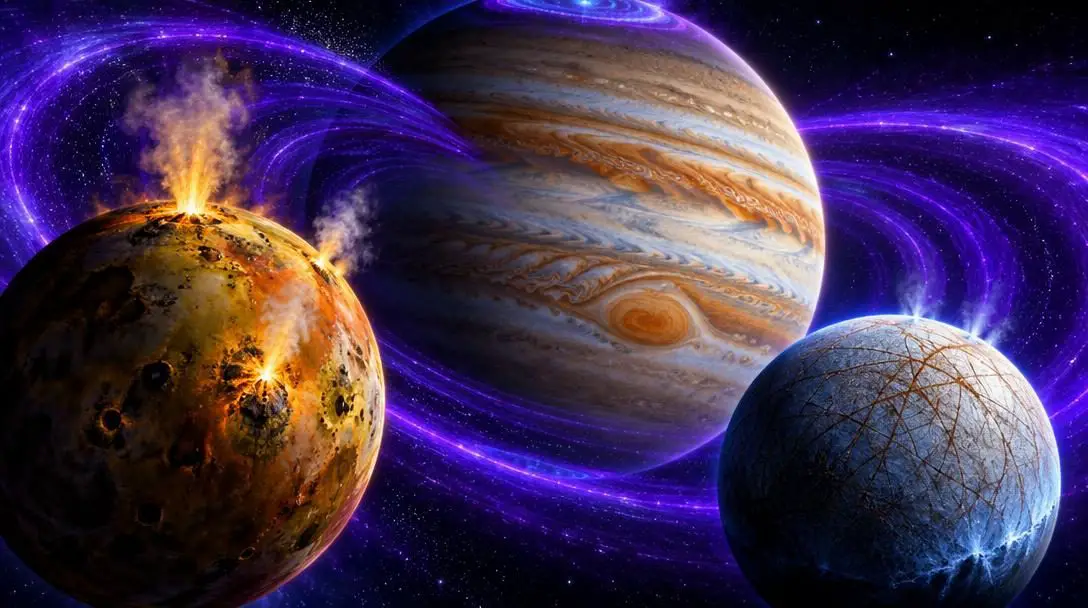
- Satellite Count: 79 natural satellites
- Key Environments: Volcanic Io and icy Europa
- Primary Hazard: Intense planetary radiation belts
- Flight Method: Complex multi-body orbital mechanics
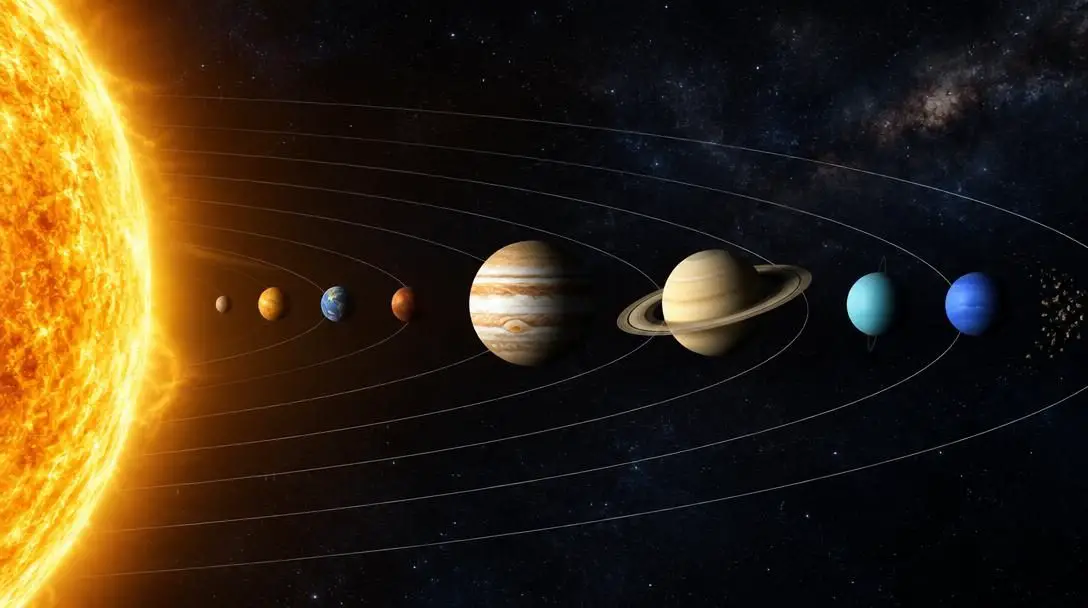
Jupiter is the undisputed giant of our solar system, anchoring a sprawling miniature planetary system containing 79 known moons. Operating a spacecraft within this dynamic neighborhood is universally recognized as one of the ultimate tests of orbital design. The gravitational landscape is intensely crowded, requiring navigators to orchestrate intricate multi-body trajectories where the gravitational tug of one moon continuously perturbs the path to the next.
Beyond the geometric challenge of navigating dozens of orbiting satellites, the Jovian environment is fiercely hostile. Jupiter generates a colossal magnetic field that accelerates charged particles into lethal radiation belts. These radiation belts can burn through standard circuit boards, degrade camera optics, and corrupt memory modules within hours. A mission targeted at the icy shell of Europa or the volcanic plumes of Io must weave through narrow orbital corridors, minimizing exposure to radiation while executing flawless engine burns.
Mars
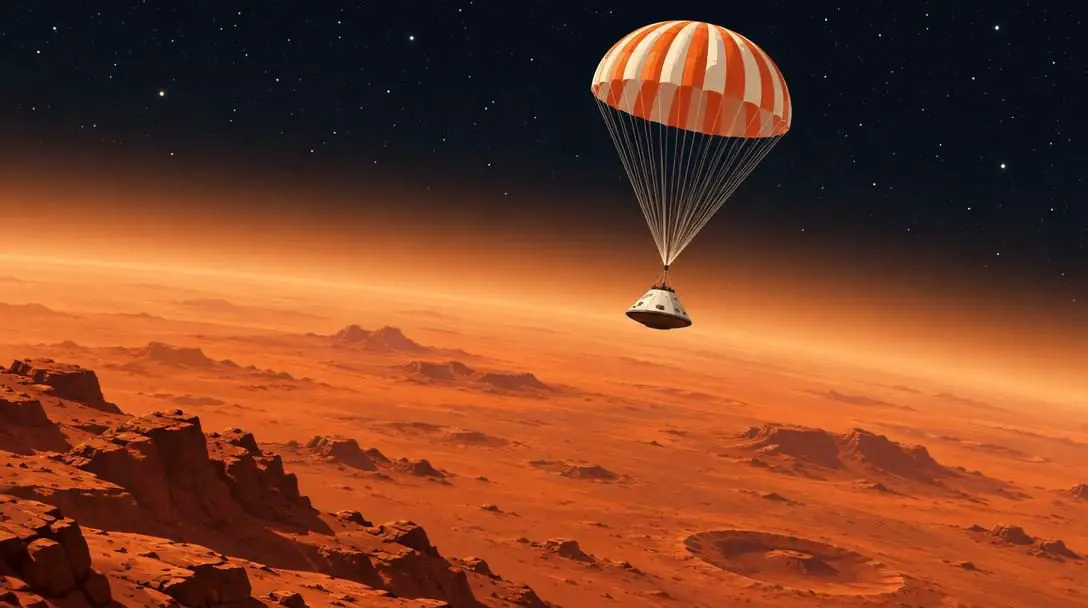
- Atmospheric Profile: Extremely thin carbon dioxide layer
- Entry Challenge: Extreme friction without sufficient aerodynamic braking
- Descent Tools: Heat shields, supersonic parachutes, and retro-propulsion
- Surface Conditions: Freezing, barren terrain demanding robotic mobility
The Red Planet has captivated exploration planners for generations as the most viable candidate for long-term human exploration, yet it continues to claim a high failure rate among automated missions. The primary hurdle is the Martian atmosphere, which occupies a hazardous middle ground: it is thick enough to generate blistering heat upon spacecraft entry, but far too thin to bring a heavy lander to a survivable landing speed using parachutes alone.
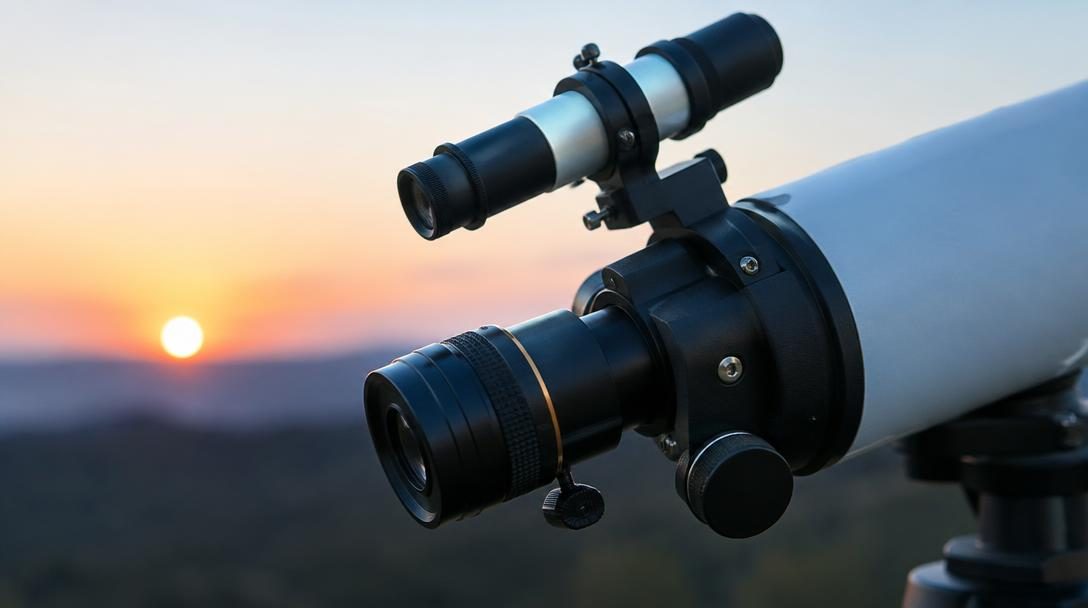
Engineers must coordinate an unforgiving entry, descent, and landing phase that relies on an integrated sequence of aerodynamic shielding, supersonic decelerator parachutes, and precision thruster arrays. During the final seconds before contact, advanced radar and robotic vision systems must scan the terrain to steer away from jagged boulders and steep craters. A single mistimed deployment or inaccurate atmospheric density estimation can cause catastrophic impact with the Martian regolith.
Saturn’s Rings
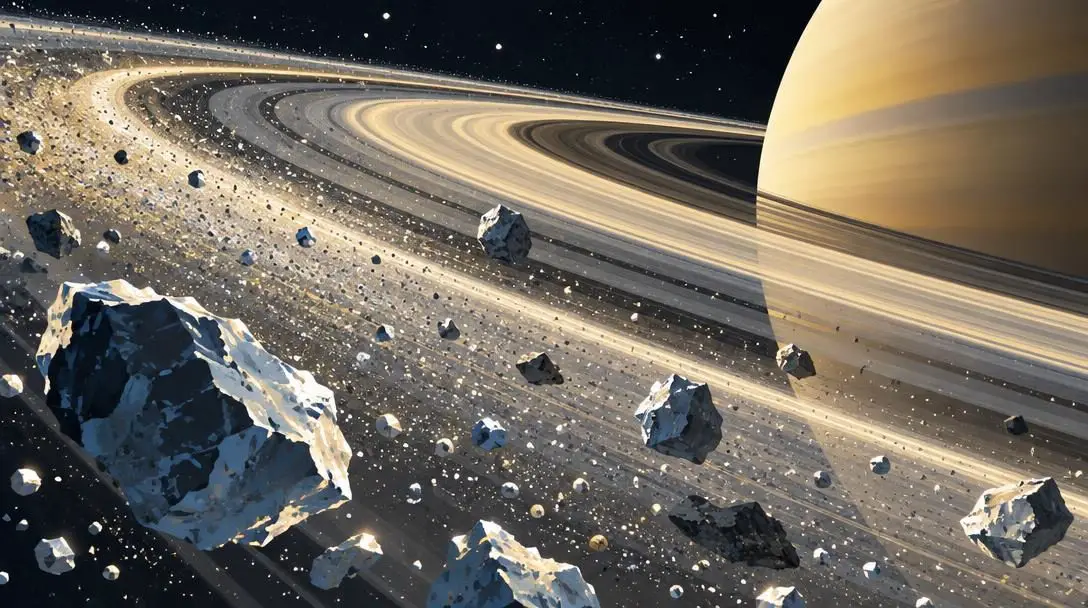
- Composition: Countless particles from fine dust to massive boulders
- Kinetic Danger: High-velocity hypervelocity collisions
- Visual Scale: Thousands of kilometers wide but remarkably thin
- Guidance Strategy: Precision ballistic plotting through clear gaps
Saturn’s expansive ring system offers one of the most stunning sights in astronomy, yet approaching it is comparable to walking through a cosmic minefield. Seen from afar, the rings appear as uniform, glossy concentric tracks. Up close, they represent a tumultuous cloud of debris particles traveling at thousands of miles per hour. These objects range from microscopic ice crystals and abrasive dust granules to colossal boulders the size of apartment complexes.
At orbital speeds, an impact with a grain of dust no larger than a grain of sand can pierce spacecraft shielding, fracture propellant lines, or blind sensitive optical sensors. Navigating this region requires mission designers to map the distribution of material with mathematical precision. Spacecraft must be steered through narrow gaps in the rings, using the main antenna dish as an improvised deflector shield when transitioning across potentially populated orbital planes.
Navigating Saturn’s magnificent rings demands surgical trajectory precision, where even a microscopic dust particle moving at orbital velocity can instantly end a multi-billion-dollar expedition.
Pluto
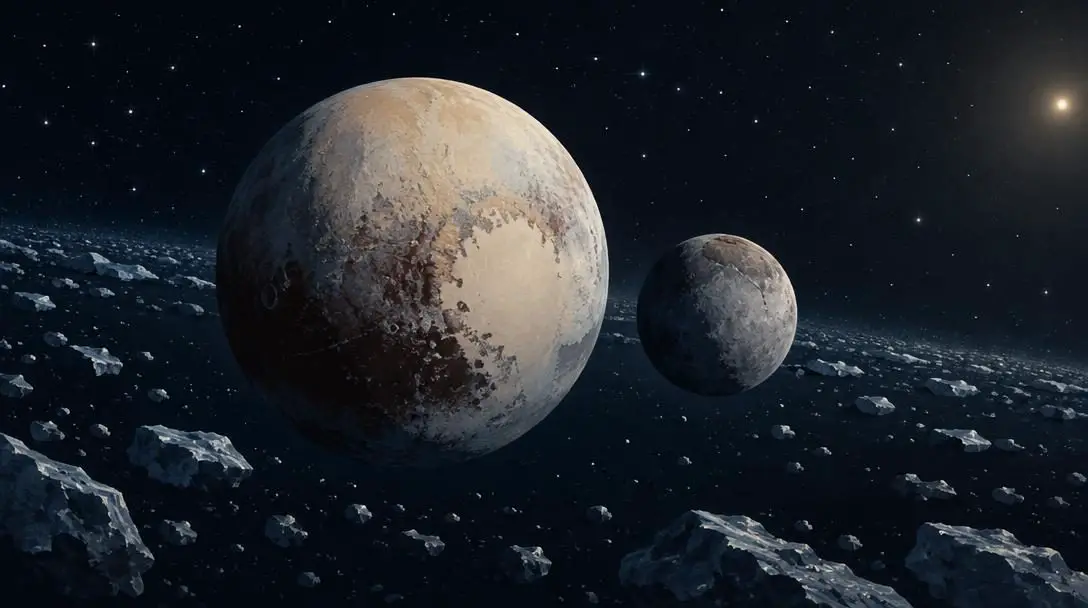
- Planetary Status: Kuiper Belt icy dwarf planet
- Distance: Billions of miles from Earth
- Environmental State: Bitter cold, dim sunlight, and long transit duration
- Navigation Target: Precise flyby or insertion across sparse gravitational markers
Situated in the far-flung frontier of the Kuiper Belt, the small, icy dwarf planet Pluto represents the apex of long-duration spaceflight stamina. Traveling billions of miles from Earth requires a journey spanning nearly a decade, during which flight hardware must endure extended cold dormancy while maintaining atomic clock synchronization and telemetry integrity. Gravitational reference points become scarce in this outer realm, necessitating sophisticated star trackers and long-range optical navigation.
Because Pluto is so far from the Sun, solar panels are ineffective, requiring onboard radioisotope power sources to survive in the dim, subfreezing expanse. When a high-velocity probe finally reaches the Pluto-Charon system, the window for scientific data collection is exceedingly narrow. Navigators must strike a target box thousands of miles wide after years of flight, with round-trip light time stretching across many hours, leaving ground teams entirely dependent on the spacecraft's automated targeting systems.
Black Holes
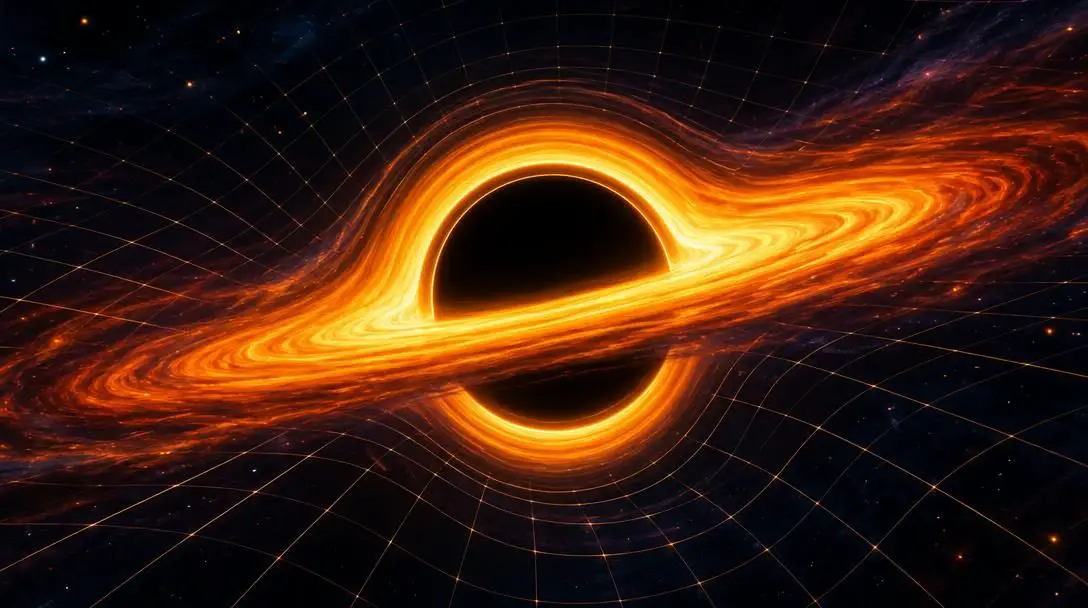
- Physical Phenomenon: Extreme mass warping the spacetime continuum
- Boundary Condition: Gravitational pull prevents escape of matter and light
- Scientific Challenge: Direct optical observation is physically impossible
- Detection Equipment: Gravitational wave interferometers and global telescope arrays
Black holes are the most physically extreme entities known to exist, serving as cosmic laboratories where general relativity and quantum mechanics collide. Because their gravitational pull is so concentrated that not even light can cross their event horizon, direct conventional photography of a black hole is out of the question. Researchers seeking to chart these regions cannot rely on standard camera apertures or direct radar pinging.
Investigating black holes requires analyzing the surrounding environment, such as the incandescent accretion disks of superheated gas spiraling toward the singularity and the relativistic jets ejected along the rotation axes. Scientists deploy worldwide networks of synchronized radio dishes to construct event-horizon-scale imagery, as well as ultra-sensitive gravitational wave detectors to listen for the spacetime ripples generated when two black holes merge. Operating these detection networks demands an extraordinary understanding of theoretical physics and data processing.
Core Mechanics of Deep-Space Celestial Navigation
Whether charting a trajectory past an icy moon or gathering data near a stellar-mass black hole, deep-space exploration relies on fundamental operational pillars that allow hardware to survive and deliver actionable scientific insights.
- Orbital Mechanics and Gravitational Slingshots: Launch vehicles lack the chemical propellant required to push heavy payloads directly to distant worlds. Flight dynamicists utilize gravity assists, swinging probes past inner planets to harvest orbital momentum and bend trajectories outward toward destinations like Saturn or Pluto.
- Autonomous Computer Decision-Making: The severe communication delay over interplanetary distances demands that robotic probes execute landing burns, hazard avoidance maneuvers, and science scans without human intervention from mission control.
- System Hardening and Redundancy: Spacecraft designed for hostile operational theaters incorporate lead-tantalum radiation shields, micro-meteoroid blankets, and dual-redundant computing architectures that switch automatically to backup systems upon detecting unexpected voltage spikes.
- Indirect Remote Sensing: Extreme targets that preclude physical touchdowns or standard photography require indirect exploration methods, utilizing electromagnetic spectrometers, magnetometers, and interferometers to measure subtle energetic shifts.
Five-Step Framework for High-Difficulty Space Missions
Executing an exploratory expedition to an unforgiving celestial body follows a disciplined, step-by-step engineering roadmap designed to mitigate extreme operational risk.
- Construct Comprehensive Environmental Models: Planetary scientists aggregate baseline observations from Earth-based observatories to build detailed models of the target body's gravitational field, atmospheric density, radiation belts, and ring plane debris levels.
- Calculate Fuel-Optimized Ballistic Trajectories: Flight dynamicists chart multi-year orbital trajectories, calculating precise launch windows, mid-course corrective burns, and gravity-assist flybys that maximize payload capacity while conserving propellant.
- Implement Environmental Hardening and Component Redundancy: Aerospace engineers construct the spacecraft using radiation-hardened microprocessors, thermal protection systems, and automated failover circuits to endure temperature swings, cosmic rays, and kinetic debris.
- Select and Validate Atmospheric Descent Architecture: For lander missions visiting planets like Mars, engineers design and test specialized entry heat shields, supersonic parachutes, and throttleable retrorocket systems to ensure survivable touchdown speeds.
- Calibrate Scientific Payloads and Autonomous Telemetry: Flight teams tune scientific instruments, high-gain antennas, and autonomous tracking software to reliably collect and transmit telemetry across millions of miles of empty space.
Critical Pitfalls and Common Mistakes in Cosmic Missions
Navigating harsh cosmic regimes offers zero forgiveness. Historical space exploration shows that even minor oversights in system design or environmental modeling can derail a multi-year mission.
- Underestimating Radiation Dosage: Failing to adequately shield computing modules against Jupiter's intense magnetic trapped-particle belts can cause microchips to scramble and mission telemetry to go silent permanently.
- Misjudging Planetary Atmospheric Profiles: Relying on outdated or incomplete models of Mars's atmospheric density can cause a descending probe to encounter air friction higher or lower than planned, leading to parachute failure or surface impact.
- Overlooking Fine Ring Particulates: Navigating near Saturn's rings while ignoring thin halos of diffuse dust can lead to severe sandblasting of reflective mirrors, solar cells, and thruster nozzles.
- Relying on Real-Time Earth Command Cycles: Designing flight architectures that require human ground control approval during critical dynamic events like orbit insertion around Pluto guarantees failure due to multi-hour radio transit latency.
- Using Inflexible Direct Imaging for Invisible Phenomena: Attempting to examine black holes using only visible-light optical telescopes yields negligible data, missing the critical gravitational waves and high-energy radio spectra generated by extreme gravitational fields.
Future Frontiers in Celestial Exploration
As human exploration sets its sights further into the cosmos, navigating demanding destinations will require leapfrog advances in propulsion, automation, and instrumentation. Traveling beyond Pluto into the deeper Kuiper Belt will necessitate power systems capable of sustaining spacecraft for multi-decade missions without thermal decline or degradation of energy supply.
Simultaneously, exploring the immediate surroundings of black holes will hinge on scaling up space-based gravitational wave observatories and expanding event-horizon telescope baselines into high Earth orbit. By overcoming the formidable environmental barriers posed by these top celestial destinations, humanity continues to unlock the deepest physical laws that govern our universe.
Frequently asked questions
Why is landing on Mars considered more difficult than landing on the Moon?
The Moon has no atmosphere, meaning descent relies purely on retro-rockets without atmospheric heat or turbulence. Mars has a thin atmosphere that causes extreme friction and high temperatures, yet lacks sufficient aerodynamic thickness to stop heavy landers using parachutes alone, requiring a complex mix of heat shields, parachutes, and thrusters.
How do spacecraft survive the radiation belts around Jupiter?
Engineers protect spacecraft bound for the Jovian system by housing sensitive electronics inside thick vaults made of metals like titanium or tantalum, selecting radiation-hardened microchips, and plotting highly elliptical orbits that minimize the time spent inside Jupiter's most dangerous radiation belts.
Can a spacecraft pass straight through Saturn's rings?
Passing directly through the dense inner rings would be catastrophic due to thousands of collisions with icy fragments and rock boulders. Spacecraft instead pass through known, cleared gaps between ring bands or fly just above and below the main ring planes to gather data safely.
How can scientists study black holes if nothing can escape them?
Scientists investigate black holes indirectly by observing the high-energy light and radio waves emitted by superheated gas orbiting in accretion disks, analyzing relativistic particle jets, and detecting gravitational waves emitted when massive bodies merge.
Why does Pluto require autonomous navigation rather than manual ground control?
Pluto is billions of miles from Earth, meaning radio communication signals take hours to travel one way. Because real-time control is physically impossible, any critical maneuvers or trajectory adjustments must be executed automatically by the spacecraft's onboard computers.
The bottom line
Exploring the most challenging heavenly bodies in our cosmos is the definitive trial of human engineering, computational precision, and physical understanding. Whether mitigating the lethal radiation surrounding Jupiter's natural satellites, surviving the dynamic entry gauntlet of Mars, slipping past the treacherous particle fields of Saturn's rings, enduring the frozen marathon to Pluto, or charting the unseen frontiers of black holes, deep space demands absolute perfection. Each milestone achieved across these hostile environments broadens the boundaries of human knowledge and prepares humanity for even bolder journeys into the cosmic unknown.