Watch Out For These Barn Finds: 5 Best Muscle Cars
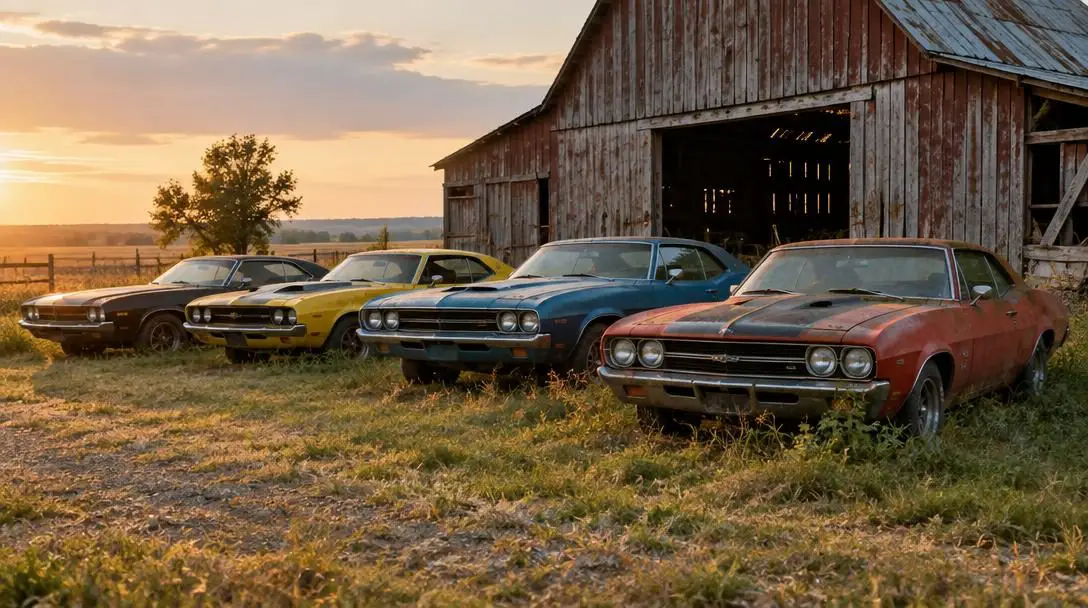
Rural barns, weathered outbuildings, and forgotten countryside garages hold countless mechanical treasures, but few discoveries capture the imagination quite like an authentic vintage automobile. While antique motorcycles often surface in greater numbers due to their compact footprint, full-sized automobiles remain surprisingly common discoveries during estate cleanouts and property sales. Left undisturbed behind heavy timber doors, these vehicles spend decades slowly collecting dust while remaining hidden away from the modern motoring world.
Among the wide variety of vehicle types and eras that enthusiasts track down, the classic American muscle car represents the single most frequent barn find category. This prevalence stems from an understandable human dynamic: many of these vehicles were originally acquired as second-hand project cars by ambitious hobbyists eager to restore their high-output performance. Over time, shifting priorities, rising household expenses, limited leisure hours, or unexpected mechanical obstacles intervened, prompting owners to push the vehicles into sheds under protective tarps. Today, unearthing these dormant icons provides a rewarding window into one of automotive history's most celebrated design movements.
Key takeaways
- Muscle cars are the most frequent type of barn find because many were purchased as second-hand restoration projects that owners never had the time or money to finish.
- Evaluating a barn find requires assessing body originality, matching-numbers powertrains, specific production generations, and the availability of replacement parts.
- First-generation editions of the Chevrolet Camaro, Dodge Challenger, and Ford Mustang consistently command the highest collector demand and financial upside.
- Restoration budgets scale substantially depending on condition, often ranging between $10,000 and $60,000 for a first-generation Camaro and exceeding $75,000 for an ambitious Pontiac GTO.
At a glance: comparing the top barn find muscle cars
| Model | Debut Year | Key Production Runs | Restoration Feasibility and Value Notes |
|---|---|---|---|
| Plymouth Road Runner | Late 1960s | 1970s staple; ended in 1980 | Relatively simple to restore; 6.2-liter engine swaps yield solid profit margins |
| Dodge Challenger | 1969 | Original 5-year run; revived 1970s, 1983, 2008 | Requires serious mechanical effort; original first-generation examples hold gold-mine value |
| Ford Mustang | 1965 | Continuous production from 1965 to present | Abundant first- and second-generation surviving examples; third-generation models gaining collector favor |
| Chevrolet Camaro | 1966 (1967 model) | First generation (1967–1969); brief 2000s pause | First-generation models are most prized; comprehensive ground-up builds range from $10,000 to $60,000+ |
| Pontiac GTO | 1963 | Four golden generations (1963–1974); 2000s return | Cultural icon featured heavily in cinema; premier ground-up projects easily surpass $75,000 |
The 5 best muscle cars to look for in barns
When scouring classified leads or inspecting rural outbuildings, certain nameplates stand above the rest in terms of historical significance, enthusiast demand, and restoration return. These five muscle cars are consistently regarded as the premier models to look for in neglected storage.
Plymouth Road Runner
- Market Era: Staple of the 1970s muscle car scene
- Discontinued: 1980
- Common Engine Platform: 6.2-liter V8
- Project Feasibility: Relatively simple to restore
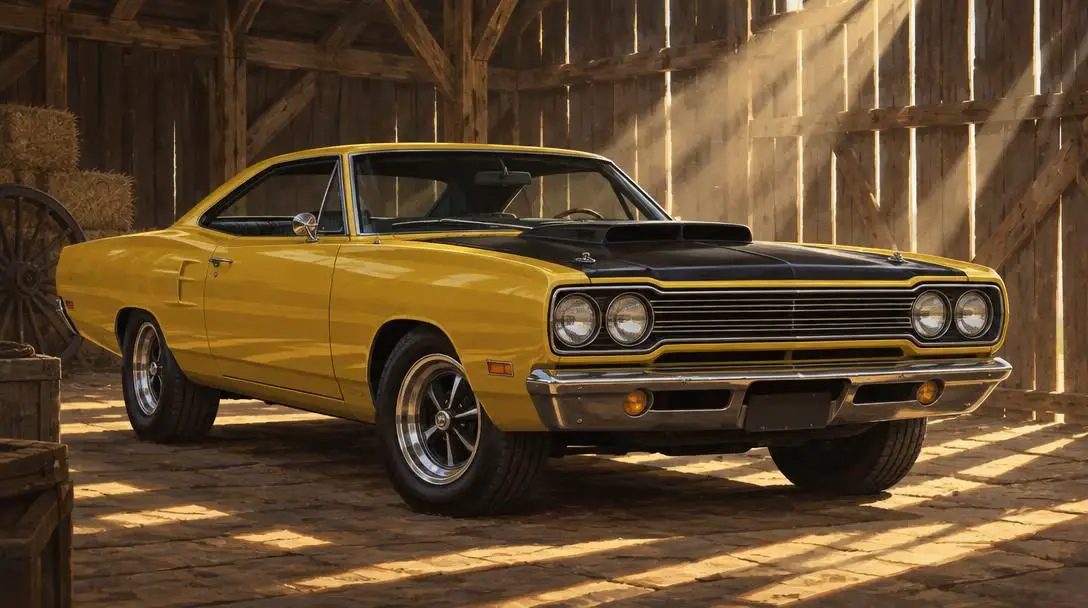
Introduced to provide genuine muscle performance at an accessible price point, the Plymouth Road Runner stripped away superfluous luxury equipment in favor of raw speed and budget-friendly power. While many competing muscle cars grew heavier, more plush, and increasingly expensive as the 1970s approached, the Road Runner maintained its sharp focus on direct performance value.
Although Plymouth officially pulled the plug on the nameplate in 1980, the car remains an absolute favorite for restorers who locate one tucked inside an old barn. The Road Runner enjoys a widespread reputation for being comparatively straightforward to rebuild mechanically. Seasoned builders frequently source and install replacement 6.2-liter powerplants, pairing them with fresh paint to turn long-forgotten rollers into high-profit showstoppers that recapture their original Detroit showroom presence.
Dodge Challenger
- Introduction Year: 1969
- First Generation Duration: 5 years
- Subsequent Hiatuses: Ended in 1983; reintroduced in 2008
- Collector Profile: High demand for original early bodies
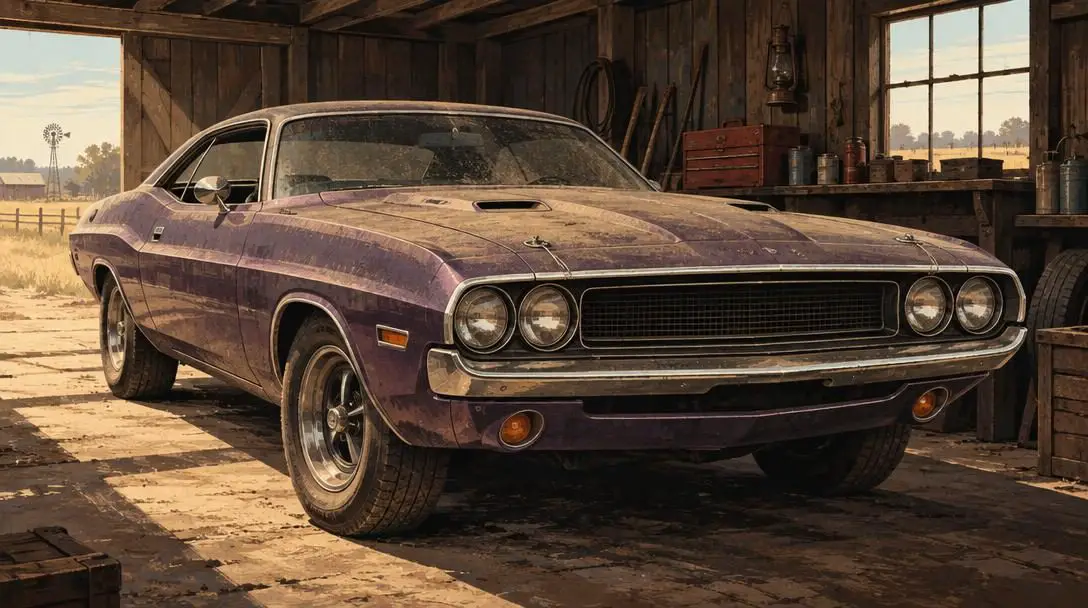
First hitting the American market in 1969, the Dodge Challenger immediately established itself as a premier performance coupe within the Chrysler lineup. Its initial first-generation manufacturing run lasted five years before the badge was briefly repurposed in the late 1970s and subsequently dropped in 1983. Dodge resurrected the modern iteration in 2008, cementing the Challenger name in modern performance culture, but original vintage examples remain the true prizes for barn hunters.
Restoring a classic Challenger requires significantly more elbow grease, mechanical patience, and investment than working on a more basic model like the Road Runner. However, because early Challengers boast dramatic body lines, aggressive stances, and a passionate enthusiast community, unearthing an intact first-generation model tucked away in a dusty outbuilding represents a tremendous discovery that commands top-tier collector interest.
Ford Mustang
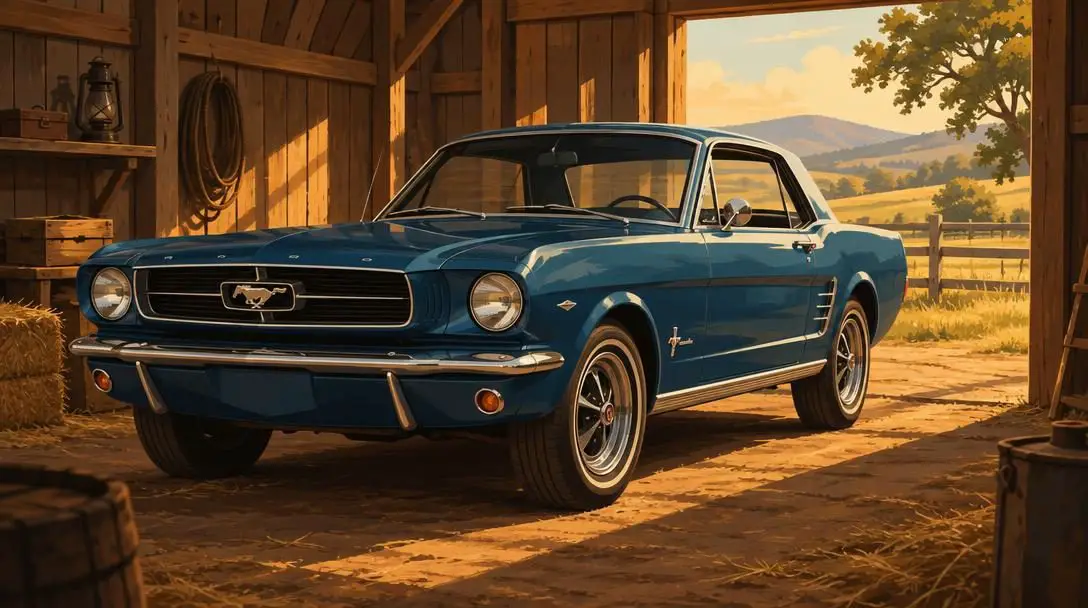
- Inaugural Model Year: 1965
- Production Timeline: Unbroken continuous manufacturing to the present day
- First Generation: 1965 through 1973
- Second Generation: 1974 through 1978
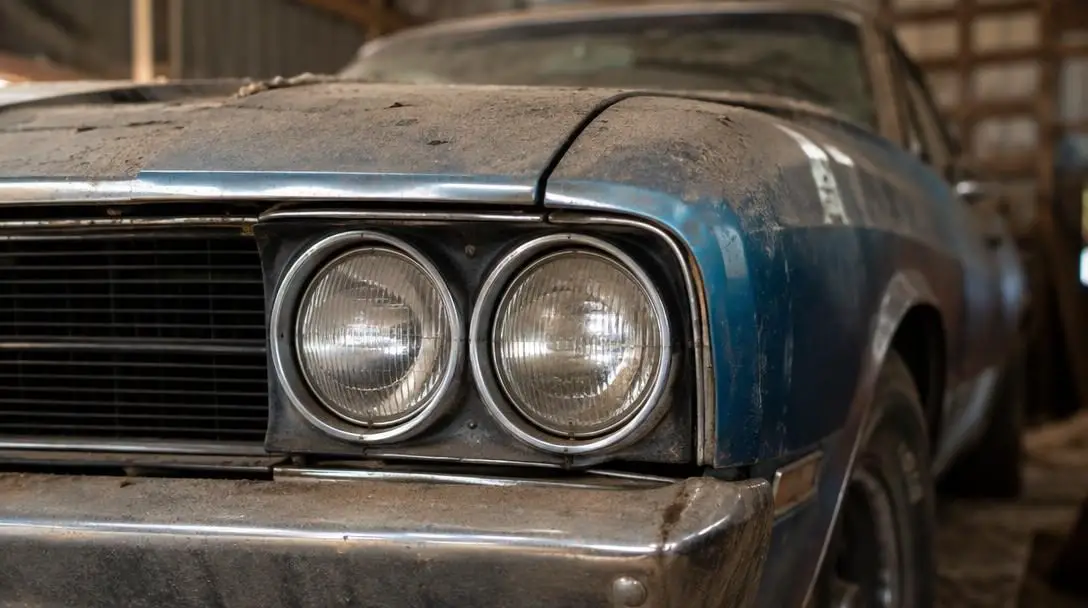
The Ford Mustang holds a unique place in automotive history as an instantly recognizable cultural phenomenon that never suffered a single break or hiatus throughout its manufacturing life. Rolling off assembly lines without interruption from 1965 through today, the Mustang established unprecedented sales volumes right from its initial launch.
Because Ford sold millions of early models, a remarkable number of first-generation Mustangs (1965–1973) remain scattered across rural properties waiting for rediscovery. Beyond the legendary first run, second-generation models (1974–1978) retain reliable interest from budget-minded collectors, while third-generation platforms—once overlooked by classic purists—have emerged as trendy enthusiast projects in recent years.
Chevrolet Camaro
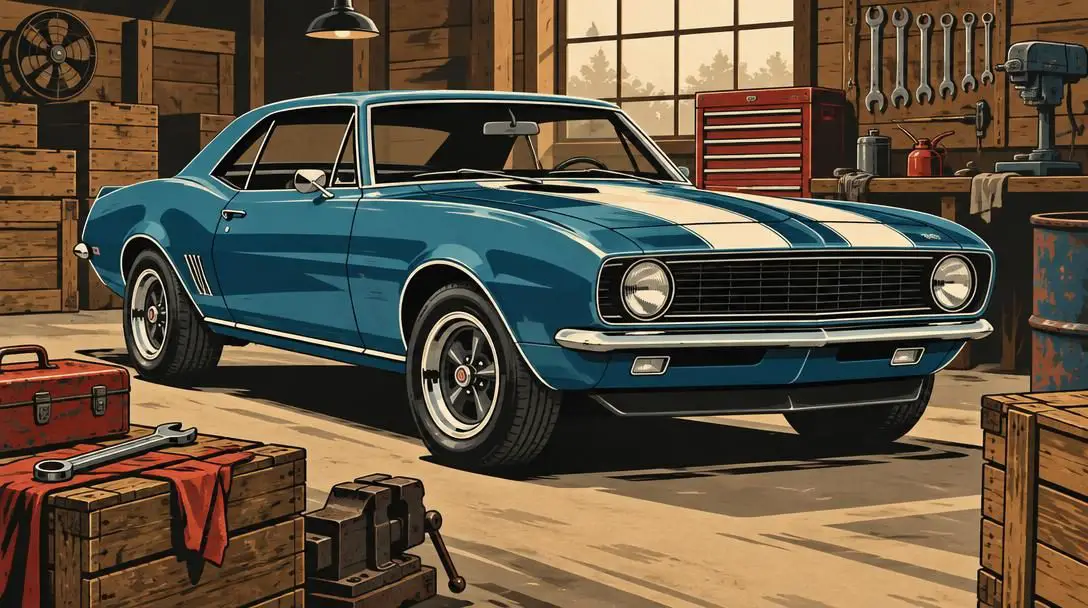
- Showroom Arrival: One year after the Ford Mustang
- Most Prized Model Years: 1967, 1968, and 1969
- Production Gap: Seven-year pause during the 2000s
- Typical Restoration Investment: $10,000 to upwards of $60,000
Arriving in dealer showrooms just one year after Ford debuted the Mustang, the Chevrolet Camaro launched one of the greatest rivalries in motorsport history. Except for a temporary seven-year hiatus during the 2000s, the Camaro has enjoyed an otherwise steady manufacturing presence across multiple decades, earning iconic status among General Motors enthusiasts.
Within the Camaro's storied timeline, the original first-generation cars—encompassing the 1967, 1968, and 1969 model years—reign supreme among collectors and command the highest market prices. Bringing a neglected first-generation Camaro back from years of barn storage requires careful fiscal planning, as ground-up restorations typically demand between $10,000 and $60,000 depending on sheet metal decay and powertrain authenticity.
Pontiac GTO
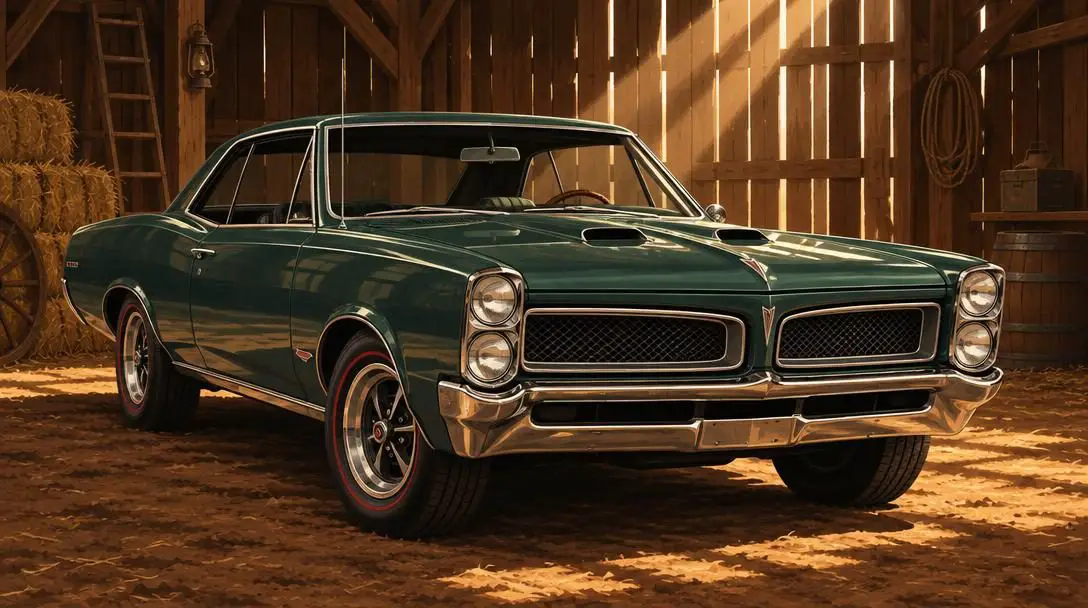
- Introduction Year: 1963
- Golden Era Run: Four generations across 11 years (1963–1974)
- Nameplate Revival: Brief return during the mid-2000s
- Top Restoration Cost: Upwards of $75,000
Widely regarded as the car that sparked the muscle car craze, the Pontiac GTO debuted in 1963 and defined American street performance for over a decade. Spanning four distinct generations across an eleven-year span until classic production halted in 1974, the GTO solidified its reputation through prominent appearances in popular television series and major motion pictures.
Although Pontiac reintroduced the badge for a short run during the mid-2000s, it is the authentic first four generations that drive collectors into rural barns with high hopes. Because these cars carry such massive cultural value, full restorations are significant undertakings, with premier ground-up projects easily climbing past $75,000 to complete.
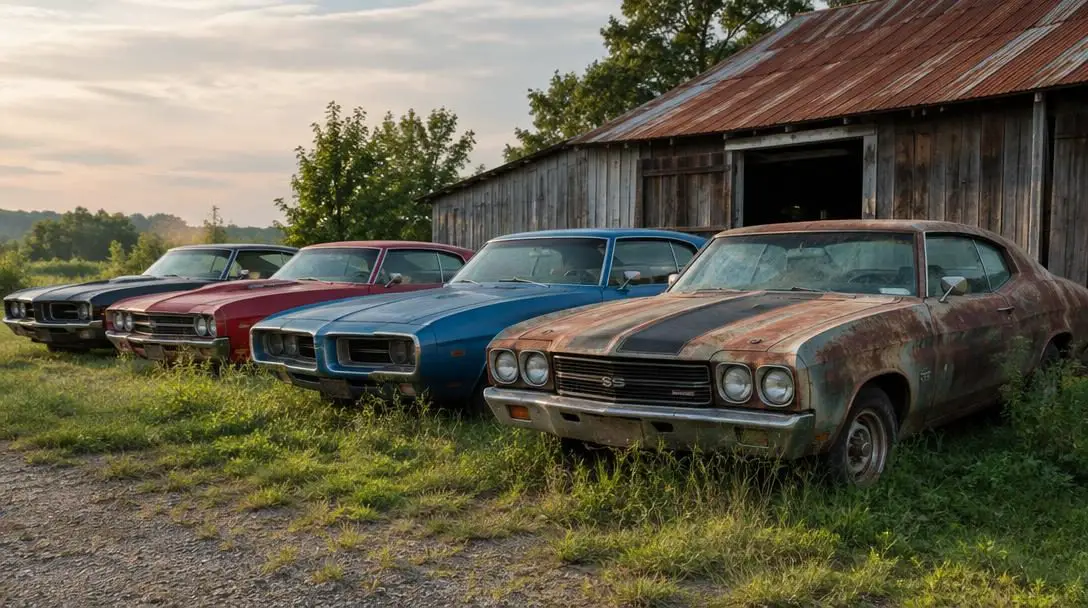
Muscle cars represent an iconic era of automotive manufacturing, characterized by potent performance, striking body lines, and enduring cultural impact.
How barn finds and muscle car valuations work
When a vintage vehicle sits enclosed inside an agricultural building for decades, it enters an extended state of physical and mechanical suspension. Although sheltered from ultraviolet rays and highway debris, the vehicle remains vulnerable to ambient humidity, seasonal temperature swings, rodent intrusion, and fluid decomposition. Understanding the baseline value of a discovered vehicle requires analyzing several interrelated factors.
- Originality: Vehicles that preserve their factory-installed sheet metal, original exterior badging, interior trim, and unmolested wiring retain a significantly higher baseline value than cars subjected to backyard modifications during the 1970s and 1980s.
- Powertrain Authenticity: Verifying matching-numbers engine blocks, transmission cases, and rear axle assemblies sets the absolute financial ceiling for any prospective classic car project.
- Generational Desirability: Distinct production windows—such as the 1967–1969 Camaro or early first-generation Dodge Challengers—consistently attract premium interest compared to later redesigns hampered by emissions restrictions.
- Parts Availability and Restoration Feasibility: Models like the Plymouth Road Runner maintain strong appeal because sourcing mechanical components, such as its popular 6.2-liter engine layout, makes returning the car to driving condition economically realistic.
Practical steps to uncover and assess a barn find
Tracking down, purchasing, and retrieving an abandoned vehicle requires organized, deliberate execution to protect your safety, your finances, and the physical integrity of the classic machine.
- Follow local and rural leads: Rather than relying on traditional online auto dealers, search out regional estate sales, talk with residents in farming communities, network with regional car clubs, and keep a trained eye on properties featuring dormant agricultural buildings.
- Secure explicit access permissions: Always obtain clear consent from the property owner or estate executor before stepping onto private acreage or opening outbuilding doors. Establishing open communication builds rapport with owners who may be hesitant about parting with family heirlooms.
- Conduct an objective structural inspection: Thoroughly inspect the chassis using high-output lighting. Check floor pans, trunk wells, lower quarter panels, firewalls, and structural frame rails. While light surface rust is easily managed, pervasive rot throughout structural crossmembers drastically shifts the economics of a project.
- Verify the vehicle identification numbers: Locate the Vehicle Identification Number (VIN) plate, cowl tags, and any original build sheets tucked under seats or dash framing. Decoding these stamps confirms whether the car is an authentic performance package or a standard base coupe fitted with aftermarket badges.
- Inspect the engine and drivetrain: Examine the displacement badging, intake manifolds, and transmission connections. Place a breaker bar on the front crankshaft damper bolt to gently test whether the engine rotates smoothly or has seized solid from internal moisture.
- Deploy dedicated vehicle extraction equipment: Cars parked on dirt or damp timber for decades frequently suffer from frozen drum brakes, flat-spotted rubber, and collapsed suspension parts. Use heavy-duty winches, spare rolling wheels, hydraulic floor jacks, and a flatbed trailer to extract the vehicle without bending original sheet metal.
Common mistakes to avoid with neglected muscle cars
The rush of finding an iconic performance machine hidden beneath dust often leads to hasty decisions. Avoiding common pitfalls protects both your project timeline and your wallet.
- Turning the key prematurely: Firing up an engine without draining the ancient fuel, clearing the fuel lines, inspecting the oil passages, and pre-lubricating cylinder walls will quickly destroy internal components.
- Underestimating concealed undercarriage rust: Dirt and gravel floors continuously release moisture upwards into floor pans and rocker panels. A body that appears pristine from above can hide severe rust underneath.
- Discarding weathered original parts: Never throw away degraded trim pieces, fasteners, or brackets during disassembly. Even if an original part cannot be reused, it provides an indispensable reference when ordering exact reproduction components.
- Overlooking title documentation: Decades of storage often leave vehicles without clear titles, current registrations, or documented probate approvals. Always confirm clear legal ownership before transferring money.
- Failing to establish budget parameters: Ground-up restorations scale rapidly, routinely climbing from $10,000 to over $60,000 on first-generation Camaros and past $75,000 on historic Pontiac GTOs. Starting without clear limits leads directly to stalled projects.
Planning your restoration scope
Once the car is securely stored in your workspace, defining the scope and purpose of your build prevents mid-project stalls. Enthusiasts typically choose between three distinct routes: returning the car to complete, factory-correct showroom standards, building a functional street-driven cruiser, or undertaking a mechanical overhaul and fresh paint job to resell the car for an investment profit. Deciding this objective early governs every choice regarding parts sourcing, metal fabrication, and overall labor allocation.
Frequently asked questions
Why are muscle cars found in barns more often than other vintage vehicles?
Many classic muscle cars were originally bought second-hand as hobby projects. When original owners faced shifting life priorities, mounting costs, or unexpected repair hurdles, they pushed the vehicles into outbuildings intending to finish them later, leaving them untouched for decades.
Which muscle car on this list is the simplest to restore?
The Plymouth Road Runner is widely recognized for its relatively straightforward restoration process. Because it was engineered as an affordable, performance-first car without complicated luxury equipment, rebuilding its mechanicals and sourcing parts like its 6.2-liter engine is very achievable.
How much should I expect to spend restoring a first-generation Camaro?
A comprehensive, ground-up restoration of a first-generation Chevrolet Camaro (1967–1969) generally runs between $10,000 and upwards of $60,000, depending heavily on initial body condition and whether you use original-equipment components.
Has the Ford Mustang ever paused production?
No. Unlike the Camaro, Challenger, and GTO, the Ford Mustang has remained in continuous, unbroken production since its introduction in 1965, resulting in a large supply of surviving first- and second-generation project candidates.
What makes early Dodge Challengers so valuable as barn finds?
Early first-generation Challengers from 1969 through the early 1970s feature celebrated body styling, relatively short initial production runs, and a passionate enthusiast base, making intact survivors prime high-value targets for dedicated collectors.
The bottom line
Barn find muscle cars remain the holy grail of automotive treasure hunting, combining historical prestige with the excitement of hands-on mechanical revival. Whether you cross paths with an affordable Plymouth Road Runner, an unbroken-legacy Ford Mustang, a high-value early Chevrolet Camaro, a legendary Dodge Challenger, or a cinema-famous Pontiac GTO, the secret to success lies in careful structural inspection, realistic financial planning, and a disciplined restoration strategy.