Your Privacy And Instagram: Here’s What You Need To Know
When Instagram launched in late 2010, it was primarily a simple, creative mobile app designed to help users share everyday snapshots with stylish filters. Over the following decade, the platform experienced explosive global growth, eventually being acquired by Facebook, the corporate entity now known as Meta. With that acquisition, Instagram transitioned from an independent photo-sharing space into an integral component of a massive digital advertising network.
Because Instagram operates under Meta's overarching corporate privacy framework, questions regarding user privacy and personal data protection have become central to the platform's user experience. Understanding how your information is gathered, how it is commercialized, and what practical tools exist to protect your digital boundaries is essential for anyone maintaining an active account today.
Key takeaways
- Instagram operates directly under Meta's unified corporate privacy policy, which uses on-platform actions and off-app behavior to power targeted advertising.
- The platform monitors user bios, friend networks, post engagement, device identifiers, IP addresses, GPS coordinates, and broader mobile browsing habits.
- Switching to a private account restricts photo visibility and extended bios exclusively to approved followers, leaving only your username and profile picture visible to outsiders.
- Users can inspect and delete their activity history via the three-line menu and have the legal right to request a full downloadable archive of their personal data.
- The most pressing everyday privacy threats stem from unvetted followers, shared personal markers in bios, and compromised accounts that target trusted contacts.
The evolution from photo filter app to Meta data ecosystem
Instagram was introduced in late 2010 as a dedicated visual community. Its core appeal relied on easy-to-use digital filters that transformed casual mobile phone photos into images that looked polished and professional. In those early years, engagement was relatively straightforward: users uploaded pictures, wrote concise captions, and interacted with friends through comments and likes. There was minimal algorithmic curation, and targeted commercial advertising had not yet entered the experience.
Following its acquisition by Facebook, the platform underwent architectural and business changes. As Facebook rebranded to Meta, Instagram was brought directly into Meta's centralized infrastructure. While Instagram retains its own outward-facing brand and community guidelines, its core data practices are governed by Meta's broader privacy policy. Under this framework, user information forms the basis of corporate advertising revenue.
Digital privacy on modern social networks has shifted far beyond simply protecting an account password from brute-force theft. Today, privacy involves managing constant telemetry, automated analytics, and behavioral profiling. Because Meta generates its revenue by connecting businesses with specific consumer demographics, every touchpoint inside the Instagram app contributes to a detailed marketing profile.
What information Instagram tracks and collects
Data harvesting on Instagram begins with the information you explicitly share on your profile. The platform stores your account username, contact details, and everything written in your bio section. It also logs your active posting schedule, the content of your imagery, the text within your captions, and your direct interactions with other accounts. However, direct profile information represents only the most visible layer of the data catalog Meta maintains.
Behind the interface, the app monitors your social connections with granular precision. Instagram maps your complete friends list, analyzes who follows you, and evaluates the size and responsiveness of your audience. By tracking how many distinct accounts you can connect with in a single post, Meta constructs a detailed graph of your social sphere, personal influence, and daily relationships.
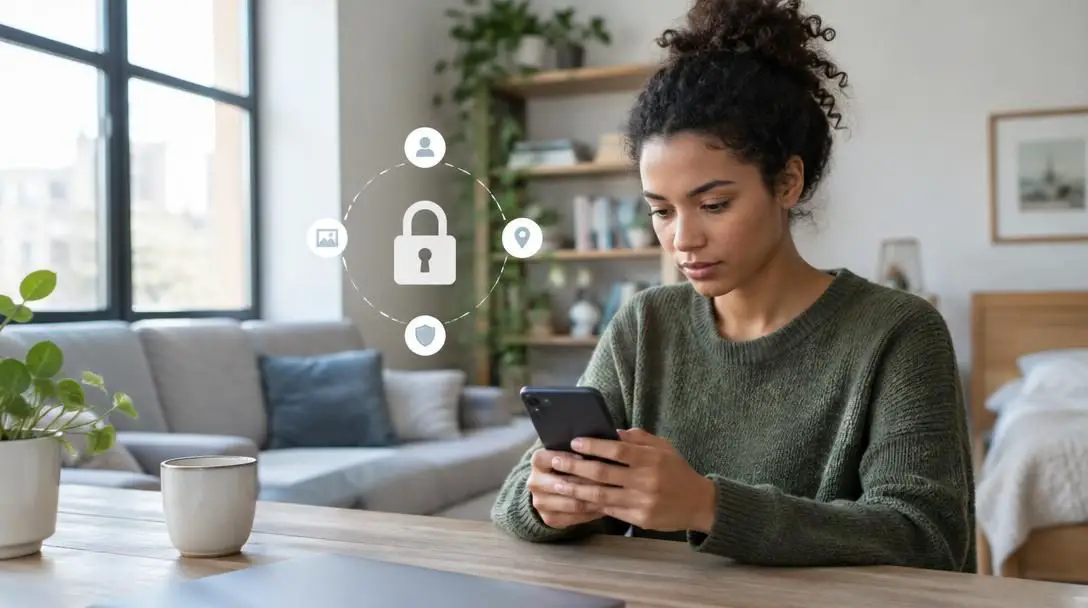
Meta tracks not only your interactions within the app, but also broader phone activities, device markers, and physical locations to shape the daily advertisements in your feed.
Beyond in-app habits, data gathering continues even when the application is closed or idle. Instagram monitors external mobile activities, noting when users browse online for specific items of clothing or research local restaurants for upcoming meals. In tandem with browsing data, Meta collects critical hardware and connection telemetry:
- Device identification: Unique mobile identifiers allow the platform to link specific accounts and habits directly to an individual physical handset.
- Precise location data: Integrated GPS tracking logs geographic locations and movement trends over time.
- Network details: The system logs your current IP address, recording the internet service providers and local networks you use to connect.
By assembling your location history, network addresses, mobile hardware markers, and commercial interests, Meta develops an exhaustive portrait of your daily routines. This profile dictates the tailored advertisements that populate your feed, stories, and discovery tabs.
| Data category | Specific signals gathered | Primary commercial function |
|---|---|---|
| Direct profile details | Username, bio section, uploaded photographs, and captions | Public display and baseline interest categorization |
| Network connections | Follower lists, friend accounts, and single-post connection reach | Social graph modeling and viral content distribution |
| External phone activity | Clothing shopping habits and restaurant research | Consumer demographic targeting and third-party advertising |
| Technical telemetry | Unique device identifiers, IP addresses, and GPS coordinates | Hardware matching, location targeting, and network profiling |
Practical tools to protect your account and data
Although it is nearly impossible to use Instagram without agreeing to Meta's baseline data collection, you can use built-in account settings to restrict public exposure, protect your personal boundaries, and audit what information remains stored on Meta's servers.
Private profile settings
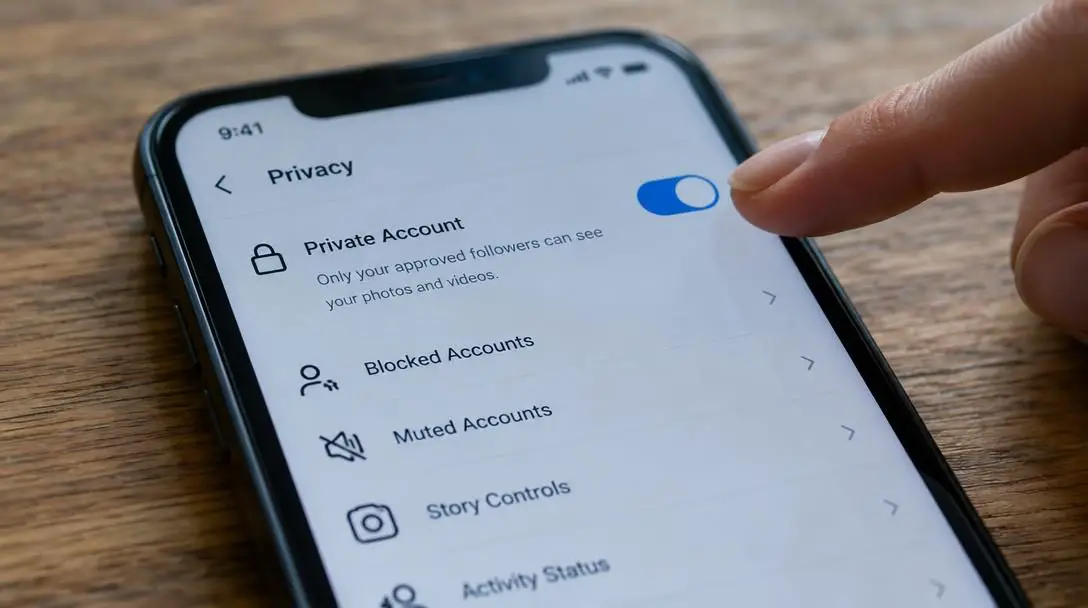
By default, newly registered Instagram profiles are accessible to anyone on the internet. Switching your account to private immediately restricts open visibility. Once enabled, outside users cannot view your published photographs, photo tags, or extended profile bio. Instead, they see only your username and profile picture. Anyone wishing to view your feed must send an explicit follow request, which you have the option to approve or deny individually.
Comment management controls
Public comment sections can quickly become conduits for unwanted interactions, automated commercial spam, or targeted harassment. Instagram allows account holders to disable comments entirely on individual posts or apply automated filters across their feeds. Restricting who can comment helps shield your personal updates from disruptive third parties.
Decoupling Facebook cross-posting
Because Meta integrates services across its corporate family, Instagram accounts frequently prompt users to publish their stories and posts to Facebook simultaneously. For users who prefer to maintain distinct audiences across both platforms, leaving cross-posting enabled can lead to unintentional exposure. Navigating to sharing preferences and toggling off Facebook integration keeps your Instagram content within its intended container.

Account activity and history audit
Instagram retains an extensive log of every interaction you make across the network, including liked posts, commented threads, and search histories. You can review, filter, and purge these logs directly within the mobile application interface.
- Open the Instagram app and tap your profile picture in the bottom corner.
- Select the three lines menu icon, commonly known as the hamburger menu, in the upper corner of your profile.
- Navigate to the activity and account history section to view recorded interactions.
- Review the categorized logs and use the filtering options to delete specific records or remove unwanted past history.
Downloading an official copy of personal records
Under international and regional digital regulations, social platforms are legally required to provide users with access to their collected data records. Instagram allows you to request an official copy of your personal archive. Once processed, the platform provides a downloadable file to your computer or mobile device containing your stored profile details, message logs, uploaded media, and historical interactions, letting you review exactly what Meta holds on your profile.
Six common privacy mistakes users make on Instagram
Many privacy vulnerabilities on Instagram stem not from technical breaches, but from routine configuration oversights and everyday posting habits. By identifying these frequent missteps, you can take deliberate steps to secure your personal footprint.
- Assuming an account is private by default: New users frequently believe their accounts are automatically shielded from public search engines and strangers. Unless you manually toggle the privacy switch in your settings, every image, caption, and follower list remains visible to any web user.
- Oversharing sensitive context in bios and captions: Many users routinely list their employer, university, school, or residential hometown in their extended bio or post descriptions. Even when an account is switched to private, the bio section and profile picture remain completely public, exposing identifying location details to anyone who searches your username.
- Granting unchecked mobile phone permissions: Users often grant broad phone permissions upon installation without realizing that Instagram monitors background activity. Permitting continuous GPS tracking and broad data access allows Meta to record external behaviors, such as shopping for specific apparel or looking up local eateries.
- Leaving automated cross-posting active: When connecting accounts, users often forget that automated cross-posting sends every photo directly to Facebook. If your Facebook profile has different audience permissions, personal photos intended for close friends on Instagram might be broadcast to wider professional or family networks.
- Neglecting stored account history: Leaving historical activity logs unchecked allows years of searches, interactions, and profile interactions to remain linked to your account. Periodically opening the three-line menu to purge unnecessary historical logs prevents outdated habits from lingering in your record.
- Trusting communications from compromised accounts: Account takeovers remain widespread across social networks. Malicious actors frequently compromise legitimate profiles and use direct messages to contact close friends with fraudulent links, deceptive urgent requests, or malicious login portals.
Frequently asked questions
Does Instagram track my activity when I am not using the application?
Yes. Instagram monitors external mobile activity, including what you look for on your phone, such as browsing for clothing or researching local restaurants. It also collects your device identification, IP address, and GPS coordinates to help Meta deliver targeted commercial advertisements.
What visible information remains public if I make my account private?
When you switch your profile to private, your uploaded photographs, tagged posts, and extended bio details are hidden from the general public. However, non-approved users can still view your username and your profile picture when they visit your handle.
How can I view or remove the data Instagram has collected about my account?
You can inspect your data by tapping your profile picture, selecting the three-line hamburger menu, and navigating to your account activity and history. From there, you can filter through your logged interactions and remove items you no longer want stored.
Can I stop my Instagram posts from appearing on my Facebook profile?
Yes. You can manage cross-posting preferences within the application settings. Toggling off the option to share updates directly to Facebook ensures that your posts remain exclusive to your Instagram followers.
Is Instagram required by law to give me a copy of my personal data?
Yes. Instagram is legally obligated to provide you with an official copy of your personal records upon request. You can initiate a data download to receive an archive on your computer containing the historical information and activity linked to your profile.
The bottom line
Operating safely on Instagram requires recognizing the core realities of modern social platforms. Because Meta's corporate business model depends on monetizing behavioral data to sell targeted advertisements, digital privacy on the network will always function within commercial boundaries. As long as you agree to the terms of service, background telemetry and commercial modeling will remain active components of the platform experience.
At the same time, legal mandates hold the company accountable to clear privacy terms and grant users the right to request comprehensive archives of their personal records. There is no need to abandon the application out of fear, provided you engage with its features deliberately. By locking down profile visibility, turning off comments when appropriate, decoupling external networks like Facebook, and remaining vigilant against compromised accounts, you can enjoy sharing your life visually while keeping your personal space protected.