Your Privacy and TikTok: Here’s What You Need to Know
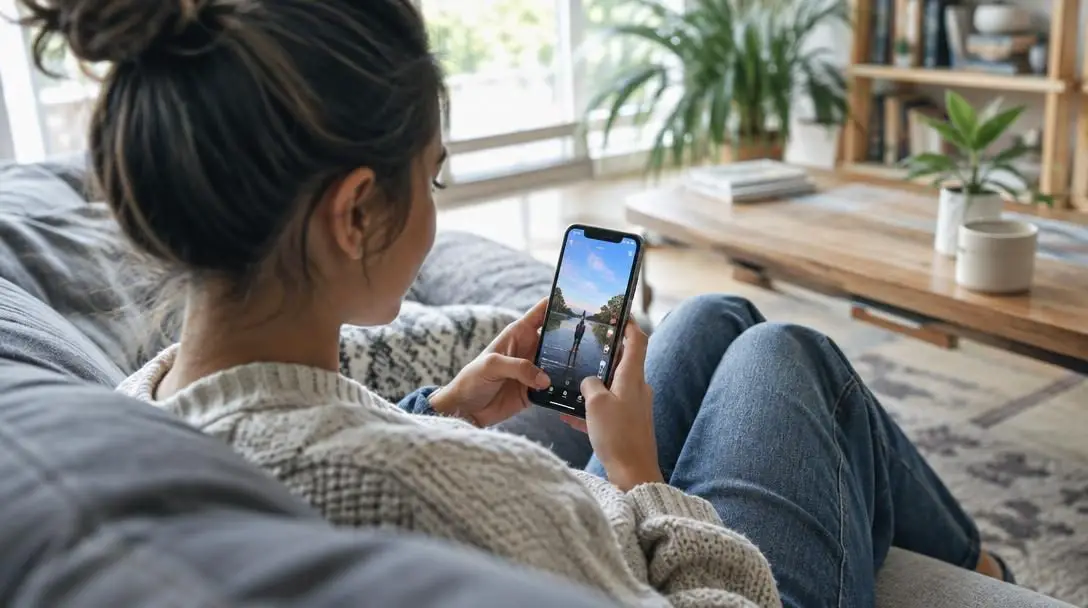
For over a decade, digital privacy debates centered almost exclusively on domestic American technology giants such as Google and Meta (formerly Facebook). However, the explosive rise of TikTok has fundamentally shifted the public conversation around how modern mobile applications track, store, and monetize personal information. Owned by the Chinese technology company ByteDance, the popular short-form video platform has captured billions of hours of consumer attention while simultaneously facing unprecedented regulatory scrutiny.
While TikTok provides an endless stream of creative entertainment and algorithmic discovery, its underlying technical architecture operates an extensive data-harvesting network. As concerns over international data transfers, behavioral tracking, and biometric scanning mount, everyday consumers need a clear understanding of what information the platform captures, how it compares to legacy tech services, and what specific measures can limit personal exposure.
Key takeaways
- TikTok ranks fourth among social media platforms in terms of the total volume of user data collected.
- The platform gathers sensitive payment details, continuous location metrics, search records, and cross-device network activity.
- Following a privacy policy update in June 2021, TikTok explicitly claims the right to analyze biometric markers, including facial and vocal attributes.
- United States lawmakers, including Virginia Senator Mark Warner, have raised national security alarms over foreign data access and urged intervention by the Federal Trade Commission.
- Users can significantly curb tracking by disabling location permissions, unlinking saved payment cards, auditing secondary devices, and cleaning local caches.
The geopolitical and regulatory spotlight on ByteDance
Digital privacy is no longer confined to technical trade forums; it has become a central battleground in international commerce and national security policy. In the United States, lawmakers have grown increasingly vocal about how foreign-owned applications handle domestic consumer records. ByteDance, the Beijing-based parent company of TikTok, sits at the heart of this confrontation due to legal requirements in its home jurisdiction and the sheer scale of American demographic data residing on its servers.
Virginia Senator Mark Warner has emerged as one of the most prominent congressional voices evaluating these risks. Addressing the commercial and strategic implications of foreign data aggregation, Warner highlighted the broader ramifications for domestic security:
This is a security concern. It is, quite frankly, a business advantage to the Chinese overall.
Senator Warner and other officials have directed their attention toward federal regulatory agencies, hoping to establish comprehensive digital boundaries that shield consumers across all digital touchpoints. Warner noted his hope that the Federal Trade Commission (FTC) would take decisive regulatory action, remarking, "My hope is the (Federal Trade Commission) will respond and we can put in place the kind of privacy protections that, right now, are just not being provided to Americans." The ongoing debate focuses not merely on whether data is accessed maliciously today, but on whether systemic legal vulnerabilities leave user information exposed to foreign surveillance or compulsory sharing tomorrow.
What information does TikTok actively collect?
Like its industry competitors, TikTok relies on sophisticated telemetry systems designed to gather comprehensive behavioral profiles. When users agree to the terms of service, they authorize the ingestion of diverse datasets spanning financial, geographic, behavioral, and physical metrics.
Financially, TikTok maintains records on how transactions are completed within the platform. If you purchase in-app gifts, coins, or retail goods, the service records your card credentials or linked PayPal details. This deep level of payment processing access creates friction for security-minded users, who worry about sensitive financial instruments being stored on servers subject to foreign jurisdictional scrutiny.
Beyond transactional data, TikTok logs traditional advertising telemetry with remarkable precision. The application records detailed search histories, viewing duration down to the millisecond, account engagements, direct messaging interactions, and geographic position. Unless location services and cellular background data are aggressively curtailed, the application tracks your movements throughout the day. Furthermore, this tracking is not restricted to a single smartphone; if you install TikTok on multiple pieces of hardware, the system aggregates data across those shared endpoints to build a composite portrait of your digital life.
Despite headlines characterizing TikTok as a unique privacy outlier, its tracking scale aligns closely with legacy Silicon Valley firms. In industry rankings assessing data-collection intensity, TikTok was ranked fourth among all major social media platforms. While it gathers an immense volume of personal identifiers, it operates within an advertising-driven ecosystem pioneered by platforms like Facebook, Instagram, and Google.
| Platform | Primary Data Collected | Biometric Recognition | Parent Company Base |
|---|---|---|---|
| TikTok | Payment records, location, searches, device sync, video audio/visuals | Face and body feature detection, voiceprints | China (ByteDance) |
| Meta (Facebook & Instagram) | Ad preferences, off-platform browsing, contacts, messaging, location | Facial recognition systems (varied by product history) | United States |
| Search queries, map routes, purchasing history, hardware telemetry | Voice recognition, visual image indexing | United States |
Biometric data harvesting and the June 2021 policy update
The most scrutinized dimension of TikTok's terms of service involves the extraction of biometric data. In technical terminology, biometric tracking refers to the digital measurement and analysis of distinct physiological characteristics. This can include fingerprints, vocal frequencies, facial recognition geometry, and even estimates of physical dimensions such as height and weight.
Shortly before an executive order addressing foreign software applications was signed in June 2021, TikTok revised its official privacy documentation to formally define the physical metrics it captures. The updated policy language explicitly identified the ingestion of images, video frames, and audio recordings, granting the company the right to determine "the existence and location within an image of face and body features and attributes."
Through this computer-vision analysis, the platform does not merely serve video clips; it algorithmically parses the physical traits of human subjects appearing on screen. This technology can isolate facial landmarks for visual filters, assess gaze direction, interpret ambient audio environments, and track physical movement. While ByteDance emphasizes that automated feature detection enhances user engagement and creative editing capabilities, civil liberties advocates remain troubled by the mass cataloging of biological attributes without explicit, separate opt-in consent.
How ByteDance defends its corporate security standards
To counter mounting pressure from Western governments, ByteDance has consistently defended its internal infrastructure, pointing to third-party assessments and institutional isolation programs designed to protect domestic records. The company acknowledges the intense public focus directed at its platform and claims to have instituted safeguards exceeding standard commercial baselines.
Addressing these concerns publicly, ByteDance explained its operational approach:
"We know we’re among the most scrutinized platforms from a security standpoint, and we aim to remove any doubt about the security of US user data. That’s why we hire experts in their fields, continually work to validate our security standards, and bring in reputable, independent third parties to test our defenses."
Despite these formal assurances and independent auditing initiatives, doubts persist among cybersecurity professionals and legislative committees. Multiple former employees have reported organizational opacity regarding cross-border internal server queries, leaving open questions about whether technical safeguards can withstand statutory demands from foreign authorities.
Step-by-step guide to locking down your TikTok account
Users who wish to continue enjoying short-form video content without relinquishing total digital autonomy can implement several defensive configurations. Taking a proactive approach to mobile operating system permissions and internal application settings reduces your trackable footprint dramatically.
- Revoke real-time location services: Navigate to your mobile device's system settings, select TikTok, and disable GPS access entirely. Prevent the application from utilizing precise or approximate geographic coordinates to map your daily travel routines.
- Decouple primary payment instruments: Never store your main debit or credit cards directly inside the application. If you make purchases, avoid storing your payment credentials or personal PayPal account permanently on remote company servers.
- Audit all secondary hardware: Inspect every auxiliary device linked to your profile, including tablets, secondary smartphones, or work devices. Uninstall the application from hardware where it is not strictly necessary to prevent cross-device profile aggregation.
- Convert your profile to private: Access the in-app privacy menu and toggle your account to private status. This ensures that only users you have personally vetted can view your published videos, profile favorites, and active follower lists.
- Constrain hardware sensors: Modify your device settings so that TikTok can access your camera and microphone exclusively while the application is open and actively being used to film. Never grant continuous background access to audiovisual sensors.
- Sanitize local application caches: Routinely enter the app settings to clear your search history and flush accumulated temporary data caches, which purges local tracking markers stored on your physical phone.
Six common privacy mistakes users make on TikTok
Many consumers believe that simply using an alias or keeping a low profile protects them from commercial surveillance. In reality, modern telemetry networks bypass surface-level anonymity through advanced environmental and device matching. Avoid these frequent missteps to keep your profile secure.
- Assuming default settings prioritize privacy: Modern social media platforms are calibrated out of the box to maximize data flow, targeted ad delivery, and behavioral retention rather than your personal confidentiality. Leaving settings at default guarantees maximum telemetry capture.
- Ignoring secondary hardware sync: Users frequently harden their primary smartphone while leaving TikTok installed on an old tablet or family device. Shared local networks allow tracking engines to merge identities across disparate hardware.
- Saving sensitive financial details: Storing permanent credit cards or PayPal accounts inside the application makes your sensitive financial records vulnerable to platform-wide database breaches or cross-border data audits.
- Believing private accounts stop internal tracking: Switching your profile to private prevents other public users from viewing your feed, but it does absolutely nothing to stop TikTok from recording your viewing habits, device metrics, searches, and biometrics.
- Broadcasting identifiable environmental cues: Filming content near building exteriors, distinctive architectural fixtures, home mailboxes, or personal identity documents provides computational systems with sufficient visual context to pinpoint your home address.
- Thinking small accounts are immune to surveillance: Many users assume that because they possess a small audience, tracking systems disregard them. While individual non-celebrity users are rarely targeted for bespoke surveillance, automated data-mining systems process every user account with identical algorithmic rigor.
Frequently asked questions
Does TikTok sell my data directly to foreign governments?
ByteDance has publicly stated that it does not share user information with the Chinese government and utilizes independent security standards to protect United States records. However, cybersecurity analysts and lawmakers remain concerned that foreign legal statutes could compel cross-border access regardless of commercial policy.
How does TikTok's data intake compare to Facebook and Google?
TikTok is ranked fourth among social media platforms in terms of the total volume of data collected. While its biometric harvesting and ownership structure invite greater geopolitical scrutiny, platforms like Google and Meta maintain similarly aggressive data-collection models spanning searches, geographic locations, and off-site browsing tracking.
Can TikTok track my location if I turn off GPS?
Yes. Even with precise GPS permissions disabled, mobile applications can approximate your general geographic location using cell tower triangulation, Wi-Fi network identifiers, IP addresses, and data synchronized from other connected devices on the same home network.
What biometric information is TikTok allowed to analyze?
Under its updated privacy disclosures enacted in June 2021, TikTok explicitly claims authorization to analyze audio, images, and videos to determine the presence, location, and physiological attributes of facial and body features, as well as vocal profiles.
Does switching to a private account prevent ByteDance from collecting data?
No. A private profile only conceals your posts and activity from other standard users on the web. The platform's internal tracking algorithms continue to log your search records, device telemetry, viewing times, and hardware metrics unchanged.
The bottom line
The tension surrounding TikTok represents a critical turning point in how society evaluates digital privacy, international data sovereignty, and algorithmic profiling. While the app provides world-class entertainment, it extracts an enormous volume of sensitive data—ranking fourth across all social platforms in total information intake. By analyzing everything from payment mechanisms and device fingerprints to nuanced biometric markers within video frames, the platform maintains a comprehensive log of user behavior.
As legislative bodies explore broader regulatory interventions and call upon agencies like the Federal Trade Commission to formulate unified consumer defenses, individual users must take ownership of their personal exposure. By disabling intrusive device permissions, cleaning out saved financial accounts, and staying mindful of background elements in uploaded videos, you can engage with modern social media without unnecessarily sacrificing your digital safety.