Your Privacy And Facebook: Here’s What You Need To Know

For more than two decades, social media platforms have fundamentally altered how billions of people communicate, share personal milestones, discover news, and interact with commercial brands. At the forefront of this digital shift sits Facebook, a platform whose unprecedented scale has made it an unavoidable centerpiece in global debates over internet security, user tracking, and personal data rights.
As the network expanded from a casual college directory into a vast corporate ecosystem, the volume of personal data collected, stored, and analyzed grew exponentially. Understanding how this information is monitored—and knowing how to configure the platform's privacy settings—is essential for anyone seeking to protect their digital footprint while remaining connected.
Key takeaways
- Facebook gathers detailed browsing and search histories through terms of service agreements and off-platform tracking tools.
- Congressional hearings highlighted deep concerns over consumer privacy, toxic content, and data collection affecting younger audiences.
- Even individuals without registered Facebook accounts are monitored across the web through embedded analytics and tracking code.
- Activating two-factor authentication and manual tag reviews drastically reduces the risk of account hijacking and unwanted public exposure.
- Using the built-in tool to limit past posts retroactively restricts historical updates from recruiters, acquaintances, and public searches.
The Congressional spotlight on social media data
Public scrutiny surrounding digital privacy reached a historic peak when company founder Mark Zuckerberg spoke to Congress regarding platform practices. During these intense proceedings, lawmakers pressed the chief executive on how user data is gathered, how targeted advertising is delivered, and how the platform impacts younger demographics. The high-profile hearings pierced the illusion that social networks are merely casual digital scrapbooks, exposing the intricate commercial mechanisms operating beneath daily user interactions.
The tension during the hearings was palpable, underscored by severe assessments from elected officials. During the exchange, Senator Ed Markey directly addressed Zuckerberg with a sharp indictment of the network's business practices:
Your time of invading our privacy, promoting toxic content and preying on children and teens is over.
This dramatic confrontation served as a wake-up call for millions of users who had previously paid little attention to platform permissions. While Facebook had publicly acknowledged its core responsibilities—with Zuckerberg once stating, "We have a responsibility to protect your data, and if we can’t then we don’t deserve to serve you"—the legislative inquiries revealed a stark divide between corporate pledges and everyday data exposure.
How Facebook tracking and data collection operate
Navigating digital privacy requires understanding the multifaceted systems used to monitor user behavior. Data collection does not begin and end within the social feed itself; rather, it encompasses a sprawling infrastructure that connects on-site engagement with broader internet browsing habits.
Off-platform browsing and search history tracking
Many users notice that after searching for a consumer item online, their social feed immediately populates with highly specific commercial advertisements, such as direct links to Amazon products they were recently considering. This occurs because agreeing to the platform's terms of service grants consent to monitor external browsing and search histories. Tracking pixels, social sharing buttons, and analytics code embedded on third-party websites relay visit logs back to central databases. Furthermore, even if an individual does not own an active profile, the company still gathers data on their web visits as part of its widespread analytics dealings.
Default profile visibility and search accessibility
By default, content shared on personal profiles can be broadcast far wider than intended, often extending to friends of friends or the general public. Without deliberate intervention, personal photographs, status updates, and biographical details are routinely indexed by internal search bars and external search engines. This open accessibility creates significant liabilities for job seekers and working professionals, as recruiters or hiring managers can easily unearth unvarnished personal moments from past vacations or social gatherings.
Unchecked photo and identity tagging
Tagging mechanics automatically connect an individual's personal profile to photos, updates, and comments published by third parties. Historically, an unchecked tag would immediately publish someone else's media directly to your personal profile and broadcast it across your network's feeds. Whether the post involves an unflattering photograph or an unsavory commentary, automatic tagging removes personal consent from the publishing process unless dedicated review filters are manually configured.
Account hijacking and malicious Messenger distribution
Account compromise represents a persistent threat across the social network. Countless profiles are hijacked on a daily basis, frequently leading to unsolicited Messenger alerts sent to long-dormant contacts. These fraudulent communications typically contain enticing or alarming messages paired with obvious virus links designed to compromise additional devices. Once an account falls into the hands of bad actors, it is routinely exploited to harvest secondary personal records and disseminate malware throughout trusted social circles.
Practical configurations to secure your profile
While the network's data practices are expansive, users have access to several integrated settings designed to restrict exposure, protect personal records, and regain control over shared media. Taking immediate action across these primary settings establishes a robust defense against unwanted surveillance and unauthorized access.
Restricting past posts from public view
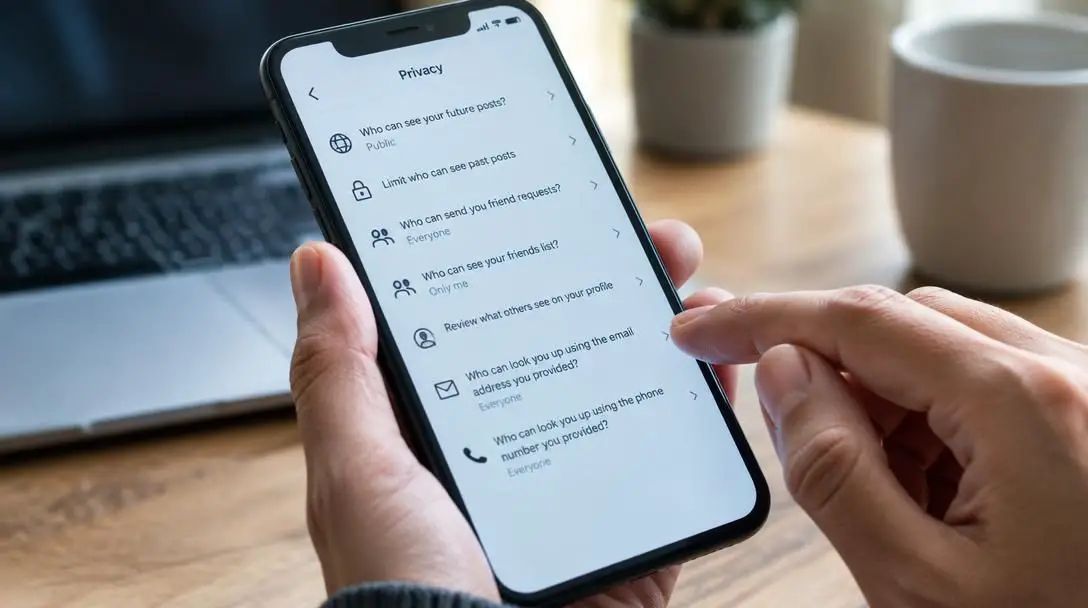
Rather than manually combing through years of historical updates to alter individual audience permissions, users can execute a sweeping restriction on all previous timeline entries. This safeguard retroactively changes previous public or "friends of friends" posts so that they are strictly visible to your direct friends list.
- Log in to your account and locate the settings gear icon in the upper-right corner of the interface.
- Select view privacy shortcuts from the dropdown menu to open immediate security options.
- Click on see more privacy settings to access the detailed management suite.
- Locate the option labeled limit who can see past posts and confirm the prompt to restrict your entire post history.
Activating two-factor authentication
Relying exclusively on a standard password leaves an account vulnerable to credential stuffing and data breaches. Activating two-factor authentication provides an essential secondary barrier, ensuring that bad actors cannot access your profile without a temporary security token.
- Open your account preferences by navigating directly to the settings tab on your profile page.
- Select the security preferences section from the left-hand navigation menu.
- Choose the two-factor authentication setup tool from the available security configurations.
- Select your preferred secondary verification mechanism, such as an authenticator application or mobile text message verification codes.
- Complete the test confirmation to ensure that future logins from unrecognized devices require this secondary approval step.
Enabling manual tag approval
To prevent third parties from associating your identity with unwanted photographs or questionable statements, you must establish an approval gate. Enabling review controls ensures that nothing appears on your timeline without your explicit consent.
- Navigate to your primary account settings menu and select the privacy tab.
- Click on the dedicated profile and tagging configuration page.
- Locate and enable the review toggle that asks to inspect posts you are tagged in before they appear on your profile.
- Enable the secondary review option that allows you to approve or reject individual tags that other people add to your own updates.
Core Facebook privacy controls at a glance
Evaluating the platform's primary protective tools allows users to prioritize which settings to adjust based on their immediate digital security needs.
| Security Feature | Primary Purpose | Interface Location | Core Protection Provided |
|---|---|---|---|
| Limit Past Posts | Audience restriction | Privacy Shortcuts | Mass-converts public historical posts to friends-only visibility |
| Two-Factor Authentication | Account defense | Security Preferences | Blocks unauthorized logins even if primary passwords leak |
| Tag Review Filters | Identity governance | Profile and Tagging | Prevents unapproved third-party media from appearing on your timeline |
| Off-Platform Ad Controls | Targeting reduction | Ad Preferences | Limits commercial profiling based on external browsing histories |
Common privacy pitfalls to avoid
Even well-intentioned individuals frequently make fundamental assumptions that leave their personal data exposed to commercial aggregators and malicious actors. Avoiding these common mistakes is essential for maintaining comprehensive privacy:
- Leaving past updates set to public: Failing to apply bulk restrictions allows recruiters, commercial entities, and unknown observers to examine your earliest social media activity.
- Assuming logouts stop tracking: Believing that signing out halts monitoring overlooks the fact that embedded analytics tools monitor web browsing habits regardless of your active login status.
- Opening unsolicited Messenger links: Interacting with unexpected links sent by acquaintances facilitates malware spread and exposes your login credentials.
- Skipping two-factor verification: Treating basic passwords as sufficient protection leaves personal accounts exposed to credential harvesting operations.
- Permitting automated timeline tagging: Leaving tagging filters disabled allows third parties to append your name and profile to unflattering or inappropriate material.
- Believing non-users are completely invisible: Overlooking that analytics code monitors web traffic across external sites regardless of whether an individual holds an active registration.
Strategies for maintaining digital privacy beyond the platform
Securing your social presence is an ongoing process rather than a one-time adjustment. Because platform menus, terms of service, and tracking technologies evolve frequently, retaining control over your personal records requires proactive digital hygiene.
Conducting periodic account privacy audits ensures that interface revisions have not inadvertently shifted your preferred permissions. Schedule a review every few months to inspect your settings gear, verify that your past post limitations remain intact, and check which third-party applications still maintain access tokens to your profile data.
Beyond account menus, take steps to insulate your broader internet browsing habits. Utilizing privacy-focused web browsers, regularly clearing stored browser cookies, and running reputable content-blocking extensions can disrupt off-platform tracking pixels before they transmit your search activities back to central corporate servers.
Finally, practice mindful sharing in your daily life. Before publishing a personal update, uploading an image, or checking in at a geographic location, consider whether that record belongs permanently in a commercial database. Cultivating careful posting habits alongside strict account settings offers the most effective long-term defense for your personal privacy.
Frequently asked questions
Can Facebook track my internet activity if I don't have an account?
Yes. The company gathers off-platform browsing data through embedded tools such as analytics code, social sharing buttons, and tracking pixels distributed across third-party websites as part of its general analytics dealings.
How do I prevent old personal posts from showing up in public searches?
You can retroactively hide historical updates by navigating to the settings gear, selecting 'view privacy shortcuts', choosing 'see more privacy settings', and activating the 'limit who can see past posts' feature.
Why do I receive strange messages with virus links from people on my friends list?
These messages occur when an acquaintance's account has been compromised by malware or unauthorized third parties, who then use the hijacked profile to distribute malicious links across the user's Messenger contacts.
What is the most effective way to protect my account from being hijacked?
Enabling two-factor authentication within your security preferences is the most reliable defense, as it requires a secondary verification code from an authenticator app or SMS message before granting access on unrecognized devices.
How can I stop unflattering photos tagged by friends from appearing on my profile?
Under the 'profile and tagging' section of your account privacy settings, enable the manual review option for posts that tag you, which prevents tagged media from reaching your timeline without your explicit approval.
The bottom line
Modern social media networks are engineered around data collection, commercial analytics, and targeted advertising. However, being an active participant on the web does not require you to surrender your personal autonomy. By understanding how off-platform tracking operates, locking down historical updates, enabling two-factor authentication, and filtering tag requests, you can take meaningful ownership of your digital privacy and protect your personal records from unnecessary exposure.