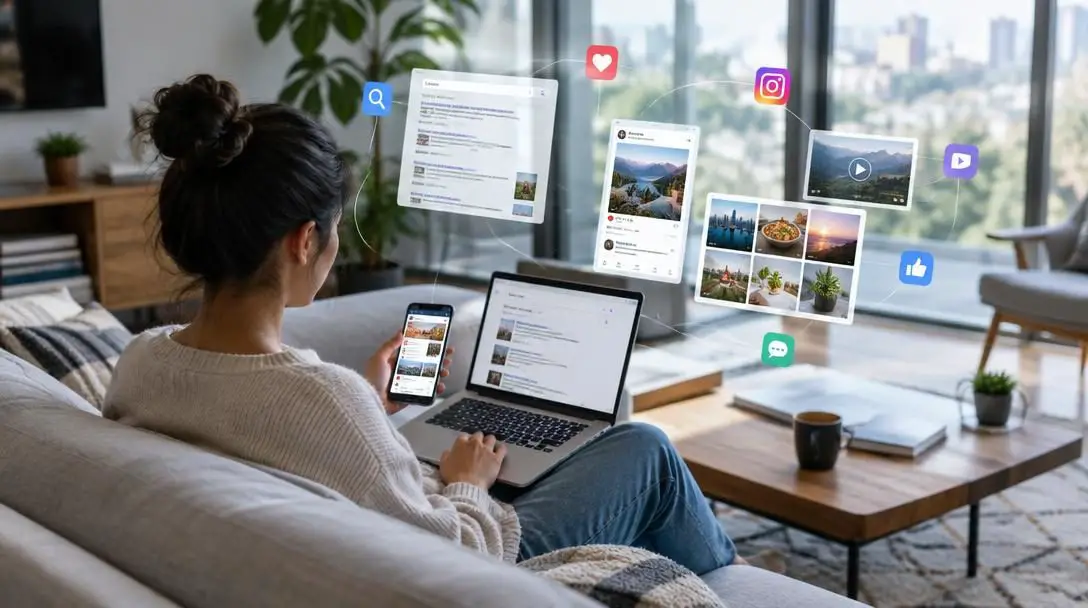
Your Privacy and YouTube: Here’s What You Need to Know
YouTube ranks among the most visited destinations on the modern internet, serving as a primary hub for breaking news, entertainment, music, and in-depth video tutorials. Its advanced algorithm delivers immediate streaming options alongside continuous streams of suggested content tailored to user behavior. Yet because watching clips feels so effortless and casual, viewers frequently overlook the substantial digital footprint generated by every search query, click, and completed video view.
Because YouTube was acquired by Google during its infancy and integrated into the tech giant's overarching ecosystem, the video platform does not function as an isolated database. Instead, YouTube and Google operate in tandem, sharing core account structures, data tracking tools, and advertising frameworks. Gaining a clear understanding of what data is collected, how your viewing habits are cataloged, and what controls are available for both viewing and publishing is essential for maintaining control over your online privacy.
Key takeaways
- Google and YouTube share a unified account infrastructure that aggregates search queries, watch patterns, and physical location data to personalize advertising and recommendations.
- Platform data collection persists even when you log out of your account, requiring active browser and account-level setting adjustments to curb tracking.
- Video creators can control distribution using unlisted or private configurations, though unlisted media can still become visible if added to a public playlist.
- Private videos restrict viewing strictly to invited email addresses and automatically disable the comment section.
- Clearing and pausing your watch and search histories resets the platform's ability to recommend hyper-tailored content based on past activity.
The Structural Connection Between Google and YouTube
To understand how your data moves through YouTube, you must first examine the corporate architecture connecting the platform to Google. Following its early acquisition by Google, YouTube transitioned from an independent video forum into a central pillar of Google's expansive portfolio. Today, signing in to YouTube almost universally involves logging in through a primary Google account. This single credential joins your video consumption directly with your web activities, location markers, and broader digital identity.
When you interact with YouTube, you are not simply using an independent video repository; you are interacting with Google's extensive digital ecosystem.
This integration facilitates seamless cross-platform functionality, but it also creates an interconnected profile of your online life. Google monitors your website and application activity alongside your geographic coordinates. According to Google, this broad tracking serves specific operational goals: determining which commercial advertisements are most useful, providing suggested YouTube videos tailored to your tastes, and highlighting people you may want to connect with across digital networks.
While discovering the sheer volume of browsing data collected in the background can feel unsettling, Google's technical infrastructure tends to keep this personal information well secured from unauthorized outside intrusion. Nevertheless, internal platform security is only as strong as individual account defenses. Regularly checking your passwords and auditing active sessions remains a vital responsibility for keeping your profile safe from unauthorized access.
Native Controls for Viewing and Search Records
Although YouTube is deeply bound to Google's administrative suite, the platform includes dedicated native controls that allow consumers to manage their video footprint directly. By default, YouTube records every video you open into a persistent watch history. This catalog directly feeds the platform's recommendation engine, prompting the algorithm to serve similar creators, topics, and formats on your homepage and sidebar.
Users are not locked into this automated recording. Within your platform settings, you retain the ability to pause your watch history entirely, halting the continuous logging of your streaming habits. Furthermore, you do not have to settle for an all-or-nothing approach: the management interface allows you to pick and choose individual videos to remove from your record, excising specific topics without wiping your entire history. The exact same controls apply to your search history, enabling you to inspect past queries, purge specific terms, or wipe the search log clean.
Understanding Upload Visibility Settings
Privacy on YouTube is a two-way street that affects not only what you watch, but also what you upload. Rather than forcing every creator or casual user to publish their videos openly to the global public, the platform provides tiered visibility options. Choosing the correct mode dictates whether your footage appears in search results, who can watch the stream, and whether viewers are allowed to participate in community discussions.
Public videos
The standard baseline on YouTube is the public setting. When footage is uploaded under this configuration, it is indexed across the platform's search engine, displayed prominently on your personal channel page, and factored into the broader recommendation system. Any internet user can find, watch, and share the video without restriction. Comments are enabled by default, welcoming open discussion from the community at large.
Unlisted videos
Unlisted status provides a functional middle ground between broad public broadcast and total privacy. When you mark a video as unlisted, it will not appear on your public YouTube channel tab, nor will it populate within standard YouTube search results. To share the video, you must distribute its direct web link to specific recipients or publish the link on external online spaces such as Twitter, Reddit, or specialized community forums.
Anyone in possession of the exact web address can watch the video, and comments can remain fully enabled to support conversations among your selected viewers. Furthermore, setting media to unlisted serves as a practical option when you want to share content while working to avoid getting a copyright strike from wide automated distribution.
Private videos
Setting a video to private provides the highest level of confidentiality available on the platform. Private uploads do not show up on your public channel page, and they cannot be discovered via search engines or accessed through a shared public link. Instead, access is strictly governed by an authorized list of specific email addresses.
To grant viewing privileges, you must navigate to the menu on the left side of your screen, select "edit," and manually enter the email addresses of the people you want to view the video. The system then shares a secure link directly with those authorized accounts. Viewers who are not signed into an approved account cannot access the media. In addition, YouTube completely disables the comment section on all private videos, ensuring no public or semi-public discussions can take place beneath the upload.
| Setting | Channel Visibility | Search Indexing | Access Method | Comments Allowed |
|---|---|---|---|---|
| Public | Visible to all visitors | Fully indexed in search | Open web access | Yes |
| Unlisted | Hidden from channel tabs | Excluded from search | Direct URL link or public playlist | Yes |
| Private | Hidden from channel tabs | Excluded from search | Authorized email invitation only | No |
How to Configure Your Account Privacy Settings
Taking control of your personal data on YouTube does not require specialized technical expertise. By navigating through the native interface of both YouTube and your overarching Google account, you can quickly adjust what information the system records and stores.
- Open YouTube in your desktop browser or mobile application, navigate to the library or profile menu, and open your history dashboard.
- Review your chronological log of viewed content. Select and remove individual entries you wish to delete, or choose the clear history tool to wipe your entire watch history and search history altogether.
- Toggle the settings to pause watch history and search history if you want to stop the platform from cataloging your future viewing habits.
- Sign in to your primary Google account dashboard and locate the controls governing web and app activity. Turn this feature off to stop Google from logging your general browsing movements.
- Open the location history settings in your Google dashboard and toggle tracking off to prevent the system from mapping your physical whereabouts over time.
- Navigate to the advertising preferences menu and turn off ad personalization to prevent Google from building targeted commercial profiles based on your activity.
- Perform a security checkup on your account credentials and review your passwords to confirm your login information has not been compromised.
Common YouTube Privacy Pitfalls to Avoid
Many consumers operate under false assumptions regarding platform privacy, believing that basic actions like logging out or sharing hidden links provide absolute anonymity. Avoiding these common mistakes will help keep your media and habits protected:
- Assuming logging out prevents tracking: Signing out of your profile does not stop Google from gathering your viewing history and approximate location to serve personalized advertisements.
- Overlooking public playlist exposure: While an unlisted video stays hidden from your channel, anyone who receives the link can place the clip inside a public playlist, inadvertently exposing it to unintended viewers.
- Failing to audit individual watch entries: If watch history remains on, every click continuously influences the recommendation algorithm. Failing to periodically prune or reset your history creates an extensive dossier of your personal interests.
- Expecting comment discussions on private uploads: Creators seeking private feedback often upload videos under the private setting, only to discover that YouTube automatically disables comments on all private media.
- Neglecting core password security: Although platform data is well secured by Google, poor password hygiene leaves your account vulnerable. Failing to check your passwords regularly undermines all other configuration safeguards.
- Isolating privacy checks to YouTube alone: Disabling recording features within YouTube does not alter Google's broader web and app tracking. Privacy settings must be adjusted at the Google account level to take full effect.
Balancing Algorithmic Convenience with Personal Privacy
Managing your presence on YouTube ultimately involves balancing convenience against privacy. The platform's advanced recommendation engine is designed to deliver relevant entertainment, tutorials, and news without requiring manual searching. This algorithmic system relies on the ongoing aggregation of your search queries, watch patterns, and web activity.
If you choose to disable your watch history and clear existing records, you will gain significant privacy, but your user experience will shift. The suggested videos presented on your home feed will become broader, more generic, and less reflective of your specific tastes. Deciding whether the convenience of accurate recommendations outweighs the benefits of keeping your streaming record empty is a fundamental choice every user must make for themselves.
For creators and everyday uploaders, distribution requires similar forethought. If you are uploading videos containing sensitive material, or if you have a video where you are actively working to avoid getting a copyright strike, relying on unlisted or private status creates a valuable buffer against general public discovery. Matching your visibility settings to your intended audience ensures your media reaches the right eyes without exposing your personal content to unintended audiences.
Frequently asked questions
Can Google still track my activity if I sign out of YouTube?
Yes. Even when you are not signed into a Google account, Google can continue to track your browsing history and geographic location to suggest personalized advertisements during your sessions.
How can people find an unlisted YouTube video?
People can view an unlisted video if you provide them with the direct URL, if the link is posted on an external site like Twitter or Reddit, or if someone adds the unlisted video to a publicly visible playlist.
Why can't viewers leave comments on my private video?
YouTube automatically turns off commenting for all private videos. If you need viewer feedback or discussion while keeping the video hidden from public channel searches, you must use the unlisted setting instead.
How do I share a private video with specific people?
When uploading or managing a private video, click on the left-hand menu, select "edit," and add the specific email addresses of your intended viewers. An authorized link will be sent directly to those accounts.
What types of data does Google use to personalize my ads and suggestions?
Google collects your website and app activity, physical location history, search queries, and YouTube watch records to deliver targeted advertisements, recommend suggested videos, and suggest people to connect with.
The bottom line
YouTube's seamless streaming and rapid recommendations come at the expense of comprehensive data logging across Google's broader ecosystem. Fortunately, you are not powerless against this tracking framework. By auditing your watch and search records, configuring Google's overarching activity controls, choosing the correct visibility settings for uploaded videos, and regularly updating your security passwords, you can enjoy all the educational and entertaining content YouTube offers while keeping your personal data firmly protected.