How to Build a Capsule Wardrobe: 5 Ways to Simplify Your Closet and Elevate Your Style

Every fashion season brings a relentless wave of shifting trends, flash retail sales, and fleeting aesthetics that encourage rapid, impulsive shopping. Because retail cycles accelerate constantly, many shoppers purchase individual garments without evaluating how those pieces integrate into their real routines. Over months and years, closets inevitably fill with disconnected one-off items, duplicate essentials, damaged textiles, and clothes that no longer fit comfortably. Despite a wardrobe packed to capacity, standing in front of crowded racks each morning frequently causes decision fatigue, stress, and the frustrating sensation of having nothing to wear.
Managing an overstuffed closet drains both time and financial resources, requiring regular sorting through clutter and replacing low-quality items that deteriorate after minimal wear. A capsule wardrobe provides an effective, intentional alternative to the exhausting cycle of overconsumption. By curating a tight collection of versatile, high-quality garments that coordinate seamlessly, you can clear visual clutter, lower long-term wardrobe expenses, and eliminate morning friction with an elevated, dependable personal aesthetic.
Key takeaways
- A capsule wardrobe treats your clothing collection as an interconnected ecosystem built on versatile, interchangeable staples.
- Conducting a thorough closet audit reveals what you actually wear and highlights genuine wardrobe gaps before you spend money on replacements.
- Curating garments around your real daily routine ensures every item earns its space through frequent, comfortable use.
- Investing in durable, well-constructed foundational pieces lowers overall wardrobe costs by eliminating constant replacement cycles.
- Dividing garments by season and organizing racks by type or color keeps your daily choices visual, intuitive, and stress-free.
The Mechanics of an Interconnected Closet Ecosystem
Traditional approaches to shopping treat garments as isolated units designed for specific, rigid outfits. In contrast, a functional capsule wardrobe operates as an interconnected ecosystem where nearly every top, bottom, and layer coordinates effortlessly with one another. Relying on complementary silhouettes, neutral base tones, and timeless tailoring allows a modest number of individual garments to generate dozens of distinct, cohesive outfits.
Consider the versatility of a single, well-fitted pair of jeans. When matched with a classic white T-shirt and comfortable loafers, it forms an effortless weekend look. Layer that exact same denim with a crisp blouse, a tailored blazer, and sleek ankle boots, and the ensemble shifts immediately into a sharp, professional option. Because every garment in the collection is chosen for comfort and cross-functional utility, you no longer need storage space for dozens of single-use, rarely worn items.
A capsule wardrobe transforms getting dressed from an unpredictable morning chore into an intuitive, low-stress routine.
This streamlined structure provides immediate visual clarity. When you open your closet doors, you can assess your entire collection at a glance instead of sifting through crowded, mismatched hangers. Every piece fits properly, flatters your frame, and suits your aesthetic tastes, removing the anxiety and cognitive friction that so often accompanies getting dressed.
5 Ways to Simplify Your Closet and Build Your Capsule
Transitioning away from closet clutter requires a deliberate, step-by-step strategy. Rather than clearing everything out haphazardly or buying a pre-packaged wardrobe set, follow these five essential steps to establish a functional, lasting collection.
Step 1: Evaluate Your Current Wardrobe
Before purchasing any new garments, you must take an honest, comprehensive inventory of what you already own. Set aside an afternoon to remove your clothing from the closet entirely, laying pieces out so each item can be assessed individually rather than lost among crowded hangers.
- Check for proper fit: Retain items that fit your current body comfortably, setting aside any clothing that pinches, pulls, or causes discomfort when moving or sitting.
- Inspect physical condition: Carefully check seams, collars, and hems to identify garments that are visibly worn out, permanently stained, stretched, or beyond practical repair.
- Review wear frequency: Separate the reliable pieces you wear on a weekly or monthly basis from garments that have hung untouched for seasons or years.
- Sort into keep, sell, and donate piles: Retain core essentials, and donate or sell the rest to free up immediate physical and mental space.
Clearing away non-functional clutter lets you see the genuine strengths of your current wardrobe. You might discover that you already own several pairs of dependable jeans and classic blouses, revealing that your true missing links are flexible layering pieces like a cardigan or a structured blazer.
Step 2: Define Your Personal Style and Daily Needs
A capsule wardrobe must reflect your authentic tastes and practical lifestyle demands, not an idealized fantasy. If you design your wardrobe around an aesthetic that does not match your real day-to-day activities, the system will fall apart quickly.
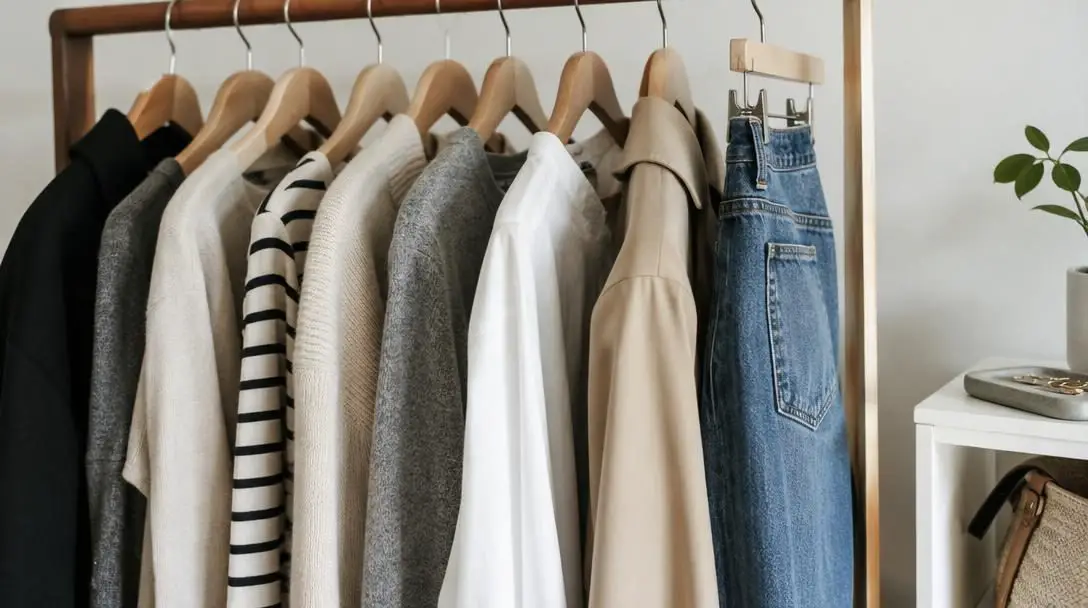
Examine the garments that survived your initial audit to identify natural patterns in your preferences:
- Color palettes: Identify which neutral base shades (such as black, navy, gray, camel, or cream) and subtle accent tones you naturally choose most often.
- Fabrics and textures: Note the materials that feel best during daily wear, whether breathable cottons, cozy knits, or crisp structured fabrics.
- Silhouettes: Determine whether you feel most confident in relaxed, loose shapes, sharp tailoring, or a balanced blend of both.
Next, align your wardrobe choices with your primary routine. A professional commuting to a corporate or business casual office needs tailored trousers, crisp blouses, and blazers that project polish throughout the workday. In contrast, a stay-at-home parent requires durable, low-maintenance pieces like high-stretch leggings, soft T-shirts, and comfortable sweatshirts. Ensuring your clothing matches your real life ensures every piece earns its place through frequent wear.
Step 3: Invest in Quality Staples
The foundation of a reliable capsule collection relies on well-made staple garments designed to endure constant wear and repeated wash cycles. While higher-grade garments often carry a higher initial price tag, their superior fabric density and reinforced stitching save money over time by reducing the frequency of replacements.
Focus your initial investments on several foundational wardrobe anchors that offer exceptional interchangeability:
| Foundational Staple | Primary Function | Key Characteristics |
|---|---|---|
| Well-Fitting Jeans | Versatile bottom layer | Comfortable cut, durable denim, flattering everyday rise |
| Classic White T-Shirt | Base layer for casual and smart looks | Sturdy, breathable cotton fabric with clean seam construction |
| Comfortable Sweater | Thermal layer and texture accent | Soft knit suitable for wearing standalone or over collared shirts |
| Tailored Blazer | Structure and instant elevation | Sharp shoulders, versatile neutral tone, balanced length |
| Versatile Footwear | Multi-setting utility | Supportive loafers or classic ankle boots that bridge casual and dressy |
Step 4: Master the Art of Mixing, Matching, and Accessorizing
Because a capsule wardrobe limits overall item count, visual variety comes from creative layering and strategic accessories rather than an endless rotation of single-use tops. Combining varied textures and structured silhouettes creates depth across identical base pieces.
Layering creates multiple outfits out of a handful of core garments. For cooler conditions, pulling a comfortable sweater over a classic button-front blouse produces a neat, preppy aesthetic. In warmer or more casual settings, wearing that same blouse unbuttoned over a white T-shirt delivers an easygoing, relaxed look. Similarly, pairing structured tailoring like a sharp blazer with relaxed denim strikes a sophisticated balance between formality and comfort.
Accessories serve as the finishing touches that expand a focused collection's range without cluttering your closet shelves:
- Scarves: Add visual depth, seasonal warmth, and subtle shifts in color or pattern.
- Belts: Cinch looser garments to redefine an outfit's silhouette while tying shoes and bags together.
- Statement earrings: Inject bold personality and focus into understated, neutral pairings.
Step 5: Keep Your Closet Organized
Sustaining a capsule wardrobe requires maintaining an orderly physical closet. Even the most carefully curated collection will create daily frustration if garments are buried in overstuffed drawers or hidden behind disorganized hanging racks.

Start by clearing out seasonal items that are not currently in use. Pack heavy winter overcoats or lightweight summer shorts into lidded storage bins or stow them in a secondary closet. Keeping only in-season, ready-to-wear clothing in your main closet eliminates visual noise and streamlines your morning choices.
Within your active closet space, implement an intuitive organization method that matches your visual habits:
- Organize by garment type: Hang all T-shirts, button-down blouses, knit sweaters, trousers, and outerwear in distinct clusters so you always know where each category lives.
- Organize by color: Arrange items within each section along a light-to-dark gradient, making it effortless to identify matching tones.
- Implement a hybrid system: Group garments first by clothing category, then sub-sort each category by color for optimal visual navigation.
Common Capsule Wardrobe Mistakes to Avoid
Transitioning toward minimalism often involves unlearning old shopping and organizing behaviors. Steering clear of common beginner pitfalls will keep your simplified wardrobe from feeling restrictive or inconvenient.
- Discarding too much too quickly: Rushing to throw out clothes in a single afternoon can leave you missing essential functional basics before you understand your true daily needs.
- Purchasing an entire capsule all at once: Buying a bundled or pre-selected list of "must-have" items often results in garments that clash with your personal lifestyle or physical comfort.
- Ignoring lifestyle realities: Curating a wardrobe for an aspirational life—such as buying numerous structured blazers when working remotely or in a casual setting—leaves high-cost items unworn.
- Overlooking physical comfort: Choosing garments solely for aesthetic appeal while ignoring scratchy fabrics, stiff waistbands, or tight seams guarantees those items will sit abandoned in your closet.
- Failing to maintain seasonal separation: Allowing heavy winter knits to crowd summer linens creates visual chaos that defeats the purpose of a streamlined wardrobe.
Sustaining Your Wardrobe and Practicing Mindful Consumption
Creating your initial capsule wardrobe is not a one-time project, but the beginning of a sustainable relationship with your personal style. As seasons change and garments naturally experience physical wear, your collection will require thoughtful maintenance and subtle updates.
Establish a regular habit of reviewing your wardrobe at the change of major seasons. As you rotate your seasonal storage containers, take stock of how well your active pieces performed over the preceding months. Identify garments that show visible wear and require mending or replacement, and note any items you consistently avoided wearing. Conducting these quarterly check-ins gives you a clear picture of what works, preventing impulsive shopping sprees.
Moving forward, adopt a mindful filter for every potential purchase. When considering a new item, evaluate whether it coordinates with at least three existing pieces in your closet and whether it fulfills a distinct, genuine functional role. By prioritizing fabric quality, daily comfort, and cohesion, your capsule wardrobe will continue to simplify your routine and keep your style elevated for years to come.
Frequently asked questions
How many items should be in a capsule wardrobe?
A capsule wardrobe does not rely on a rigid, universal item count. The goal is to own a curated collection where almost every top, bottom, and layer coordinates effortlessly with the rest. The exact number of garments depends entirely on your daily routine, climate, and how frequently you prefer to do laundry.
Do I have to wear only neutral colors?
No. While neutral base colors like navy, black, camel, and cream make mixing and matching simpler, you can incorporate accent shades and patterns that reflect your personal tastes. The key is ensuring that whatever accent colors you choose harmonize with your foundational base pieces.
How do I transition to a capsule wardrobe on a budget?
Start by auditing your current closet rather than purchasing new items. Most people already own reliable jeans, T-shirts, and blouses that can serve as foundational pieces. Clear out what you do not wear, identify the specific functional gaps in your wardrobe, and add quality staples gradually as your budget allows.
What should I do with out-of-season clothing?
Pack off-season garments, such as heavy winter outerwear or summer shorts, into storage bins or place them in a secondary closet space. Storing non-current items out of sight clears visual clutter and ensures that every piece visible in your primary closet is immediately wearable.
How do I prevent my outfits from feeling repetitive?
Vary your outfits through thoughtful layering and accessories rather than buying more clothes. Pairing casual denim with a structured blazer creates a completely different silhouette than wearing the same jeans with a casual T-shirt. Introducing scarves, belts, and statement jewelry also transforms the tone of basic staples.
The bottom line
A capsule wardrobe replaces the chaos of impulse-driven fashion with intentionality, visual calm, and long-term utility. By taking inventory of what you already own, honoring your authentic routine, investing in durable staples, and organizing your closet with care, you can eliminate daily decision fatigue. Simplifying your closet does not limit your personal style—it refines it, ensuring that getting dressed each morning is effortless, enjoyable, and distinctly your own.