
Tech that exists now that will change how we live in 20 years

For most of human history, technological advancement moved at a glacial pace. A craftsperson or farmer living several centuries ago could expect to use nearly identical tools, transport methods, and manufacturing techniques as their grandparents, with major innovations unfolding gradually across entire generations. Over the past century, however, that dynamic has completely inverted. Technological progress has shifted into an exponential sprint, where specialized lab experiments and early mechanical concepts evolve into ubiquitous mass-market utilities in just a few decades.
Because innovations compound upon one another, predicting the exact technological landscape twenty years into the future—such as the world around 2042—means preparing for ideas that may not even have names yet. However, the foundational cornerstones of that future are already operating in our midst. Advanced additive manufacturing, autonomous aerial and ground transit, microscopic mechanical engineering, and pattern-seeking machine algorithms are functioning today, quietly maturing into the systems that will reshape everyday modern existence.
Key takeaways
- Additive manufacturing is advancing beyond basic prototyping to produce custom lightweight automotive parts and viable biological structures like bones and organs.
- Autonomous transit has already arrived in commercial freight through companies like Walmart, while flying passenger vehicles await regulatory clearance from the Federal Aviation Administration (FAA).
- Nanorobotics operates on the scale of billionths of a meter to target malignant cancer cells directly while preserving surrounding healthy tissue.
- Artificial intelligence is evolving from predictive shopping algorithms and diagnostic mirrors into comprehensive, affordable domestic robot assistants.
Four Foundational Technologies Redefining the Next Twenty Years
While experimental technologies emerge constantly, four core domains represent the most dramatic shifts between our current tools and the routines of daily life in twenty years. Each has transitioned from pure theory into functional reality, laying the groundwork for a radically transformed human environment.
3-D Printing
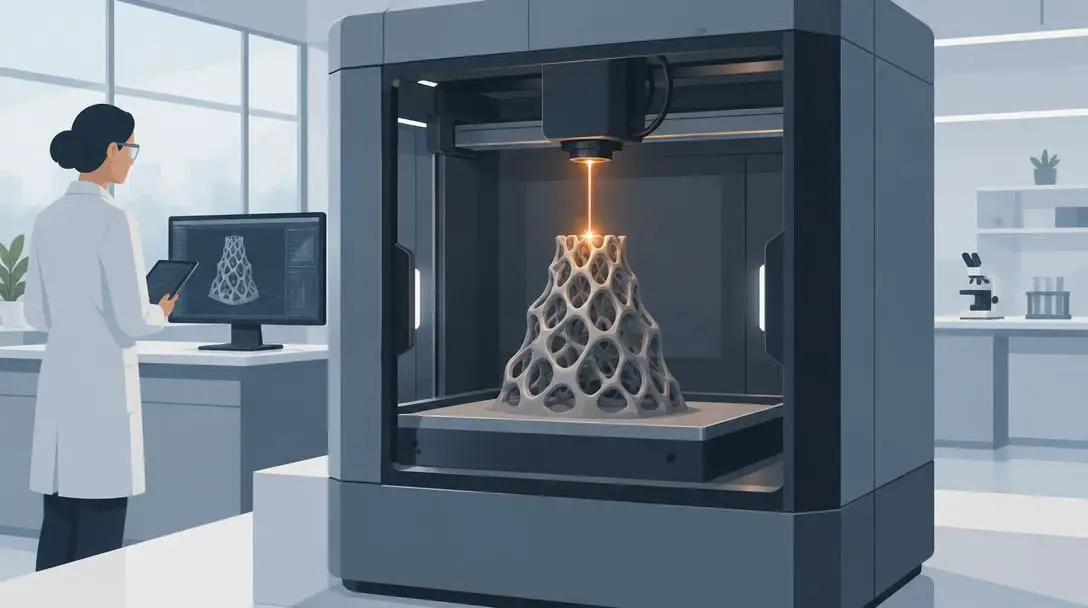
- Core mechanism: Layer-by-layer additive manufacturing guided by digital models
- Historical roots: Simple plastic shapes and basic industrial prototypes
- Key emerging sectors: Biomedical engineering and automotive manufacturing
3-D printing is not brand new, but its modern development has accelerated far beyond its humble beginnings. Decades ago, additive manufacturing was primarily reserved for crafting basic plastic symbols, mechanical mockups, and early design prototypes. Today, the process has matured into a sophisticated pillar of industrial engineering that turns digital blueprints into functional, structurally intricate physical objects.
The defining strength of 3-D printing lies in how it contrasts with traditional manufacturing. Conventional industrial production relies heavily on subtractive techniques, which involve cutting, drilling, carving, or grinding away raw material from larger blocks of metal, wood, or synthetic polymers. In contrast, additive manufacturing builds objects from the base up, depositing raw material layer upon layer. This precise deposition allows engineers to fabricate complex internal channels, weight-saving lattice networks, and customized geometry that conventional casting, stamping, or tooling molds could never achieve.
Over the next two decades, the most profound impacts of 3-D printing will unfold in medicine and healthcare. Biomedical engineers are adapting additive principles to print living cellular structures and synthetic matrices. By using patient-specific biological scans, specialized printers can generate customized bone replacements and complex organic tissue tailored precisely to an individual patient's anatomical dimensions. This custom approach promises to revolutionize reconstructive surgery and organ replacement therapy. Simultaneously, automotive engineers are utilizing additive manufacturing to engineer lightweight structural components, streamline parts production, eliminate material waste, and enhance overall vehicle performance.
Autonomous Transit and Flying Vehicles

- Operational hardware: Optical cameras, radar units, and laser-based sensors
- Regulatory authority: Federal Aviation Administration (FAA)
- Key industry actors: Tesla for consumer cars; Walmart for commercial freight
Popular culture from the twentieth century famously predicted that the skies of the early twenty-first century would be crowded with airborne commuter vehicles. While personal sky-based transport has not caught on just yet, the underlying ambitions remain very active. Engineering firms continue working to develop the first commercially viable flying personal vehicles, designing hybrid platforms capable of navigating both roads and local airspace.
The primary barrier between experimental flying prototypes and civilian skyways is not purely mechanical; it is regulatory. Widespread consumer flight demands extensive safety frameworks, airworthiness certification, collision-avoidance networks, and dense airspace coordination overseen by government agencies like the Federal Aviation Administration (FAA). Navigating these strict requirements will determine whether urban air mobility becomes standard transit by 2042.
Meanwhile, ground-level autonomous transit is advancing at an exceptional rate. Modern autonomous vehicles navigate the physical world using an intricate mesh of sensor hardware and onboard computational processing. Optical cameras, laser-based sensors, and radar arrays continuously sweep the driving perimeter, detecting lane boundaries, reading traffic signals, and anticipating pedestrian movements. Vehicle computers process these high-bandwidth data streams in fractions of a second to navigate complex roadways.

Automakers like Tesla have pushed automated driving functions directly to consumer roadways, testing autonomous mechanics in daily driving environments. In the commercial sphere, retail giants like Walmart have deployed self-driving transport trucks to handle logistics and freight transfer between distribution facilities. These commercial deployments prove that autonomous mobility is no longer a distant theoretical vision, but an active, road-tested technology steadily heading toward total integration.
Commercial freight networks and suburban delivery routes are already proving that automated mobility is transforming logistics from the ground up.
Nanorobotics
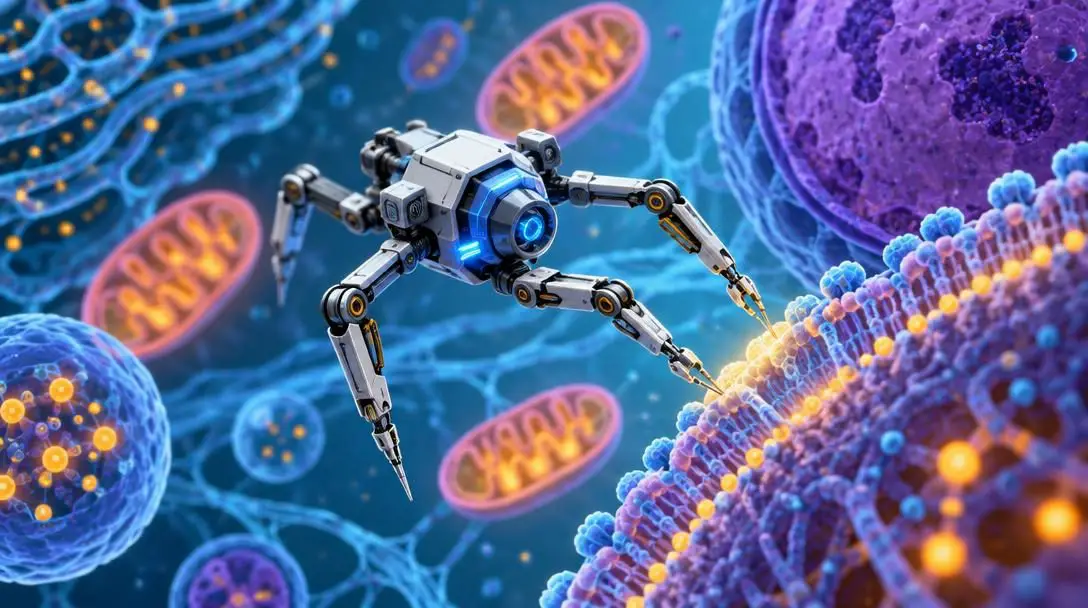
- Operational scale: Nanometers (one-billionth of a meter)
- Primary medical target: Precision oncology and targeted cancer eradication
- Secondary applications: High-density microprocessors and automotive material engineering
In contemporary pop culture, particularly throughout the Marvel Cinematic Universe, microscopic machines are often treated as a convenient plot device capable of instantly resolving impossible scientific problems. In real-world research laboratories, however, nanotechnology is grounded in rigorous physics, chemistry, and molecular engineering. Far from pure fantasy, it is poised to transform major industries over the next two decades.
Nanorobots are microscopic mechanical assemblies engineered to operate at the scale of nanometers, which measure exactly one-billionth of a meter. At this scale, objects are completely invisible to the naked human eye, and standard Newtonian mechanics yield to atomic interactions, surface tension, and molecular bonding forces. Engineering devices capable of navigating and manipulating materials at this molecular frontier allows scientists to interact with cellular biology in ways that macroscopic surgical instruments cannot.
The most anticipated application of nanorobotics is the targeted treatment of cancer. Traditional cancer interventions often take a systemic toll on the human body, damaging healthy tissue alongside diseased cells. Functional nanobots, by contrast, could be programmed to navigate the bloodstream, detect biological markers unique to malignant tumors, and deliver concentrated therapies directly to cancer cells while leaving surrounding healthy tissue unharmed. Outside medicine, microscopic machines will play an essential role in computing and materials science, paving the way for denser microchip architecture, superior electrical conductivity, and ultralight automotive alloys with exceptional structural strength.
Artificial Intelligence

- Underlying method: Machine learning algorithms trained on massive datasets
- Current daily uses: Diagnostic health mirrors and predictive retail reordering
- Long-term projection: Affordable domestic robot assistants managing household tasks
Artificial intelligence has steadily operated in the background of consumer technology for years, but recent advances in machine learning have drastically accelerated its reach. Modern AI models analyze massive volumes of historical data to detect subtle patterns, predict outcomes, classify sensory inputs, and emulate conversational interaction. Rather than functioning as a standalone gadget, AI serves as an invisible computational layer beneath daily digital activities.
Consumers already experience this algorithmic assistance in subtle ways. Optical health tools can analyze personal wellness metrics simply by scanning a person's reflection in a smart mirror, while retail algorithms on platforms like Amazon evaluate past purchasing histories, seasonal rhythms, and consumer behavior to anticipate household supply shortages before they occur. These systems process environmental context to automate routine analytical decisions that previously required manual oversight.
Looking ahead toward 2042, the convergence of machine intelligence and physical robotics will likely make domestic robotic assistants both capable and financially accessible. Instead of requiring programmed instructions, a domestic robot butler will seamlessly interpret natural human conversation, navigate domestic environments, and automate household maintenance. Such a system could seamlessly handle chores and track household provisions, noticing when spring temperatures rise and autonomously reminding you to restock seasonal items like pool noodles before summer begins.
At a Glance: How Emerging Technologies Compare
Understanding how these four technologies will transform our lives over the next twenty years requires looking at where they operate today, how they will impact everyday routines, and the primary obstacles standing in the way of widespread adoption.

| Technology Domain | Current Operational Stage | Expected 2042 Everyday Impact | Key Commercial or Institutional Players | Primary Engineering or Regulatory Challenge |
|---|---|---|---|---|
| 3-D Printing | Industrial additive manufacturing and rapid prototyping | Patient-specific printed organs, custom bone implants, and lightweight car bodies | Biomedical engineering labs and automotive manufacturers | Cellular viability during biological printing and scaling production speeds |
| Autonomous & Flying Vehicles | Commercial freight trucking and consumer automated driving features | Widespread autonomous transit corridors and regulated consumer sky vehicles | Tesla, Walmart, and Federal Aviation Administration (FAA) | Airspace management protocols and sensor reliability in unpredictable weather |
| Nanorobotics | Experimental nanoscale synthesis and molecular research | Targeted cancer cell eradication and ultradense microchip computing | Advanced medical research institutes and materials science labs | Precise microscopic navigation and atomic-scale manufacturing controls |
| Artificial Intelligence | Pattern recognition, behavioral prediction, and diagnostic mirrors | Affordable household robot assistants managing domestic life and shopping | Amazon, consumer tech developers, and retail analytics providers | Contextual common-sense reasoning and complex physical manipulation |
How to Prepare for the Next Twenty Years of Tech
Adapting to technologies that will mature over the next two decades requires deliberate engagement. Rather than passively waiting for these shifts to arrive, individuals, businesses, and technical professionals can take clear, practical steps to stay ahead of the curve.
- Build adaptive digital literacy: Move beyond basic software usage by familiarizing yourself with automated workflows, machine learning interfaces, and algorithmic tools embedded across everyday platforms.
- Track aviation and transit regulations: Follow safety oversight updates and airspace management guidelines from agencies like the FAA to anticipate when urban air transit and driverless logistics will enter your local community.
- Analyze supply chain and labor shifts: Observe how major commercial operators like Walmart incorporate autonomous freight, and evaluate how additive manufacturing is replacing traditional assembly lines in regional manufacturing hubs.
- Practice rigorous personal data hygiene: Regularly audit your digital footprint and purchasing histories across retail platforms like Amazon to maintain privacy while learning how behavioral algorithms shape consumer suggestions.
- Invest in STEM and biological education: Support learning pathways in high-demand fields like biological engineering, materials science, algorithmic design, and nanoscale physics to prepare the next workforce for twenty-first-century challenges.
- Explore additive manufacturing use cases: Evaluate whether your business, workshop, or local makerspace can replace subtractive tooling and physical inventory by 3-D printing replacement parts on demand.
Common Pitfalls and Misconceptions to Avoid
When assessing how rapidly emerging tools will shape the world over the next twenty years, observers frequently make analytical mistakes that distort realistic expectations. Avoiding these traps helps ground long-term technological forecasts in reality.
- Assuming past historical pace guarantees future timelines: Believing that future tools will take centuries to develop overlooks how computational modeling, automated logistics, and global research collaboration create exponential acceleration.
- Confusing cinematic fiction with real scientific practice: Assuming nanoscale machines behave like the miraculous swarms depicted in the Marvel Cinematic Universe creates unrealistic expectations of immediate, effortless microscopic engineering.
- Dismissing early design prototypes as failures: Forgetting that 3-D printing started with simple, crude plastic shapes before advancing to human bone scaffolds can lead people to write off promising early-stage innovations too soon.
- Overlooking institutional oversight: Ignoring the critical safety, liability, and airspace frameworks enforced by regulatory bodies like the FAA leads to overly optimistic timelines for consumer flying cars.
- Underestimating corporate logistics pipelines: Waiting for consumer self-driving vehicles while missing the quiet revolution happening in commercial freight—such as Walmart running autonomous logistics routes—misses where the real economic momentum lies.
- Focusing solely on humanoid robotics: Waiting for fully formed mechanical humanoids can blind consumers to the pervasive, subtle AI systems already managing health diagnostics, algorithmic shopping, and predictive scheduling.
The Convergence of Future Technologies
The most dramatic transformations of the next twenty years will not occur in isolation. Instead, the true acceleration of daily change will emerge where these four separate domains intersect and compound upon one another.
Consider the intersection of additive manufacturing and advanced medicine. When 3-D printing hardware merges seamlessly with algorithmic modeling and biological material synthesis, the medical field will move from standard mass-manufactured prosthetics to fully organic, patient-matched organs printed on demand. This shift will fundamentally rewrite surgical recovery protocols and donor organ availability, though it will also require careful examination of biomedical safety standards and equitable access.
Similarly, the convergence of nanorobotics and artificial intelligence could yield microscopic autonomous agents capable of assessing biological environments and making localized decisions in real time. Rather than relying on rigid external commands, intelligent nanodevices operating within the bloodstream could identify and neutralize mutated cellular structures before clinical symptoms ever appear.
In the physical built environment, the fusion of autonomous navigation, urban logistics, and aviation oversight will redefine city layouts. If commercial supply chains like Walmart's autonomous freight networks integrate with consumer air travel under FAA corridors, urban traffic congestion could shift fundamentally from surface streets into carefully monitored multi-tier transit networks. Meanwhile, domestic AI will continue bridging digital commerce and physical upkeep, allowing conversational household robots to handle physical chores while predicting domestic supply needs months in advance.
Frequently asked questions
Are flying cars really going to be part of daily transportation in twenty years?
While companies are actively developing viable consumer flying cars, widespread adoption depends heavily on strict safety oversight from regulatory bodies like the Federal Aviation Administration (FAA). Before passenger skyways become routine, developers must overcome complex airspace management challenges, safety certifications, and crash-avoidance standards.
How is 3-D printing different from traditional manufacturing?
Traditional manufacturing relies mostly on subtractive methods, cutting or carving away material from large blocks of metal, wood, or plastic. 3-D printing uses additive manufacturing, building objects layer by single layer from digital files. This allows for lighter structures, complex interior channels, and customized anatomical shapes like printed bones and organs.
Can nanorobots really target cancer cells inside the human body?
Yes, researchers are developing microscopic nanobots measuring billionths of a meter that can navigate biological environments. In cancer treatment, these tiny machines are engineered to detect and eliminate malignant cells directly without damaging the surrounding healthy tissue, presenting a far more focused alternative to systemic medical treatments.
How will artificial intelligence change household routines by 2042?
AI is progressing from software tools like predictive ordering on Amazon and health-tracking smart mirrors into physical, affordable robot assistants. By 2042, these domestic robots will converse naturally, manage physical household chores, and track seasonal routines—such as reminding you to buy pool noodles as warm weather approaches.
Are self-driving vehicles currently being used in commercial business?
Yes. Beyond consumer vehicle features developed by companies like Tesla, autonomous transit is actively deployed in commercial freight. Companies with massive supply chain operations, such as Walmart, already utilize self-driving transport trucks to move goods efficiently between facilities.
The bottom line
The next twenty years will not be defined by sudden, out-of-nowhere inventions, but by the quiet maturation and convergence of technologies that exist right now. Additive manufacturing, self-driving vehicles, airborne commuter craft, nanorobotics, and machine intelligence are already well beyond their earliest developmental stages. As these tools continue to scale, lower in cost, and merge across disciplines, they will transform healthcare, physical transit, and domestic life into an interconnected, highly responsive reality.