Unique Transportation Options Across The Globe

Transportation is an indispensable component of everyday life, serving as the bridge between home, work, and recreational discovery. While contemporary transit relies heavily on standardized networks of automobiles, subways, and municipal buses, communities across the globe have long engineered distinctive methods of movement tailored to their immediate surroundings. Regional climates, unique topographies, available construction materials, and pressing economic circumstances have spurred extraordinary ingenuity when standard infrastructure proved impractical or unavailable.
Exploring these alternative transit traditions offers travelers a window into authentic cultural adaptations. From makeshift platforms gliding over railway lines in Southeast Asia to hand-crafted wooden boats navigating historic European canals, these vehicles demonstrate how local populations solve logistical hurdles while developing lasting cultural symbols.
Key takeaways
- Unconventional transit modes developed directly in response to geographic barriers, damaged infrastructure, or extreme seasonal climates.
- Vehicles like Cambodia's norry and Thailand's tuk-tuk highlight how communities repurpose mechanical parts to create agile, low-cost transportation.
- Centuries-old practices such as Venetian gondola rowing and Lapland reindeer sledding preserve vital indigenous and artisanal traditions.
- Successful travel on traditional transport requires proactive preparation, including verifying seasonal availability and establishing fares in advance.
Distinctive transit systems at a glance
Each traditional mode of travel reflects a harmonious balance between human ingenuity and environmental necessity. The table below outlines how these iconic options compare across regions, environments, and mechanical methods.
| Transit Mode | Primary Region | Operating Terrain | Key Propulsion Method |
|---|---|---|---|
| Bamboo Train (Norry) | Cambodia | Single rail tracks | Small engine with drive belt |
| Gondola | Venice, Italy | Canals and waterways | Single oar held in a carved forcola |
| Tuk-Tuk | Thailand and Southeast Asia | Urban streets and narrow alleys | Internal combustion engine |
| Cable Car | Switzerland | Alpine ravines and mountainsides | Stationary electric motors pulling haulage cables |
| Reindeer Sled | Lapland, Finland | Snowfields and winter forests | Harnessed reindeer |
Five unique transit options around the world
Understanding the history, operational mechanics, and daily realities of these regional transit solutions provides valuable insight into the cultures that created them.
Cambodian Bamboo Train (Norry)

- Origin: Rural Cambodia
- Track Type: Single standard railway line
- Primary Materials: Steel wheels, bamboo, and wood
The bamboo train, locally known as the norry, emerged as a grassroots response to damaged infrastructure and absent train services across rural Cambodia. To transport goods, farm produce, and passengers between isolated villages, residents assembled lightweight platforms using locally abundant bamboo resting atop salvaged steel wheels. Today, it has transitioned from an informal transit lifeline into a celebrated cultural attraction that offers travelers a thrilling, bumpy journey across the countryside.
The mechanics of the norry are remarkably simple yet effective. Two unattached steel wheel axles sit directly on standard rail tracks, supporting an unfixed bamboo and timber deck. A small motor mounted to the rear frame turns the rear axle through a basic belt-drive system. Because norries share a single track with traffic traveling in both directions, operators employ an ingenious protocol when two cars meet: drivers stop, assess which platform carries the lighter load, and quickly dismantle the lighter vehicle by lifting the bamboo deck and wheels off the rails. After the heavier vehicle passes, the dismantled car is reassembled on the tracks within minutes.
Venetian Gondola

- Origin: Venice, Italy
- Operating Environment: Coastal lagoons and urban canals
- Steering Mechanism: Single wooden oar with forcola
In Venice, the total absence of street-based motor vehicles led to watercraft becoming the undisputed foundation of urban mobility. The traditional gondola was sculpted to navigate the city's labyrinth of shallow canals, sharp turns, and low bridges. Steered by professional gondoliers who often sing traditional Italian songs while guiding guests, these sleek black vessels remain a timeless symbol of master craftsmanship and maritime heritage.
The engineering of a gondola centers on deliberate asymmetry. The boat is built with a flat bottom to glide across shallow water, and its left side is noticeably wider than its right side. This offset structural design perfectly counterbalances the weight of the standing gondolier on the rear left deck. Using a single, long wooden oar fitted into an intricately carved wooden oar lock known as a forcola, the gondolier executes complex stroke sequences that propel, pivot, brake, and steer the craft without ever lifting the blade from the water.
Each unique transit mode tells a specific story about its environment, the needs of the local community, and how travel traditions evolve over time.
Thai Tuk-Tuk
- Origin: Thailand and Southeast Asia
- Vehicle Layout: Three-wheeled motorized rickshaw
- Ideal Use: Navigating congested city centers
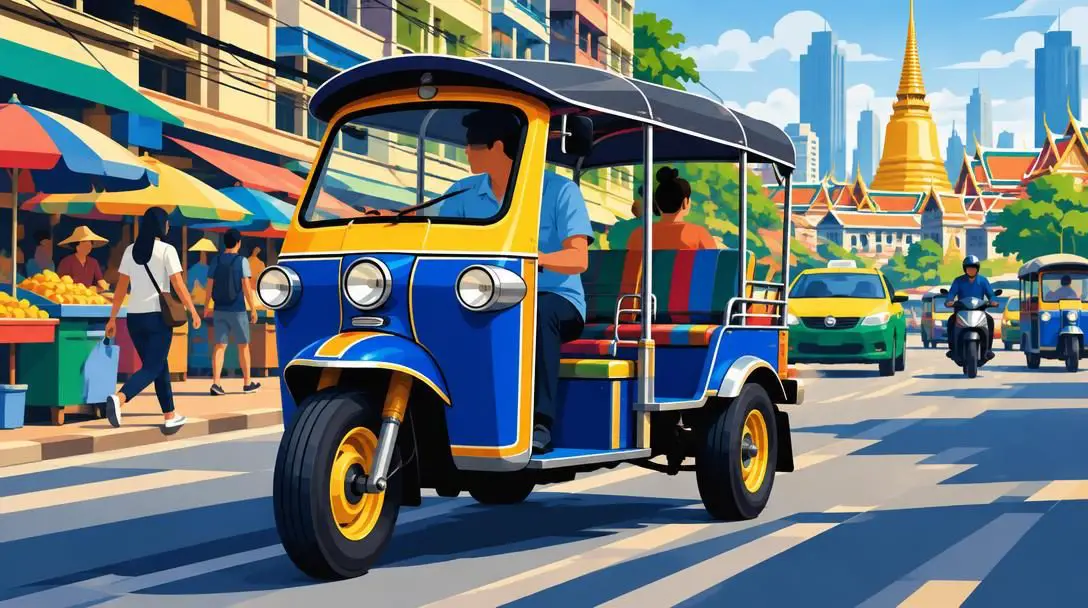
The motorized tuk-tuk developed as a practical, affordable adaptation of three-wheeled vehicles in the post-war era, addressing the need for agile urban transit in rapidly expanding Southeast Asian metropolises. Especially prominent in Bangkok, these open-air vehicles dart effortlessly through heavy traffic, fitting into tight alleys where conventional buses cannot enter. They immerse riders directly in the sensory energy, warm breezes, and bustling sounds of the urban core.
Structurally, a tuk-tuk integrates a steel three-wheeled chassis with a motorcycle-style front fork and handlebar setup. A small internal combustion engine powers the rear wheels, carrying a seated passenger cabin positioned directly over the rear axle. Drivers manage acceleration and braking via standard motorcycle controls or foot pedals. The lack of passenger doors allows for rapid boarding, making it an efficient transport choice for short urban journeys.
Swiss Cable Car
- Origin: Switzerland
- Transit Corridor: Alpine peaks, valleys, and rock faces
- Drive Mechanism: Terminal-based electric motor system
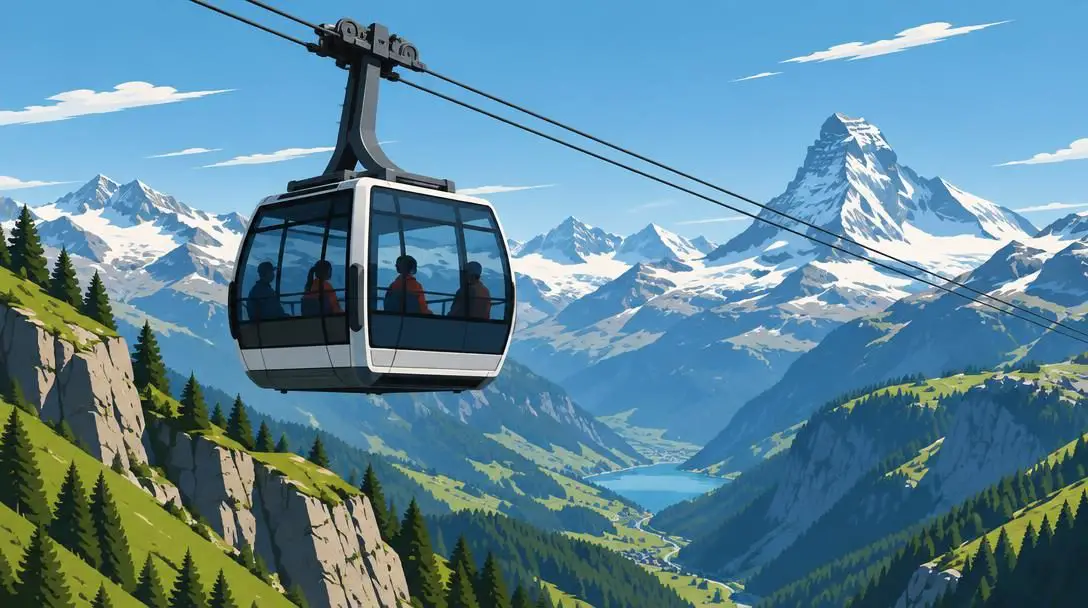
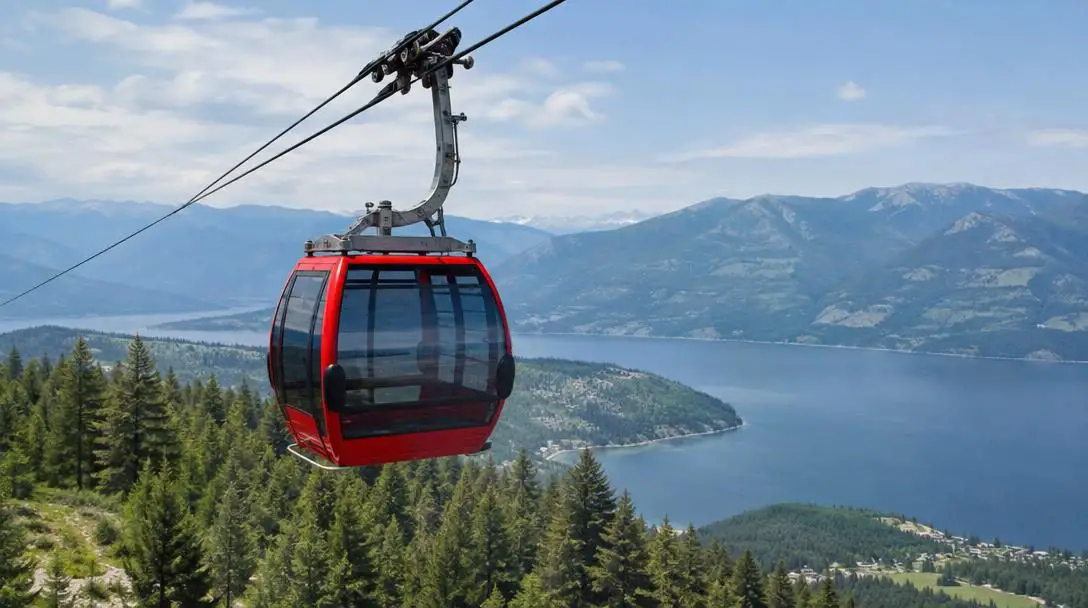
Vertical terrain and deep valleys in the Swiss Alps historically separated neighboring communities during severe weather. Constructing traditional roads or rail links up near-vertical rock faces proved slow, hazardous, and structurally complex. To overcome these barriers, engineers developed aerial cable cars that soar across mountain chasms, connecting valley floors to high-altitude pastures, weather stations, and ski villages while keeping fragile ground ecosystems undisturbed.
These aerial tramways rely on enclosed cabins suspended from high-tensile steel track and haulage cables, supported along their path by steel lattice towers anchored into the bedrock. Instead of onboard engines carrying heavy fuel reserves, large electric motors located in stationary base or summit terminals pull the haulage lines. Cabins glide smoothly thousands of feet above the valley floor, with select systems even offering summit dining experiences alongside panoramic mountain views.
Lapland Reindeer Sled

- Origin: Lapland, Finland
- Operating Environment: Subarctic snowfields and boreal forests
- Cultural Custodians: Indigenous Sami communities
Across the frozen landscapes of subarctic Finland, reindeer sled transit has supported the indigenous Sami people through centuries of extreme winters. In environments where heavy snowdrifts make wheeled transit impossible and foot travel exhausting, domesticated reindeer became vital allies for survival. Today, sled journeys allow visitors to cross peaceful, snow-blanketed forests, experience authentic Sami heritage, and view the Northern Lights.
The system pairs natural animal adaptations with purposeful craft. Reindeer wear wide harnesses designed to spread pulling weight evenly across the chest, preventing strain while dragging low wooden sleds fitted with curved runners. Drivers guide the animals using reins combined with gentle vocal commands, relying on the reindeer's instinct to follow beaten snow trails and move in single-file formation through the winter wilderness.
Essential preparation steps for travelers
Riding unconventional transportation requires different expectations and precautions than catching a standard municipal train. Taking sensible preparatory measures ensures a seamless and memorable excursion.
- Review seasonal schedules and regional conditions: Verify operating windows prior to booking. Sled journeys in Lapland require adequate winter snow, while Swiss mountain cable cars periodically pause services during shoulder seasons for mechanical maintenance or when facing sudden high winds.
- Identify confirmed boarding stations: Research departure locations ahead of time. Gondolas depart from established canal piers, and tuk-tuks can be hailed roadside or at designated urban queues. In contrast, Cambodian bamboo trains often require transport to dedicated rural departure stations situated outside town centers.
- Carry local cash and confirm pricing: Independent operators rarely accept digital payments or credit cards. Carry small local currency notes. Always negotiate and fix the total fare before boarding a tuk-tuk, and confirm current daytime or nighttime rates with Venetian gondoliers before pushing off.
- Select appropriate environmental gear: Open-air and outdoor transit leaves passengers exposed to weather. Secure hats and glasses on windy bamboo trains or fast tuk-tuks, wear insulated thermal layers and waterproof footwear for Finnish reindeer treks, and bring windbreakers to handle high-altitude alpine air.
- Follow operator safety instructions: Pay close attention to directions provided by your sled driver, boatman, or cable car operator. Remain seated while boats or aerial trams are moving, keep limbs within the structural frame of open vehicles, and maintain a quiet, gentle demeanor near draft animals.
Frequent oversights and mistakes to avoid
Navigating unconventional transit is thrilling, but tourists frequently encounter preventable hurdles by overlooking regional customs or physical realities.
- Neglecting upfront fare agreements: Boarding a Thai tuk-tuk without agreeing on the total cost is a common mistake that can spark heated disagreements at the destination.
- Underestimating physical jolts: The Cambodian norry travels over uneven rail joints and rustic tracks. Passengers with chronic back pain or stability issues should brace themselves firmly against the timber frame and use protective floor mats.
- Ignoring rapid elevation shifts: Swiss cable cars ascend thousands of feet in mere minutes. Rapid air pressure variations can trigger ear discomfort or mild lightheadedness, requiring travelers to swallow often and hydrate steadily.
- Dressing lightly for static cold: While reindeer sleds glide at a steady pace, passengers remain stationary for extended periods in freezing temperatures. Without windproof outer shells and thermal underlayers, the subarctic chill penetrates regular clothing rapidly.
- Shifting weight abruptly in boats: Because gondolas are finely balanced, moving suddenly to snap photos or standing up without notifying the gondolier can destabilize the vessel and disrupt the rowing rhythm.
Frequently asked questions
Why are Venetian gondolas built with an asymmetrical shape?
Gondolas are deliberately constructed with the left side wider than the right to counteract the weight of the gondolier, who stands on the rear left side to row. This asymmetrical hull keeps the boat level in the water while permitting navigation with a single oar.
How do Cambodian bamboo trains handle oncoming traffic on a single track?
When two bamboo platforms meet on the single rail line, both stop. The drivers quickly determine which vehicle has the lighter cargo load. The lighter platform and its wheel sets are removed from the tracks by hand, allowing the heavier norry to pass before the disassembled car is reassembled on the rails.
Are tuk-tuks safe for luggage and group travel?
Tuk-tuks comfortably accommodate small groups and day packs, but they lack secure enclosures or trunks. Passengers must keep hand luggage firmly secured within the seating area and avoid letting items hang near the open sides.
Can reindeer sledding tours run year-round?
No. Reindeer sledding relies on deep, packed snow cover and is strictly a winter activity in Lapland, typically operating when winter conditions allow sled runners to glide smoothly across trails.
Do Swiss cable cars operate during bad weather?
Cable cars generally operate across various weather conditions, but severe high winds or severe storms can trigger temporary precautionary closures. Operators also schedule periodic maintenance shutdowns during shoulder seasons.
The bottom line
Traditional transit vehicles are far more than quaint novelties; they are living testaments to human adaptability, local materials, and geographic resourcefulness. Whether sliding across Lapland snows, floating down centuries-old Venetian waterways, or rumbling along Cambodian train tracks, these journeys link passengers directly to regional heritage. Integrating these unique modes of travel into a broader itinerary offers perspective on how diverse cultures solve the universal challenge of moving through the world.