
What Makes A Good Supervillain? Analyzing Character Development

In superhero fiction, heroes establish the moral foundation and steer the narrative toward resolution, but an exceptional supervillain dictates the true stakes, tempo, and thematic resonance of the entire story. A one-dimensional antagonist placed as an obstacle to be overcome in an explosive final clash creates a forgettable narrative, whereas a multi-dimensional villain transforms an adventure into an enduring classic.
Modern audiences look beyond grand visual displays and overwhelming physical powers to evaluate antagonists as characters in their own right. Crafting a genuinely compelling supervillain requires a deep understanding of psychological realism, narrative structure, and the complex interpersonal dynamics that bind opposing forces together across an evolving story.
Key takeaways
- Iconic supervillains rely on three interconnected structural pillars: relatable motivation, a transformative backstory, and a distinct personality.
- Effective antagonists are driven by understandable internal logic rather than unexplained, arbitrary wickedness.
- Formative traumas and catalyst events provide essential psychological context for a villain's descent into extremism or chaos.
- A distinct demeanor—ranging from magnetic charm and sharp wit to chilling coldness—elevates an antagonist into a fan favorite.
- The strongest villains act as thematic foils to the hero, forcing protagonists to confront their own philosophies and personal flaws.
The evolution from narrative obstacle to complex figure
The role of the antagonist has evolved significantly across the history of comic books and adventure literature. In early traditions, villains functioned primarily as straightforward plot devices. They committed crimes out of pure malice, greed, or inherent wickedness, rarely possessing complex underlying reasons for their behavior. Their structural job was simple: spark an immediate crisis so that the hero could arrive, fight the threat, and restore the status quo.
Over time, creators discovered that flat, unmotivated villains severely capped the narrative potential of their stories. When an antagonist has no personal stake beyond mindless destruction or simple financial gain, an audience's emotional investment remains shallow. Storytelling traditions gradually adopted psychological realism, crafting conflicts that tested heroes philosophically and emotionally rather than just physically. Today, great supervillains are granted the same narrative care and nuanced development as the protagonists they oppose.
Audiences began to respond to antagonists whose worldviews challenged the heroes not just physically, but philosophically and emotionally.
The three pillars of supervillain character development
To transcend the cartoonish archetype of the generic menace, character development must balance three core structural dimensions: motivation, backstory, and personality. When these elements operate together, the villain becomes a living, breathing participant within the fictional world.
Motivation forms the foundation of any villain's dramatic credibility. An antagonist's actions must be driven by reasons that make sense to the audience. Viewers and readers do not need to condone violent or extreme methods, but they must grasp the internal logic behind those choices. Whether driven by personal revenge, a hunger for power, or a radical desire to reshape society, a villain with a clear objective becomes an understandable human being rather than an arbitrary physical hurdle.
Backstory supplies the necessary emotional architecture to justify that motivation. An effective backstory maps the transition from ordinary life to villainy, illuminating the formative environments, choices, and traumas that shaped their psychological worldview. Without this context, extreme behavior reads as senseless cruelty; with it, the character's descent into villainy feels earned and compelling.

Personality is the final element that makes a supervillain memorable. Immense physical or cosmic power cannot compensate for a dull presence. An iconic villain demands a defined manner, unique voice, and specific behavioral traits—such as dark humor, cold brutality, or captivating charisma—that leave an indelible impression whenever they step onto the page or screen.
Iconic case studies in villain development
Examining well-known antagonists demonstrates how distinct combinations of motivation, backstory, and personality produce unforgettable characters across modern media franchises.
| Character | Core Motivation | Formative Backstory | Defining Personality Trait |
|---|---|---|---|
| Magneto | Protect mutants from oppression and human persecution | Surviving the horrors of the Holocaust | Fierce ideological conviction and superiority |
| The Joker | Spreading violence, madness, and pure chaos | Suffering a devastating, catalytic personal loss | Unpredictable cruelty and fractured psychological state |
| Loki | Pursuing power, validation, and personal recognition | Navigating complex familial and royal tensions | Sharp wit, cunning strategy, and magnetic charisma |
Magneto
- Franchise: X-Men
- Primary Driver: Mutant protection and supremacy
- Formative Experience: Holocaust survival
Magneto serves as one of the clearest examples of powerful, justifiable motivation in speculative fiction. Having lived through the absolute worst horrors that humanity can inflict upon others during the Holocaust, Magneto developed an unshakable conviction that mutants must assert their superiority to survive. His desire to shield his people from suffering the same atrocities and persecution he endured in his youth grounds his campaign in profound emotional truth. Although his aggressive methods and willingness to subjugate humanity place him in direct conflict with heroic figures like the X-Men, his core goal remains undeniably understandable.
The Joker
- Franchise: DC Comics / Batman adaptations
- Primary Driver: Anarchy and psychological disruption
- Formative Experience: Devastating personal loss
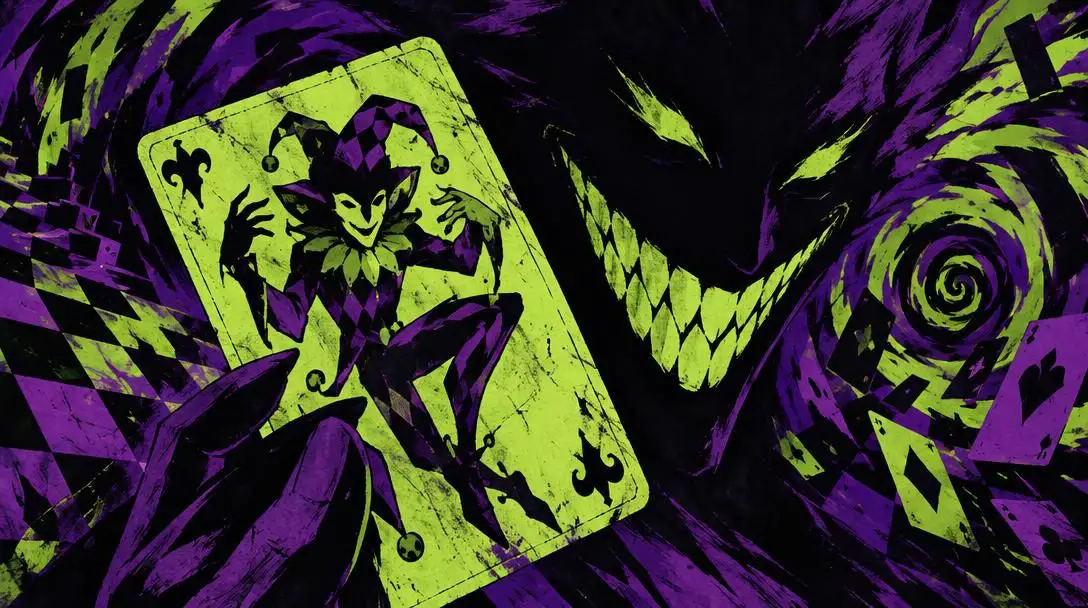
The Joker illustrates the dramatic power of a catalyst-driven backstory. Across multiple adaptations, the character is defined by a tragic past marked by an overwhelming personal loss. That profound devastation breaks his psychological stability, initiating a descent into chaos and violence. Because audiences can see the immense suffering that shattered his psyche, his horrifying actions gain tragic narrative depth rather than registering as superficial, unmotivated cruelty.
Loki
- Franchise: Marvel Cinematic Universe
- Primary Driver: Royal power and personal distinction
- Formative Experience: Royal familial rivalries and hidden origins
Loki demonstrates how a compelling personality can transform a villain into a cultural phenomenon. Rather than relying on pure brute force or standard apocalyptic threats, Loki captivates audiences through personal charm, razor-sharp wit, and intricate schemes. His ability to disarm and entertain viewers makes him the quintessential antagonist that audiences love to hate, illustrating that a vibrant, specific voice is just as vital as physical prowess.
Step-by-step framework to developing a supervillain
Writers and worldbuilders seeking to construct antagonists with narrative longevity can implement a systematic development process to ground their characters in clear dramatic logic.
- Define the core worldview and moral philosophy: Determine how the villain interprets human nature, justice, or society. Identify what they believe is fundamentally broken about the world and why their extreme methods represent the only valid remedy.
- Identify the catalyst event: Pinpoint the formative turning point in the character's past. Isolate the precise tragedy, injustice, or betrayal that shattered their conventional morality and initiated their villainous trajectory.
- Clarify the specific objective: Move past vague ambitions such as world domination. Define concrete, actionable targets, whether that involves exact retribution against a specific rival, the acquisition of power for defensive security, or systemic revolution.
- Establish personal emotional stakes: Anchor the character's grand schemes directly to their internal emotional wounds. Ensure that every intermediate victory or setback carries personal significance for their identity and self-worth.
- Craft a distinct voice and demeanor: Choose the behavioral traits that characterize their presence. Determine whether they command attention through disarming charisma, chilling emotional detachment, intellectual vanity, or explosive physical intimidation.
- Align the villain as a direct foil to the hero: Tailor the antagonist's principles to reflect, distort, or challenge the protagonist's core beliefs. A well-designed villain acts as an uncomfortable mirror, forcing the hero to confront their own latent vulnerabilities and ideological blind spots.
Common mistakes in supervillain characterization
Even stories set within inventive worlds can collapse if the central antagonist lacks substance. Writers frequently encounter specific pitfalls that dilute the narrative tension of their stories:
- Unmotivated evil: Introducing malevolence without an underlying psychological rationale. When villains commit heinous acts simply because they are labeled evil, tension evaporates and the character becomes a two-dimensional caricature.
- Prioritizing superpowers over personality: Relying on cosmic strength, reality-warping abilities, or striking visual designs to compensate for an absence of defined desires, distinct traits, or internal conflict.
- Detached backstories: Crafting a dramatic past full of trauma that bears no functional connection to the villain's current choices, philosophy, or tactical habits.
- Inconsistent internal logic: Forcing the antagonist to betray their established principles or intellectual capability solely to accommodate an easy hero victory or resolve a plot knot.
- Relying on generic tropes: Resorting to predictable monologues, clichéd threats, and unearned cruelty instead of developing an authentic, idiosyncratic perspective.
Sustaining villain growth across extended narratives
Once the foundational components of motivation, backstory, and personality are firmly established, creators must manage how the supervillain evolves across an extended story or multi-part narrative arc. An antagonist who remains static across multiple encounters risks becoming predictable and losing their menacing aura.
Characterization is tested most rigorously during moments of failure. A compelling villain cannot afford to remain completely impassive when their meticulously laid plans fall apart. How an antagonist reacts to defeat—whether by doubling down on their radical philosophy, experiencing profound psychological distress, or adapting their tactics with renewed ferocity—reveals the true depth of their convictions.
Furthermore, the interpersonal dynamic between the villain and the protagonist must remain dynamic. The most celebrated rivalries are not simple physical slugfests; they are prolonged ethical debates fought through action. As the hero and villain repeatedly clash, their shared history should alter how they perceive one another, raising the emotional stakes of each subsequent confrontation. Deciding whether an antagonist is fundamentally irredeemable, tragic, or capable of temporary alliances against larger threats determines their ultimate legacy within the story.
Frequently asked questions
What is the single most important element of a supervillain?
While motivation, backstory, and personality are all essential, clear motivation is foundational. If an audience cannot understand why an antagonist acts, their actions carry little dramatic weight, reducing the character to a simple plot obstacle.
Does a villain's motivation have to be morally acceptable to the audience?
No. The audience does not need to endorse the villain's extreme methods or moral code. They only need to understand the internal logic driving the character, recognizing how their experiences produced their worldview.
How does a compelling backstory prevent a villain from being a caricature?
A strong backstory explains the transition from an ordinary life to a villainous path. By showing the loss, trauma, or injustice that provoked their descent, it establishes that their current behavior is an understandable psychological consequence rather than arbitrary cruelty.
Why is a supervillain's personality as crucial as their power level?
Overwhelming powers create physical threats, but personality generates emotional engagement. Distinct mannerisms, such as sharp wit, cold calculation, or charismatic charm, make an antagonist memorable and entertaining to watch.
What does it mean for a supervillain to act as a foil to the hero?
Acting as a foil means the villain's worldview, values, and methods directly challenge the hero's core beliefs. This dynamic forces the protagonist to confront their own weaknesses and proves that their ethical principles can withstand philosophical scrutiny.
The bottom line
A memorable supervillain is far more than a physical hurdle standing between a superhero and the end of a story. By integrating understandable motivations, meaningful backstories, and distinctive personalities, writers transform basic narrative obstacles into nuanced characters who challenge the hero on intellectual, emotional, and physical levels. When an antagonist is given the same psychological care and narrative development as the protagonist, the resulting story achieves genuine emotional resonance that stays with the audience long after the final battle concludes.





