Family Fun Outdoors: Top 5 Outdoor Games for All Ages
In modern households dominated by portable devices, personal media feeds, and persistent screen time, finding engaging pastimes that unite family members across generations can feel increasingly difficult. While digital entertainment connects people across the globe, it frequently isolates individuals under the same roof. Transitioning leisure time into the open air is one of the most reliable and revitalizing ways to shatter sedentary routines and bring family members together in shared laughter and teamwork.
Outdoor games transform ordinary lawns, neighborhood greenbelts, and public parks into lively arenas for collaborative play. By stripping away digital distractions and introducing low-pressure physical movement, simple open-air recreational pastimes encourage authentic face-to-face interaction. Whether navigating a multi-generational footrace or testing throwing accuracy on an afternoon lawn, outdoor activities establish accessible common ground where participants of all ages can bond, develop essential life skills, and build lasting traditions.
Key takeaways
- Outdoor games replace passive indoor screen time with dynamic movement, face-to-face interaction, and intergenerational family bonding.
- Activities like Kickball and Capture the Flag foster endurance, strategy, and teamwork, while Cornhole and Frisbee Golf hone concentration and finesse.
- Modifying rules, field boundaries, and throwing distances ensures that toddlers, teenagers, and older adults can compete together comfortably.
- A Nature Scavenger Hunt provides a gentle, non-elimination alternative that builds problem-solving skills and deepens observation of the natural world.
- Careful advance planning, such as ground hazard inspections and planned hydration breaks, keeps mixed-age group games safe and enjoyable.
The developmental and social benefits of outdoor recreation
Engaging in regular open-air play provides a practical foundation for lifelong physical fitness and mental rejuvenation. Unlike structured gym routines or regimented sports practices that can sometimes feel like chores, outdoor family pastimes weave healthy, active movement naturally into the flow of play. Running across grass, tossing bean bags, leaping over obstacles, and tracking rolling balls improve cardiovascular endurance, balance, spatial awareness, and fine motor skills. For adult participants, these casual games introduce low-stress cardiovascular exercise and mobility training disguised as lighthearted recreation.
Beyond physical development, outdoor games present a fertile training ground for vital social-emotional capabilities. When children join adults in organized games, they absorb crucial life lessons surrounding sportsmanship, rule compliance, emotional regulation, and group coordination. Cooperating with teammates toward a shared objective teaches young participants how to communicate under pressure, celebrate collective wins graciously, and accept setbacks with resilience. Conversely, older players gain practice in mentorship, patience, and encouraging others, forging deeper mutual respect across generation gaps.
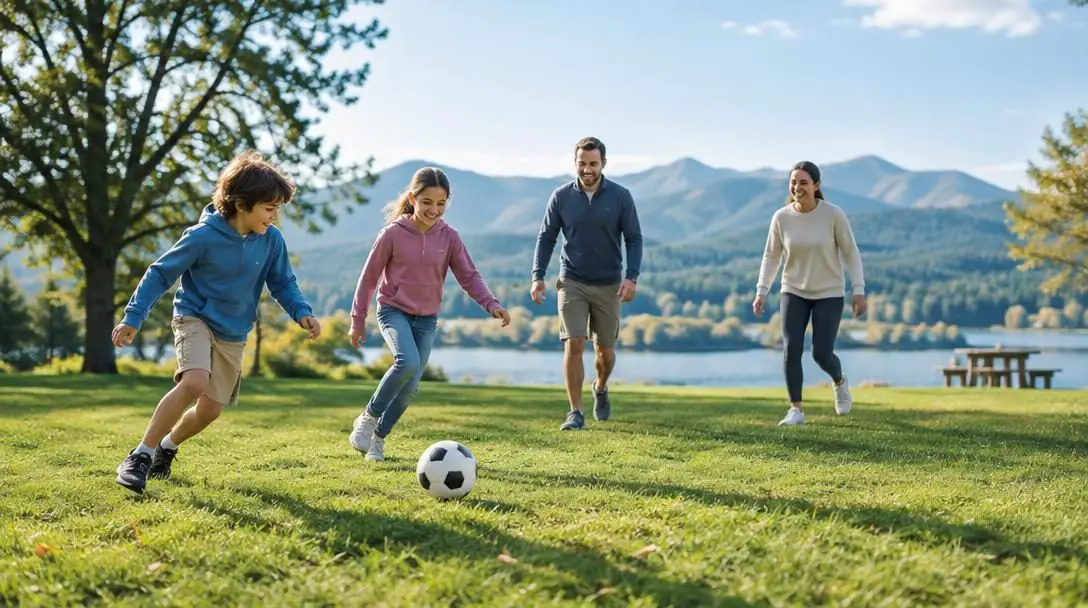
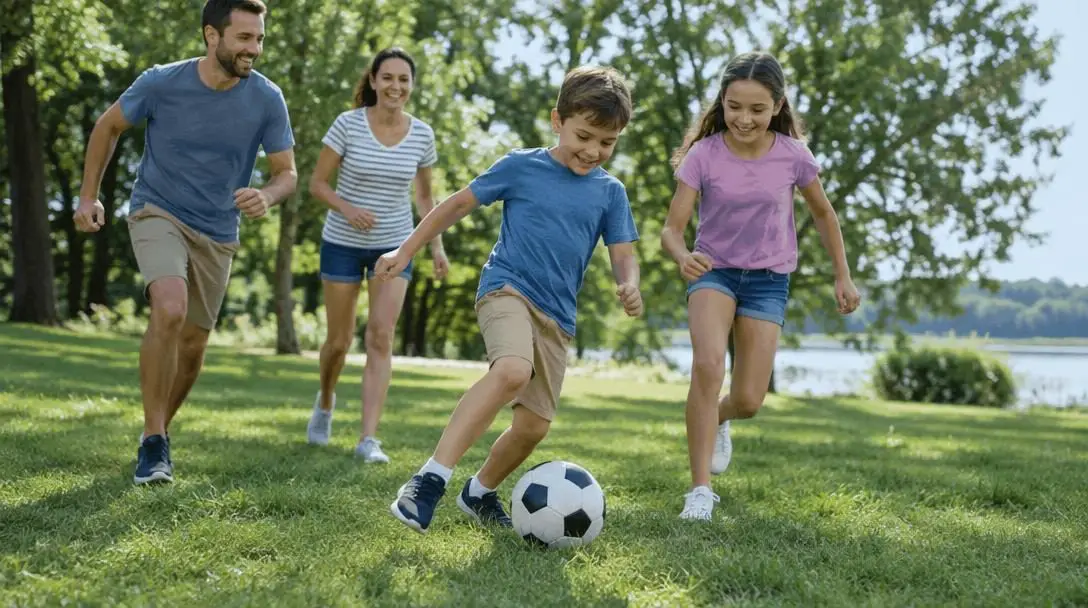
Outdoor recreation offers a natural change of scenery that encourages movement, face-to-face interaction, and shared experiences away from digital distractions.
At a glance: Comparing the top family outdoor pastimes
Selecting the right game depends heavily on available lawn space, the mobility levels of your group, and the time available for setup. The comparison table below highlights the primary physical demands, spatial footprints, and age accommodations for each pastime.
| Game | Primary Skills | Ideal Terrain & Space | Best Intergenerational Adjustment |
|---|---|---|---|
| Capture the Flag | Speed, tactical strategy, teamwork | Large, divided open field or park | Assign younger players to defend bases or conduct jailbreaks |
| Kickball | Kicking, hand-eye coordination, base running | Flat grassy field with four-base diamond | Offer gentle underhand pitches and designate running buddies |
| Cornhole | Underhand toss, precision, concentration | Compact lawn, patio, or driveway | Set up staggered foul lines so younger throwers stand closer |
| Frisbee Golf | Throwing finesse, course navigation, patience | Open park with natural or artificial targets | Shorten total fairway distances and allow flexible tee locations |
| Nature Scavenger Hunt | Environmental observation, problem-solving | Backyard garden, nature trail, or park | Pair children with adults to search for broad colors and textures |
The top 5 outdoor games for all ages
The following five activities have stood the test of time because of their versatility, minimal equipment requirements, and ability to adapt seamlessly to players of widely varying ages and physical capabilities.
Capture the Flag
- Core dynamic: Two teams defending home territory while attempting to steal an opponent's flag
- Key equipment: Two flags or bandanas, visible boundary markers
- Skill emphasis: Tactical communication, endurance, and sprinting
- Adaptability factor: High; roles can range from stationary flag defense to active offensive running
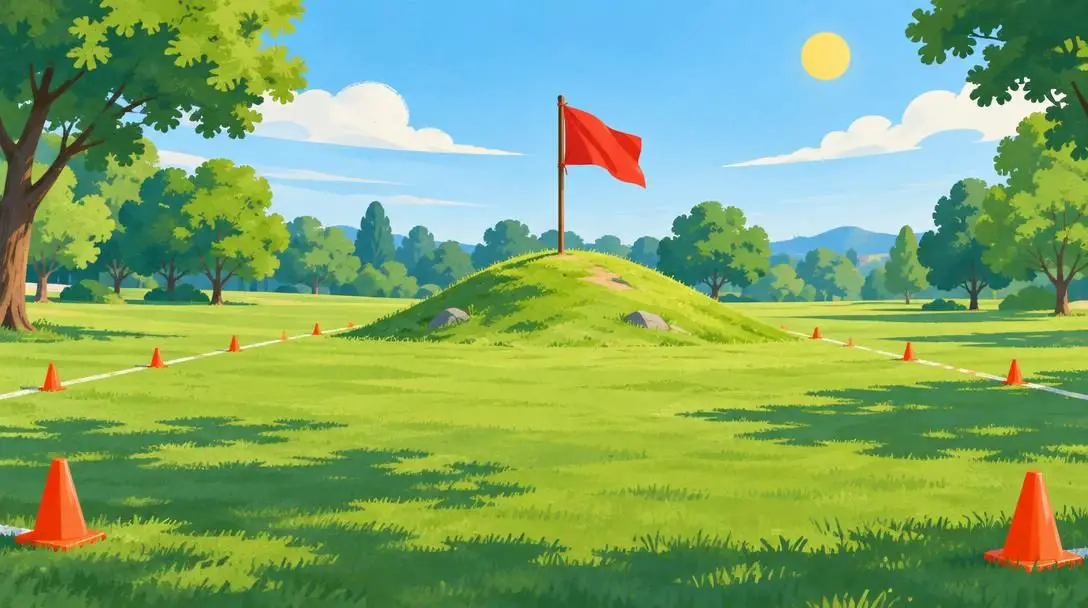
Capture the Flag is an enduring classic that has energized backyards, summer camps, and community parks for generations. The playing area is divided into two distinct territories separated by a clearly marked center line. Each team places a flag, bandana, or marker inside their own zone, keeping it in open view. The primary objective is to sprint across the border into enemy territory, snatch the opposing flag, and race back over the center line without being tagged by an opponent.
When an opposing runner is tagged inside foreign territory, they are escorted to a designated holding zone or jail. Imprisoned players must wait until a teammate darts through defensive lines to tag them, triggering a daring jailbreak. Because the game relies as heavily on tactical ingenuity as it does on sheer speed, it naturally accommodates diverse ages. Younger children who may tire quickly during long sprints can be appointed as flag guards or sentinels near the perimeter, while older children and adults shoulder the intense running duties, creating a truly collaborative group effort.
Kickball
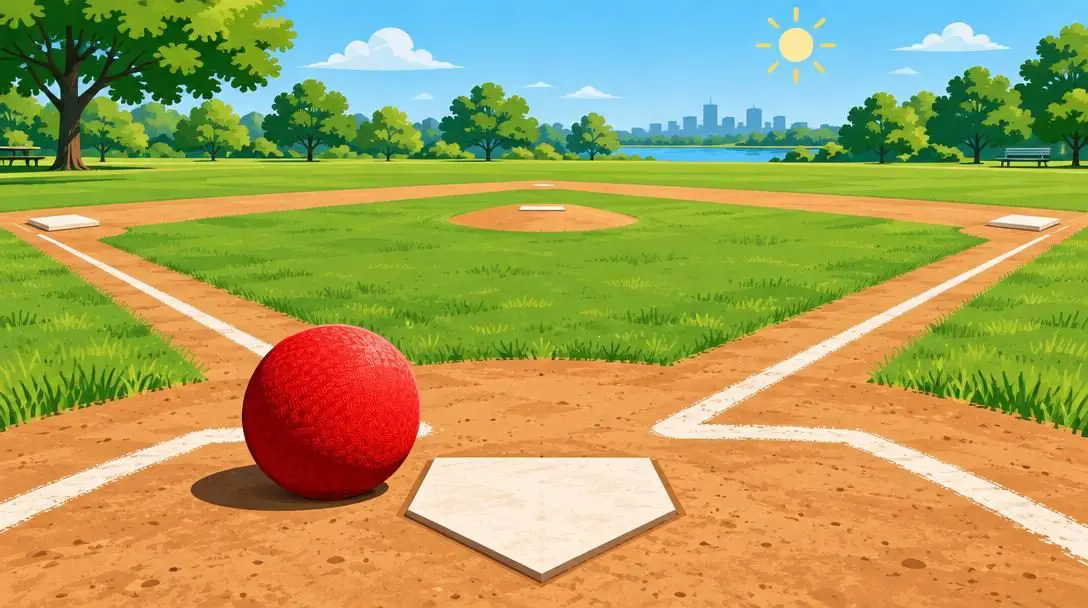
- Core dynamic: Diamond-format team sport where players kick a rolling ball and run bases
- Key equipment: Large inflatable rubber ball, four base markers or throw-down plates
- Skill emphasis: Hand-eye coordination, catching, kicking power, and team defense
- Adaptability factor: High; pitching speed and defensive shifts can be adjusted per player
Capturing the strategic thrill of traditional baseball in a far more accessible format, Kickball eliminates the frustration of striking out with a bat. The game operates on a standard four-base diamond. A defensive pitcher gently rolls a large, bouncy rubber ball toward home plate, where an offensive kicker lines up their approach and boots the ball into the field before sprinting toward first base.
Fielders attempt to retrieve the ball and record outs by catching it in the air, tagging the runner directly, stepping on a force base, or hitting the runner below the shoulders with a gentle thrown ball. Because a rubber ball offers a generous striking surface, players of all skill levels can experience the satisfaction of launching a solid drive. To keep games balanced for younger kids, pitchers can deliver slow, predictable rolls, while adults can kick with controlled placement rather than overwhelming force, keeping defensive fielders safely involved.
Cornhole
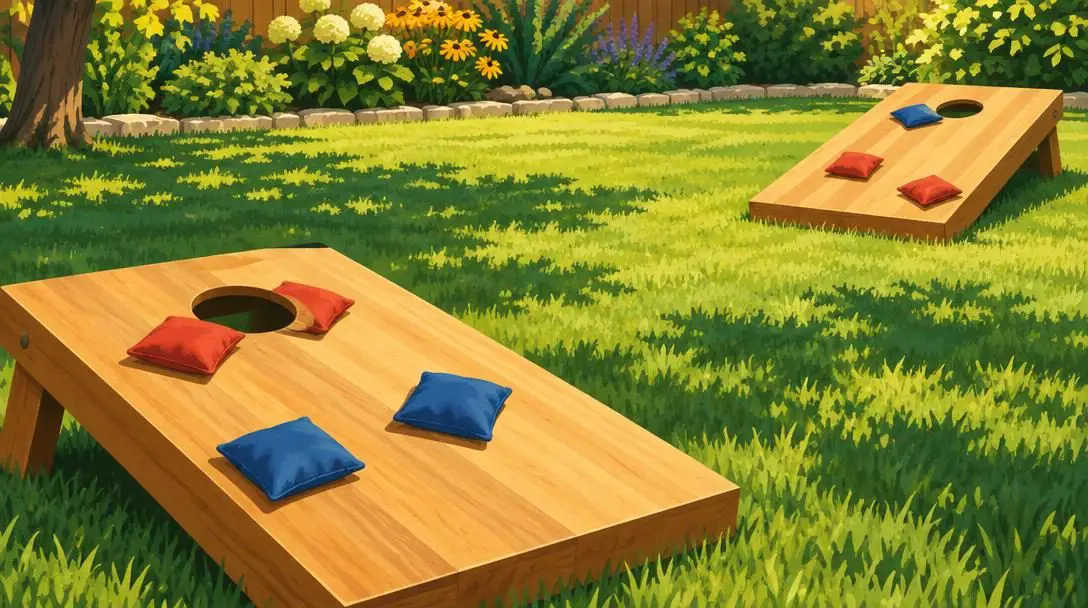
- Core dynamic: Alternating target toss game played across opposing angled platforms
- Key equipment: Two cornhole boards with six-inch target holes, eight fabric bean bags
- Skill emphasis: Consistent tossing mechanics, spatial judgment, and concentration
- Adaptability factor: Excellent; throw distances can be tailored independently for each player
Few lawn pastimes have experienced the meteoric rise in popularity that Cornhole has enjoyed in recent years. Two wooden or composite boards, each featuring a centered round target hole near the top edge, are positioned facing one another across a flat lawn or driveway. Standing alongside their respective platforms, players alternate tossing small fabric bags filled with corn feed or resin pellets toward the opposite target board.
Scoring is straightforward and rewarding: any bag that lands and remains on the board surface at the end of the round scores one point, while any bag pushed through the hole earns three points. Cornhole delivers an unhurried, social environment that allows conversation to flow freely while maintaining lighthearted competition. The game is exceptionally accommodating for players with limited physical mobility, seniors, or young children, as throw lines can be adjusted independently without altering the core scoring rules.
Frisbee Golf
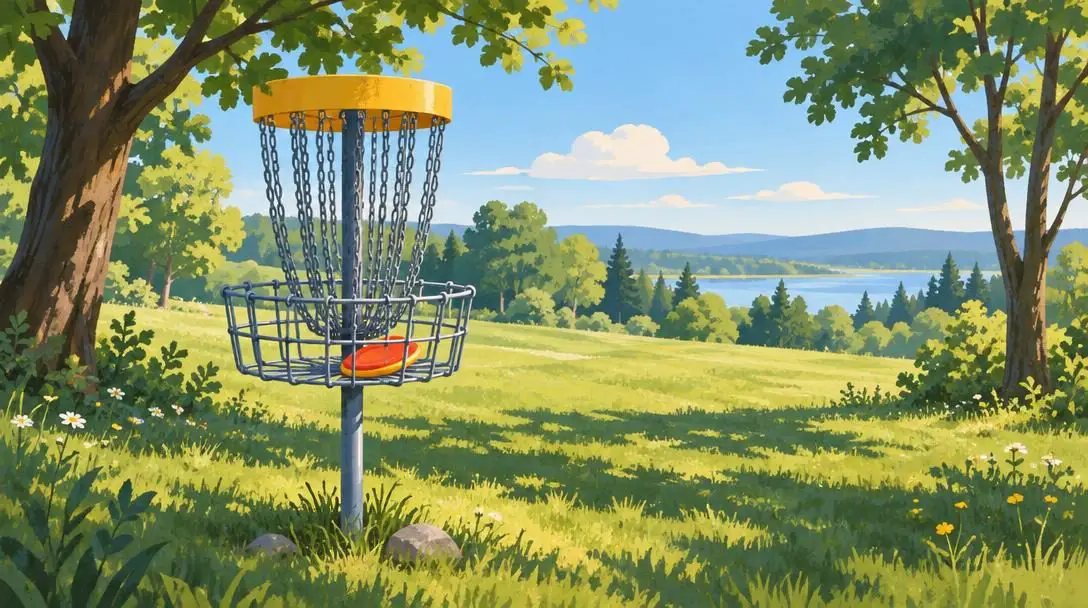
- Core dynamic: Course-style navigation where flying discs are thrown into designated targets
- Key equipment: Standard flying discs or disc golf discs, chain baskets or landmark targets
- Skill emphasis: Trajectory control, angle release, spatial calculation, and patience
- Adaptability factor: High; fairways can be shortened and target parameters expanded
Combining the leisurely cadence of traditional golf with the accessibility of a flying plastic disc, Frisbee Golf (or disc golf) turns any park or expansive yard into a custom course. Players begin each hole from a designated teeing marker, releasing their disc toward an agreed-upon target—such as a professional metal chain basket, a sturdy tree trunk, or a designated park bench. The exact spot where the disc comes to rest establishes the lie for the next throw.
The objective is to complete the entire course of holes in the lowest total number of throws possible. Frisbee Golf rewards finesse, angle manipulation, and wind awareness over raw physical power, making it a fantastic equalizer between younger players and adults. Families can easily design their own multi-hole layout using everyday landmarks, establishing par scores and creating shorter throw corridors for smaller children to build their confidence.
Nature Scavenger Hunt
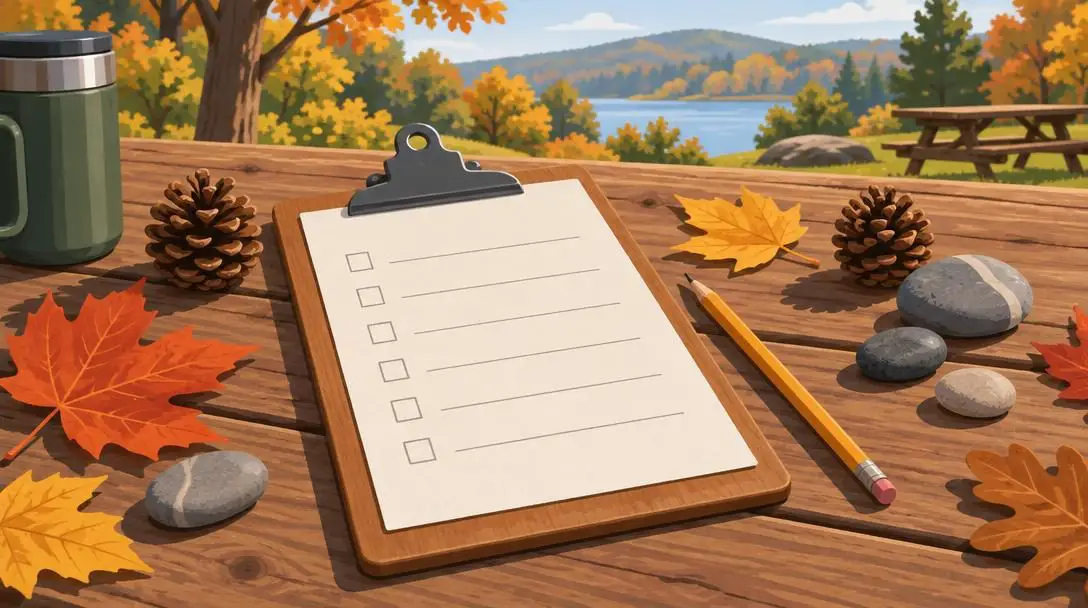
- Core dynamic: Exploratory checklist quest conducted across natural landscapes
- Key equipment: Printed search checklists, clipboards, and marking pencils
- Skill emphasis: Visual discernment, natural curiosity, and problem-solving
- Adaptability factor: Outstanding; clues can be simplified for toddlers or detailed for adults
A Nature Scavenger Hunt reframes the outdoor environment into an interactive wonderland, shifting the focus from head-to-head athletic competition to cooperative exploration. Organizers assemble a checklist of items readily found in local ecosystems—ranging from specific leaf shapes, rough bark, and uniquely textured stones to feather fragments, moss patches, and animal tracks. Players or small multi-generational teams set out with clipboards to spot, record, and check off every item on the sheet.
Unlike fast-paced running pastimes, a scavenger hunt encourages families to slow down, listen closely to their surroundings, and observe subtle nuances in nature. The activity is easily customized to the developmental stages of participants. Young toddlers can hunt for broad visual cues, such as "something yellow" or "a smooth round pebble," while older children and adults tackle challenging botanical textures, seed pods, or signs of local wildlife. It is an ideal non-elimination pastime that leaves every participant feeling accomplished.
Practical steps for setting up an outdoor family game day
Organizing a smooth, conflict-free afternoon of outdoor recreation requires only modest equipment, but thoughtful preparation ensures that participants remain safe, energized, and actively engaged from start to finish.
- Evaluate and select the appropriate venue: Choose an outdoor setting that matches the physical footprint of the games you plan to host. Large running games like Kickball and Capture the Flag demand expansive, level turf, whereas Cornhole and Scavenger Hunts thrive in compact backyards or shaded neighborhood parks.
- Inspect the playing surface for safety hazards: Walk the perimeter of the field prior to organizing the teams. Identify and remove any tripping hazards, such as exposed tree roots, hidden divots, wet mud patches, fallen branches, or broken glass, to ensure runners can sprint without fear of injury.
- Gather and organize essential gear: Assemble basic, durable equipment ahead of time. Ensure you have flags or bandanas, a properly inflated rubber ball, throw-down rubber bases, sturdy cornhole boards with bags, balanced flying discs, and printed checklists with pencils.
- Establish and simplify ground rules collectively: Gather all participants in a circle before opening play. Outline the core rules, boundaries, and safety expectations in clear, plain language. Give young children an opportunity to ask questions so everyone shares a common understanding.
- Implement flexible age-based modifications: Balance competitive mismatches before play starts. Introduce shorter running baselines for small children, move throwing lines closer to the boards in Cornhole, or pair younger players directly with adult mentors.
- Schedule regular rest and hydration pauses: Sustained physical exertion in warm weather can quickly lead to fatigue. Designate a shaded station equipped with ample drinking water, healthy snacks, and sunscreen, scheduling compulsory pauses between innings or rounds.
Common mistakes that derail outdoor family fun
Even the most well-intentioned family gathering can run into friction if organizers overlook the emotional and physical needs of a multi-generational group. Keeping these common pitfalls in mind preserves a lighthearted, supportive atmosphere throughout the afternoon.
- Enforcing rigid professional rulebooks: Insisting on strict tournament regulations, complex out rules, or harsh penalties can quickly alienate younger or less athletic family members. Prioritize flow, participation, and fun over strict rule adherence.
- Overlooking wide age and strength disparities: Allowing older teens or adults to pitch or throw at full velocity against small children creates safety risks and damages morale. Always calibrate competitive intensity to match the most vulnerable player.
- Failing to delineate boundary markers: Ambiguous foul lines and undefined jail areas routinely cause arguments over whether a player was tagged or out of bounds. Take two minutes to lay down visible markers using cones, jackets, or chalk lines.
- Neglecting hydration and sun safety: Playing under direct sunlight without water or shade causes quick exhaustion, headaches, and irritability. Establish proactive drink breaks before players begin showing signs of fatigue.
- Choosing unsuitable terrain: Attempting to pitch bean bags on steep slopes or running across slick, wet grass causes frustration and injuries. Match each game to a surface that supports its specific mechanics.
Frequently asked questions
How can we include toddlers in complex games like Capture the Flag or Kickball?
Toddlers can participate meaningfully when paired directly with an adult or teen "running buddy." In Kickball, allow the toddler to take a stationary kick from home plate and jog to first base while holding an adult's hand. In Capture the Flag, appoint younger kids as honorary jail wardens or flag lookouts who assist older teammates, ensuring they feel integral to team strategy without having to outrun older players.
What equipment do I need to buy to start playing these games?
Very little specialized equipment is required. Capture the Flag uses fabric bandanas or old hand towels. Kickball requires an inexpensive inflatable rubber ball and temporary base markers. Cornhole sets and flying discs are widely accessible, while a Nature Scavenger Hunt requires nothing more than household paper and pencils. Many games can be played using everyday items repurposed from around the home.
What should we do if our backyard is too small for running games?
If your yard has limited square footage, focus on precision and exploration games such as Cornhole and Nature Scavenger Hunts, which require very little lateral space. Alternatively, take advantage of local public resources by moving games like Kickball, Frisbee Golf, and Capture the Flag to nearby municipal parks, community center lawns, or school recreational fields.
How do you keep games fun when some family members are overly competitive?
Emphasize team rotation and cooperative play rather than individual score keeping. Swap team rosters between rounds, blend age groups across both sides, and introduce humorous house rules—such as kicking with an opposite foot or running bases backward—to disrupt intense competitive focus and keep the spirit lighthearted.
Can Frisbee Golf be played without professional metal chain baskets?
Yes. Casual Frisbee Golf can be played in any park or open area using natural landmarks or urban fixtures as targets. Agreed-upon target objects can include specific tree trunks, wooden fence posts, or park benches. A player simply completes the hole when their flying disc strikes the designated target object.
The bottom line
Reclaiming quality family time from the grip of digital screens does not demand costly vacations or elaborate entertainment complexes. By stepping onto a grassy lawn with simple equipment and a shared sense of play, families can dissolve generational boundaries and build an enduring reservoir of shared joy. Pastimes like Kickball, Cornhole, and Capture the Flag offer balanced blends of energetic movement, strategic thinking, and continuous conversation.
As your family integrates these activities into regular weekend routines, encourage everyone to contribute their own creative adjustments. Allowing children and adults to collaborate on custom house rules, design fresh obstacle courses, or map new scavenger hunts transforms outdoor play into an evolving, personalized family tradition that will resonate across generations for years to come.