The Rise of Crossword Puzzle Tournaments: A Look at Competitive Puzzle-Solving
For generations, solving crossword puzzles was regarded as a quiet, contemplative ritual. Enthusiasts tackled the morning paper over coffee, filled in grids during long train commutes, or spent lazy Sunday afternoons leafing through reference books at kitchen tables. It was an inherently solitary pursuit where the only opponent was the wit of the puzzle constructor, and success was measured strictly by personal satisfaction.
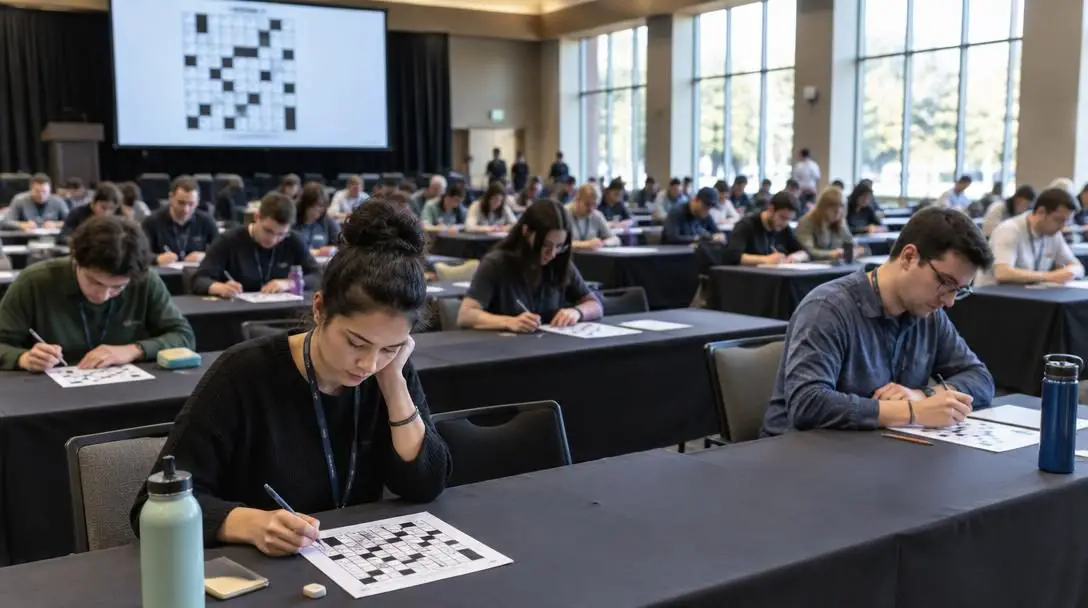
In recent years, however, the landscape of wordplay has undergone an energetic transformation. Crossword solving has burst into the realm of organized competitive mental athletics. Across the globe, thousands of solvers now gather in crowded hotel ballrooms, regional civic spaces, and digital arenas to race against the clock and one another. These tournaments combine intellectual stamina, rapid linguistic deduction, and raw pencil speed, turning an unassuming home pastime into a thrilling spectator sport complete with trophies, cash prizes, and an enthusiastic community.
Key takeaways
- Competitive crossword solving transforms a traditionally solitary pastime into a fast-paced, high-stakes spectator sport.
- Major gatherings like the American Crossword Puzzle Tournament and the World Puzzle Championship establish rigorous standards for speed and accuracy.
- Scoring systems balance swift completion against precision, penalizing empty grid squares and incorrect letters heavily.
- Regular puzzle competition delivers significant cognitive benefits, from memory retention to reduced dementia risk in older adults.
- Success depends on deliberate strategic choices, including clue sequencing, handwriting clarity, and careful time allocation.
Premier Arenas in the Competitive Solving Circuit
The modern competitive circuit is defined by storied live events and expanding digital spaces that welcome solvers of every background. While informal puzzle circles have existed for decades, structured tournaments created the scoring metrics, round formats, and playoff stages that define modern competitive wordplay.
American Crossword Puzzle Tournament
- Established: 1978
- Format: In-person annual championship
- Attendance: Up to 700 participants worldwide
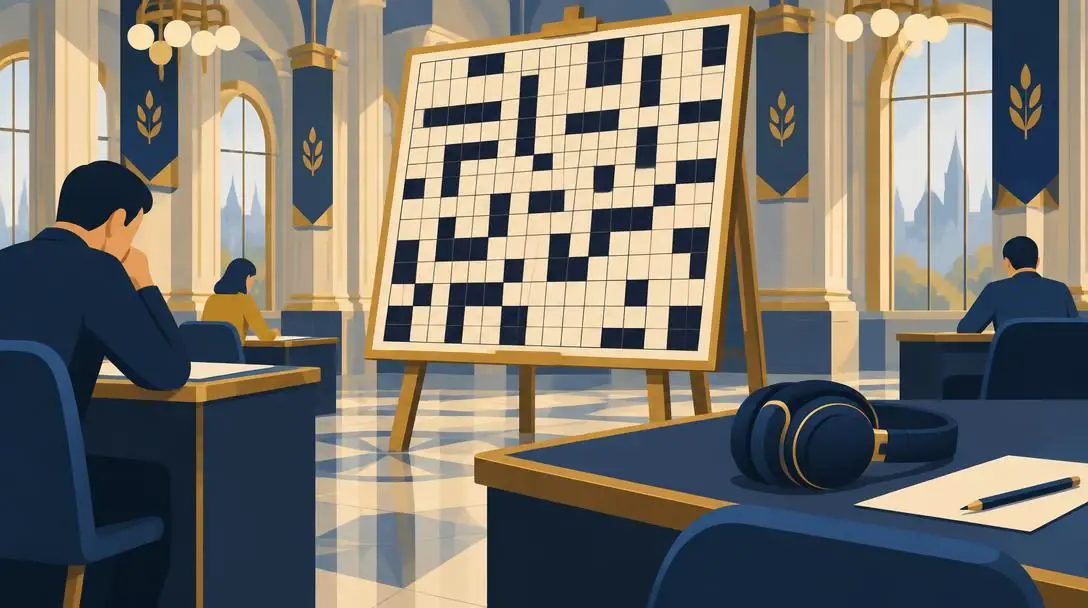
- Key feature: Live playoff round solved on oversized easels
The American Crossword Puzzle Tournament, widely recognized by its acronym ACPT, stands as the oldest and most prestigious event of its kind in the United States. Founded in 1978, the tournament has grown from a humble gathering into a world-renowned festival of wordplay that draws up to 700 competitors annually. Participants range from casual hobbyists testing their limits to elite mental athletes who can solve dense Thursday- or Saturday-level newspaper grids in mere minutes. The ACPT established the standard competition framework used across the discipline, including timed solving sessions across multiple rounds and an electric championship finale where the top three finalists battle in front of a live, hushed audience.
World Puzzle Championship

- Established: 1992
- Format: International multi-day competition
- Scope: Global representation from national teams
- Key feature: Mixed word, logic, and deduction challenges
On the international stage, the World Puzzle Championship represents the pinnacle of multi-discipline mental contests. While the ACPT focuses predominantly on American-style crosswords and wordplay, the WPC gathers national puzzle delegations from across the globe to compete in an expansive assortment of logical grids, spatial puzzles, and linguistic problems. Top-tier solvers who excel in national crossword competitions frequently represent their countries at the WPC, testing their cognitive flexibility against diverse cultural and structural puzzle traditions under rigorous tournament conditions.
Virtual and Online Tournaments
- Format: Digital remote competition
- Accessibility: Worldwide access without travel barriers
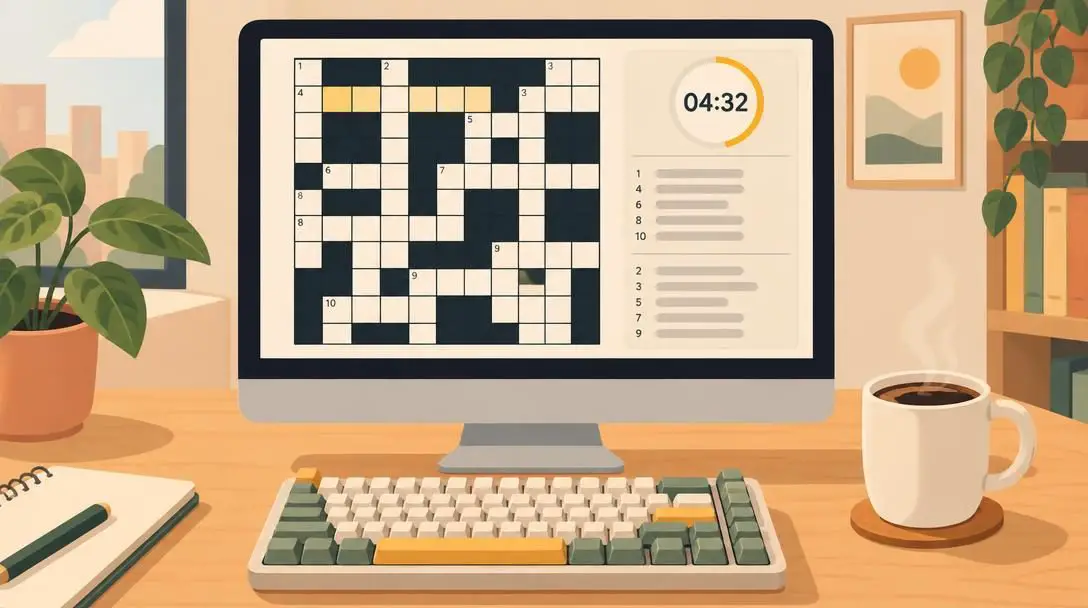
- Interface: Web-based grids with instant keystroke logging
- Role: Low-stakes training ground for new solvers
The digital revolution has democratized competitive puzzle-solving through the rise of virtual tournaments. These online competitions allow solvers from anywhere in the world to experience the pressure of timed competition without incurring the financial cost or travel logistics of in-person conventions. Using streamlined browser interfaces, digital competitions automatically log completion times to the fraction of a second, tally accuracy scores instantly, and provide comprehensive post-round analytics. Online events have proven crucial in expanding the community, attracting younger demographics, and serving as an accessible gateway for newcomers eager to transition from couch solving to competitive play.
| Tournament Platform | Primary Focus | Competition Setting | Participant Reach |
|---|---|---|---|
| American Crossword Puzzle Tournament | Linguistic crosswords and wordplay themes | In-person ballroom setting | Up to 700 global entrants |
| World Puzzle Championship | Logic, deduction, and varied puzzle forms | Rotating international host venues | Elite national team delegations |
| Virtual Solving Events | Standardized digital word puzzles | Online browser interfaces | Unlimited global competitors |
How Tournament Rounds and Scoring Mechanics Operate
Competitive crossword tournaments are carefully regulated events designed to evaluate both swiftness of thought and absolute precision. A standard tournament schedule unfolds over several rounds, typically featuring puzzles of graduated difficulty. Early rounds often assess raw speed on accessible, straightforward themes, while middle and later rounds introduce intricate linguistic acrobatics, deceptive clues, and complex visual grids that test even seasoned champions.
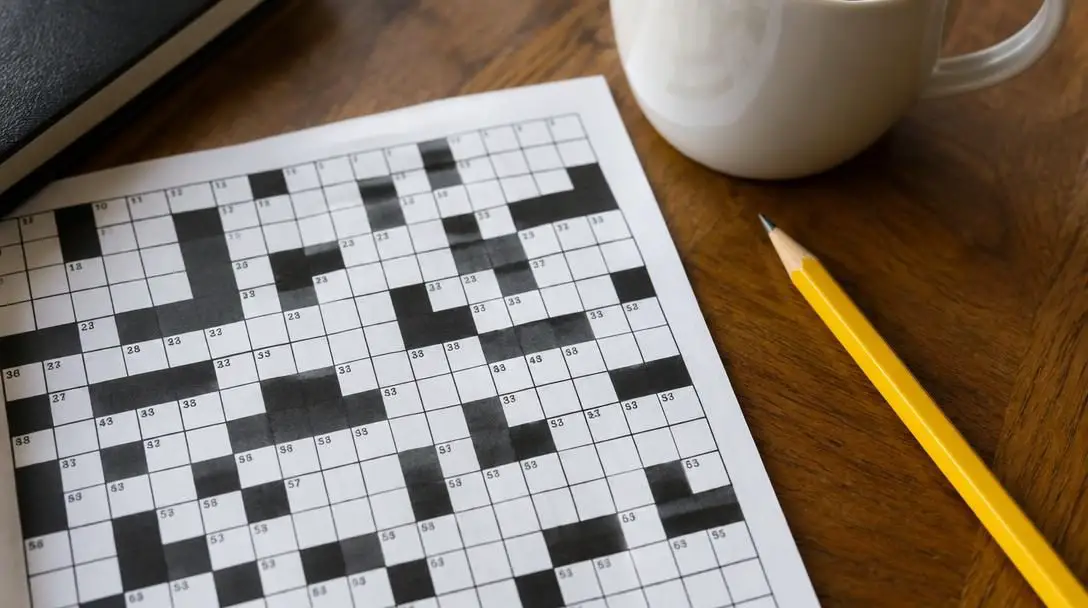
During a tournament round, every participant receives identical puzzle sheets placed face down on their desk. Solvers are forbidden from turning the papers over until the official starting signal sounds. From that moment, competitors work furiously within a strict time limit, balancing the urge to write quickly against the necessity of avoiding careless blunders.
The scoring systems utilized in major tournaments reflect this delicate balance. Competitors are awarded base points for every correct letter placed into the grid. When a participant completes the puzzle correctly before the round timer expires, they receive a time bonus based on the number of minutes remaining. However, if a solver turns in their paper early with missing squares or incorrect letters, severe scoring penalties apply, often erasing any advantage gained by speed. This rule forces competitors to make tactical calculations on whether to review their grid or turn it in immediately for bonus points.
The culmination of these events is the championship playoff round. The highest-ranking competitors from the preliminary rounds earn a spot on the stage, where they solve an oversized puzzle printed on giant easels facing a live audience. To prevent finalists from hearing spectators or commentators, contestants wear sound-dampening headphones. Watching competitors write with thick markers while racing through intersecting words under theater lighting turns a quiet pastime into an intense physical and mental spectacle.
Tournament puzzle-solving turns a quiet home pastime into an intense test of mental athletics where every second and every letter counts.
Beyond the competitors, tournaments serve as a celebration of puzzle constructors. In the puzzle community, top constructors hold an esteemed status akin to celebrated authors or chess grandmasters. Solvers recognize their individual stylistic signatures, anticipating witty cultural references, novel grid geometry, and unexpected punning. Tournaments elevate puzzle construction from an anonymous editorial service into a revered literary and mathematical art form.
Cognitive and Social Benefits of Competitive Solving
The surge of interest in competitive crossword solving has drawn significant attention to the cognitive benefits of rigorous word games. Engaging deeply with complex puzzles requires dynamic neural activity, drawing upon both crystallized intelligence—such as vocabulary and factual recall—and fluid intelligence, which governs pattern recognition and logical deduction.
Medical and psychological research highlights how regular puzzle engagement can bolster memory retention, enhance focus, and sharpen everyday problem-solving skills. For older adults, consistent mental stimulation through crossword solving has been linked to a reduced risk of dementia and cognitive decline. The fast-paced tournament format amplifies these perks by requiring solvers to retrieve facts under strict deadlines, stretching the brain's executive functioning and processing speed.
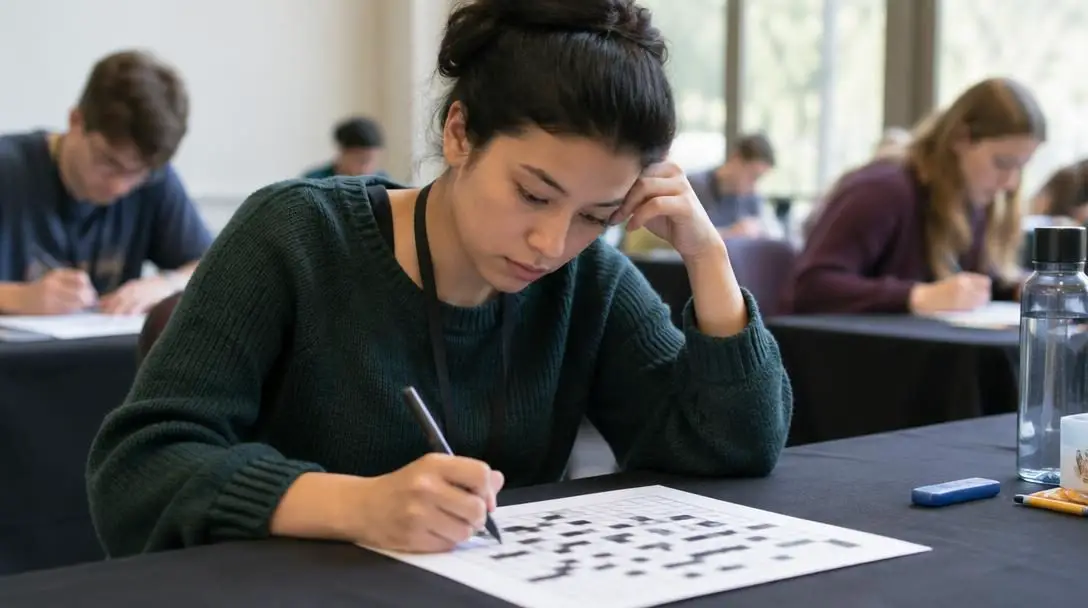
Equally valuable is the social element that tournaments provide. Everyday puzzle-solving is an isolated habit, but tournament venues create an instant sense of community. In hotel corridors and post-round lounges, hundreds of solvers connect over shared passions, dissecting obscure clues, marveling over brilliant themes, and laughing about shared blind spots. The shared environment validates an eccentric intellectual pursuit, turning an individual hobby into a lasting network of supportive peers.
Tactical Playbook: Strategic Elements of Speed Solving
Novice observers often assume that winning a tournament requires nothing more than memorizing an encyclopedia. In practice, elite performance requires a refined tactical framework. Knowing the answers is only half the battle; managing the clock, minimizing mechanical errors, and prioritizing clues define championship play.
- Targeted Clue Selection: Rather than solving sequentially from 1-Across downward, elite solvers hunt for fill-in-the-blank clues first. These clues tend to have unambiguous, direct answers that provide instant intersecting anchor letters across the grid.
- The Across-and-Down Sweep: Many speed solvers make an initial rapid sweep through all across clues, filling in instant answers without pausing to deliberate, followed immediately by a down sweep that leverages the resulting cross-letters.
- Instrument Choice: Solvers must choose between writing instruments carefully. While pencil allows clean corrections of uncertain entries, a sharp, smudge-resistant pen provides higher contrast and legibility for judging panels scanning hundreds of sheets.
- Constructor Profiling: Seasoned competitors identify the constructor behind each round's puzzle to anticipate solving hurdles. A puzzle by a constructor known for mathematical wordplay demands a different mental approach than one known for colloquial slang or trivia.
Step-by-Step Guide to Tournament Preparation
Transitioning from solving leisurely in bed to competing against hundreds of ranked solvers in an auditorium requires structured training. Approaching your preparation with methodical habits builds the speed and mental composure necessary for tournament success.
- Practice Under Strict Timed Conditions: Replace leisurely solving sessions with a timer set to standard competition windows (typically 15 to 45 minutes, depending on the puzzle's difficulty). Learning to function with the visual pressure of a ticking clock eliminates panic during actual competition rounds.
- Refine Your Block Lettering: Tournament judges evaluate handwritten sheets manually. If an ambiguous letter could be read as either an 'O' or a 'D', or an 'I' or an 'L', you risk forfeiting hard-earned points. Practice printing uniform, unambiguous capital block letters at high speed.
- Diversify Your Puzzle Diet: Do not restrict practice to early-week, straightforward crosswords. Solve late-week, highly challenging puzzles featuring rebus squares, trick clues, and complex puns to expand your familiarity with unexpected grid mechanics.
- Simulate Rounds with Digital Competitions: Enter low-stakes virtual tournaments to experience standardized scoring, leaderboard rankings, and strict submission deadlines without the anxiety of a massive live venue.
- Conduct Post-Solve Error Audits: Whenever you miss a clue during practice, investigate the underlying reason. Categorize the mistake as a factual knowledge gap, a misinterpretation of clue phrasing, or a mechanical writing error to prevent repeated missteps.
Pitfalls and Mistakes That Derail High-Rank Solvers
The pressurized atmosphere of a tournament room often causes even experienced solvers to make uncharacteristic errors. Being mindful of these common traps preserves points and protects leaderboard standings.
- Overlooking a Blank Square: The single most common self-inflicted error is leaving an isolated square empty in an obscure corner. An empty cell guarantees zero points for the corresponding clues and eliminates all speed bonuses.
- Chasing Unproductive Rabbit Holes: Spending three unbroken minutes agonizing over a single stubborn clue can ruin your entire round. When stuck, immediately move elsewhere in the grid to develop intersecting letters that simplify the problematic entry.
- Sacrificing Legibility for Velocity: Scribbling frantically to shave ten seconds off your time is counterproductive if a grader cannot verify your spelling. Clear, legible letters preserve points far more reliably than reckless speed.
- Neglecting Physical Well-Being: A weekend tournament is an intellectual marathon. Solvers who skip meals, fail to hydrate, or maintain poor posture at the desk suffer cognitive fatigue that severely impacts performance during critical afternoon rounds.
Frequently asked questions
Do I have to be a trivia expert to compete in a crossword tournament?
No. While a broad general knowledge base is helpful, competitive crosswords rely heavily on vocabulary, pattern recognition, anagramming, and wordplay. Strategic deduction and working from intersecting letters often allow solvers to complete answers to trivia clues they did not initially know.
Can beginners enter major tournaments like the ACPT?
Yes. The American Crossword Puzzle Tournament and many regional events feature different skill divisions, including dedicated categories for rookies and intermediate solvers. Tournaments welcome participants of all experience levels, offering a supportive environment for newcomers.
Are competitors allowed to use dictionaries or internet searches?
No. Tournament solving is strictly closed-book. Participants may not consult dictionaries, smartphones, reference materials, or fellow competitors during an active round. All answers must be generated entirely from memory and grid deductions.
What writing instrument is best for competitive solving?
This comes down to personal preference. Many solvers prefer soft-lead pencils with reliable erasers so they can correct guesses cleanly without cluttering the paper. Others prefer smooth, quick-drying black pens to ensure bold legibility and avoid smearing when their hand moves rapidly across the page.
How does the championship playoff work if solvers wear headphones?
In traditional finals, the top three solvers stand in front of large easels holding oversized versions of the championship puzzle. They wear noise-canceling headphones to block out the tournament hall's sound, allowing live commentators to entertain the audience and discuss solving strategies in real time without tipping off the finalists.
The Bottom Line
The rise of crossword puzzle tournaments has reshaped how the world perceives word games. By transforming an introspective living-room hobby into an exhilarating arena of mental competition, tournaments celebrate the intricate beauty of language and the remarkable capabilities of the human mind. Whether competing on a championship stage before an audience, participating in a regional community event, or tackling virtual grids from home, puzzle enthusiasts have discovered a vibrant, inclusive subculture. As tournaments continue to expand, they prove that quick thinking, intellectual curiosity, and friendly rivalry remain an enduring formula for community and play.